He Survived Four Shipwrecks, Then He Died

Neal Pollard

Many stories have been written about Violet Jessop, a ship stewardess who survived the sinking of the Titanic and the Brittanic. But fewer know about someone who survived twice as many sinkings, including the two survived by Jessop. Arthur Priest, a stoker for the steam-powered ships, survived two major collisions and four shipwrecks. The Asturias was in a collision on its maiden voyage in 1908 and the Olympic survived a collision in 1911. Then, Priest survived the Titanic in 1912, the Alcantra in 1916, the Brittanic in 1916, and the Donegal in 1917. Two of the ships were luxury liners, one was a hospital ship, and the other was an armed merchant cruiser. For the latter, Priest was awarded the Mercantile Marine Ribbon by the British for service in World War I. He sustained a serious head injury on the Donegal, returning to his home in Southampton, England. 

As remarkable as all these survival stories are, Arthur Priest died of pneumonia with his wife Anna by his side in Southampton. He was 50 years old. There is very little information about what he did with a life spared four times from the depths of the sea. We don’t know if he was a religious man, much less a Christian. We don’t know much beyond the fact that he was unsinkable at sea.

Reading about Priest, I thought about a different kind of priest (cf. 1 Pet. 2:5,9) the New Testament tells us about. He wrote, “three times I was shipwrecked, a night and a day I have spent in the deep” (2 Cor. 11:25). We know what this man did with his life, which was cut short in service to an infinitely greater King than the one who was on the throne in Arthur’s lifetime. He was in a war of far more lasting consequence (2 Cor. 10:4-5), and he was decorated for his service in a far more dramatic way (2 Tim. 4:6-8).

The likelihood that you and I will survive even one shipwreck is small. But, like Priest and Paul, we will ultimately die unless the Lord returns first. Even if our lives are not filled with dramatic tales of rescue and unlikely survival, we can leave a legacy of faith and fervor in service to our King (1 Tim. 6:15). We can share Paul’s victory, crowned with the victorious on that last day (Rev. 2:10). 

The Heavenly Lifeboat

Art Shannon

In Belfast, Ireland, in the Spring of 1909, approximately 20000 workers began construction on a ship for the White Star Company of which U.S. mogul J.P. Morgan was a major stockholder. This vessel was designed to be bigger and better than anything currently out there on the market. When completed three years later, it would measure an impressive 10 decks high and three football fields long. 

This ship was named the RMS Titanic and was lauded worldwide for its grandeur. Superlatives such as opulent, luxurious, elegant, lavish, grand, and elegant were used to describe it. Ticket prices ranged from $35-$4300. It could accommodate 1500 passengers and 750 crew members. 

On April 10, 1912, it set out on its maiden voyage from England to New York. Within three hours, the bow was submerged and chaos ensued as people were scrambling to get on one of the 16 lifeboats or four collapsible boats. Only one ship, The Carpathia, responded to distress signals in those early morning hours and it picked up as many Titanic passengers as possible. The rough waters and frigid temps made survival difficult.

By daybreak on April 15, 1912, the world was waking up to news of the worst maritime disaster in history. The New York Times headline read: “Saved–866  Probably Drowned–1254.” In the days that followed, final estimates recorded 32% survivors and 68% fatalities. 

I would imagine that 99% of the 2200 souls onboard the Titanic thought they were totally safe before the iceberg pierced the right side of the hull just below the waterline. How many of the 2200 were spiritually prepared for possible death? How many of us are?

If there were to be a newspaper headline following Judgment Day, which column do you want your name? Saved or lost? I think of the Book of Life somewhat as a headline. Revelation 20:12-13 says that those whose name is not written there are cast into a lake of fire. Matthew 7:13-14 tells us about the broad gate that leads to destruction or the narrow gate that leads to life. 

Later, in Matthew 7:21, it tells us that not everyone who thinks they are going to heaven will enter the kingdom, but those who do the will of the Father. Jesus says in John 14:6, “I am the way, the truth, and the life. No one comes to the Father except through Me.” We are not promised tomorrow, but we do have the here and now. 

God offers each of us a “lifeboat” like no other with His Holy Word. It is up to us and our free will if we will accept His invitation and desire for us to be part of His heavenly home. The good news is each of us, as long as we have breath, have the ability to “write” our final headline of lost or saved. 2 Peter 1:10 tells us to make our calling and election sure, whether the need is to get into our heavenly lifeboat or adjust our life vest. 

Little Choices

Tuesday’s Column: Dale Mail 

Around 6,000 years ago a single snowflake was drifting through the sky. 

As it crystallizes more snowflakes latch on until it becomes too heavy and gravity takes this small mass of snow to the ground. 

For generations snow would fall in this particular region of the world. Eventually layers of ice would build up until the weight of the thick glacier sheet would slide off the side of a cliff and splash in the waters below. 

From a snowflake, to glacier, to an iceberg at last— now adrift on the ocean. As years would pass it grew closer to warmer seas shrinking in size. In just two weeks it would melt into the surrounding waters. That’s what happens to most icebergs, but this particular one wouldn’t melt before going down in history. 

The ancient iceberg would be hit by a massive ship. The infamous Titanic– hit by an accident thousands of years in the making. It all started with a single snowflake. 

We’re all building something. Every day we scheme, think, and make decisions that contribute to a final outcome. 

Paul echoes this in Galatians.

“Do not be deceived: God cannot be mocked. 
A man reaps what he sows.
Whoever sows to please their flesh, from the flesh will reap destruction; 
whoever sows to please the Spirit, from the Spirit will reap eternal life.”

(Gal. 6.7-8)

Three Quick Lessons 

  1. A person gets out of life what he puts into it— this life and the next.
  2. I’m either working towards my own destruction, 
  3. Or I’m working towards an eternal life in the presence of God. 

There should be hope found in each hour, 
a blessing with each breath, 
because to die now— 
is life after death. 

May we always be mindful of what we’re sowing, and always thankful for the patience and grace of our God. 

Dale Pollard

Four Waves On The Sea Of Life

Monday’s Column: Neal At The Cross

Neal Pollard

For whatever reason, I have been fascinated with stories of maritime disaster. I have read about the Titanic, but have even read more closely about the Lusitania, the Edmund Fitzgerald, the HMS Hood (for more, click here), and more. Perhaps few things could conjure up more fear than the thought of being thrust into a cold, deep ocean with no way to stay afloat, subject to attack and almost certain drowning. Poets have drawn upon such imagery, but so do the psalm writers. Read Psalm 42:7 or Psalm 69:2, 14-15 or Psalm 88:7. It is also the way Psalm 130 begins.

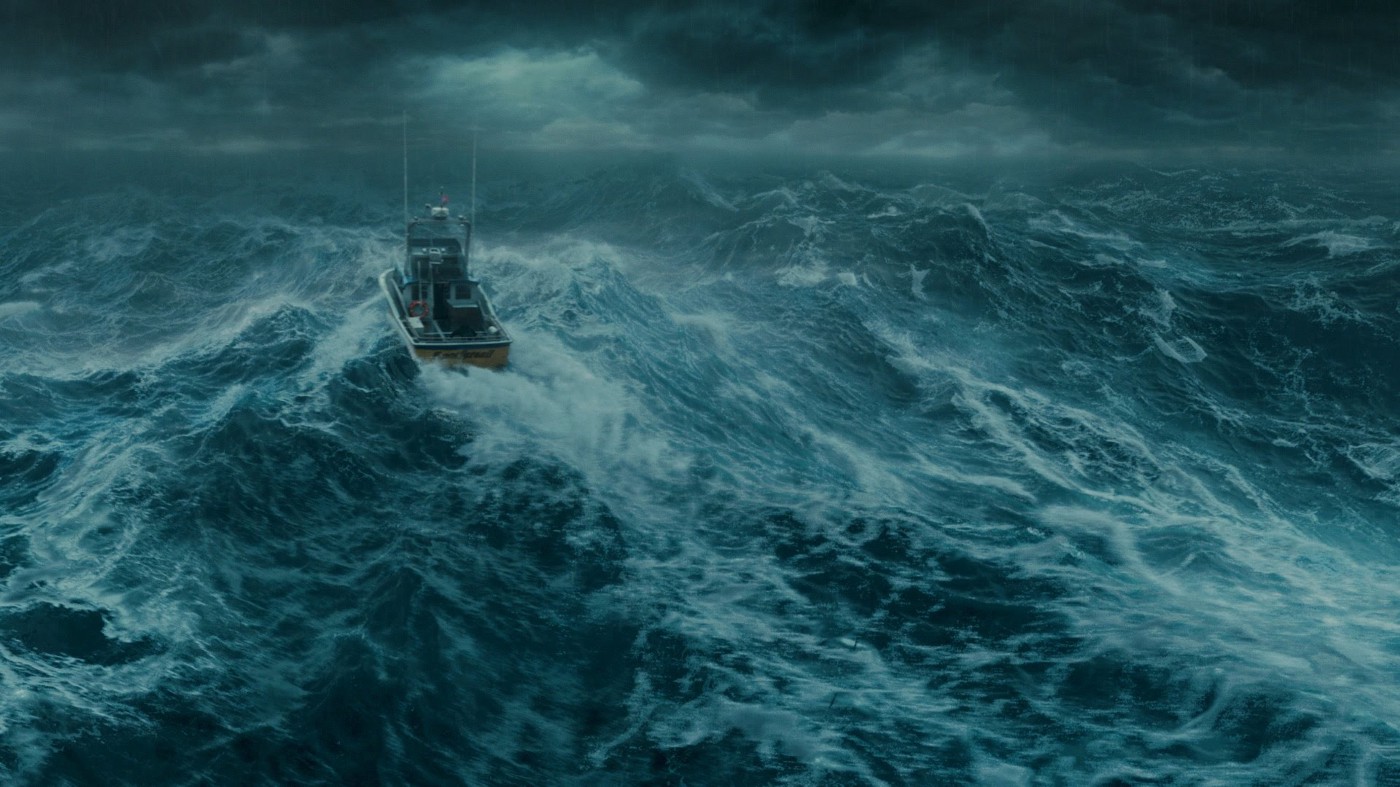
It seems to me that the writer is depicting the rolling waves we encounter in life, the ups and downs and the good and bad. How will I respond when I am in the storm, whether a literal storm, a storm others bring upon me or a storm I bring upon myself? What will I do when the winds have subsided and the storm has passed? Let’s look at this psalm as depicting four successive waves. 

APPREHENSION: Our Cries And Supplications (1-2)

(Wave One)

We find the writer in a watery valley, looking up at a high, but descending, wave. It causes him to cry out and voice his pleas and supplications. The crisis may be financial, medical, familial, personal, or spiritual. It may seem like the world is crashing in on top of you. Do you sink in waves of worry, fear, and doubt? Or do you cry out to God for help? The writer sets an example for us, when we feel like we will be buried by trouble!

TRANSGRESSION: Our Iniquities And Unforgiven Sins (3-4)

(Wave Two)

Though the writer moves away from the metaphor, the idea continues. When you wade in the ocean and reach a shelf, you can no longer put your feet on the bottom. You can sink or swim, but you cannot stand. Verse three asks, “If You, Lord, should mark iniquities, O Lord, who could stand?” The question is rhetorical, but a lifesaver is thrown! “But there is forgiveness with You, that You may be feared.” Perhaps better imagery is to see the Omnipotent Hand of God reaching into the deep, grabbing our outstretched, up- stretched hand! Perhaps self-inflicted trouble, our sins, cause us to sink deeper than any other trouble. 

EXPECTATION: Our Waiting And Hoping (5-7a)

(Wave Three)

Perhaps we could envision this as one floating to the top or having their head come up out of the water. The writer uses two significant, connected words–“wait” and “hope.” Help is coming! Just wait. Hope. You’re trusting, praying, studying, serving, and enduring. Maybe you feel like you’re holding onto a splintered plank that’s separating in the aftermath of your shipwreck, but you hear the sound of the rescue vessel humming on the waters. You know Who is at the helm, so you hang on!

REALIZATION: Our Mercy And Redemption (7-8)

(Wave Four)

I don’t know about you, but I don’t think I could be coaxed off a massive barge onto a rickety rowboat. But, most of us would make the exchange in the opposite scenario. Yet, the world clings to the leaky carrier of lostness when the ship of salvation is within reach. The writer calls heaven’s help “lovingkindness” and “abundant redemption.” This is the way I want to view the tumultuous waves of this world, from the safety of God’s saving grace. Resting in His everlasting arms, I can experience confidence and assurance at life’s worst while keeping my focus on Him at life’s best! 

You are probably facing, enduring, or looking back at one of those first three waves right now. We sometimes singing, “Jesus, Savior, pilot me over life’s tempestuous sea; Unknown waves before me roll, hiding rock and treacherous shoal, chart and compass came from Thee, Jesus, Savior, pilot me.” We are echoing the sentiments of the psalmist in Psalm 130. Wherever you are in life, be sure you are letting Him lift and lead you! It’s the only way to reach eternal safety (John 14:6)!