
Magic Dinosaur Bones

Dale Pollard

 I’m trying to convince my wife (Janelle) that she needs to make a podcast/Youtube series that would provide a nurses perspective on the many kinds of medicines used in the Bible as well as the medical practices of ancient cultures mentioned in the Bible. Would their medical practices actually work or make things worse? If you think that would be interesting as well, please send her a message and let’s all annoy nurse Janelle until she makes it happen. 

On a similar note, this article was written after researching a few of these bizarre medical practices.  

DID YOU KNOW…

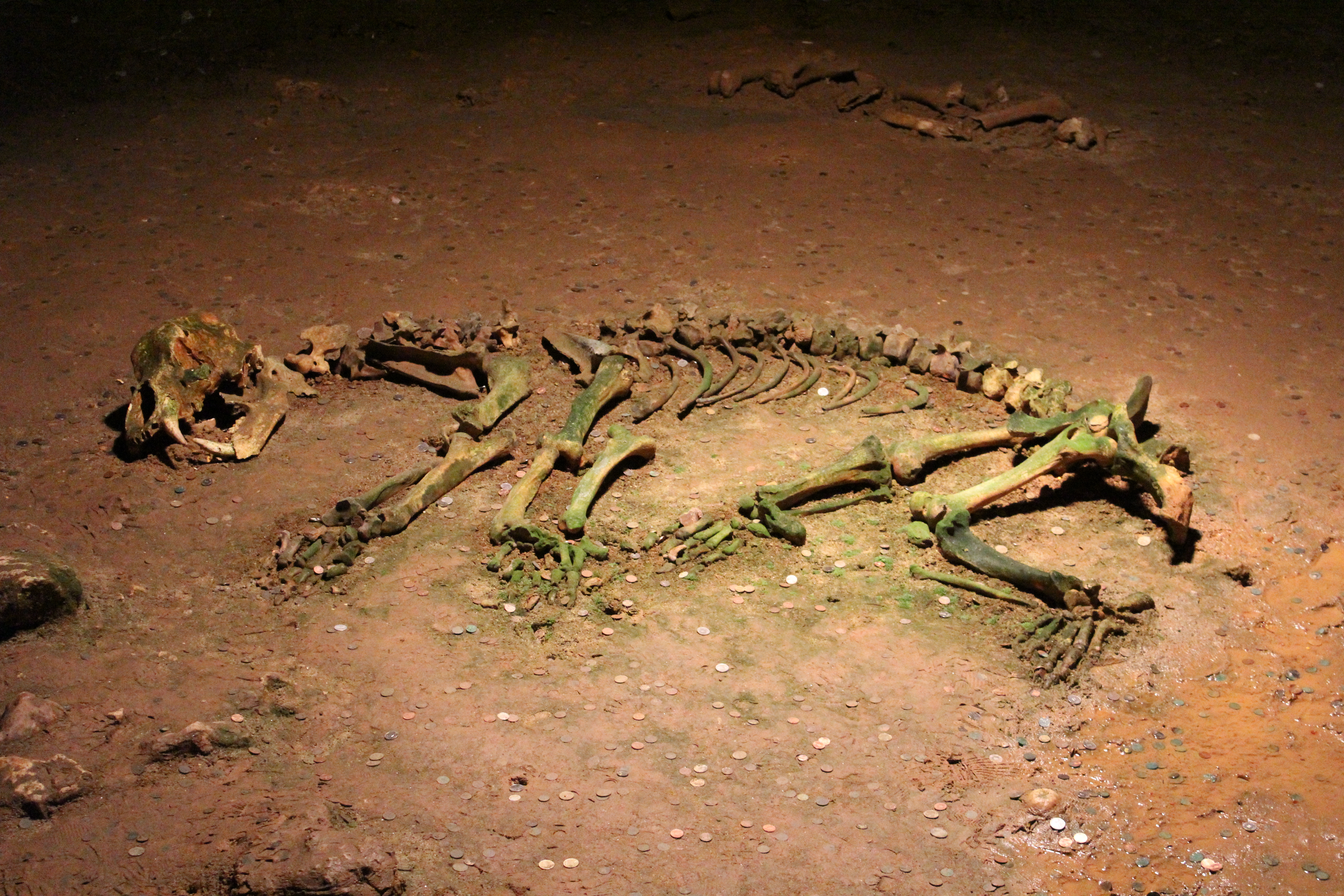
The use of dragon bones in medicine is a fascinating aspect of ancient beliefs, particularly if you view these “dragons” as possible examples of humans and dinosaurs co-existing. However, what’s really  strange is the fact that various societies around the world all decided to use the bones in such a unique way— medicine. 

For example, in medieval Europe, people sometimes discovered large bones and  believed them to hold magical properties. Powders made from these bones were used as talismans or medicinal remedies.

During the Middle Ages, alchemists often incorporated “dragon” substances in their potions and elixirs. They believed that dragon bones could enhance the efficacy of their concoctions or serve as some sort of protective charm.

Some Mesoamerican civilizations had legends about dragon-like creatures, and they used the large fossilized bones in rituals and their medicinal practices because they believed the remains held mysterious power. 

An article in the Associated Press in 2007 had this to say about the ancient Chinese: 

“Villagers in central China spent decades digging up bones they believed belonged to flying dragons and using them in traditional medicines. Turns out the bones belonged to dinosaurs…

The calcium-rich bones were sometimes boiled with other ingredients and fed to children to treat dizziness and leg cramps.”

The Bible has an interesting account about “magic” bones in 2 Kings 13:20-21. This passage recounts the power of God working through the prophet Elijah— even after his death.

Here’s a brief summary for those who might be unfamiliar with this incredible account: 

The prophet Elijah made a significant impact (perhaps the most significant) in Israel. Even after his death his prophetic legacy was admired by the people, but Elijah would perform one last miracle from beyond the grave. Some men were burying a man when they saw a raiding party coming. In haste, they threw the deceased man into the tomb where Elijah’s bones lay and when the dead man touched the bones of Elijah he came back to life and stood on his feet. 

While there may or may not be anything to the medicinal benefits of dinosaur bones as claimed by ancient cultures, there’s no need to speculate where the power was coming from in our biblical account. It’s obvious that it was God’s hand at work and not the prophet’s bones. The same can be said of baptism or even our Bibles. The power isn’t in water found in a baptistery or words on a page because we know the source is actually our Savior. The cure to the world’s greatest disease isn’t some secret recipe that utilizes dragon bones. What we need is what we already have and it’s widely available. 

“Be not wise in your own eyes; fear the LORD, and turn away from evil. It will be healing to your flesh and refreshment to your bones.” 

Proverbs 3.7-8
Life In The Blood

Thursday’s Column: Captain’s Blog

Carl Pollard

A common practice for thousands of years was to drain “bad blood” out of the body. In fact, there are still some cultures today that practice this. The greatest doctors who were thought to be extremely smart would commonly drain the “bad blood” out of their patients if they were sick. For the longest time it was believed that if you were sick you needed to let this poisonous blood out of your body in order to be healed. 

Leviticus 17:11 says, “For the life of the flesh is in the blood, and I have given it for you on the altar to make atonement for your souls, for it is the blood that makes atonement by the life.”

December 13th 1799 a man was riding a horse through his plantation. It was a day like any other, and everything was perfectly normal. Little did this man know that in less than two days he would be dead. The decision he made that day in December proved to be fatal. While he was out riding he got caught in the rain, and when he returned home he decided to hold off on changing out of his wet clothes because he didn’t want to be late for his dinner party. The next morning, he worked outside in the bitter cold as he had the day before. The whole day he worked through the pain that had developed in his throat. Nevertheless he pushed on and tried to ignore it. 

That evening his symptoms worsened, but he decided to see if they would improve by the morning. This man woke up and things had only gotten worse. He called in three well-known physicians and he received good news that it was just a cold and a slight fever. The physicians assured the man that he would be just fine. All they had to do was drain the sickness out of his body and he would be healed. 

This fatal decision resulted in the death George Washington. 

Bloodletting is now seen as an incompetent practice. Yet it was practiced worldwide until the late 1800s. Millions of people died thanks to this lack of understanding, but guess who knew NOT to do this right from the start? The life is in the blood and God is the one who revealed this fact to us. 

Sometimes we are a little slow in catching on to the wisdom that God has revealed in His Word. If God was right about the blood, what else could He be right about? 

LOOKING IN THE WRONG PLACE FOR JESUS

Neal Pollard
Periodically, we read or hear of “sightings” that unbelievers have a field day with. I refer to “Jesus sightings,” people are claiming in such things as clouds, Cheetos, dental X-rays, cooking utensils, windows, walls, and trees. Wikipedia even has an entry for it (“Perceptions of religious imagery in natural phenomena”). People vehemently defend the idea that these are intentional, divinely sent images. Meanwhile, secular and agnostic witnesses to such claims gather up baby and bathwater together, using such superstitiousness to show how deluded those in Christendom really are. Yet, while responding to superstition in religion would be a fitting use of time, another thing comes to mind when hearing these sad stories. It is a reminder that people are looking for Jesus in all the wrong places.
They want some heavenly sign, some overwhelming feeling, some sensory sensation, and some sort of religious fireworks to create or validate their faith. While God has embedded plenty of these in the marvels of nature and creation, through the product of answered prayer that defies logic or explanation, and by the amazing process of transformation that occurs when people follow Christ, He calls on us to seek for Him in a much less electrifying and cataclysmic place.
When we pick up God’s Word and regularly, intently read, meditate, and study (cf. Psalm 1) it, we see Jesus come alive in powerful, sustaining ways! When we walk with the Lord each day, the resulting relationship built on His character and our trust in Him is powerful! When we actively serve Him and others and put into practice what He teaches us through the Bible, we see Jesus in a vivid way. Daily Christian living, the longer we practice it, brings Jesus into unmistakeable, clear focus. Maybe that is what these “seers” truly desire, and what they need is our help to truly find Him. Let us take that as a challenge and help people really “see Jesus” (cf. John 12:21; Heb. 2:9).

10391950_190406240921_3760525_n

Do You Believe In Goats?

Neal Pollard

With the Chicago Cubs winning their first World Series since 1908, which year was near the end of Teddy Roosevelt’s second presidential term when there were only 46 United States and the first that Mother’s Day was celebrated in America, diehard fans believe a World War II-era “curse” has been lifted. Chicago tavern owner, Billy Sianis, “put” the curse on the Cubs when he and his goat were asked to leave game four of the 1945 World Series against the Tigers (imagine a goat even getting into a Major League park today). Fans point to strange, “inexplicable” events through time—most famously Steve Bartman in 2003—to support the “fact” of that curse (see more here: http://www.billygoattavern.com/legend/curse/).

For most of us, this is a fun and playful distraction that makes sports, particularly baseball, that much more fun. Superstition is a nuance that shows up in so many places: pitchers stepping over the foul line going back to the dugout, players not washing and re-wearing underclothes and uniforms, pre-game and post-game meals, etc. I would guess precious few actually believe there is real power in these rituals (on a personal note, my continuous practice of having to wake up wearing UGA apparel on football game days—begun in 1980—was once and for all broken in the midst of a bad 2016 season).

All joking aside, goats get negative attention in a place much more important than Wrigley Field. In Scripture, Jesus, in the last of five parables of preparation in Matthew 24-25, likens the lost to goats (Mat. 25:32-33). Commentators tell us that “their normal dirty state, it might even have been considered wise to leave it to the skilled shepherd to distinguish with confidence the sheep from the goats” (Nolland, NIGTC, np). In fact, throughout the Old Testament, sheep and goats were mostly interchangeable for milk, meat, sacrifice, and general use (ibid.). But, for the purpose of Judgment, Jesus is skillful and discerning enough to know with perfect discernment whether every individual is “goat” or “sheep.” No one is inadvertently mislabeled or misplaced. He will perfectly divide the saved from the lost.  Placement at Judgment will not be influenced by looks, wealth, popularity, education, or any other criteria the world embraces as success. Jesus tells us who both the goat and sheep are (Mat. 25:31-46).

Billy’s goat was not responsible for a “Cubs curse.” Yet, we should understand in a day when the world and even the religious are less inclined to label any activity goat-like, i.e., soul-condemning, Scripture makes it clear that Jesus has not lost any such ability to discern. In fact, He tells us most will be placed in the goat column (cf. Mat. 7:13-14). Let us love and respect God’s Word enough to avoid the curse He came to undo (Gal. 3:13; Rev. 22:3).

hausziege_04