
The Meat

Gary Pollard

There were some members of the early church who had difficulty accepting some of the basic teachings of Christianity. The Hebrews writer told them, “We have many things to tell you about this. But it’s hard to explain because you’ve stopped trying to understand. You’ve had enough time by now that you should be teachers. But you need someone to teach you again the first lessons of God’s teaching. You still need the teaching that is like milk. … Anyone who lives on this is still a baby and not able to understand much about living right. But solid food is for people who have grown up. From their experience they’ve learned to see the difference between good and evil” (Hb 5.11-14). 

What’s the basic stuff that prevents us from being mature? 

6.2 — Baptisms. This is probably Jewish washings and other irrelevant customs from the old system. They should’ve been past this by now. 

6.2 — This one doesn’t really apply to us today, but “laying hands on people”, usually to give them God’s blessing or supernatural power. 

6.2 — The resurrection of the dead and final judgment. 

These basics should be a given for every Christian. The Hebrews writer’s audience had “had enough time by now to become teachers” only a couple decades after Jesus’s work. It’s been about 2,000 years for us. We have no excuse to be stuck in the basics! 

So what should we be doing? 

Hebrews 7-10 — Understand that Jesus is far superior to any other system of belief, he’s in the highest position of power in the universe, he lives to serve as our perfect high priest, the old system (Old Law) is irrelevant now (8.13), that Jesus’s sacrifice cleared humanity of how the Old Law convicted us of sin (9.15), understand that his return means rescue for those of us who are waiting for him (9.28), to think about and encourage each other to show love and do good things for other people (10.24-39), and to never lose our confidence in the power of our king (10-11). 

This is a very simplified list for the sake of brevity, but a mature Christian tries hard to be like Jesus in how they live. They don’t give in when pressured by circumstance to deny Jesus through bad behavior. They accept suffering with grace and patience. Their confidence in who Jesus is and what he will do for us is never severely shaken. Their love for Christian family compels them to do good for them, and to encourage them by living like Jesus. 
Characteristics of Hope

Neal Pollard

An epistle centering around the superiority of Christi as our all-sufficient One would certainly be expected to contain a message of hope. While some had apparently given up Jesus as their hope (6:4-6), the writer of Hebrews had a higher estimation of those to whom he writes. for one thing, they had a legacy of good works and brotherly love and benevolence (6:10). His desire was that they would continue to stay strong. In expressing this, the writer suggests hope as an integral tool to keep them hanging onto their faith in Christ. In these final ten verses of Hebrews six, he mentions three qualities of hope that would help them–and will help us–hang onto our hope in Christ no matter what.

This hope is durable (11). Look at the language he uses. This hope was tied to an assurance that would endure “until the end.” It was a hope that would lead them to “inherit the promises” (12), just as Abraham’s hope in God led him to his inheritance (13-17). God desires to show us, as heirs of the promise through Christ, His unchanging purpose (17), so He guarantees that promise through an oath build upon the foundation of Himself. Hope which is guaranteed by the very nature and character of God is hope that will outlast anything! Nations rise and fall. Presidents serve only one or two terms. Supreme court justices, at most, can serve only a lifetime. Our hope transcends time.

This hope is tangible (18). These Christians needed to count on a refuge in difficult times (see 12:4), and we desire the same thing in our lives! Knowing that God is so trustworthy, we are encouraged to “take hold of hope” that is found only in Christ. To say that we can take hold of hope and that it is set before us means that it has substance. In a world where nothing seems certain, evidence from scripture, nature, order and design of the universe, and so much more allows us, by faith, to grab this hope. He had already told them to hold onto that hope in Christ earlier in the letter (3:6) and to encourage this response he points them to scripture (cf. 3:7-11; Psa. 95:7-11). Scripture helps us see the solid hope we have in Jesus.

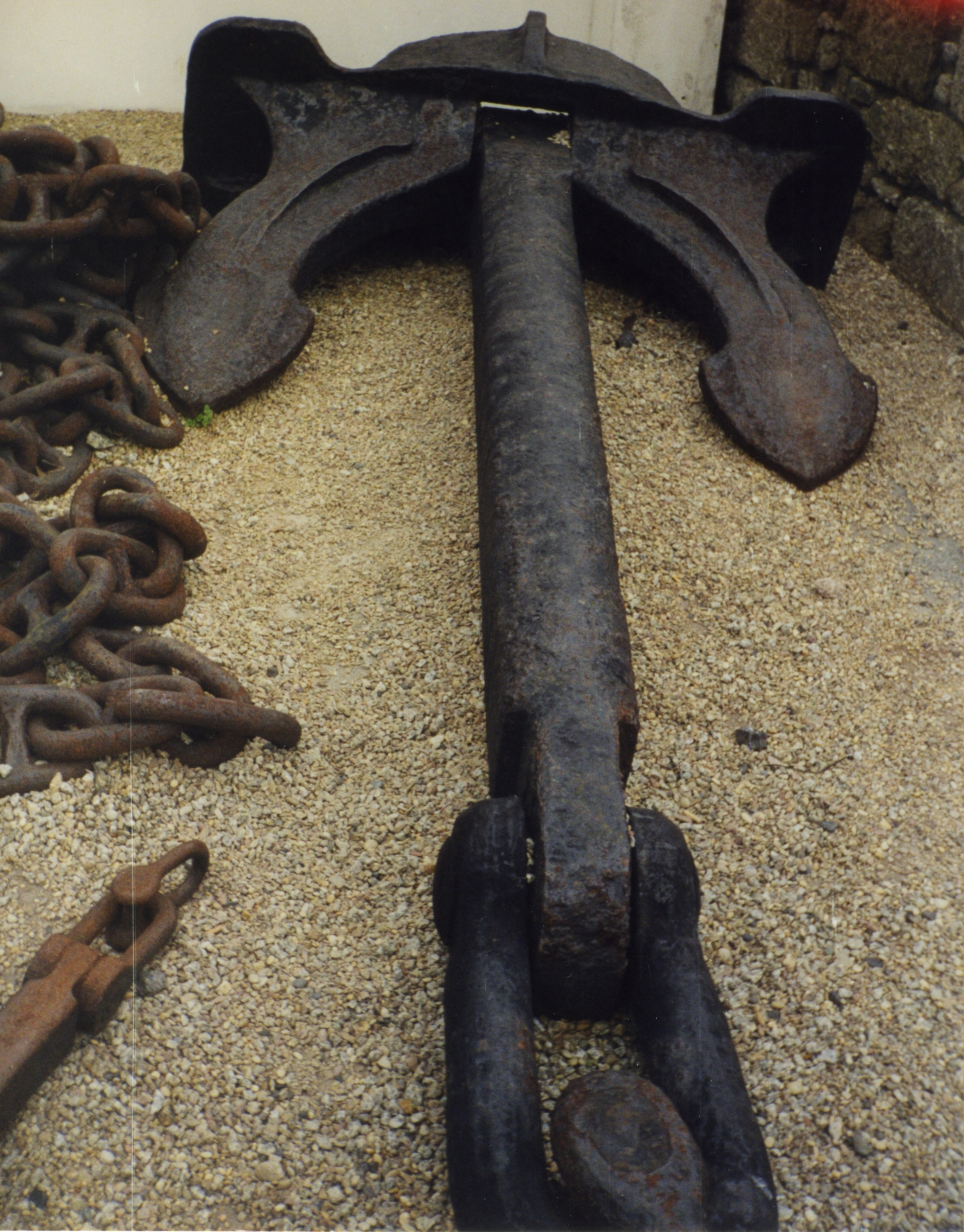
This hope is stable (19). It is an anchor. Anchors keep a vessel from drifting, an appropriate illustration since the Christians were tempted to drift from Christ (2:1). By maintaining their hope, they could anticipate three blessings: (1) sureness, (2) steadfastness, and (3) the service of the sacrificial Savior (19-20). All three of these descriptions of this Almighty anchor underline the security found in keeping ourselves anchored in Christ. Those who keep Jesus as their hope are able to weather the most horrific storms of life!

As Christians, we may find ourselves ready to abandon Jesus as our hope. So many things attempt to pull us from Him. Let us draw encouragement from this inspired writer, as surely these first Christians did, and rejoice in these changeless characteristics of hope!

anchor_england_-_scan01