Firefighters And Word-Spreaders

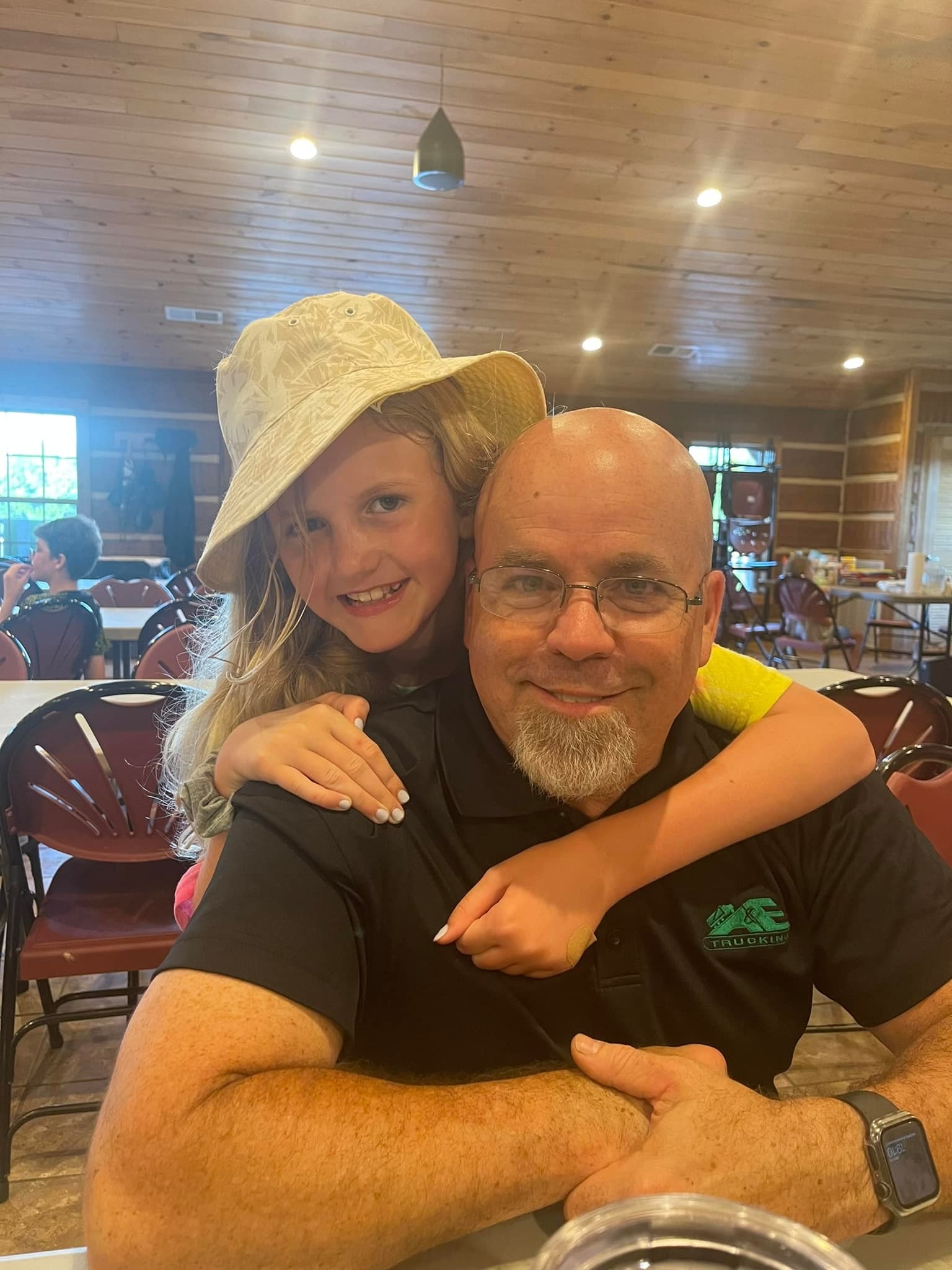
Dave Steeves (photo credit: Holly Steeves)

Grant Wilson and I were in the Navy back in 1992, some 32 years ago. As Grant will tell you, it was a culture shock for both of us. A little more for Grant seeing as how it was his first time out of Smiths Grove. It would be an understatement to say we didn’t know what to expect when checking on board the ship; we were sure, however, that we would experience things that were new to us. I came on board the ship as an undesignated sailor, meaning that I didn’t have a particular job, I was just a member of the department that cared for the outside areas of the ship. The jobs were many but the most disliked was chipping paint, sanding, and painting. Standing the midnight watch in the pilothouse was a close second. It was also tasked to each sailor to be part of the ship’s firefighting team. This is a fact that I was aware of from the training we received in bootcamp, but didn’t fully understand what that would be like on board. You see, when we are out to sea there is no fire department to call, it’s just us in the middle of the ocean, often times hundreds of miles from shore or another ship for that matter. It’s up to us whether we sink or swim (quite literally).

  When we become Christians, we also have “jobs” that we may or may not like or be totally comfortable in doing. I for one, am uncomfortable getting up and speaking. But I know this helps me grow as a person and in my walk with Christ, I also am hopeful that it will be helpful for those that read this. We’ll never know the good we do until we get to the end of this life. But that doesn’t stop us from striving to have a closer walk with our Heavenly Father.

   In the parable of the sower we see that there are four different types of soil.

     Mark 4:3-9 it reads…….

”“Listen! Behold, a sower went out to sow. And as he sowed, some seed fell along the path, and the birds came and devoured it. Other seed fell on rocky ground, where it did not have much soil, and immediately it sprang up, since it had no depth of soil. And when the sun rose, it was scorched, and since it had no root, it withered away. Other seed fell among thorns, and the thorns grew up and choked it, and it yielded no grain. And other seeds fell into good soil and produced grain, growing up and increasing and yielding thirtyfold and sixtyfold and a hundredfold.” And he said, “He who has ears to hear, let him hear.”“

   We know that the different types of soil are indicators of the condition of the heart. It’s important to see here that the Bible is telling us that although we may not be aware of the condition of the hearers heart, we are still to share Gods word with those we come in contact with.

Mark 16:15 “Go into all the world and proclaim the gospel to the whole creation.“

  That verse does not tell us to be sure the people you’re speaking to are ready to hear the good news; it simply says to go and proclaim the word of God. The power of the good news does not lose its value or have its value diminished because the person listening isn’t ready to hear it. That is a very important lesson for us to learn in this passage. But that’s not all we can glean from this parable. The sower is mentioned in Mark 4:3, but is not mentioned again. You see the emphasis is on the condition of the soil/heart, NOT ON THE SOWER. This is a very important point that I think is missed far too often. You see those who have obeyed the gospel and have been added to the Lord’s family have an obligation. Much like on board the ship when I realized that I WOULD IN FACT BE A FIREFIGHTER. It was expected of me when I was sworn in .

I didn’t have a choice anymore. I didn’t sign up for part of the Navy. I signed up for all of it. I wrote a check to the United States Navy with no clear amount noted. Meaning, that I would give everything I had.

   If we are members of the Lords family, we ARE EXPECTED TO SPREAD HIS WORD. We can’t be half-in when it comes to God’s family. Those of us that have been baptized into God’s family are all the way in. We shouldn’t be fearful of that fact–that should give us comfort. Just like on board the ship, there is work to be done but we will never be doing that work alone. We have our Heavenly Father beside us. We have His word to guide us and we also have each of our brothers and sisters in Christ to support us.

   The sower was mentioned almost in passing. Let’s not lose that important point. You see the sower isn’t responsible for the increase. That is on God’s capable shoulders. That fact should free us to not worry as much about the response or lack thereof from those we study with because that’s not what we are called to do. We are called to spread the good news. It is GOD and GOD alone that gives the increase. Our job is to proclaim the word of God to all, not to shoulder guilt if the person we study with doesn’t obey the gospel. This should be a freeing realization to us all, allowing us to continue to spread the word and plant seeds in hopes that those seeds may grow and add another soul to the book of life.

Mysterious Seeds

Monday’s Column: Neal At The Cross

pollard

Neal Pollard

In recent weeks, packets of seeds have been mailed to apparently random homes across the country. Dozens of folks received the seeds, which have Chinese labels but have not been confirmed as originating from China. A few days ago, the USDA confirmed that the seeds were harmless but still cautioned recipients not to plant them. The seed packets included mint, sage, cabbage, roses, and other plants. One working theory is that this was part of a “brushing scam,” where people receive unsolicited items from sellers who then post fake reviews (Joseph Wilkerson, msn.com, “Mysterious China seeds received by Americans identified by USDA”). But, given the current political climate, skepticism–and concern, suspicion, and even fear– abound!

One of the major projects Kathy has begun in our backyard is a “cottage garden.” You can research the origin and history of these gardens, which started in England perhaps as far back as the Medieval period. These gardens have a mix of flowers, herbs, and bushes, and the more elaborate of these gardens have trees, bees, and even livestock. Ours is simpler, with climbing roses on a trellis, boxwoods in the middle, herbs planted throughout, but included among the many packets of seeds planted was a mix called bee feed.  It has been fun to see a variety of mysterious seeds appear, like California poppies, Chinese forget me not, Coreopsis, and Sweet Alyssum. We’re not sure where the tall fringed bluebells came from, but it’s incredible to see such an eclectic mix growing and thriving and demonstrating Genesis 1:11 before our eyes. 

In the New Testament, Jesus teaches several parables involving seeds. In one, a man sows wheat seed in his field, then his enemy sows darnel, a weed resembling wheat. Only after they started growing could the two be differentiated. The landowner instructs his slaves to let them both grow up and separate them at harvest time (Mat. 13:24-30). This parable illustrates the lives of the righteous and unrighteous, whose destiny will be sorted out at the judgment (Jesus explains the parable in Mat. 13:36-43). It certainly can apply to true and false teachers (lawless stumbling blocks), who can seem similar but are also distinguishable to the discerning.

Jesus also teaches the parable of the mustard seed (Mat. 13:31-33), which shows God’s power to do great things through seemingly humble deeds attempted in true faith. Matthew, Mark, and Luke record the parable of the sower, the soils, and the seed. Luke 8:11 identifies the seed as the Word of God. The soils represent the different conditions of heart, three of which are futile and one of which is fertile. The sower is the one who spreads the word to people. 

Then, there is the parable of the seed (Mark 4:26-29). A man casts seed on the soil, and then gets to behold the marvel of how it transforms from seed to sprout, the soil producing it from blade to head to mature grain in the head. Then, he harvests it. The power is not in the sower, who is not around (or, in the parable, awake) when the seed produces. The growth of the seed is a marvel even to the sower. Where is the power? In the seed!

There are certainly some malicious ideas and teaching out there in the world. Sometimes, even truth can be shared from improper motivation. But, God’s Word is a seed which can produce incredible things in a heart and life that is good and fruitful. Have you ever seen someone who seemed like a poor candidate to become a Christian, much less become a force for good in God’s Kingdom? How does that happen? We can talk about planters and waterers, but God causes the growth (1 Cor. 3:6). You may not be an eloquent, sophisticated Bible teacher or soul-winner. You may feel you are unskilled.  But, when you share God’s Word with others, you will see the wonders of this mysterious process. It has been said that persuasion happens in the absence of the persuader, as the Word gets to work on a heart. The power is in the seed! Let’s be about planting it however, wherever, and to whomever we can, then witness the marvel of the seed producing in the recipients’ lives. It’s God’s plan! It works in mysterious ways! 

seeds

DAFFODILS THAT DON’T BLOOM

Friday’s Column: Supplemental Strength

brent 2020

Brent Pollard

Like the robin, daffodils are a harbinger of spring. They begin blooming in late winter and create anticipation for the pretty spring flowers following. We planted our place in Appalachia with daffodils nearly 30 years ago. Today, we get few flowers in places where we planted them. We do have healthy-looking, green blades but no blooms. By their nature, a single daffodil bulb becomes an entire colony of bulbs within a few years because it reproduces by dividing at the bulb. Once so many bulbs are packed into a small space, the plant cannot receive enough moisture or nutrients to produce the desired flower. So, on the one hand, it’s great because just a few daffodil bulbs can yield an entire daffodil garden in a few years. On the other hand, to keep daffodils flowering one must periodically dig up these new bulbs and space them out so conditions remain conducive to their overall health.

When we think about Jesus’ parable of the sower, we likely think of the various soils presented therein. We pray we find the good soil as we go to plant the seed but realize since few are finding the strait gate and narrow way (Matthew 7.13-14), most of our seed falls on the other three poor soils. Of those poor soils, Jesus highlighted a group in whom the seed never produces fruit since they become choked by thorns (Luke 8.14). These thorny-soiled hearts didn’t recognize how detrimental their thorns were since they took the form of the cares and riches of the world. In like manner, we don’t see the problems posed by a bunch of healthy-looking, green blades where our daffodils ought to be. We keep hoping they will put on blooms, bringing us the testimony of God’s wondrous creation. Yet, conditions underground won’t allow for that.

Might I suggest those possessing thorny-soiled hearts can have a similar problem as the daffodil? It may be they don’t just wither and die (i.e. fall away). It may be they are sitting on the pew, where we planted them, looking as if they hold promise, but never producing blooms. Why? It may be their fruit is being crowded out by conditions at their root. We see no prickly thorns gathered around them. Yet, there are cares and concerns on the inside choking out God’s Word all the same. It is confounding since they may even greet us with a smile on their faces while being inwardly consumed by such things as anxiety.  If we do nothing, though, the results will be the same as if it were thorns.

It may be we need to lift these unproductive Christians to help them settle in a better environment conducive to their growth. We need to help them remove all the things choking their heart. We need to nurture them. Though we’re more considerate of the newborn in Christ, the overcrowding of the heart is a challenge potentially taking place even in the one who obeyed the Gospel years ago. Be your brother and sister’s keeper (Galatians 6.1; James 5.19-20). If you see a pretty green blade that never flowers, dig a little deeper. If one’s heart is being crowded out, help him find the space to bloom (Hebrews 3.13).

5262209_c01205ab