
“You Thought That I Was One Like Yourself”

Neal Pollard

Asaph was a spiritual Renaissance man, a musician (1 Chron. 15:17-19), a worship leader (1 Chron. 16:4-15), a prophet (2 Chron. 29:30), and a poet, whose inspired work is found in twelve of the psalms in the book of Psalms. In numerical order, Psalm 50 comes first. In that psalm, he addresses the whole earth (1-6), His people (7-15), and the wicked (16-23). He establishes His right and power to judge “His people” (4)…”for God Himself is judge” (6). He tells His people that He wants their true worship (7-13), and by giving it they would find a responsive, protecting God (14-15).

How He ends the chapter is jarring! He addresses “the wicked” presumably from among His people. They tell of His statutes and His covenant is in their mouths (16), but they are worldly to the core. They hate His teaching and His Words (17). They love to hang out with dishonest, dishonorable people (18). Their tongue is an unruly evil (19-20). This is a comprehensive and graphic picture of the hypocrite. What emboldened them to live in such an audacious way? God’s silence (21). They thought they were getting away with it because God did not respond to this as He did with Nadab and Abihu (Lev. 10:1-3), Korah and his clan (Num. 16), and Uzzah (2 Sam. 6:7). He says, “These things have you done and I kept silence….” (21a). God explains how one can perceive the lack of immediate punishment as an endorsement of a lifestyle or a mindset, saying, “Because the sentence against an evil deed is not executed quickly, therefore the hearts of the sons of men among them are given fully to do evil” (Ecc. 8:11).

This can cause us to bring God down to our level, to think that He thinks like we think and that He feels like we feel. “You thought I was just like you” (21b). If one is tolerant of sin and permissive of a sinful situation, he or she may naturally think God will overlook it. If one is willing to accept in fellowship a person who is living in rebellion against God’s will, he or she may conclude that God does too. This leads to rationalizing and embracing things God, in His Word, has already declared His thoughts and feelings about. That is why He says, “Let the wicked forsake his way and the unrighteous man his thoughts; and let him return to the Lord, and He will have compassion on him, and to our God, for He will abundantly pardon” (Isa. 55:7). Like in Psalm 50:21, Isaiah reminds us God’s thoughts and ways are not ours (Isa. 55:8-9).

God longs for a relationship with His people (22-23), but it will be on His terms. If we forget God, the result is frightening (22), but if we honor Him with righteous living He shall “show the salvation of God” (23). For this to occur, we cannot bring God down to our level and think that because we want to endorse willful sin He does, too. There is an enormous difference between wrestling with sin and wallowing in it. The one He sees with compassion, the other He sees with condemnation.

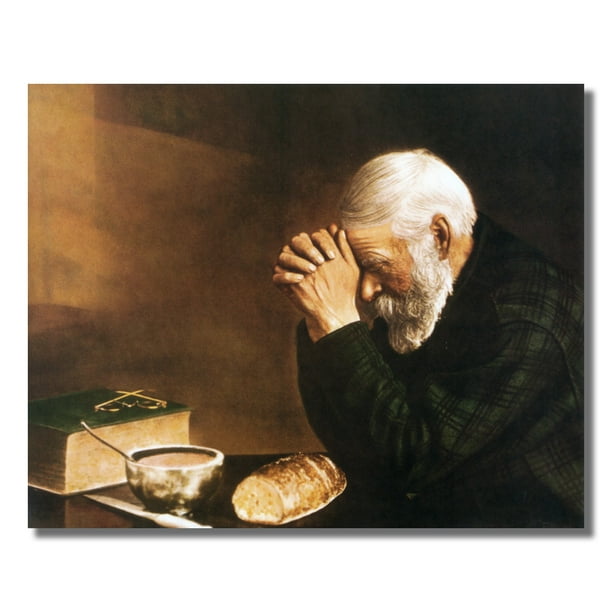
“Give Thanks To The Lord”

Thursday’s Column

Smiling middle-aged man with purple shirt and tie on with evergreens as a backdrop
Neal Pollard

I wonder if Kathy felt like she was living with Briscoe Darling and the boys (imagine them if they were talkative) through the years they were growing up. She is refined and genteel, words that are not usually connected to our three sons and me. One thing she impressed upon us was the importance of timely, thoughtful thank you notes. Gratitude, though it can be expressed with very little time and expense, is telling. It acknowledges the kindness and generosity of the giver. 

One of the elements of worship, generally, and prayer, specifically, is thanksgiving. Our songs call for it: “Give Thanks With A Grateful Heart,” they express it: “Thank You, Lord,” “For All That You’ve Done,” “How Great Thou Art,” “10,000 Reasons,” and “He Has Made Me Glad.” Though that songwriter, Leona Von Brethorst, apparently wrote the song from Psalm 100, she includes a line from Psalm 118:24: “This is the day that the Lord has made.” 

Five times in Psalm 118, the psalmist says “give thanks” (1,19,21,28,29). He urges others to do so, but also expresses his resolve to do the same. Why?

GIVE THANKS FOR HIS GOODNESS (1-4)

“Good” is a general word that takes in pleasantness, desirability, and beauty. The good quality specified here is His everlasting mercy (lovingkindness). The writer moves from the broad to the specific–Israel, house of Aaron, those who fear the Lord. Everyone is the object of God’s lovingkindness. The righteous freely express their thanks for it.

GIVE THANKS FOR HIS DELIVERANCE (5-13)

There is a sudden, dramatic shift in tone in verse five. From an upbeat, positive tone, he turns to thoughts of trouble and difficulty. Distress, hatred, being surrounded, and violence threatened him, but God was there for him as protection and help. This kept him from fearfulness. It gave him refuge. 

It is an amazing thing to think of all the ways and times God has been with me, but those are just the instances I’m aware of. How many trials has God spared me from, disasters has He caused me to avoid, and troubles has He averted for me that I won’t know about on this earth? Just what I do know humbles me, and it should fill my heart with gratitude. 

GIVE THANKS FOR HIS GREATNESS (14-17)

The writer turns to the Giver. He is strong, a Savior, valiant, and exalted. Summarizing God’s qualities, the writer says, “I will not die, but live, And tell of the works of the Lord” (17). Awareness of who God is for me, physically, materially, and spiritually, will drive me to grateful thanks.

GIVE THANKS FOR HIS DISCIPLINE (18)

Though it is almost a parenthetical phrase in the middle of this song of thanksgiving, it is important and an additional reason for gratitude. He writes, “The Lord has disciplined me severely, But He has not given me over to death.” Who is brave enough to say that with the psalmist? He implies gratitude for God’s severe discipline. Hebrews 12:7-10 tells us that God disciplines those He loves and calls His children. It is for our good and allows us to share His holiness. Can I thank Him for the trials and challenges that refine me and grow my dependence on Him? Or do I just plaintively ask, “Why?”

GIVE THANKS FOR HIS PROVISION (19-29)

He uses the imagery of a city here–gates, stones, and chief corner stone. Then, he ends with a temple analogy, with the house of the Lord, festival sacrifice, and the horns of the altar. Saved inside God’s walls of protection, we are free to offer worship which He accepts. We marvel, we rejoice, we are glad, we prosper, and we extol. He has given us light. The primary thrust is not material, but spiritual. However prosperous or impoverished you are, financially, however strong or weak you are, emotionally, we have the greatest provision of all in Christ. Eternal salvation, the hope of heaven, fellowship with God and the saved, the church, strength to endure, the list is endless. 

Today, as you go through the day, why not stop and spend time in prayer to God thanking Him categorically: physical blessings, relationship blessings, emotional blessings, national blessings, and spiritual blessings. No doubt, there are things in your life right now that are dissatisfying and disappointing. You may be struggling mightily. Perhaps those are ways God is disciplining you in His love. Whatever is happening in your life, choose to give thanks and know God is trustworthy! It’s more than polite. It’s righteous!

How Many Blades Of Grass Are There?

Tuesday’s Column: Dale Mail

image-e1601983688162

Dale Pollard

How many blades of grass are there?
According to one study, there are approximately 418,000,000 blades of grass for every person on the planet.

How many fish are in the sea?
Scientist admit that it’s nearly impossible to know the answer to this question but that hasn’t stopped several educated guesses. One study estimated around 3,500,000,000,000 as their total.

How many cars are there in the world?
There are around 1.446 billion cars total. America has approximately 350 million vehicles and Antarctica has about 50.

Psalm 90.12 states, “So teach us to number our days so that we might apply our hearts to wisdom.”

This verse has nothing to do with the actual length of our individual lives but it does deal with the human perspective of time. Nobody can accurately determine how many days or years they’ll be around for. That’s not for us to know and something we don’t have to concern ourselves with. This Psalm seems to point us all in a different direction. Instead of trying to count how many days we have left, we should view each day as our last. Here we see the connection between time management and our spiritual lives. Since we can’t know the exact day of our death, our time is best spent chasing His wisdom and the application of it. We’re essentially asking God to teach us to view our mortal lives the way He does and that only happens when we dedicate our ways to His words.