Worthy of Praise!

Have you ever made a list of why God is worthy to be praised? David did, in Psalm 111. Take a moment and explore his inspired, itemized list…

Neal Pollard

WORTHY OF PRAISE (PSALM 111)

Neal Pollard

One of those names that remind me of my childhood love of singing is Tillit S. Teddlie, a prolific songwriter and member of the church of Christ who lived to be 102. His songs have a trademark sound, and we have sung so many of them: “Heaven Holds All To Me,” “When We Meet In Sweet Communion,” “Oft We Come Together,” “Singing Redemption’s Song,” “Hear Me When I Call,” “Don’t Wait Too Long,” and “Into Our Hands.” He wrote about soul-winning and personal devotion, but he also devoted a lot of his hymns to worship. I love his song, “Worthy Art Thou.” 

It is said that Teddlie wrote this hymn in 1930, sitting on his front porch on a Sunday morning. He was studying a commentary, Johnson’s Notes, looking for something to put into his sermon. His Bible was open to Revelation, where the elders are before the throne and singing, “Worthy is the Lamb that was slain to receive power, and riches, and wisdom, and strength, and honour, and glory, and blessing” (Rev. 5:11)(biographical info via hymnstudies.blog). Teddlie could as easily have been studying Psalm 111. While the phrase, “worthy of praise,” is not found in the psalm, the psalmist calls for praise and then sets out to show why. 

HIS WORKS ARE WORTHY OF PRAISE

The psalm’s writer mentions God’s “work” and “works” four times in this brief psalm. They are “great” and “studied” by those who delight in Him (2). They are splendid and majestic (3). They are “powerful” (6). “The works of His hands are truth and justice” (7). The God who created everything did not step back and cease His activity among men after the creation. The God who calls for our works of obedience sets the example by continuing to work in the affairs of mankind. Whether His natural laws set in motion at the creation, His providential care, His answer to prayer, or His redemption, He is at work! For this, He deserves our praise. 

HIS WONDERS ARE WORTHY OF PRAISE

“He has made His wonders to be remembered” (4). These are unusual things beyond human capabilities. It means “to be wonderful” or “to cause a wonderful thing to happen” (TWOT 723). While the psalmist doesn’t mention specifically what these wonders are or give examples, any of the attributes and actions would qualify. The psalmist mentions who He is and what He has done. If we think deeply about those, we are left to dwell on how incredible and awesome our God is!

HIS WORD IS WORTHY OF PRAISE

The psalmist does not confine his praise to God’s nature and activity. There are His precepts (7), His commandments (10), and His covenant (5,9). God’s greatness is found in what He has revealed to us and what that revelation does for us in this life and for the life to come. My maker has seen to it we have the owner’s manual, to help us know how to best live. I am blessed by His truth (7,8). 

HIS WISDOM IS WORTHY OF PRAISE

While I must obtain wisdom myself, it is truly a “wisdom from above” (Jas. 3:17). I get wisdom through the fear of the Lord (10). This good understanding, brought about by His Word (see above), helps me avoid the folly of the unbeliever and the heartache of the rebellious. 

When I assemble with the saints to worship, I need to have a proper frame of mind. That occurs by intentional preparation beforehand. It helps me to meditate on who God is and what I am about to do in worship. This can help me focus and bring a better offering. There is no shortage of matters to consider. This psalm shows me just a few of the reasons why the object of my worship is praiseworthy! 

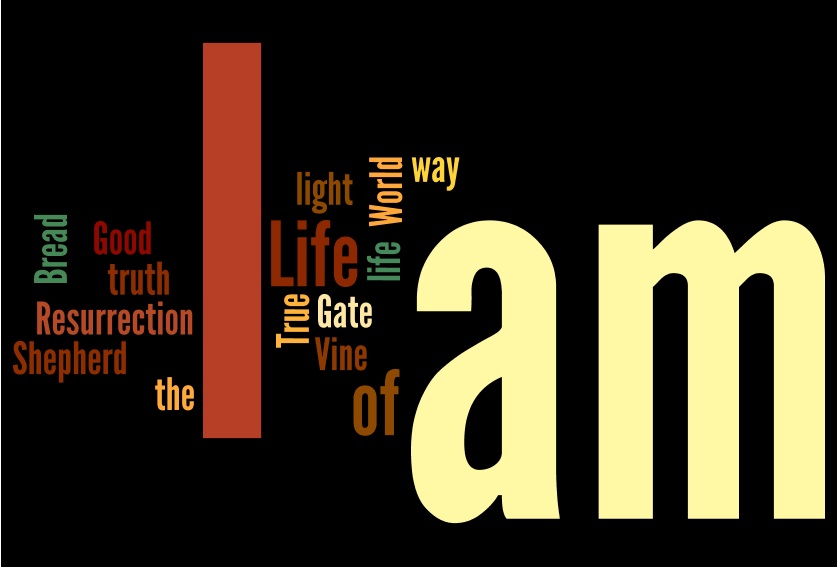
I Am

Tuesday’s Column: Dale Mail

image

Dale Pollard


God speaks of Himself as simply “I Am.” This one powerful statement depicts His infinite presence and His existence through every age. What does it mean to know Him? How do you know if you do? To know of Jesus is very different than knowing Him.

John is one of those books in the New Testament that will help us to become better aquatinted with the Christ. It’s the last of the gospels that paints us a vivid picture of who He was and is on a deeper level than even the three previous gospels. He’s the Bread of life, Light of the world, the Gate, Good Shepherd, Resurrection and Life, the Truth, and the Vine. All of these titles found within the book teach us a little more about the Savior of the world.

There are seven “I Am” statements in John referring to Jesus and three hundred throughout the entire Bible. They begin in Genesis and end in Revelation, and in many books in-between. You just can’t read very far without discovering something very profound about its Writer. He’s eternal. God’s desired response to this is simply for us to believe, respond, and live with our minds and hearts prepared to live with Him.

When Jesus describes Himself as the “I Am” it makes the religious leaders want to kill Him in John 8. To know Jesus, to really know Him, is something that many people have not fully understood. Even as Jesus walked among us mortals and we witnessed His miraculous power, there were still several that didn’t realize what it meant to follow Him (Luke 9:57-62).

While it’s true that everyone is made in the image of God, few reflect the Father’s image. Those that know Jesus introduce others to Him. With the knowledge that we are imperfect, let’s not forget that we also have the ability to have a relationship with Him. I am flawed and I am weak, but the Great I Am is interested in who I am. By the grace of God, I am His child. He is the bread of life that sustains us, the light that guides us, the gate we’ll walk through, and the truth that will save us. It’s not how great I am, but how great the Great I Am is. Do you know Jesus?

Paul’s Portrait Of God For Timothy

Neal Pollard

Devoting himself to a theme of godliness in writing his spiritual son, Timothy, Paul writes to encourage him to teach godliness to people who enjoy financial prosperity (1 Tim. 6:3-10, 17-19). Part of his instruction is to point rich Christians (the case can easily be made that American Christians qualify as this in nearly all instances and many preachers in foreign lands on U.S. support do, too, among their fellow natives) to where the truest treasures lay. Along with encouraging righteous behavior, Paul points to God. He gives life to all things (13). Paul also points to Christ Jesus, who is faithful (14) and who is coming again (14) to give “life indeed” in “the future” (19). Certainly, as Christ is divine, this picture describes Him, though it is obvious this is a portrait of God. He depicts God as:

  • Privileged—“Blessed” (15)
  • Particular—“Only” (15); “Alone” (16)
  • Predominant—“Sovereign” (15)
  • Preeminent—“King of kings and Lord of lords” (15); “Whom no man has seen or can see” (16)
  • Possessor—“Possesses immortality” (16)
  • Phenomenal—“Dwells in unapproachable light” (16)
  • Praiseworthy—“To Him be honor and eternal dominion!” (16)

Why would Paul remind a preacher (or have a preacher remind Christians) about who God is? As we see in the second letter to this young man, motivation is vital! What keeps me serving God when life is difficult? When the world around me ignores Him, mocks Him, rebels against Him, blasphemes Him, and dismisses Him, I need to serve and glorify Him. What will help me do that? I need to see Him for what He truly is! So Paul pulls out a series of superlatives to drive home the point, “How great is our God!” 

In a world full of ungodliness, of “worldly and empty chatter and the opposing arguments of what is falsely called ‘knowledge’” (20), we must be on “guard.” Nothing clarifies the task better than intently focusing on the nature of God. He provides (1:4), He is (1:17), He saves (2:4; 4:10), He is one (2:5), He lives and rules (3:15;4:10), He created (4:3-4), and He sees (5:21). What motivation!

p46