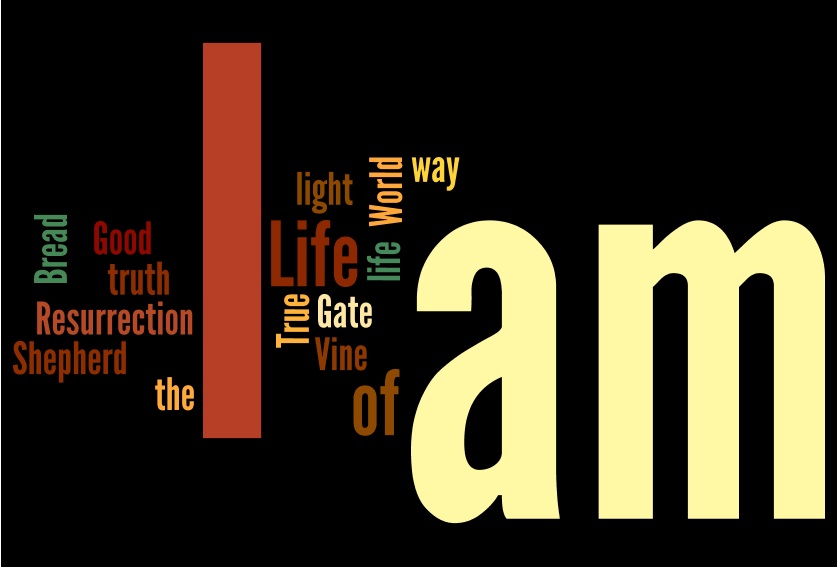
The Seven “I AM” Declarations: Jesus Reveals Himself (Part 1 of 2)

Brent Pollard

When Jesus said “I AM,” He opened a door into divinity. God had told Moses His name: “I AM WHO I AM” (Exodus 3.14). That name—stark, eternal—declared self-existence and sovereign being. Centuries later, a carpenter from Nazareth used the same formula seven times in John’s Gospel.

John recorded these statements with a clear and deliberate purpose: to demonstrate that each “I AM” declaration is a signpost affirming both the divine identity and mission of Christ. Rather than serving as random metaphors, these statements specifically articulate how Jesus meets fundamental human needs and discloses what He offers to believers. Together, they form the thesis of John’s Gospel by answering the central question about Jesus’ true identity.

Let us walk through these seven declarations, not as scholars cataloguing data but as souls hungry for the Bread of Life, stumbling in darkness and desperate for Light.

The Bread of Life (John 6.35, 48, 51)

“I am the bread of life; he who comes to Me will not hunger, and he who believes in Me will never thirst.”

The multitudes had just eaten their fill of fish and barley loaves. They wanted Jesus as a permanent meal ticket, another Moses who would give daily manna. But Jesus refused to be seen as a mere provider of bread that perishes. He called Himself the true bread from heaven—the source that fills not the stomach but the soul, meeting our deepest need.

We are born hungry for purpose, acceptance, and to fill a God-shaped void. We try to satisfy this hunger with achievements and pleasures. Yet earthly bread leaves us hungry again. Christ alone satisfies because He is life. To come to Him ends our soul’s restlessness.

The Light of the World (John 8.12; 9.5)

“I am the light of the world; he who follows Me will not walk in the darkness, but will have the Light of life.”

Picture Jerusalem during the Feast of Tabernacles, its massive golden lamps blazing in the temple courts, commemorating the pillar of fire that led Israel through the wilderness. Against that backdrop, Jesus makes His audacious claim: I am the true Light.

Darkness in Scripture is never neutral. It represents sin’s blindness, ignorance’s confusion, and the deep despair that comes from separation from God. To walk in darkness means to lack moral direction, to be unable to see or know God, and to experience the guilt and shame that result from this separation.

But Jesus does not merely illuminate the path—He is the path. He does not simply reveal truth—He is truth embodied. When we follow Him, we step out of the shadow of death into the light of life. We see clearly, perhaps for the first time, who God is, who we are, and what life is meant to be.

The Door (John 10.7, 9)

“I am the door; if anyone enters through Me, he will be saved, and will go in and out and find pasture.”

In the ancient world, a shepherd led his flock into a walled enclosure each night. There was a single opening—no gate, just an entrance. The shepherd would lie across it, making his body the door, a living barrier. No wolf could enter without facing him, and no sheep could slip out unseen. The shepherd as “door” meant protection and the only path to safety.

Jesus claims to be the only true entrance into God’s safety. No one climbs over by achievement. No one sneaks in with rituals. There is no other entrance called “good intentions” or “sincere beliefs.”

The exclusivity of the Door troubles our pluralistic age, but it ought to comfort our souls. For if Jesus is the Door, we know exactly where to enter. We are not left to guess which of a thousand paths might lead to God. We need not wonder whether our efforts are enough. The Door stands open. The Shepherd calls. When we enter through Him, we are saved.

The Good Shepherd (John 10.11, 14)

“I am the good shepherd; the good shepherd lays down His life for the sheep.”

Israel had sung of the Lord as their Shepherd in Psalm 23. The prophets had condemned Israel’s leaders as faithless shepherds who scattered the flock. Now Jesus claims the title for Himself—and defines it by the cross.

A hired hand flees danger. A false shepherd uses sheep. The Good Shepherd knows His sheep, calls them by name, and lays down His life. The cross was not a tragedy; it was the Shepherd’s choice for His flock.

This is love without parallel. This is commitment beyond measure. And this is why we can trust Him even as we walk through the valley of the shadow of death. Our Shepherd has already been there—and He has conquered it.

In our next article, we will explore the final three “I AM” declarations, where Jesus reveals Himself as the answer to our deepest fears, our greatest confusion, and our spiritual fruitlessness.

“I Am He”

Carl Pollard

Jesus describes Himself in many ways throughout the Gospels. Each name further explains His love, care, protection, judgment, and attitude towards us. There is one name He used that caused quite an uprising in His earthly ministry. However before we dive into the New Testament, we must start at the beginning. 

Exodus 3. 

Here we read that Moses was shepherding his father-in-law’s flock. He takes the herd to Horeb, the mountain of God. While he is there with the animals he notices a bush engulfed in flames, but the bush wasn’t consumed by the fire. Moses goes closer to investigate, and he hears a voice from the bush call his name. This voice is the voice of God and He had a job for Moses to do. 

He had heard the cries of His people in Egyptian captivity, and verse 10 He tells Moses to deliver them from the hand of Pharaoh. Moses isn’t too thrilled with his new task, but pay special attention to the next few verses: Exodus 3:13–14 says, “Then Moses said to God, “Behold, I am going to the sons of Israel, and I will say to them, ‘The God of your fathers has sent me to you.’ Now they may say to me, ‘What is His name?’ What shall I say to them?” God said to Moses, “I AM WHO I AM”; and He said, “Thus you shall say to the sons of Israel, ‘I AM has sent me to you.’ ” 

When God revealed Himself to Moses, He identified Himself as “I AM.” These two words summarize God’s nature. He is the only: 

  • Uncreated
  • Eternal 
  • Always-existing Being. 

He is the I AM because He just is. He exists in all power and majesty, He has no timeline, no beginning, no end. He is I AM. No one else is like Him. Well, maybe someone is…

Seven times in the gospel of John, Jesus used the name “I Am” while claiming to possess certain attributes of God. For the Jews, numbers had special meaning. Seven is quite possibly the most important. In Hebrew numerology the number 7 represents completion or perfection. God created the world in 6 days, and rested on the seventh. The Jewish week had 7 days. Shabbat occurred every seven days. Noah brought 7 pairs of clean animals on the ark. The number Seven is the most important symbolic number in the Hebrew Bible. It conveys wholeness, perfection and for the Jew it came to represent holiness. 

It could be a coincidence, but I do think it’s interesting that Jesus says “I AM” 7 times in the gospel of John. He is God in the flesh, He came to make us complete, and whole. 

He came to make us holy. Seven times, He says, “I AM.” With that in mind, let’s look at the last time He says this. 

John 18

Jesus has just finished a lengthy discussion with His apostles at the last supper. He goes to the garden where He knows that He will be arrested. 

Verse 3 tells us, “So Judas, having procured a band of soldiers and some officers from the chief priests and the Pharisees, went there with lanterns and torches and weapons. Then Jesus, knowing all that would happen to him, came forward and said to them, “Whom do you seek?” They answered him, “Jesus of Nazareth.” Jesus said to them, “I am he.” Judas, who betrayed him, was standing with them.“ 

Look at the very next verse, “When Jesus said to them, ‘I am he,’ they drew back and fell to the ground.” This claim is made as a blatant show of divine power. A band of heavily armed men have shown up to arrest Jesus. Jesus asks who they were there for, and they respond “Jesus of Nazareth.” 

His self-identification in verse 6 does something incredible. Every last Pharisee, Roman soldier, and chief priest stumbled back and fell to the ground when Jesus spoke the words “I AM HE.” At His spoken word, these men are blown back. 

It’s interesting that this same apostle wrote later of the power of the LOGOS. 

So why did John record this? They came to arrest Jesus with weapons. Christ was clear that He knew what would happen, and He chose to cooperate with God’s plan. This moment highlights His sovereignty, reminding everyone that nothing happens to Him which is beyond His own control. 

He WILLINGLY gave Himself because no man can destroy the I AM. But the I AM can sacrifice Himself.

Do You Know Him Or Know Of Him?

Tuesday Column: Dale Mail

blond man with goatee smiling at camera with blazer on
Dale Pollard


God speaks of Himself as simply “I Am.” This is one powerful statement depicts His infinite presence and His existence through every age. What does it mean to know Him? How do you know if you do? To know of Jesus is very different than knowing Him.

John is one of those books in the New Testament that will help us to become better aquainted with the Christ. John paints us a vivid picture of who He was and is on a deeper level than even the three previous books.

He’s the Bread of life, Light of the world, the Gate, Good Shepherd, Resurrection and Life, the Truth, and the Vine. All of these titles found within the book teach us a little more about the Savior of the world. There are seven “I Am” statements in John referring to Jesus and three hundred throughout the entire Bible. They begin in Genesis and end in Revelation, and in many books in-between. You just can’t read very far without discovering something very profound about it’s Writer.

He’s eternal. God’s desired response to this is simply for us to believe, respond, and live with our minds and hearts prepared to live with Him. When Jesus describes Himself as the “I Am” it makes the religious leaders want to kill Him in John 8. To know Jesus, to really know Him, is something that many people have not fully understood. Even as Jesus walked among us mortals and witnessed His miraculous power there were still several that didn’t realize what it meant to follow Him Luke 9:57-62.

While it’s true that everyone is made in the image of God, few reflect the Father’s image. Those that know Jesus introduce others to Him. With the knowledge that we are imperfect, let’s not forget that we also have the ability to have a relationship with Him. I am flawed and I am weak, but the Great I Am is interested in who I am.

By the grace of God, I am His child. He is the bread of life that sustains us, the light that guides us, the gate we’ll walk through, and the truth that will save us. It’s not how great I am, but how great the Great I Am is. Do you know Jesus?

I Am

Tuesday’s Column: Dale Mail

image

Dale Pollard


God speaks of Himself as simply “I Am.” This one powerful statement depicts His infinite presence and His existence through every age. What does it mean to know Him? How do you know if you do? To know of Jesus is very different than knowing Him.

John is one of those books in the New Testament that will help us to become better aquatinted with the Christ. It’s the last of the gospels that paints us a vivid picture of who He was and is on a deeper level than even the three previous gospels. He’s the Bread of life, Light of the world, the Gate, Good Shepherd, Resurrection and Life, the Truth, and the Vine. All of these titles found within the book teach us a little more about the Savior of the world.

There are seven “I Am” statements in John referring to Jesus and three hundred throughout the entire Bible. They begin in Genesis and end in Revelation, and in many books in-between. You just can’t read very far without discovering something very profound about its Writer. He’s eternal. God’s desired response to this is simply for us to believe, respond, and live with our minds and hearts prepared to live with Him.

When Jesus describes Himself as the “I Am” it makes the religious leaders want to kill Him in John 8. To know Jesus, to really know Him, is something that many people have not fully understood. Even as Jesus walked among us mortals and we witnessed His miraculous power, there were still several that didn’t realize what it meant to follow Him (Luke 9:57-62).

While it’s true that everyone is made in the image of God, few reflect the Father’s image. Those that know Jesus introduce others to Him. With the knowledge that we are imperfect, let’s not forget that we also have the ability to have a relationship with Him. I am flawed and I am weak, but the Great I Am is interested in who I am. By the grace of God, I am His child. He is the bread of life that sustains us, the light that guides us, the gate we’ll walk through, and the truth that will save us. It’s not how great I am, but how great the Great I Am is. Do you know Jesus?