Does God Still Send Disasters As Punishment?

When disaster strikes, people instinctively seek meaning. After Hurricane Katrina devastated New Orleans and earthquakes tore through Haiti, a famous televangelist swiftly claimed these events were acts of divine retribution. While such statements may seek to provide a sense of cosmic order, they often do more harm than good and reveal a troubling misunderstanding of God’s character in our modern world.

Brent Pollard

When disaster strikes, people instinctively seek meaning. After Hurricane Katrina devastated New Orleans and earthquakes tore through Haiti, a famous televangelist swiftly claimed these events were acts of divine retribution. While such statements may seek to provide a sense of cosmic order, they often do more harm than good and reveal a troubling misunderstanding of God’s character in our modern world.

This impulse originates from retributive theology, which holds that God punishes sin through physical means, such as natural disasters. This view has deep roots in the Old Testament, where Israel’s covenant promised prosperity to those who obeyed and calamity to those who rebelled. In this unique covenant between God and a nation, God linked physical blessings and curses directly to the nation’s spiritual faithfulness.

But does that system still govern our world today?

A Covenant of Earthly Consequences

To understand this question, we need to revisit ancient Israel—a time when God’s people constituted a literal nation with defined borders, laws, and a temple. In this theocratic context, God sent droughts, diseases, and foreign armies to discipline His people and urge them to return to faithfulness. Prophets like Elijah (1 Kings 17.1) and Amos (Amos 4.6-11) proclaimed these judgments with divine authority, and Israel’s history unfolded as a visible drama of obedience and its consequences.

Even within the Old Testament, a deeper mystery unfolds. The story of Job—a righteous man who suffers beyond human comprehension—challenges the idea of simple retribution. When Job’s friends insisted that his suffering must be a sign of hidden sin, God rebuked them (Job 42.7-8). Their critical mistake was presuming to speak for God about matters they could not fully understand.

A Kingdom Transformed

Christ’s arrival transformed everything as profoundly as dawn breaks the night. God’s people are no longer confined to a single nation or governed by stone tablets. We are now citizens of a spiritual kingdom, shaped not by geography but by grace, led not by thunder from Sinai but by the gentle voice of the Spirit.

Nowhere in the New Testament do we see God threaten the Church with natural disasters as punishment for sin. While divine discipline is still a reality—“the Lord disciplines those He loves”—its nature has undergone a profound transformation (Hebrews 12.6). The Spirit convicts hearts, churches correct, and the consequences manifest in individuals’ souls rather than in their harvests.

When Calamity Comes

This fact does not imply that God is distant when disaster occurs. He remains sovereign, with His providence still overseeing the wind and waves. However, we need to carefully distinguish between stating that God can use tragedy for a purpose and claiming that He caused it to punish specific sins.

When people asked Jesus about a collapsed tower that killed eighteen people, He did not speculate about the victims’ sins. Instead, He gave an urgent yet gentle reminder: “I tell you, no, but unless you repent, you will all likewise perish” (Luke 13.5 NASB95). This statement suggests that tragedy is not proof of others’ hidden wrongdoings, but rather a call for us to examine our hearts.

All creation suffers under the weight of sin, and hurricanes, earthquakes, and fires are symptoms of a world fractured by the fall, not signs of an angry God pacing heaven’s battlements. Even amidst such brokenness, He draws near with compassion.

Discipline Refined

God’s discipline today is not diminished but refined. It comes through the quiet grief that follows sin, the loving correction of faithful friends, and the Spirit’s gentle whisper through the Word. No longer does God thunder judgments from mountaintops—He writes His corrections on our biblically trained consciences through grace.

Claiming that every disaster represents divine judgment misinterprets both the grace of the New Covenant and the nature of our Savior. Christ did not come to condemn the world but to save it (Luke 19.10). The cross speaks more profoundly than any hurricane—there, God’s justice and mercy met, and love triumphed.

Our Response

When disasters inevitably strike, let us respond with compassion rather than blame. Let us be Christ’s hands, lifting those who have fallen and rebuilding what tragedy has broken. Before we point out the faults of others, let us examine our hearts. Above all, let us offer hope instead of theories.

We live not under wrathful skies but beneath a gracious banner. If God speaks through storms today, it’s not to destroy but to awaken, not to punish but to invite.

In this broken world, the Church’s message must never be “They got what they deserved” but “Come, weary soul, and find rest in Christ.” He doesn’t send floods to wash us away but offers living water to make us whole.

A Biblical Flood In Our Time:

Hurricane Helene’s Lessons

Brent Pollard

In a remarkable display of divine providence, a changing storm pattern guided Helene far to the east, sparing my cherished home in the north Georgia mountains from its fury. Though this may bring scant solace to those affected by the storms in western North Carolina and eastern Tennessee, I reflect on the profound insights that the sorrowful occurrences of late September 2024 have unveiled. Sometimes, extreme weather events’ catastrophic character justifies using terms like “biblical.” Indeed, WUNC’s Due South featured an article on the aftermath of Hurricane Helene, capturing the devastation with the phrase “biblical destruction.”

Peter tells us that the great flood swept away the world existing before Noah’s days (2 Peter 3.6). Similarly, WSPA shared a segment from their newscast on YouTube, aptly titled “Hurricane Helene Geographically Changed Western NC River, Fire Chief Said.” In the report, the journalist referenced a first responder from Swannanoa, who shared that the landscape surrounding the Swannanoa River had transformed significantly over the three days of relentless rain and flooding. This change necessitated remapping the area to facilitate the rescue of individuals and the execution of other essential duties!

One might ponder how three days of rain could bring about such a remarkable transformation. Yet, Helene’s four outcomes turned the familiar into the terra incognito.

  • Channel shifts: Rivers and streams changed course, forming new channels or eroding existing ones.
  • Sediment deposition: Floodwaters transported significant sediment downstream, affecting riverbeds and water quality.
  • Landslides: Heavy rainfall created instability, resulting in landslides that blocked waterways and altered water flow. 
  • Erosion: Increased water flow has accelerated erosion, particularly in areas with vulnerable soils, altering the shape and depth of river valleys.

From September 25 to 27, Yancey County, North Carolina, got hit with a remarkable 31.3 inches of rain in just a few days. This recorded amount is the highest in the region, surpassing all others with noteworthy distinction. But what if you were to multiply that number by forty days? What wonders might forty days bring if three days can transform a place beyond recognition? Noah constructed the Ark as a refuge amidst the deluge that engulfed the earth, resulting from relentless forty-day rain and the shattering of the planet’s vast aquifers (Genesis 7.11–12).

Anyone who survived Hurricane Helene’s destructive energy will find it more difficult to dismiss the idea of an angry God using water to cleanse the world’s surface of a creation that had become too pesky with its sin. Indeed, it is not difficult to believe that God could use a flood to inundate the world, but that in so admits that there is One to whom we must all account (cf. Romans 14.12). This admission is what the skeptic and scoffer seek to avoid.

The profound effects of Hurricane Helene stand as a poignant reminder of nature’s untamed strength and our enduring fragility in the face of forces that lie beyond our grasp. Though our technological advancements allow us to monitor, assess, and occasionally foresee these devastating occurrences, nature’s power reminds us of her power to transform our world in just a matter of days. The changing landscape of western North Carolina resonates with timeless stories of divine influence woven through the fabric of nature, inviting both the faithful and the doubtful to ponder deeper truths about our connection to the world around us and, perhaps, to its Maker. As communities rise anew and adjust to their transformed landscapes, the teachings of Helene—echoing the timeless story of Noah’s flood—persist in their relevance, urging us to honor the power of nature and recognize our limitations as we journey through the challenges of our ever-changing world.

When The Storms Of Life Are Raging

Monday’s Column: Neal At The Cross

Neal Pollard

Jesus, the master teacher (Luke 8:1-21), shows His humanity as He fell asleep as the disciples sailed across the Sea of Galilee (23). Assuming the boat to be large enough to transport at least 13 people and provide Jesus room to repose, it makes the situation more impressive when “a fierce gale of wind descended on the lake, and they began to be swamped and to be in danger” (23). We know that at least four of the men in that boat made their living negotiating these waters as fishermen, and we would guess they had seen their share of storms. But this one was apparently exceptional. They woke Jesus up in a panic, exclaiming, “Master, Master, we are perishing!” (24). 

When Kathy and I were young newlyweds, we worked with the church in Livingston, Alabama. Our best song leader was a man who grew up close friends of Gus Nichols’ children. His name was Selman Falls, and his repertoire of songs was vast. He taught us the song, “He Will Hide Me,” written by Mary Servoss in 1878. The first verse says, “When the storms of life are raging, tempests wild on sea and land, I will seek a place of refuge, in the shadow of God’s hand.” Few metaphors seem more fitting than to call our trials and difficulties “storms.” I confess that more than one of these has led me to panic and to pray, “Master, Master, I am perishing!” Our trials disturb our peace, rock our world, and threaten our stability. 

Will you notice how Jesus handled this? First, He acted. Then, He admonished. He did not lecture while waves crashed and water encroached. He took care of the problem. But, then He said, “Where is your faith?” Luke mentions no sober self-reflection on the part of the disciples. Instead, they marveled. They responded, in fear and amazement, “Who then is this, that He commands even the winds and the water, and they obey Him?” (25). Storms are opportunities for us to ask, then answer, such an identity question. It’s the right question. Not, why did this storm come? Why me? But, Who then is this? Who is the master of the maelstrom? Who is the commander of the crushing confusion? 

Chances are great that several of you are in the midst of some kind of storm. The boat is rocking, the winds are howling, and the prospects are not promising. What will you do? More importantly, what will you allow Him to do? He still stills storms! 

Business on 31W bypass, relatively close to our church building

But, They Were Certain!

Neal Pollard

Have you ever been absolutely sure about something, only to find out you were wrong? Maybe, it was the name of the band that sang your favorite song or the name of the third baseman on your favorite team when you were in elementary school. Sometimes, the stakes are higher and being wrong more costly than that.

Erik Larson’s book, Isaac’s Storm: A Man, A Time, and the Deadliest Hurricane in History, is about a man and an entire bureau’s certainty that cost probably 6,000 their lives. And because they were so certain that a hurricane could not strike Galveston, Texas, a lot of people made fatal choices based on their own certainty—they were certain of houses that would stand, trains and tracks that would get them to their destinations, and that the slope of the coast would deter tidal waves and storm surges. Yet, in September, 1900, on Saturday and Sunday, probably the worst hurricane in modern history struck the exposed, helpless booming Texas city.

Some have been so certain about spiritual matters, but were wrong. They have been certain about what to bring God to worship (Gen. 4:2-3), about how to be saved from death (2 Kings 5:11-12), and about how to carry out God’s command (1 Sam. 15:13ff).

In the Sermon on the Mount, Jesus speaks of some who seemed certain, but were certainly wrong. Depicting the Judgment scene, Jesus preaches, “Not everyone who says to Me, ‘Lord, Lord,’ will enter the kingdom of heaven, but he who does the will of My Father who is in heaven will enter. Many will say to Me on that day, ‘Lord, Lord, did we not prophesy in Your name, and in Your name cast out demons, and in Your name perform many miracles?’ And then I will declare to them, ‘I never knew you; depart from Me, you who practice lawlessness’” (Mat. 7:21-23). These folks will have done religious acts in Jesus’ name. They will haven been certain they were on the right path, but Jesus says they will have been mistaken. They will not have done the will of the Father.

How many people will this ultimately describe? They have confidence in a preacher, a teaching, a tradition, a feeling, or a belief. Sadly, they have not even questioned whether or not it might not be what the Bible says on the matter. Jesus ends His sermon by talking about storms. This storm is more powerful than the one Larson writes about. It determines destiny (Mat. 7:24-27). We must base our certainty on the Rock!

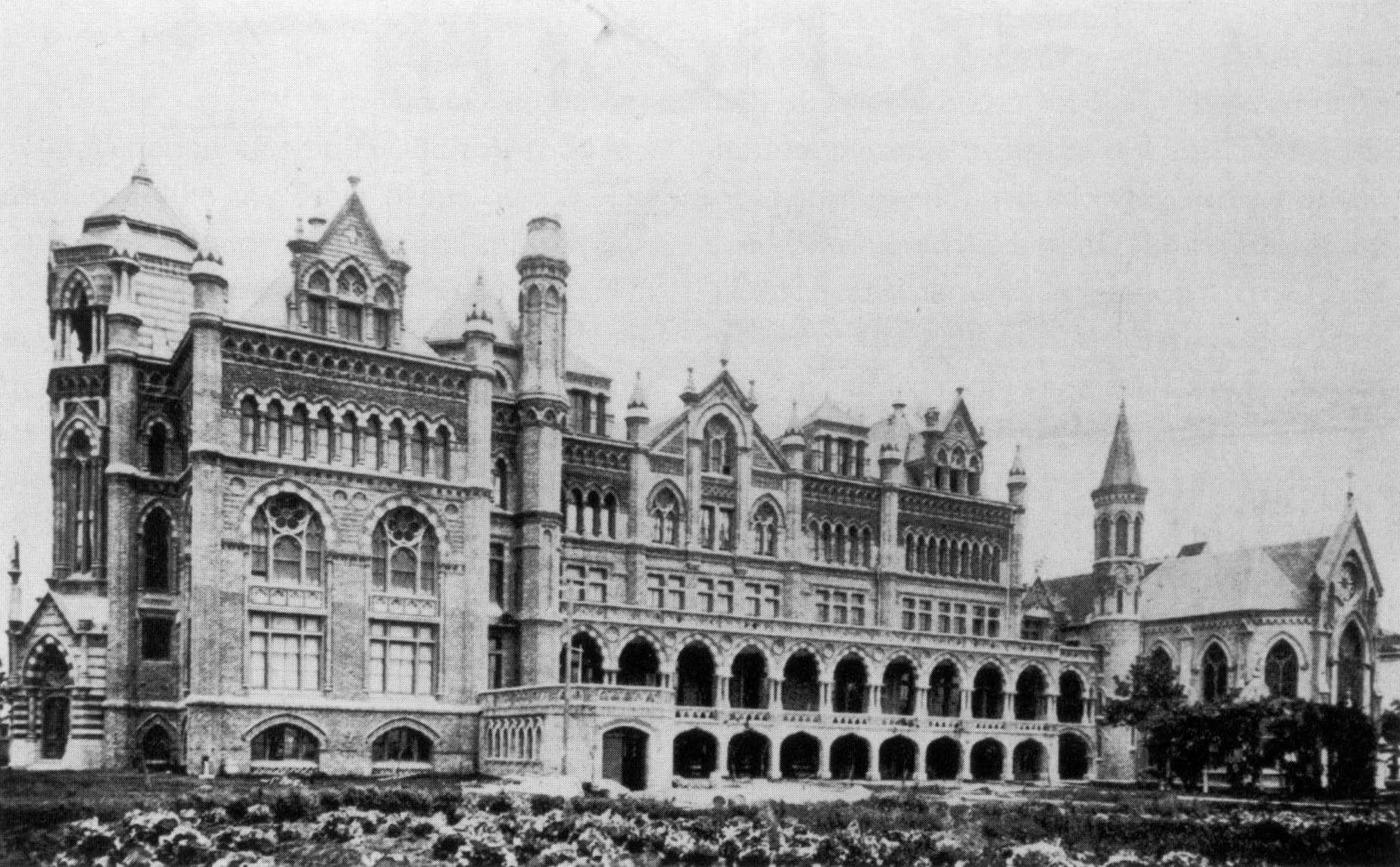
ursuline_academy_galveston
Ursuline Academy in Galveston, Texas, before the hurricane.