Origen’s “On First Principles” (Book II, Ch. 4.2)

Gary Pollard

[This is a continuing translation of Origen’s systematic theology in modern language]

It would take too long to gather every passage in the Gospels showing that the God of the Law and the God of the Gospel are one and the same. We’ll briefly look at the Acts of the Apostles. There, Stephen and the other apostles prayed to the God who made the sky and earth, who spoke through the prophets, and who is called “the God of Abraham, Isaac, and Jacob.” This was the same God who brought Israel out of Egypt. These compel us to have faith in the Creator and cultivate love for him in anyone who learns to think of him appropriately.

This fits with Jesus’s own teaching. When he was asked which commandment in the Law is greatest, he answered, “Love the Lord your God with all your heart, soul, and mind. And the second is like it: love your neighbor as yourself.” Then he added, “On these two commandments hang all the Law and the Prophets.” If he was training someone to become his disciple, why would he compel them to love the God of the Law, unless he recognized that God as the one true God?

But suppose, despite all these clear indications, someone insists that Jesus was speaking about some other, unknown God when he said, “Love the Lord your God with all your heart…” In that case, how could Jesus reasonably say that “the Law and the Prophets” depend on these two commandments? If the Law and the Prophets truly come from the Creator—as even the opponents admit—how could they depend on commandments that come from a different God? What is foreign to him cannot be said to hang on him.

Paul’s own words make this point even more clearly. When he writes, “I thank my God, whom I serve from my ancestors with a pure conscience,” he shows that he did not turn to a new or foreign deity when he came to Christ. Who are Paul’s ancestors, if not those about whom he says, “Are they Hebrews? So am I. Are they Israelites? So am I”? The opening of Romans makes the same point for anyone who understands Paul’s language. He begins with, “Paul, a servant of Jesus Christ, called to be an apostle, set apart for the gospel of God, which he promised beforehand through his prophets in the holy Scriptures, concerning his Son, who was born from the seed of David according to the flesh and appointed Son of God in power by his resurrection…” This proves that the God Paul preached is the same God who spoke long ago through the prophets and promised the coming of Christ.

Paul also interprets the Law in ways that reveal its divine purpose for the church. When he quoted the command, “Do not muzzle the ox that is treading out the grain,” he asked, “Does God care about the ox, or was this written for our sake?” And he answered, “It was written to to benefit us,” meaning that the God who gave the Law gave it for the benefit of the apostles who preach the gospel. Elsewhere Paul embraces the promises attached to the Law, saying, “Honor your father and mother, which is the first commandment with a promise: that it may go well with you, and that you may live long on the land the Lord your God gives you.” By this he clearly showed that the Law, its God, and the promises attached to it are good in his sight.

The Anger Of The Lord

The Word of God provides so much comfort, consolation, encouragement, strength, hope, and excited anticipation. It is food and drink for the soul. David describes it as beautiful and beneficial (Psa. 19:7-10). It makes us alive and saves our soul (1 Pet. 1:22; Js. 1:18). It sanctifies (Jn. 17:17). 

Neal Pollard

The Word of God provides so much comfort, consolation, encouragement, strength, hope, and excited anticipation. It is food and drink for the soul. David describes it as beautiful and beneficial (Psa. 19:7-10). It makes us alive and saves our soul (1 Pet. 1:22; Js. 1:18). It sanctifies (Jn. 17:17). 

Yet, the Word, consistent with God’s perfect character, contains warnings, rebukes, and threats all backed by the unlimited power and perfection of God’s nature. Back when God instituted His special covenant with the Jews at Mt. Sinai, He made it clear that His promises and blessings were conditional. Moses reviews this promise of God at the end of his life, saying, “See, I am setting before you today a blessing and a curse: the blessing, if you listen to the commandments of the Lord your God, which I am commanding you today; and the curse, if you do not listen to the commandments of the Lord your God, but turn aside from the way which I am commanding you today, by following other gods which you have not known” (Dt. 11:26-28). 

At the end of 2 Kings, the remnant of the Jews still in the land (remember, Israel was destroyed and carried off into captivity in chapter 17) had drifted into the curse Moses spoke of. The prophets, like Jeremiah, Obadiah, Nahum, Habakkuk, and Zephaniah, had warned Judah, but the kings, priests, false prophets, elders, and the people, shunned the message. After His perfect patience had been repeatedly tried and finally exhausted, He displays His wrath.

Wicked Jehoiakim’s son, Jehoiachin, mounted the throne in his father’s place. Though he only reigned three months, the record shows that “he did evil in the sight of the Lord, according to all that his father had don” (2 Ki. 24:9). The Babylonian Emperor, Nebuchadnezzar, besieged Jerusalem, carried Jehoiachin captive “his mother and his servants and his captains and his officials” (12), all the temple and king’s treasures (13), ” all Jerusalem and all the captains and all the mighty men of valor, ten thousand captives, and all the craftsmen and the smiths” (14–leaving only the poorest people in the land), and “all the men of valor, seven thousand, and the craftsmen and the smiths, one thousand, all strong and fit for war” (16). Nebuchadnezzar put a puppet king on Judah’s throne, Jehoiachin’s uncle, Mattaniah, who Nebuchadnezzar renamed “Zedekiah” (17). He did evil in the sight of the Lord, just as his nephew had done (18)! Even in the face of such punishment and defeat, Judah’s leadership refused to humble itself and repent. In fact, Zedekiah was not only rebel against God but also the instrument of punishment in His hand (Babylon’s king, Jer. 25:9)(20).

Why would God allow this to happen to His chosen people? The writer of 2 Kings explains it this way: “For through the anger of the Lord this came about in Jerusalem and Judah until He cast them out from His presence” (20). Perhaps the people convinced themselves that since God had not acted in punishment against their parents and grandparents, He didn’t care about how they were acting and they were going to get away with it. Peter tells us how that is part of human nature. Using the past (the days of Noah) as an illustration of the end of time, Peter says that mockers with their mocking will ask where the promise of God’s coming is. They’ll say, “Ever since the fathers fell asleep, all continues just as it was from the beginning of creation” (2 Pe. 3:4). They ignore what happened in Noah’s day (5-6). They ignore that God spares or destroys this world according to the word of His power (5-7). They ignore that God is not bound by time (8). They ignore that God’s perfect patience is at work right now, as He wishes for all to come to repentance (9). But, the day of the Lord will come (10a)! He will deal out retribution to those who do not know God and to those who do not obey the gospel of our Lord Jesus (2 Th. 1:8). 

But, let us be convinced of this. God wants to pour out His blessings, approval, and incredible love upon all of us! Yet, He leaves the ball in our court. He wants nothing more than to hold us close to Him and have us spend our eternity with Him (2 Pe. 3:11-15). If we respond to that love in submissive obedience, we will feel the full force of His kindness. If we don’t, He’s loved us enough to show us what that will mean for us! May we be wise enough to avoid “the anger of the Lord”! 

Assurance Of Truth

Carl Pollard

A few years back, my dad and I traveled to Cambodia for a mission trip. One evening, we wandered through the night market, looking at all the different shops. They had everything from designer clothes to headphones like Beats, Gucci belts, and even iPhones—all unbelievably cheap! I mean, we’re talking $5 for a Casio watch, $10 for an iPhone, and $12 for an iPad. 

At first, it felt like a dream, but the longer we looked, the more we realized something was off. Those “Beats By Dre” headphones actually said “Beats By Bray,” and the Ray-Ban sunglasses actually said “Roy-Bans.” The Casio watch I bought? It seemed legit but died after a few weeks. These knockoffs looked real at first glance, but upon closer inspection, the truth was clear. 

These fake items exist because somewhere, genuine designer products are out there, creating a market for the fakes. Just like those counterfeits, false truths abound today. Jesus warned us about false prophets, and we see their influence everywhere. Satan takes what’s valuable and crafts knockoffs that seem real but lack true worth. As Buddy the Elf famously said, “You sit on a throne of lies.”

In a world filled with deception, false teachings threaten our faith. Yet, John, the apostle Jesus loved, assured early believers that they could have confidence in their relationship with God. There’s no reason to fear; we can have the assurance of truth. God desires for us to feel secure in our faith, knowing that we are saved, a privilege not extended to those outside of Christ.

John makes it clear why he wrote his letters. In 1 John 5:13, he states, “I write these things to you who believe in the name of the Son of God, that you may know that you have eternal life.” This assurance isn’t a gamble; it’s a certainty for those who believe.

John encourages us to evaluate our faith through three tests. First, do you believe that Jesus is the Son of God? 1 John 4:9-10 emphasizes God’s love for us, even when we were unlovable. He sacrificed His Son so we could live through Him. Recognizing this love is crucial.

Next, do you obey God’s commands? 1 John 2:3-6 tells us that knowing Him means keeping His commandments. Obedience isn’t just about fear; it’s rooted in love. We must trust and obey God, finding assurance in our faith through our actions.

Lastly, do you show love toward others? 1 John 3:14 states that love for our brothers and sisters shows we’ve passed from death to life. Love is an active choice, demonstrated through our actions and sacrifices. 1 John 3:18-24 challenges us to love not just in words but in deeds. 

In summary, ask yourself three essential questions: Do you believe in Jesus? Do you obey the Father? Do you love others? If you answered no to any, you may not be right with God. But there’s hope. With a repentant heart, God is ready to forgive and embrace you. So, how badly do you want eternal life? Enough to change your behavior? Let’s strive to embody belief, love, and obedience in our lives.

Idol Worship And YAHWEH Coin

Dale Pollard

Israel first heard Exodus 20.4 spoken by God from heaven in an audible voice.

“You must not make for yourself an idol of any likeness of what is in heaven above or on the earth beneath or in the water under the earth…” 

Obviously this wasn’t enough to keep humans from doing the exact opposite. 

“They (Israel) forsook all the commandments of the LORD their God and made for themselves molten images, two calves, and made an Asherah and worshiped all the host of heaven and served Baal. Then they made their sons and their daughters pass through the fire, and practiced divination and enchantments, and sold themselves to do evil in the sight of the LORD, provoking Him. So the LORD was very angry with Israel and removed them from His sight; none was left except the tribe of Judah.

Also Judah did not keep the commandments of the LORD their God, but walked in the customs which Israel had introduced. The LORD rejected all the descendants of Israel and afflicted them and gave them into the hand of plunderers, until He had cast them out of His sight” 

(2 Kgs 17.16-20). 

Both the Egyptians and the Babylonians assigned stars to their many gods. The practice of star worship was common place among the Assyrians— and especially the Chaldeans.

IMG_2312.jpeg

“…beware lest you raise your eyes to heaven, and when you see the sun and the moon and the stars, all the host of heaven, you be drawn away and bow down to them and serve them, things that the LORD your God has allotted to all the peoples under the whole heaven” (Deut. 4.19). 

Were there any depictions of Israel’s (and our God), Yahweh? The evidence is sparse, but here’s a possible example. 

IMG_2279.jpeg

An Achaemenid period coin inscribed with the word Yehud depicts a supreme deity as a seated figure riding on a winged wheel. 

IMG_2280.jpeg

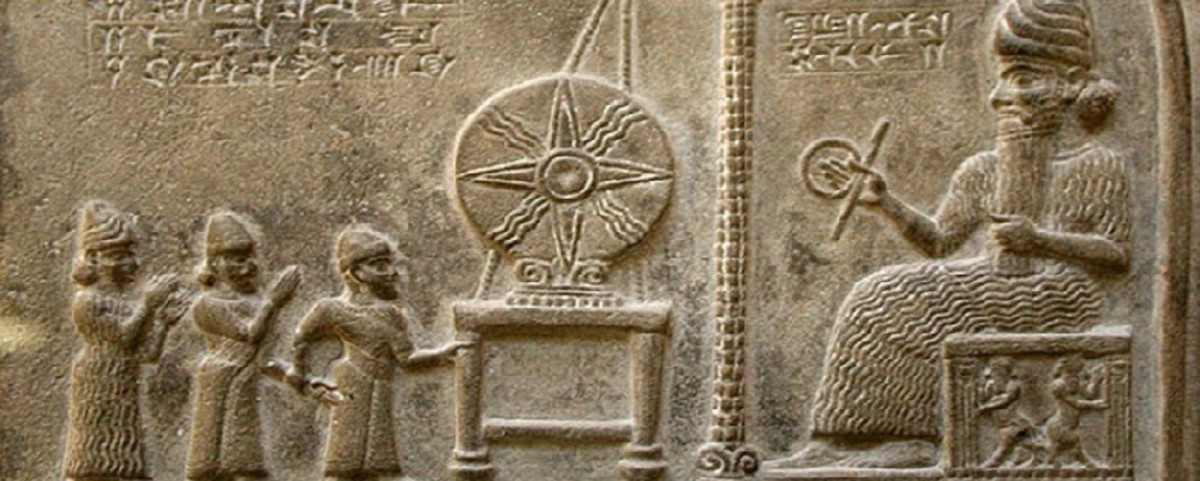
Images of Ezekiel’s wheel (Ophanim) or Elijah’s “flying chariot” also come to mind. These motifs are seen depicted not only in the ancient middle and near East, but throughout the entire ancient world. Orthostats (foundation blocks with artistic impression), stone stele, reliefs, and a plethora of artifacts all share a striking resemblance. While these artistic depictions and their character identities aren’t entirely accurate to biblical accounts, many aspects mimic and even seem to acknowledge true Divinity. 

“He bowed the heavens and came down;
thick darkness was under his feet.
He rode on a cherub and flew;
he came swiftly on the wings of the wind.” Ps. 18.9-10 

Much Better To Listen And Obey

Neal Pollard

God has a straightforward task for Saul in 1 Samuel 15. As a consequence for their opposition to Israel as they are fleeing Egypt in the battle where Aaron and Hur hold up Moses’ arm as Joshua leads the battle (Ex. 17:8-16), Amalek was devoted for destruction by God (Deut. 25:17-19)(1 Sam. 15:1-3). God is not ambiguous. He says “devote to destruction all they have” (3) and “do not spare them” whether man, woman, child, infant, or livestock (3). 

Saul is given the task of carrying out that total annihilation. He amasses a huge army of 210,000 soldiers and sets out against Amalek (4). After warning the Kenites (5-6; Num. 10:29-32) among the Amalekites to leave or die, Saul and his army thoroughly defeat this enemy (7). Up to this point, Saul’s effort has been nothing but a success!

However, Saul decides to do things the way he thinks is best. While he kills all the people as God instructs, “Saul and the people spared Agag and the best of the sheep and of the oxen and of the fattened calves and the lambs, and all that was good, and would not utterly destroy them. All that was despised and worthless they devoted to destruction” (9). God commanded Saul and he “would not” do it.

Samuel records some pretty chilling words regarding His choice of Saul. God says, “I regret that I made Saul king” (11,35). This is very similar to what God said about humanity in Noah’s day (Gen. 6:6-7). The text reveals several factors that led to God’s grief. 

  • Saul turned back from following God (11)–He followed what he wanted to do
  • Saul had not performed God’s commandments (11)–He neglected or omitted what God instructed
  • Saul blamed his followers for this sin (15,21)–He left out his part as decision-maker and pinned it on the people
  • Saul forgot his humble roots (17)–He allowed his position to go to his head
  • Saul was disobedient (19)–This was at the very core of Saul’s issues
  • Saul was greedy (19)–He pounced on the spoil
  • Saul had no fear of God (19)–He did evil in the very sight of Him
  • Saul rationalized (20-21)–He claimed to have done what God said except for the “best of the spoil” in order to sacrifice them to God; He reasoned that it was OK since his motives, he claimed, were right.
  • Saul feared the people and listened to them (24)–He got things backward!

But, that is when Samuel delivers the well-known, oft-quoted response to Saul. He tells the king, ““Has the Lord as great delight in burnt offerings and sacrifices, as in obeying the voice of the Lord? Behold, to obey is better than sacrifice, and to listen than the fat of rams. For rebellion is as the sin of divination, and presumption is as iniquity and idolatry. Because you have rejected the word of the Lord, he has also rejected you from being king” (22-23). What was going through Saul’s mind? Whatever it specifically was, he decided his way was better than the way God commanded him to go. 

God’s attitude toward such a spirit and mindset is crystal clear. God rejects it! It’s obvious that Saul knew what he was doing. His confession of sin reflects he completely understood what he had done wrong (24-25), but he still feels more concerned about his image with the people than his integrity before God (25,30). He falls at Samuel’s feet and tears the prophet’s robe, and Samuel tells him that symbolized how the kingdom has been torn away from him and his descendants (27-29). Samuel tells him he cannot and he will not keep up appearances for Saul’s sake, but he does follow Saul back to the people so that he can finish the job Saul had not done. He kills Agag (32-34). Then, he leaves Saul never to see him again (35). Samuel was far from hard-hearted, but instead grieved over how Saul had turned out.

It is dangerous for us to put question marks where God has put periods and exclamation marks. We have no right to make right what God has clearly deemed wrong, and we’re wrong to make wrong what God has not forbidden. Saul put himself in God’s place and thereby placed himself in spiritual danger. Perhaps worst of all is behaving in such a way that God regrets choosing to use us to accomplish His will because we would not trust and obey! We can always be sure that what God says is right and only His way is the way to go. In case we lose sight of that, we help ourselves by reviewing the sad case of Saul! “Behold, to obey is better than sacrifice, and to listen than the fat of rams” (22).

THE NON-LITERARY PROPHETS: GAD

Neal Pollard

There are several prophets whose writings, by the inspiration of the Holy Spirit, make up part of the Old Testament canon. We often refer to them as the Major Prophets (Isaiah-Daniel) and the Minor Prophets (Hosea-Malachi). In addition, there is a biblical sense in which the remaining Old Testament writers would be rightly called prophets (from Moses to Samuel, but also including those who lived thereafter as they wrote by inspiration). Then, there are prophets whose labors are recorded by these writing prophets. Some we know very well: Elijah, Elisha, and Micaiah, for example. But, there are others whose works either take up less space in the inspired canon or whose work is lesser known. Let us look more deeply at some of these other, more unsung heroes, starting with the prophet Gad.

His Background

Nothing is said about where Gad is from, but it’s an educated guess to say it might be the tribe of Gad or perhaps he was from the Valley of Gad (cf. 2 Sam. 24:5). However, without that fact disclosed, that’s a mere conjecture. We do not know when he began his work as prophet, but the first mention of him is during Saul’s relentless hunt for David (1 Sam. 22:5). 

His Service

He is referred to as “David’s seer,” sometimes alongside Nathan his prophet and Samuel his seer (1 Chron. 29:29; 2 Chron. 29:25). He was quite a versatile man of God, a fact succinctly and well put by J.R. Dummalow: “He became the king’s seer after David was king (2S 24:11); he rebuked David for the sin of numbering Israel; and after David’s death, he wrote a history of that monarch’s reign (1C 29:29)” (193). So, he had the courage to rebuke the king when it was warranted, though his loyalty to him seems very clear. He appears to have been God’s man most of all.

His Value

  • His work was respected. When he told David to leave the stronghold, David did it (1 Sam. 22:5). David pleaded with Gad after the king had sinned (2 Sam. 24:14). He listened to Gad’s instructions for how to show fruits of repentance (2 Sam. 24:18ff). The respect was not derived from his wealth, power, education, looks, or worldly influence. The text does not even mention them. It was the work and the way Gad conducted it. So, the respect people have for us should come from the same place it did for Gad. We shouldn’t have to command or demand it. As we follow God faithfully, others will follow us (cf. 1 Cor. 11:1). 
  • His work was God-ordained. Gad’s authority derived from its source. He spoke in the name of the Lord (1 Chron. 21:19). He spoke with a “thus says the Lord” (1 Chron. 21:11). He spoke, “just as the Lord had commanded” (2 Sam. 24:19). God’s messengers’ clout and credibility is intrinsically connected to its God-ordained nature!
  • His work was versatile. He helped to strengthen the worship of God’s people (2 Chron. 29:25). He preached (2 Sam. 24:19). He ministered (2 Sam. 24:11ff). He wrote (1 Chron. 29:29). He was multi-talented, and he used his resources to God’s glory. That’s the challenge for us today (cf. Mat. 25:14-30), to use all God gives us to promote His work.

luca-giordano-king-david-reproached-by-the-prophet-gad
Oil painting of the depiction of Gad addressing David (Luca Giordano, Italian, 1634-1705)

Misguided Anarchists

Neal Pollard

In her excellent book about the many events leading up to World War I, Barbara Tuchman, in The Proud Tower, spends a chapter talking about the anarchist movements swirling particularly around Europe and the United States. It was the inspiration for several assassinations of important political figures, including one of our presidents—William McKinley. In the wake of the industrial revolution, many immigrant, uneducated, illiterate, and otherwise disadvantaged people, worked an incredibly high number of hours each week for less than living wages. They lived in deplorable conditions and had nearly no prospects of improving their plight or the plight of their children. A growing proposal around the industrialized world was to throw off all government and institute what amounted to a global commune with a total sharing of assets. It was not Communism because it did not want any organization or officials to rule and govern. Those who truly embraced the cause put total faith in man, in every case, to be noble and devoid of base motives like greed, power, and self-interest. It was anti-religious, anti-capitalist, anti-authority of any kind. Other than inspire attacks on famous people, the anarchists never came close to materializing their desired revolution. Rationale people knew there must be order and law.

Periodically, a similar movement rears its head even within the body of Christ. Christianity, in their view, is reduced to a single, undefined maxim: “Love Jesus.” While it can seem appealing, when it is viewed uncritically, it is unsustainable and self-defeating. When Jesus was asked the greatest commandment in the Law, He replied by saying it was a total love of God. He added that the second greatest command was loving others. Yet, throughout the gospels, Jesus expressed so many other specific commands for His followers that build upon that vital foundation. The men to whom He delegated authority to reveal His will and commands (John 14:26; 16:13) revealed His expectations of His followers. Pulpits and leaderships that deemphasize, avoid, or attempt to nullify these commands may be acting from high motives and noble desires, but they are more harmful than those anarchists of over 100 years ago. They encourage more than civil disobedience. They encourage disobeying the God who will one day judge mankind. Human governments may rule from corruption, self-service, and oppressive intentions, but God’s Word never does. What God commands for us is only for our good. How should we respond? We should humbly, reverently, lovingly, and totally submit to His reign and rule in our lives. May that be our highest aim!

london_0