Who Leads The Way?

Neal Pollard

One of the most legendary fighting forces in military history is the U.S. Army Rangers, the elite fighters of that branch of the armed forces.  Their fame and lore is derived from many true stories of valor and bravery.  The modern Rangers began service in World War II, though their heritage is traced back to the early 17th Century.

In World War II, Darby’s Battalion infiltrated the German lines in Sicily and wiped out nearly all of a “German parachute regiment during close in, night, bayonet and hand-to-hand fighting” (Ranger Handbook, ii). Two other Ranger battalions were in action on D-Day, landing at Omaha Beach in Normandy, France, and engaged in bitter fighting that allowed the allies to breakthrough and drive inland from the beaches they invaded.  There, their motto was formed, that “Rangers lead the way.”  “Merrill’s Marauders,” as other Ranger units serving in the Pacific Theatre were known, were volunteers of “a high state of physical ruggedness and stamina” who were to come from jungle-trained and tested units (ibid.).

The official 75th Ranger regiment website speaks of their many attributes, like physical strength, intelligence, toughness, courage, and discipline.  They state, “Rangers are self-starters, adventurers, and hard chargers” (www.goarmy.com).  They are model soldiers who have it engrained in them to never quit.  They are soldiers of personal excellence and character, on and off duty.

While these soldiers are among the most elite to have ever fought and died for the freedoms we enjoy, there is another group of soldiers whose mission is greater, whose character must be more outstanding, and whose potential peril outweighs all others.  They are the soldiers about whom Paul speaks in Ephesians six.  They fight “against the rulers, against the powers, against the world forces of this darkness, against the spiritual forces of wickedness in the heavenly places” (6:12).  This formidable enemy is led by none other than a devil whose schemes (6:11) have eternally defeated the majority of mankind in human history to have ever faced him.  Defeating him and his forces requires divinely designed and issued armor (6:10, 13-17).  Souls are in the balance, and the Lord needs us to rescue them.  Eternity is what is at stake.  How we live and conduct ourselves in this world spells the difference in our success and failure.  Romans 12:2 urges Christians not to be conformed but be transformed.  Are we being led by the world, or are we spiritually those “who lead the way”?  The Lord needs nothing from us that exceeds this!

The Good, The Bad, & The Lucky

Tuesday’s Column: Dale Mail

Dale Pollard

In 1951, two to three miles off the coast of Point Reyes, California, a military plane went down after battling faulty electrical issues and then eventually running out of fuel. The plane made a crash landing in the ocean and to make matters a little more terrifying, it was a Great White shark haven. There was one Army service man who managed to escape the aircraft, but once in the water he had no idea where to go. It was in the early morning and the fog was too thick to see through. Knowing he had to do something, he simply chose a direction and began to swim. After a couple of miles of swimming he finally, to his relief, reached land. Later on in life he’d go on to become the star of several Hollywood movies, direct his own movies, and even star in movies that he himself directed! His name was Clint Eastwood. 

He got lucky. Occasionally, that happens in life. We flip a coin, spin a bottle, or make a random turn and it all ends up working out in the end. Accidental fortune might happen in some areas of life, but not when it comes to our spiritual lives. There won’t be anyone in heaven who says, “I have no idea how I got here. I just randomly went through life and made the right choices, I guess!”

 If we’re looking for a deeper faith, a closer walk with God, or directions along the narrow way, we’ll have to be intentional about that. 

Psalm 25:5 reminds us that not only does God guide us into all truth, but that this is a path that must be taught. 

Do Brotherhood

Neal Pollard

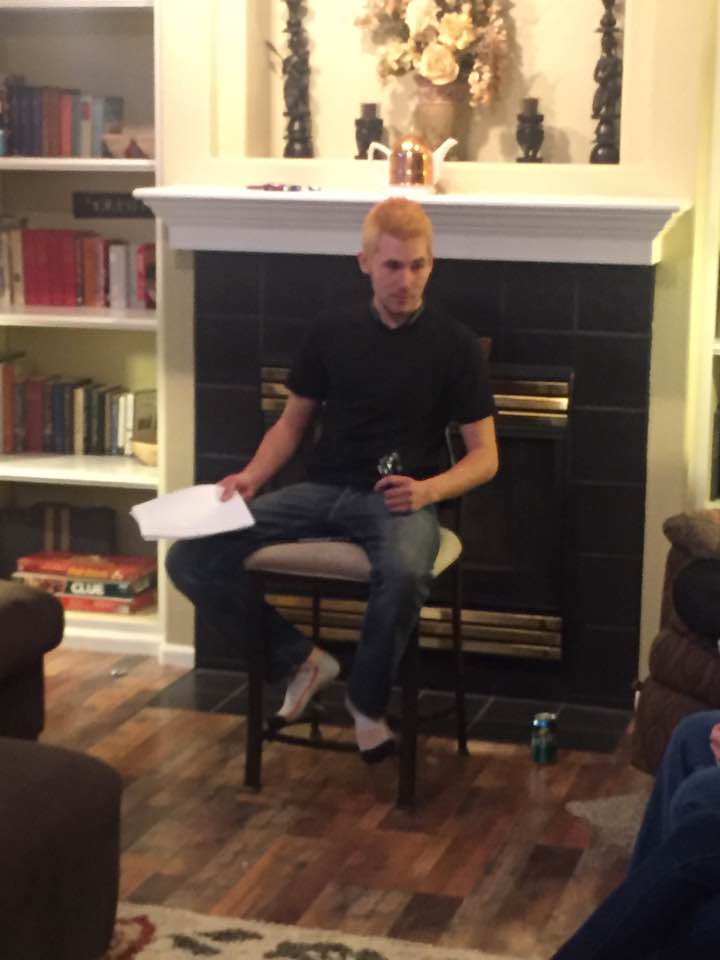
Hayden Holland, who obeyed the gospel less than three years ago, taught his first Bible class last night at Teens in the Word. It was an excellent, hour-plus long study of the parallels between serving in the military and living the Christian life. In this very practical study, Hayden mentioned the Army’s concept of brotherhood. The fraternity and bond built by basic training and the structural philosophy of the armed forces creates this sense of brotherhood among soldiers.  Without fellowship, he said, disputes will pull soldiers apart. Throughout his lesson, Hayden urged us to “do brotherhood.” Brotherhood is a noun, meaning “the feeling of kinship with and closeness to a group of people or all people” (Dictionary, version 2.2.1, 2016). Peter uses the word in 1 Peter 2:17, a word, according to BDAG, meaning, “A group of fellow-believers, a fellowship” (19; cf. 1 Pet. 5:9—“brethren”). Hayden’s exhortation to us was to do what it takes to create that feeling and fellowship.  Saying we are brethren, even acknowledging and teaching what God says is necessary to become part of that brotherhood, is insufficient of itself.  There is something to be done!

He directed us to the seven values touted by the army—“loyalty, duty, respect, honor, integrity, courage, and selfless service”—as examples of how we can “do brotherhood” in the Lord’s Army (cf. Eph. 6:10ff). Doing brotherhood means taking time to listen to and help our brothers and sisters in Christ when they are struggling. It means spending time together, engaging in each others’ lives. It means being faithful to live out what we say we believe daily, in the world and in the absence of our church family, because we love them and don’t want to let them down. It means talking out our problems and disagreements. As we work to see ourselves as a part of something bigger than just ourselves, the effect is revolutionary. Non-Christians see the bond we have with our brethren and it draws them. Jesus told His disciples that this brotherly love would be their identifying mark to a searching world (John 13:34-35).

How often it has been observed that Christianity is more than a state of being; it requires a life of doing. The brotherhood consists of all those within the body of Christ. But, that “group” has to be maintained, sustained, and retained. Such requires action! My action and your action. Let’s be sure we are “doing” brotherhood!

17862689_10212031358357411_591145317067498345_n

Giving Up Ground To the Enemy

Neal Pollard

On at least three fronts, there are major battles occurring—ISIS and the existing governments in a handful of Middle Eastern countries, Israel and the Palestinians, and Ukraine and Russian-led rebels. In each of these conflicts, both sides are trying to gain ground or at least hold onto what they already have. They are trying not only to win the actual battles they are fighting, but they also seek to win the battle of public opinion.  With the money and lives invested, neither side in any of the conflicts can bear the thought of losing.

While “our struggle is not against flesh and blood” (Eph. 6:12) and “we do not war according to the flesh” (2 Cor. 10:3), we face a deadly adversary (1 Pet. 5:8).  He is the enemy, though he has a great many who have “been held captive by him to do his will” (2 Ti. 2:26). They are fighting his battles for him of their own free will (Js. 1:13-15), and they are more than willing to engage those of us who would steadfastly resist him (1 Pet. 5:9).

In this media age, the devil’s soldiers have used means previous generations did not have at their disposal to spread his ideas across the nation and all over the globe.  But because there have been people willing to battle him, he has not gained ground all at once. The moral erosion has happened slowly over time, attitudes about foul language, alcohol, modesty, sex outside of marriage and living together, adultery, homosexuality, and much more.  Doctrinal erosion also occurs subtly and gradually, but denominationalism has given way to modernism, post-modernism, and emergent theologies.  The Lord’s church is impacted by assaults on its distinctiveness, and elderships, pulpits, classrooms, and memberships can gradually lose their militancy, courage, and resolve to stand up for God’s revealed will.  It is easy to be cowered by charges of extremism, hatred, or sanctimoniousness, especially when there are examples of such to be found.

Yet, we cannot forget that we are in a battle.  God needs us to stand in the gap and continue fighting for His truth, even in the face of opposition and resistance.  Paul reminds us that “the weapons of our warfare are not of the flesh” (2 Cor. 10:4). The weapons in our left and right hands is righteousness (2 Cor. 6:7).  We press on in spiritual armor (Rom. 13:12; Eph. 6:11ff).  When each of us as soldiers in the Lord’s Army arrive at the time when we must lay down our armor, may it be said that we gained ground and served the Lord’s cause successfully. May it never be that we gave up ground to the enemy!