Shibboleth 

Brent Pollard

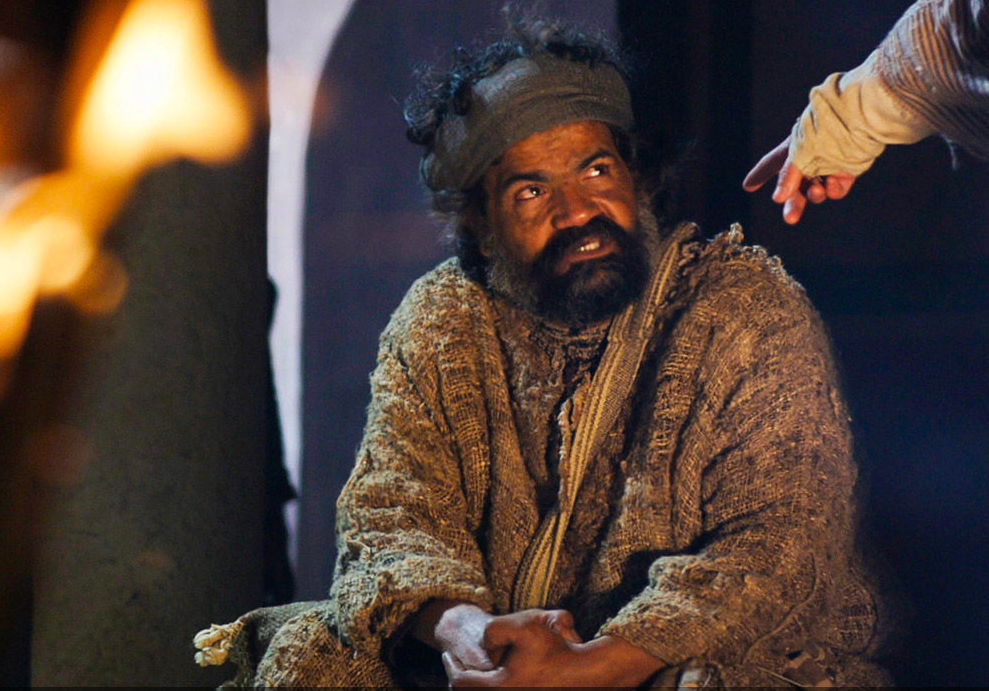
Judges 12 details a civil war between Ephraim and the Gileadites of Manasseh. God used Jephthah and the Gileadites to humble Ephraim. The haughty Ephraimites felt they could bully Jephthah and the Gileadites as they had previously bullied Gideon (Judges 8). Jephthah and his men ended up slaying 42,000 Ephraimites. One of the keys to the Gileadites’ lopsided victory was seizing the fords over the Jordan River. And when fleeing Ephraimites tried to cross, they were asked for a “password.” The password was “shibboleth.” Various commentators have offered different definitions for the word, but its meaning is not necessary to understand the text. Here is what we need to know: The Ephraimites could not pronounce the word “shibboleth,” as the Gileadites. Thus, they replied, “sibboleth.” Having been betrayed by their dialect, the Gileadites then slew the Ephraimites.  

Wordsmiths know that, beyond its Biblical source, shibboleth has come to mean any word or practice separating one group from another. Christians should have shibboleths, correct? They are called upon to transform themselves from the world rather than conform to it (Romans 12.1-2). However, while perusing several online dictionaries, I noted that they also tended to look upon a shibboleth unfavorably, calling it an “old-fashioned” or “outdated” idea still clung to by some. In the example sentences provided by those aforementioned dictionaries, shibboleths seem connected with “conservative-thinking” people. So, evidently, “progressives” must not be hampered by them. Frankly, it is hard to keep up with the self-righteousness of progressives. Their mores change so swiftly that sometimes they snare even themselves when a past tweet or video surfaces. It reminds me of the foolish man building his house upon the sand (Matthew 7.26-27).  

God is aware of the mindset that mocks established standards. Jeremiah records God’s words: “Stand by the ways and see and ask for the ancient paths, where the good way is, and walk in it; and you will find rest for your souls.” (6.16) Not unlike those living today, Jeremiah’s contemporaries replied, “We will not walk in it.” (ibid.) To borrow modern parlance, those in ancient Judah found the old paths “shibboleth.” But who gives such persons the right to esteem something as antiquated? Honestly, it seems like it is the “right” of the squeakiest wheel, those with the largest echo chamber.  Those of us with our shibboleths abandoned the arena of popular culture, education, and media. Hence, we can only blame ourselves for allowing the castigation of truth as incompatible with temporary society.    

But lest we forget, the victors from the source material had their shibboleth while the defeated had their sibboleth. As someone has said in summation of the book of Revelation, the message is that in the end, God wins. That is applicable here as well. God brings victory to those with the shibboleth, not sibboleth. No, it is not a superior concept because it is older. We can find new ways to do something that is “old.” (e.g., We may use new mediums to teach the “old Jerusalem Gospel.”) The shibboleth is what was given by God in His inspired word. Sibboleths reflect the precepts of men (cf. Matthew 15.8-9). We must not drop even one consonant sound (cf. Deuteronomy 4.2; 12.32; Proverbs 30.6; Revelation 22.18).  

When I eventually cross the Jordan River ford, I want to find life, not death. Don’t you agree? To safely cross, an obedient life is our “password.”  

Sprouting Our Wings

Dale Pollard

The kit comes with everything you need to raise your very own Sea Monkeys. I remember the very first batch of these strange creatures I grew when I was a young boy. A small package of tiny brown eggs are dumped into purified water and then after two weeks they’ve hatched into real swimming organisms. That change is fascinating and it’s almost mesmerizing to watch them all dart around inside their aquarium. In the animal world the process of metamorphosis is very common and we’re not too surprised when it happens. It’s interesting and exciting, but it’s expected. We aren’t confused when a tadpole turns into a frog or when a caterpillar turns into a butterfly, because it’s natural. 

In Romans 12:2 we read that as Christians we are to undergo a drastic spiritual transformation by the “renewal of the mind.” The Greek word used for “transformation” here is where we get the word “metamorphosis” from, and that’s very telling. The idea is that the transformation process we are to undergo is not a small change like getting a haircut or getting contacts, but a dramatic and radical change. We are to have an entirely different mind, heart, and outlook on life. We have been transformed into someone and something entirely different. In the animal world there is an essential process involved in metamorphosis. If the caterpillar never spins a cocoon, then it could never hope to sprout wings. If the caterpillar leaves the cocoon too soon then it can’t expect to be as developed and healthy as it needs to be. There is a natural time allotted for the change to occur. Christians are expected to grow but not to be completely transformed overnight; we, too, have a process. This shouldn’t be used as an excuse to not be proactive in growing our faith, but it should be a reminder that if we’re not working toward this transformation we will remain in the same state in which we are now. That is unnatural.

Why does that caterpillar slowly climb that tall tree or take the time to painstakingly wrap itself in that cocoon? Because it knows it wasn’t meant to be a caterpillar forever. The work it takes to be transformed and to sprout the wings of a great and mature faith is a difficult process, but it’s worth it. That’s what God expects from us and He has the power to help us make this amazing change. Our prayer lives and our time spent in His Word are crucial to our development. We should let the end goal be the motivation to press on and allow ourselves to be completely transformed. One day that effort will show when we see our new bodies (Philippians 3:21) and we’ve reached our final glorious destination. We will live forever with the Savior who transformed us. 

So You Have A Sinful Past? (POEM)


Neal Pollard

Moses was a murderer, Rahab was a liar,
David was an adulterer and to murder he did conspire,
Gideon and Timothy were timid, Peter a confirmed denier,
Paul wrecked havoc on the church, so full of hate and ire.

God, from time immemorial, has used the earthen vessel,
Sons of thunder or deceivers– like Jacob, who an angel did wrestle.
Just like Abraham and Isaac, very human if chosen and special
Barak, Samson, Jephthah, who with flaws their faith did nestle

From cover to cover, Scripture shows that God works through sinners
Preachers, prophets, kings and elders, saints and great soul-winners
It helps us who would serve today, to be better enders than beginners
To not let sin defeat us, to go from offenders to God defenders

Perhaps you have a sinful past or there’s guilt here in your today
A habit, sin, or weakness, crimes of deeds, thoughts, or what you say
Look back to men and women of old, they willed for they knew The Way
Conquer through Christ your old man, get busy, trust in God and obey!

Peter denying Jesus
Peter denying Christ

BEING SANCTIFIED WITHOUT BEING SHELTERED

Neal Pollard

Sanctification is one of those words used in more than one sense in the New Testament. It usually means the state of having been made holy (Rom. 6:19,22; 2 Th. 2:13; 1 Pt. 1:2), but it also is used in the sense of moral purity (see especially 1 Th. 4:2ff).  There is no doubt that God calls us to live pure, godly lives in Christ.  Because of this, we must watch the company we keep (cf. 1 Co. 15:33; 2 Co. 6:16ff).

How do we balance this need of keeping ourselves “unspotted from the world” (Js. 1:27) with the ability to reach out to those who are not followers of Christ?  David Kinnaman and Gabe Lyons, in their book UnChristian: What A New Generation Really Thinks About Christianity…And Why It Matters, discuss several factors that lead two generations—they call them “Mosaics” (born between 1984 and 2002) and “Busters” (born between 1965 and 1983)—to be more radically disconnected from and antagonistic toward “Christianity” as they perceive it.  One of the factors is their view that Christians’ lives are too sheltered for them to relate to it or find it desirable as a lifestyle choice.  We’re often thought of as living in our own world, providing too simplistic answers for our complex world, being ignorant and outdated, speaking our own, exclusive language, and our outrage and offense at being putdown and mocked by the world. I don’t know how this hits you, but perhaps it gives us an opportunity to examine ourselves.

The authors make a great point worthy of our consideration: “Christianity begins to shift its sheltered reputation when Christ followers are engaged, informed, and on the leading edge, offering a sophisticated response to the issues people face” (132).  The answer is not to replace congregational singing with rock concerts, recruit women, homosexual, or hard-edged shock-sermonizers who are foul-mouthed and irreverent to replace faithful gospel preachers, or the like. The answer is much more New Testament, more aligned with what the early church was.  The answer is “engagement.”

That means we engage people in the world.  We create opportunities or enter environments where “outsiders” (non-Christians) are to be found and we become salt and light, opening doors for the gospel through relationship-building and our genuine concern for people’s (often messy) lives.

It means we engage ourselves in “active faith.” We let faith have arms and legs. We move from being “believers” to being “doers” (Js. 1:22). We urge, encourage, and enable people to actively serve and live out faith in their daily lives.

It means we engage people like those Jesus and His disciples targeted.  That means the woman caught in adultery, Zaccheus, the lame man, Blind Bartemaeus, the 10 lepers, the Samaritan woman, and others like them.  We cannot forget what Paul said, that God has chosen the foolish, weak, base, nothing, and despised types to be His people (1 Cor. 1:27-28). The people God chose to be heirs are not the pretty, popular, influential, and wealthy (Js. 2:5).  The authors of UnChristian specify groups like “loners,” “self-injurers,” and “fatherless” people (135-137). We can add to that list, but people like these do not often top the “prospect lists” we might make.

Divine Truth must prevail and guide us in matters of salvation, our teaching, our personal morality, our worship, etc.  If it will guide us in reaching the world with the Word, we had better stop sequestering ourselves and our faith from a world in desperate need of the only message with eternal implications. Reflect on how Paul’s words apply to this, when he says, “And do not be conformed to this world, but be transformed by the renewing of your mind, so that you may prove what the will of God is, that which is good and acceptable and perfect” (Rom. 12:2). We’re not just meant to prove that to each other. God wants us proving it to those outside of Christ.

Bear Valley youth feeding the homeless in downtown Denver