The Quiet Sin That Still Shouts on Black Friday

Brent Pollard

For years, Black Friday earned its reputation not from ledgers but from battlegrounds—retail floors where human dignity took a backseat to door-buster deals. News cameras captured the spectacle: grown men and women trampling one another, wrestling over discounted electronics, shouting with voices hoarse from camping overnight in cold parking lots. The scenes were shocking precisely because they revealed something uncomfortable about ourselves.

Those chaotic stampedes have largely faded, replaced by the quieter click of online carts and the convenience of sales that stretch across entire weeks. Yet we would be naive to assume the spirit behind those frenzies has disappeared. Covetousness has not been conquered; it has merely changed costumes. It still prowls, perhaps more dangerously now because it moves in the shadows of normalcy.

Understanding Covetousness in a Consumer Culture

The Scriptures speak with clarity and force about covetousness. God inscribed it among the Ten Commandments—”You shall not covet” (Exodus 20.17)—placing it alongside murder and adultery as a fundamental breach of divine order. The apostle Paul equates it with idolatry (Colossians 3.5), and Jesus Himself warned that a person’s life does not consist in the abundance of possessions (Luke 12.15). These are not casual observations. They are urgent warnings about a sin that destroys souls.

Yet covetousness may well be the most overlooked sin among professing Christians today. We have learned to identify sins that announce themselves—drunkenness carries an odor, anger has volume, and sexual immorality brings scandal. But covetousness? It wears the mask of prudence. It masquerades as ambition, self-care, or simply “keeping up.” In a world built on consumption, covetousness looks like Tuesday afternoon.

This is precisely what makes it lethal. When sin begins to look like normal living, we cease to call it sin at all. If the enemy of our souls seeks to neutralize the church without triggering alarms, covetousness serves as his preferred weapon—quiet, respectable, and devastatingly effective.

The Warning of Jesus: “Take Heed and Beware”

In Luke 12.15, our Lord issues a double warning with deliberate urgency: “Take heed, and beware of covetousness.” Two imperatives, one breath. Why such emphasis? Because Jesus understood what we often forget—that the human heart is perpetually vulnerable to the lie that more will satisfy.

Notice that Christ does not merely say “avoid” covetousness. He says take heed, which means to pay careful, sustained attention, and beware, which calls for active vigilance. This is not passive resistance but intentional, disciplined watchfulness. The implication is sobering: covetousness will not announce itself. It will arrive disguised as legitimate need, reasonable desire, or innocent comparison.

Let us be clear: Black Friday itself is not inherently sinful. Wisdom in stewardship often means seeking good value, and thoughtful purchasing can serve both family and generosity. The issue is not the calendar date or the transaction but the condition of the heart engaging in it. When we participate in the marketplace, do we do so with contentment and purpose, or with the restless craving that can never be filled?

The frenzy that once defined Black Friday—and the subtler compulsions that still drive much of our economic behavior—expose three spiritual dangers we dare not ignore.

Three Spiritual Dangers of Covetousness

Covetousness Normalizes Discontent

God calls His children to contentment (1 Timothy 6.6-8; Hebrews 13.5). Yet covetousness whispers constantly that what we have is insufficient. It trains us to focus not on what we possess but on what we lack. This is not mere pragmatic planning for the future; it is a spiritual disease that robs us of peace and gratitude in the present.

As has been observed, the man who has God and everything else has no more than the man who has God alone. Covetousness blinds us to this truth. It convinces us that one more purchase, one more upgrade, one more experience will finally deliver the satisfaction we seek. But the nature of covetousness is that it never delivers. It only promises.

Consider how advertising works: it manufactures dissatisfaction. Before the ad, you were content. After the ad, you feel incomplete without the product. This is spiritual warfare dressed in marketing language, and it works because our hearts are already fertile ground for discontent.

Covetousness Trains Us to Measure Worth by Possessions

Jesus teaches that life does not consist in the abundance of things (Luke 12.15). Yet covetousness reverses this wisdom, teaching us to evaluate ourselves and others based on what can be seen, touched, and posted online.

Someone seeking material possessions only creates for themselves a gilded prison. When our identity becomes intertwined with our acquisitions, we trap ourselves in an exhausting cycle of comparison and competition. We measure our worth not by God’s declaration of value through Christ but by fluctuating market standards.

This is practical idolatry. The accumulation of things becomes not merely a means to life but the meaning of life itself. And when this happens, we have exchanged the Creator for created things—precisely what Paul condemns in Romans 1.25.

Covetousness Weakens Our Gratitude

Perhaps nothing reveals the corrosive effect of covetousness more clearly than its assault on thanksgiving. The covetous heart cannot truly give thanks because it is perpetually focused on what it does not yet have. Gratitude looks backward and upward, recognizing God’s provision. Covetousness looks forward and laterally, cataloging deficiencies and envying neighbors.

This is why the day after Thanksgiving can be so spiritually jarring. One day we gather to express thanks for God’s blessings; the next, we rush to acquire more as if what we have is inadequate. The irony should not escape us. Covetousness turns thanksgiving into hypocrisy.

Fighting Covetousness With Eternal Treasure

How then do we fight? Not by suppressing desire—God created us with the capacity to want, to long, to pursue. The battle against covetousness is not won by desiring less but by desiring better things.

Jesus provides the antidote in Matthew 6.19-21: “Do not lay up for yourselves treasures on earth, where moth and rust destroy and where thieves break in and steal; but lay up for yourselves treasures in heaven, where neither moth nor rust destroys and where thieves do not break in and steal. For where your treasure is, there your heart will be also.”

This is not poetry; it is economics. Jesus is telling us to invest wisely. Earth’s treasures decay, disappoint, and ultimately disintegrate. Heaven’s treasures endure. The question is not whether we will treasure something—we cannot avoid doing so—but what we will treasure and where.

God is most glorified in us when we are most satisfied in Him. Covetousness is defeated not when we grit our teeth and endure deprivation but when we discover a satisfaction so profound that lesser things lose their grip. When Christ becomes our treasure, sales and upgrades and status symbols fade into their proper insignificance.

If we covet trivialities, it is because we have not yet tasted the goodness of God. We chase shadows because we have not yet stood in the light.

Practical Steps to Guard Against Covetousness

All truth must become actionable or it remains mere information. What then shall we do?

First, practice intentional gratitude. Before making any significant purchase, pause to list what God has already provided. This simple discipline reorients the heart from scarcity to abundance.

Second, examine your motives. Ask: Am I buying this because I need it, or because I want what someone else has? Am I seeking to fill a legitimate need, or am I trying to fill a spiritual void with material things?

Third, give generously. Nothing breaks the power of covetousness faster than open-handed generosity. When we give, we declare that God—not possessions—is our source and security.

Fourth, fast from consumption. Consider seasons of deliberate simplicity. Skip sales. Avoid browsing. Create space to discover that you already have enough.

Fifth, redirect your desires. Cultivate hunger for spiritual realities—Scripture, prayer, fellowship, service. Feed your soul the bread of life so that the world’s junk food loses its appeal.

The Greatest Bargain Ever Offered

Black Friday will come and go with its sales, advertisements, and temptations. The receipts will fade, the products will break, and the cycle will repeat. But the danger of covetousness remains, not just on one day but every day we draw breath in this consumer culture.

Yet hear the good news: The greatest bargain ever offered is still available, and it requires no credit card. A life emptied of covetousness and filled with Christ is a life money cannot buy. This treasure is free to all who will receive it, paid for not by our purchasing power but by the precious blood of Jesus Christ.

God offers us satisfaction that lasts, joy that endures, and treasure that neither moth nor rust can destroy. The transaction is complete. The price is paid. The only question is whether we will stop chasing shadows long enough to embrace the substance.

May we be a people who treasure Christ above all things, who find in Him a satisfaction so complete that the world’s bargains become irrelevant. For in Him we have already received everything—and what we have cannot be improved by any sale, upgraded by any purchase, or diminished by any economy.

Where your treasure is, there your heart will be also. Choose wisely.

The Dogtrot Deathtrap

Dale Pollard

 I was given permission to search around a home that was over one hundred years old  and rumored to have treasure buried on the property. The abandoned homestead was set off the road and down in this wooded valley and after making my way down to it, I decided to take a look under it. It’s a dogtrot house, meaning there’s an opening in the middle with two doors. This style of home was commonly found in old western settlements as the opening allowed for more air flow in hot summers. On the side of the house I could see the massive stone foundation had large gaps that I was able to peer through. It was flooded and there were timbers that had caved in. I just slipped through the gap in the foundation with my metal detector which sounds easier than it was. There was sheet metal on the ground that my unit was not happy about. 

The stench of sulfur under the house was overwhelming. The water I had seen was not from past flooding. My guess is that the house was either built over a sulfur spring, or perhaps more terrifying, a sinkhole that had since opened under the foundation. My heart began to pound as I was attempting to swing the detector in search of old coins, my foot slipped and my boot sank down into the water. It was deep. I’m not sure how deep but I thought it was only a couple inches when I had originally decided to crawl under the home. Surrounded by an old stone foundation, any sound I made would have been muffled to the outside world. That could have become deadly in a blink. Had I known how treacherous the loose footing would be and how deep that hole of water was, I wouldn’t have entered. Sadly, the risk yields nothing. No relics, no coins, though I’m sure they’re under there. 

Christ does not deprive us of our treasure, but directs us in the choice of it. In Matthew 6.21 we’re reminded that what we hold most dear to us, has our heart. A treasure is an abundance of something that is, at least in our opinion, precious and valuable. God knows that earth’s treasure is not going to last so the most prudent thing to do is to load up our loot in eternity. The vanity of valuables became all too real to an aging Solomon and that’s seen throughout the inspired collection of his lived experiences that we call Ecclesiastes. What treasure is worth pursuing? Only those that are found in the kingdom. Jesus will attempt to save us the time that could so easily be wasted in searching for something we hope will satisfy us by telling us what to look for. He simply says, “..seek first the kingdom” (6.33). If you’re not seeking that, you’re looking in the wrong place.

Filling Up Your Heart 

Carl Pollard

Fort Knox is one of the most heavily guarded places on the planet. There are lookout towers at each corner of the building. Supposedly there are land mines, electric fences, and machine guns that are activated when invisible lasers are tripped. 

They use radar and satellite imaging to keep a close eye on any suspicious activity. 

At any given time there are up to 40,000 guards on standby ready to respond. 

Now, let’s say you make it past all of this, there’s still the vault itself to deal with. 

The door to the vault is made of steel and concrete, and weighs in at over 41,000 pounds. There’s not a single person that knows the combination to get in. Instead, certain staff members only know one combination each. 

Why the need for such extensive security? Because Fort Knox is home to over 4,582 tons of gold worth 6.2 billion dollars. Back in 1974 it contained 11.4 billion dollars. 

All the security makes sense; that’s a lot of money! But what if there wasn’t any gold? It would be a complete waste of time and money to build a fort like this and leave it empty. 

God has instructed Christians to guard our hearts, but the first step is to fill it with the word of God. Proverbs 4:13 says, “Keep hold of instruction; do not let go; guard her, for she is your life.” Verses 20-22 say, “My son, be attentive to my words; incline your ear to my sayings. Let them not escape from your sight; keep them within your heart. For they are life to those who find them, and healing to all their flesh.” 

Leading up to Proverbs 4:23, the instruction to us is not just to guard our hearts but to guard the godly instructions within our hearts. Not only that, but we are told that God’s instruction “is your life” and “they are life to those who find them.” A heart filled with sin and worldliness is a dead heart. There is no life flowing from it. It is only when we put Gods word in our hearts that we will have life flowing forth from it. 

Guarding our hearts, according to scripture, is the action of protecting the biblical truths and instructions that God has given us. If we aren’t guarding God’s Word in our hearts, then what are we protecting? If we fail to put Proverbs 4:23 in the context of chapter four and the rest of scripture, we will guard our hearts from receiving what we need from God. If we guard our heart before letting truth in and we don’t guard our heart to keep the truth in, we will be opening the door to sin and selfish desires. 

A Surprising Find

Thursday’s Column: Captain’s Blog

Carl Pollard

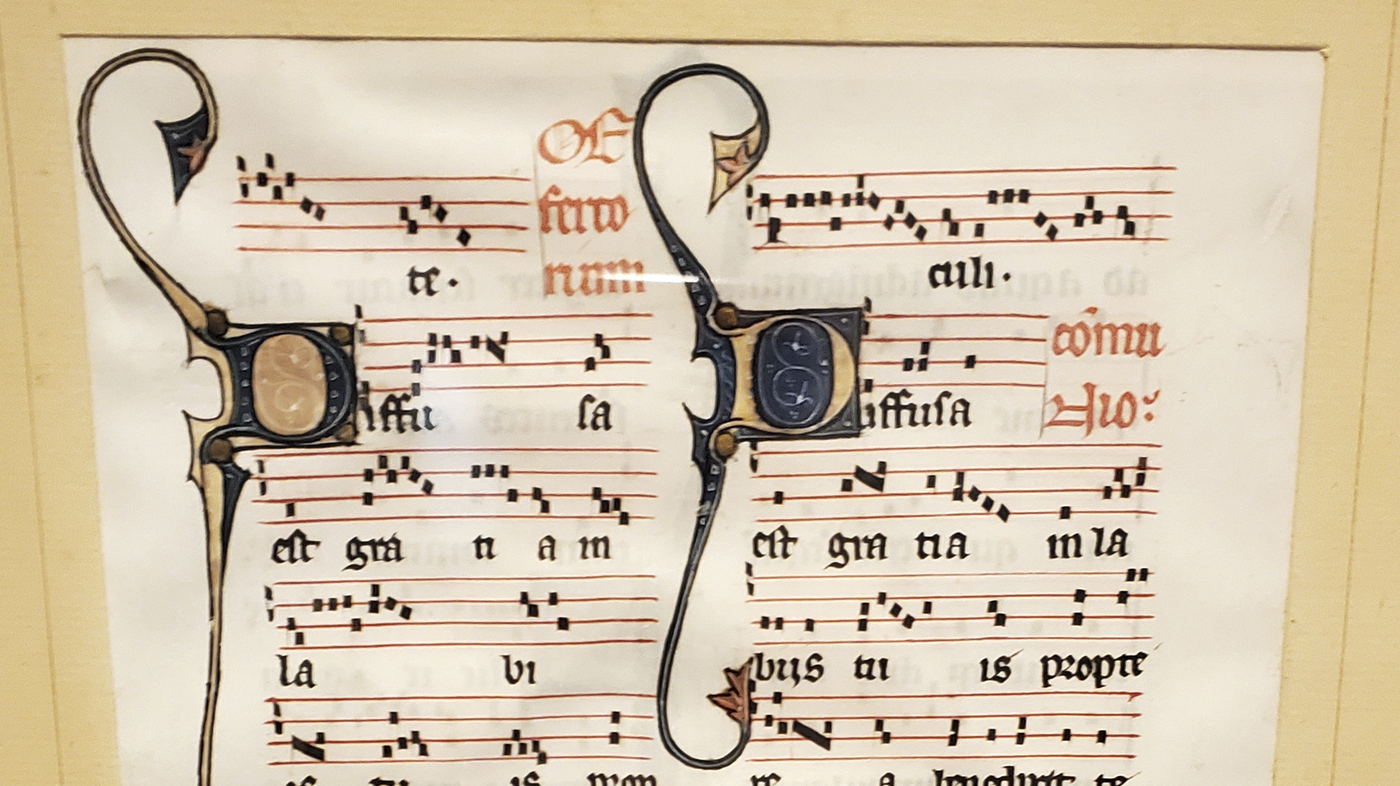
I recently read a news article about a bargain hunter that went to an estate sale in Portland, Maine, to find a KitchenAid mixer. Rather than finding his kitchen appliance, he ended up walking away with a 700 year old treasure. Will Sideri stumbled upon a framed document hanging on a wall that caught his eye. It had an elaborate script in Latin, along with musical notes and decorative gold edges. Based on what he’d seen in a manuscripts class at College, he figured that this document was from the medieval ages. And it was a bargain at $75. Academics confirmed the parchment was from The Beauvais Missal, used in the Beauvais Cathedral in France, and dated to the late 13th century. It was used about 700 years ago in Roman Catholic Church. An expert on manuscripts said the document, first reported by the Maine Monitor, could be worth as much as $10,000. Will Sideri walked away with a priceless treasure that cost him just 75 bucks.

This news story reminded me of a parable taught by Jesus in Matthew 13:44. It reads, “The kingdom of heaven is like treasure hidden in a field, which a man found and covered up. Then in his joy he goes and sells all that he has and buys that field.” In this short verse we read that: 

  • The treasure is hidden 
  • The treasure is valuable 
  • Sacrifice was needed to gain the treasure
  • The field was bought, but the treasure came free 

What did Jesus mean with this parable? You can’t find The kingdom without looking (the treasure was hidden). Seek and you will find (you’ll never find it if you aren’t looking). The kingdom of God is valuable, and sacrifice is required to obtain the kingdom. The man in this parable joyfully went and sold everything. The Kingdom is freely given. When we seek and sacrifice for Christ, he freely gives us grace, mercy, peace and salvation. 

Will we recognize the value that is found in the Kingdom of God?

Important Benefits From God’s Wisdom

Friday’s Column: Brent’s Bent

Brent Pollard

In the first chapter of Proverbs, Lady Wisdom was shouting at the crowd in the town square. From our last article, we know that she was looking for simpletons, mockers, and fools to warn about what would happen if they didn’t listen to her advice. In Proverbs 2, we meet another set of three people, but these are servants of Lady Folly who are ready to lead people down the path to eternal damnation. But first, we are told to find wisdom once more. 

Lady Wisdom is not always in plain sight. If she were, you wouldn’t have to dig sometimes to find her, just like a miner who digs precious metals and ores out of the ground. One can, thankfully, also cry for her (2.3-6; cf. James 1.5). Crying is a good way for a baby to get food (1 Peter 2.2), and it works just as well for people who are hungry and thirsty for righteousness (Matthew 5.6). God will not only feed us, but He will also tell us what to do to please Him.  

Lady Wisdom also helps people deal with their neighbors fairly and correctly (2.9). She shows us what God’s justice looks like so we can do the same thing when dealing with others. This example is critical because people don’t always see things as God does. But her advice is also helpful when dealing with risks posed by others. God’s wisdom, which Lady Wisdom represents, is great because it acts as a shield and watchman (2.7-11). 

But here is where our triplet comes in. We have a perverse guy, people who walk in the dark, and the adulteress (2.12ff). God’s wisdom is helpful because it tells us more than just what to avoid. It gives us what we need to do. So, when our triplet comes, we know how to send them away. This wisdom comes from letting God’s word into our hearts, where it guides us. As David said, “Your word I have treasured in my heart, That I may not sin against You” (Psalm 119.11 NASB1995). 

But we must do more than say no to evil. We must take charge of being good. How does that happen? When you don’t hang out with bad people, you hang out with good people instead (2.20-21). Paul told the Corinthians that the people they hung out with could change their morals (1 Corinthians 15.33). Lady Wisdom helps you tell the difference between good and bad people so you can be a good judge (Matthew 7.20). 

The end of Proverbs two is a warning. Those who aren’t looking for Lady Wisdom or calling for her will be led astray by our trio. Once a person is lost, God will take them out of His garden like he would a dead branch or tree. No one wants this to happen to them. In the meantime, let’s also remember what Jesus said about seeking, asking, and knocking:  

“Ask, and it will be given to you; seek, and you will find; knock, and it will be opened to you. For everyone who asks receives, and he who seeks finds, and to him who knocks it will be opened” (Matthew 7.7-8 NASB1995). 

What We Know About Recently Uncovered Ancient Viking Treasure

Neal Pollard

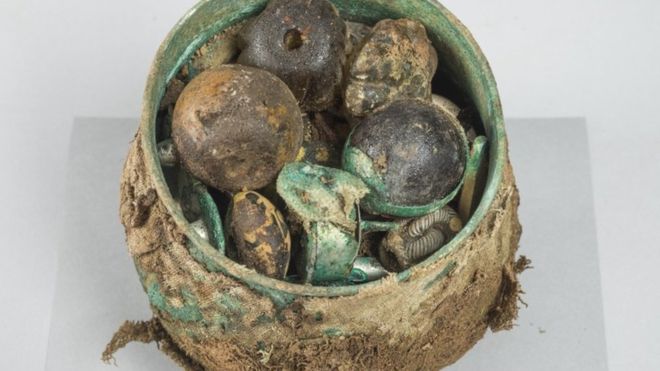
BBC reports that Historic Environment Scotland, Treasure Trove Unit, and the Queen’s and Lord Treasurer’s Remembrance’s conservation team have discovered an ancient Viking pot full of treasure, including six silver Anglo-Saxon disc brooches, a silver brooch from Ireland, Byzantine silk, a gold ingot, and gold and crystal objects wrapped in cloth bundles (read article here). The objects date from the 8th or 9th Century. The article goes on to tell us what the discover cannot tell us, at least without years of further research and theorizing. Stuart Campbell of the Treasure Trove Unit says, “”The complexity of the material in the hoard raises more questions than it answers, and like all the best archaeology, this find doesn’t give any easy answers. Questions about the motivations and cultural identity of the individuals who buried it will occupy scholars and researchers for years to come” (ibid.).

While we do not know whether the owner of this pot was a Christian or was more interested in laying up treasure in heaven, we do know that he (or she) was laying up treasure on this earth. We also know that this treasure did not continue to benefit the owner following his or her demise. The photographs released with the find also show that the objects have been worn and decayed with time.  It seems like a fitting illustration of what Jesus taught.

In the Sermon on the Mount, he wrote, “Do not store up for yourselves treasures on earth, where moth and rust destroy, and where thieves break in and steal. But store up for yourselves treasures in heaven, where neither moth nor rust destroys, and where thieves do not break in or steal; for where your treasure is, there your heart will be also” (Mat. 6:19-21).  He doesn’t condemn saving or even making money. He does continue to warn that one inevitably chooses God or money as master (Mat. 6:24). This find in Dumfries and Galloway, Scotland, reminds us of the ultimate futility in laying up treasures on the earth.  What’s held and hoarded isn’t stored in heaven, but it does reflect what’s in the heart. Later, Paul urges Timothy to teach the need to fix the hope on God rather than riches (1 Tim. 6:17).

It would be great to find out that this was the church treasury of a congregation of God’s people being taken and used to help the poor or preach the gospel or the personal portfolio of a person who put his riches to good use in the kingdom. It’s not statistically probable, but it’s possible. What I do know is that there is a Perfect, Heavenly Accountant who knows what we treasure most. May our legacy be that we “seek first the kingdom of God and His righteousness” (Mat. 6:33).

88913064_vesselwithlidremoved

HOW BAD DO YOU WANT THE TRUTH?

Neal Pollard

Do you want the truth as bad as Jiang Xulian wanted a six-karat diamond from Thailand?  The 30-year-old woman stole the jewel from a jewelry fair in Nonthaburi, swallowed it, and tried to smuggle it out of the country.  CCTV caught the heist and an X-ray in Bangkok revealed the diamond in her large intestine.  Eventually, a surgeon removed the gem, worth $392,000, and Xulian faces three years in prison (read more here).

In successive parables, Jesus compared the search and pursuit of the kingdom of heaven to treasure, the first unspecified valuables and the second pearls (Mat. 13:44-46). David calls the law of the Lord “more desirable than gold, yes, than much fine gold” (Ps. 19:10; cf. 119:72, 127). Solomon adds his inspired counsel to “buy truth, and do not sell it” (Prov. 23:23).  Repeatedly, the Bible lays out the superiority of spiritual treasure above not only physical treasure but all else (Mat. 6:19-21).

  • Some do not stand in the truth (John 8:44).
  • Some question even the existence of truth (John 18:38).
  • Some suppress the truth in unrighteousness (Rom. 1:18).
  • Some exchange the truth for a lie (Rom. 1:25).
  • Some do not obey the truth (Rom. 2:8).
  • Some are not straightforward about the truth (Gal. 2:14).
  • Some do not receive the love of the truth so as to be saved (2 Th. 2:10).
  • Some do not believe the truth (2 Th. 2:12).
  • Some are self-deprived of the truth (1 Tim. 6:5).
  • Some have gone astray from the truth (2 Tim. 2:18).
  • Some are always learning but never able to come to the knowledge of the truth (2 Tim. 3:7).
  • Some oppose the truth (2 Tim. 3:8).
  • Some turn their ears away from the truth (2 Tim. 4:4; Ti. 1:14).
  • Some lie against the truth (Jas. 3:14).
  • Some stray from the truth (Jas. 5:19).
  • Some malign the truth (2 Pet. 2:2).
  • Some do not practice the truth (1 Jn. 1:6).
  • Some do not have the truth in them (1 Jn. 1:8; 2:4; etc.).

The point of Scripture is that these are people who not only do not want the truth but are trying to avoid it.  They lack sufficient hunger and desire for the will of God or the rule of God in their lives. It is not something they treasure.

What about us?  Do we want God’s truth so badly that we are willing to sacrifice, pursue, and strive to obtain it? Its value is without comparison! Its reward is beyond comprehension. Let’s encourage each other to be truth-lovers, willing to pay whatever price is necessary to have it.

Are There Diamonds In Antarctica?

Neal Pollard

With the recent discovery of kimberlite on the east coast of Antarctica around Mount Meredith in the Prince Charles Mountains, there is considerable talk that much more may lay beneath the ice and cold at the south pole.  Kimberlite is a type of rock known to contain diamonds, named for Kimberly, South Africa, which lays not far to the north.  It is a rare rock, and the discovery of it in Kimberly led to a 19th-century diamond rush.

Despite the promise and prospect of diamonds in Antarctica, there will not likely be an onslaught of prospectors there.  There is the forbidding cold, isolation, and winter darkness, the meticulous restrictions forged by environmentalists, and how difficult it is to travel there.  For now, it is an interesting discovery.  Whether or not there will be diamond mining there in the future, time will tell (Alister Doyle, Reuters, 12/18/13).

Is it possible that an even bigger treasure is buried, not beneath ice or international treaties, but rather mounds of fear, indifference, and the like?  Paul says “we have this treasure in earthen vessels” (2 Co. 4:7).  The treasure is the message of salvation through Christ (cf. 2 Co. 4:2-6) and we are the earthen vessels.  God gets this treasure to the world through us.  But, far too many of us are burying this treasure like one man did in the parable of the talents (Mat. 25:25).  In a similar parable in Luke, a man hides his mina in a handkerchief (19:20).  In both parables, the application is the same.  God does not want us to keep this treasure hidden and inaccessible.

The soul-saving message of grace should not be buried.  We should not keep it in isolation, be cold or forbidding in any way.  God wants every person to have access to this treasure (1 Ti. 2:4), and He is counting on us to share it!