What Standard Are We Following?

Gary Pollard

My truck overheated today. A couple of hours and $100 later, it was back on the road. Whoever worked on it last had put the thermostat in backwards, and had failed to bleed the system after a coolant flush. 

Dad pointed out at lunch that we use objective standards for everything. How I feel about the orientation of a thermostat — or whether I believe its orientations makes a difference — is irrelevant. The engine will overheat if it’s not correctly installed, because that’s how it works. 

We have standards in almost every field we rely on. We don’t want bankers changing their standards on us while handling our assets. We don’t want automotive or aircraft manufacturers going solely by what feels right to them. We don’t want surgeons to just wing it while we’re under the knife. 

Standards keep chaos at bay, and allow for reliable, consistent, effective results. On what basis would we throw standards away in the field of morality? If everything else in life requires some kind of standard to make it functional (ie. not chaotic), why wouldn’t the same apply to ethics and morality? 

There is mostly order, not mostly chaos. Good standards bring order, no standards have only ever produced chaos. When postmodern or any other progressive ideals attack your faith, find out what their standards are. There most likely are none, or they are arbitrary and reliably chaotic.  

How we feel about most things could not matter less. Our feelings do not magically bend reality! Always ask, “By what standard do we believe this to be true/false?” If that standard is subjective, it’s probably safe to throw it away. 

What Is Truth?

Gary Pollard

Introductory Explanation:

[This is an excerpt from some research I’m doing on first principles. A dangerous, neatly-organized method of destroying faith has developed in recent years, and I’m trying to wrap my tiny brain around it. The conclusion I’ve come to is that addressing each and every issue would take years, but that each one could be satisfied with a return to first principles. This section addresses the notion that truth is fluid and subject to the influence of time, language, and culture, and that no reliable, universal constants exist.] 

In Platonic thought, there is a concept known as Forms. These are things that exist outside of our physical perception but are universally accepted as Real. For example, no one has ever seen a “perfect” circle or a perfectly straight line. But we all recognize a circle or a straight line when we see one. 

There are universal constants. These are easily observed in the growth spirals of a Nautilus shell, which expresses mathematical constants like Fibonacci Numbers or Φ. We use these (and countless other reliable constants) every day to properly orient ourselves in our environment. Everything must have some kind of reference point to give it definition and meaning. Every zero has a one as its counterpart. Night has day. Life has death. Love has hate. Violence has peace. Happiness has grief. Sickness has health. 

If meaning were not fixed in language and narrative, how could civilization flourish? How would we, on an individual level, communicate with each other? How would such a thing as definable culture — which is in part the natural outgrowth of a collection of common narratives expressed as stories — even exist? What would be the purpose of linguistics? How is it that we are able to communicate with people who speak another language if the words of their language do not correspond in an adequately analogous fashion to the words of our own language? It would not be possible if meaning could not be fixed in language. 

So, some kind of objective, universal standard must exist, because order exists. This order keeps chaos at bay, as much as we are able to in this world. Chaos — like warfare, crime, civil unrest, disease — certainly exists, but we use objective standards to bring order from this chaos. These standards place boundaries around chaos, defines the undefined, and creates a narrative of propriety that allows billions of people with differing immediate contexts to somewhat peacefully coexist on the same planet. There is war and there always has been — but we are still here. Every functional civilization has laws that keep chaos at bay, which are nearly universally followed, and the breach of which introduces a chaos that is usually self-corrected by its culture or legal system. 

This is the primary first principle issue which we should adopt — there are universal constants that remain unchanged by time, language, or culture. The question every human must answer for themselves is, “Which system is most effective at keeping chaos in check?”

MODESTY AND THE MEDIA SEXUALIZATION OF OUR GIRLS

Monday’s Column: Neal At The Cross

16174665_10154303308455922_2453812807432667966_n

Neal Pollard

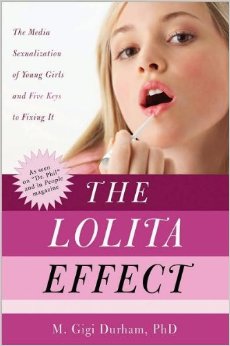
In 2008, M. Gigi Durham wrote a blunt book entitled: The Lolita Effect: the Media Sexualization Of Young Girls And What We Can Do About It. Durham is not at all writing from a Christian worldview, being a militant, secular feminist instead. In the book, she writes about several myths created by the media and the culture.

  • The “if you’ve got it, flaunt it” myth: Fashion magazines and media urge girls to dress in a way that’s “hot” and as such sets up the danger girls will attract harmful sexual attention.
  • The “anatomy of a sex goddess” myth: The runway model or the Barbie doll is projected as the ideal body, but both are unnatural.  They are genetic anomalies.
  • The “pretty babies” myth: “Ideal sexiness is about being young—very young it seems.”
  • The “what boys like” myth: “The ideal spectator is said to be male and the image of the woman is designed to flatter him.”

Durham is definitely on to something, even if it serves her own and different agenda. She is not alone in the secular world, worrying about the unhealthy consequences of the sexualization of our girls, even at the youngest of ages (Read more here).

Christian families, who believe and follow the Bible, already had these warnings in place. Consistently, God calls women (and girls) who profess godliness to reflect that by how they project themselves (cf. 1 Tim. 2:9-10; 1 Pet. 3:3-4).  Many preachers and Bible class teachers through the years have taken great pains to try and define and describe modesty, but what we have observed above would have been indisputably immodest in most people’s eyes in the world just a generation or so ago.

Too many parents, including Christian parents, have been swayed by the world’s fashion standards.  Even girls being raised in a Christian home have at times been encouraged and allowed to dress in ways that can easily produce lust. Jesus says that those who lust after a woman are committing adultery with her in their hearts (Mat. 5:28).  Men, young and old, have a responsibility to combat lust in their hearts, but Christian love would seem to dictate that women, young and old, would make that as easy as possible for them.

Fashions that are marketed as hot, sexy and daring, that reveal the body in a sexual way, are immodest!  The world, even without the Word, sees and understands that. We dare not rationalize it!  The world sexualizes everything from Cheetos to plant food and everything in between.  God commands purity of His people, but His Word must inform our standard of purity rather than what we think is pure.  Proverbs 30:11-13 says, “There is a kind of man who curses his father and does not bless his mother.  There is a kind who is pure in his own eyes, yet is not washed from his filthiness. There is a kind—oh how lofty are his eyes! And his eyelids are raised in arrogance.”

It’s important for us to ask, “What kind am I?”  Fashion choices and body obsession that say “if you’ve got it flaunt it” must be honestly examined and carefully avoided. God bless our homes which thoughtfully consider and decide with hearts set to honor Him.