
Wednesday’s Column: Third’s Words

A prominent religious group is pretty well-known for their use of archaic pronouns in prayer. When asked about it, their official response is (paraphrased), “It’s more reverent and respectful,” (ldsliving.com). They believe that prayer is something that requires a special vocabulary, one that demonstrates a deeper respect for God.
We do it, too, and for the same reasons they cite. I would like to offer some points to consider:
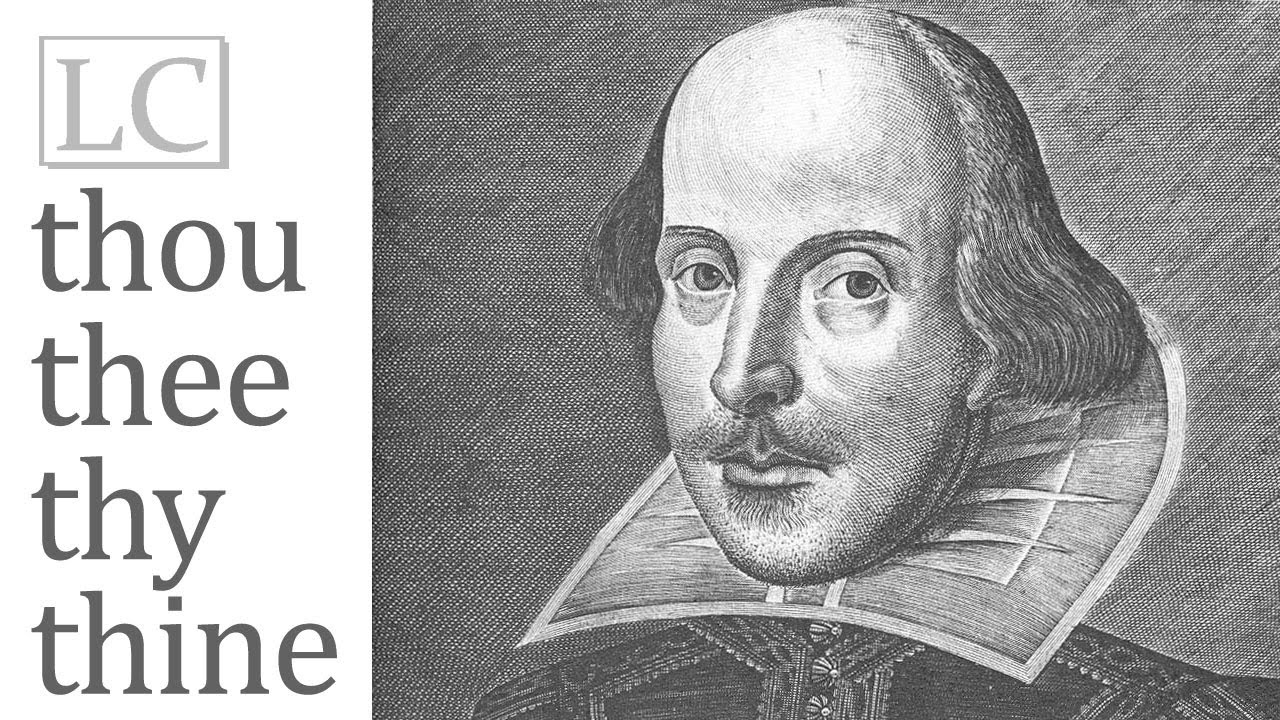
1. Early Modern English does not demonstrate a greater level of respect. Why not use Middle English? Why not use Greek or Hebrew or Latin or Aramaic? From a purely linguistic standpoint, thee/thou/thine are not more formal in this century, and haven’t been for roughly three centuries (Yaswen, University of Toronto). Reverence comes from the heart. It is not something that can be invoked with a special vocabulary.
2. It can be detrimental to evanglism. God expects us to emulate our culture as long as it doesn’t violate his law (I Cor 9.19-27). Many non-religious people, when talking about religious things, will switch to archaic, exaggerated English to highlight the oddness of religious people. An example in mainstream culture is the show Supernatural. One of the main characters reads something with archaic wording to another main character. When asked about it, his response was, “…that’s how God talks” (S8, E19). If our goal is to reach the lost, we should try to avoid potential obstacles (that aren’t related to doctrinal issues). When we invite them to worship, hearing, “Well-pleasing in thy sight,” or, “This, thy table,” or, “We thank thee, father,” etc. may reinforce Christianity’s irrelevance/social incompatibility in their minds.
3. Biblical prayers do not teach a pattern of special language at all. Jesus’ example prayer was very simple (Matthew 6). Paul’s prayers did not differ from his conversational language (Eph 1.18; 3.14ff; Rom 1.8-10; 15.30-33; I Cor 1.4ff; II Cor 1.3ff; 9.12ff; Col 4.2ff; I Thess 3.9ff; 5.23f; II Tim 1.16ff; Philemon 4ff). No New Testament example suggests that using anything other than conversational language is superior. What does matter is our spiritual state when we pray (Jn 9.31; I Pt 3.7; I Tim 2.8).
To be very clear, this is not a salvation issue at all. This is not even an indictment those who use Early Modern English pronouns in prayer. I strongly believe that Christians who pray or direct worship using old English have pure motives and are simply doing what they think most honors God! Hopefully this will serve as encouragement to evaluate our approach to prayer and worship so we can most effectively lead people to God.
“To the Jews I became like a Jew so that I could help save them…to those who don’t practice the Law I became like someone who doesn’t practice the Law to help save them (though I am still ruled by Christ’s law). To those who are weak, I became weak so that I could help save them. I did this so that I could save people in any way possible. I do all this to make the Good News known. I do this so I can share in the blessings of the Good News” (I Cor 9.20-23).

 The Preacher Pollard Blog