I Timothy three deals with the qualifications of Christian men who want to be elders.
1 — Wanting to be an elder is a good thing.
2 — An elder must have a squeaky clean reputation, both inside and out of the church. He also has to be faithful to his wife. A man who isn’t faithful to his wife certainly can’t be faithful to the bride of Christ.
3 — An elder can’t be alcoholic or violent; he should be known for being gentle and peaceful. He also can’t be materialistic. Since elders who preach, teach, and work hard deserve to be paid (5.17-18), this shouldn’t be a weakness for them.
4-5 — Are repeats of verse 2, but expands this to an elder’s family. If he neglects his family’s spiritual health, he’ll neglect the church’s spiritual health.
6 — An elder can’t be a new Christian.
7 — An elder has to have the respect of people who aren’t in the church.
Verses 8-13 are the qualifications for deacons. They’re nearly identical to elders, and the faithful-to-their-wives issue is repeated here. This section has been a source of controversy for years, but it’s explained very clearly in 3.11-12: they must be faithful to their wives, and their wives must also have the respect of other people. It also applies to widows in 5.9 — they have to have been faithful to their husbands (and meet some other qualifications) to be financially supported by their church family.
Around our house, my wife has pictures with different sayings, like – “In this kitchen we lick the spoon”, “Blessed”, “Gather”, and “Give Thanks”. As much as I make fun of these light-hearted sayings, one of them caught my attention this week. It says:
“In this house we – say please and thank you, never give up, love one another, show respect, think good thoughts, say I’m sorry, give second chances, sing out loud, try to do better, give hugs, are a family.”
I couldn’t help but think about how this not only applies to my personal family, but to my church family as well. Obviously we could take each one of these phrases and spend time comparing them to our church family, but I want to spend time on just a few.
#1: Love one another and show respect.
John 13:34-35 says, “A new commandment I give to you, that you love one another: just as I have loved you, you are also to love one another. By this all people will know that you are my disciples, if you have love for one another.”
Loving one another is a command from God and acts as a type of evangelism to the world. We should love in this family.
#2: Say I’m sorry and give second chances.
In Luke 15:20-24, we read about this happening in between the prodigal son and his father. In verse 21 it says, “And the son said to him, ‘Father, I have sinned against heaven and before you. I am no longer worthy to be called your son.’”
Not only did the father forgive his son, but he gave him a second chance. Verse 24 says, “For this my son was dead, and now is alive again; he was lost, and is found. And they began to celebrate.”
The church family should be one where we feel comfortable enough to say we are sorry and humble enough to give second chances.
#3: We are a family.
Acts 2:44-47 gives a perfect picture of what the New Testament church family should look like. These new Christians were helping each other, spending time together, and praising God with one another. They were a family, just like we are today.
If you aren’t apart of this family yet, now is the time!
“My son, hear the instruction of your father, And do not forsake the law of your mother; For they will be a graceful ornament on your head, And chains about your neck.”
Hear: More than just the process of hearing words spoken. The idea is to do something with the valuable information given, i.e., follow it.
Instruction of your father: Just like ignoring proper building instructions/blueprints leads to an unstable house, ignoring wise instruction from the older and more experienced will lead to an unstable life.
And do not forsake the law of your mother: Solomon emphasizes the importance of God’s design for the family. It’s the duty of both father and mother to provide wisdom (James 3.17) in the form of instruction (Prov. 4.13, 8.33, 10.8, 10.17, 12.1, 19.20).
For they will be a graceful ornament on your head and chains about your neck: Training a child to fear the Lord begins with teaching children to have a proper fear (respect/reverence) of their parents and their seniors. For additional motivation, Solomon includes the maturing child’s reward. The ornaments and chains represent an upgrade in social status. As a general rule, godly teaching in the home, when combined with a willingness to hear— leads to financial and social success.
“Honor your father and your mother, that your days may be prolonged in the land which the LORD your God gives you.”
– Ex. 20:12
“Children, obey your parents in the Lord, for this is right. Honor your father and mother, that it may be well with you and you will live long on the earth.”
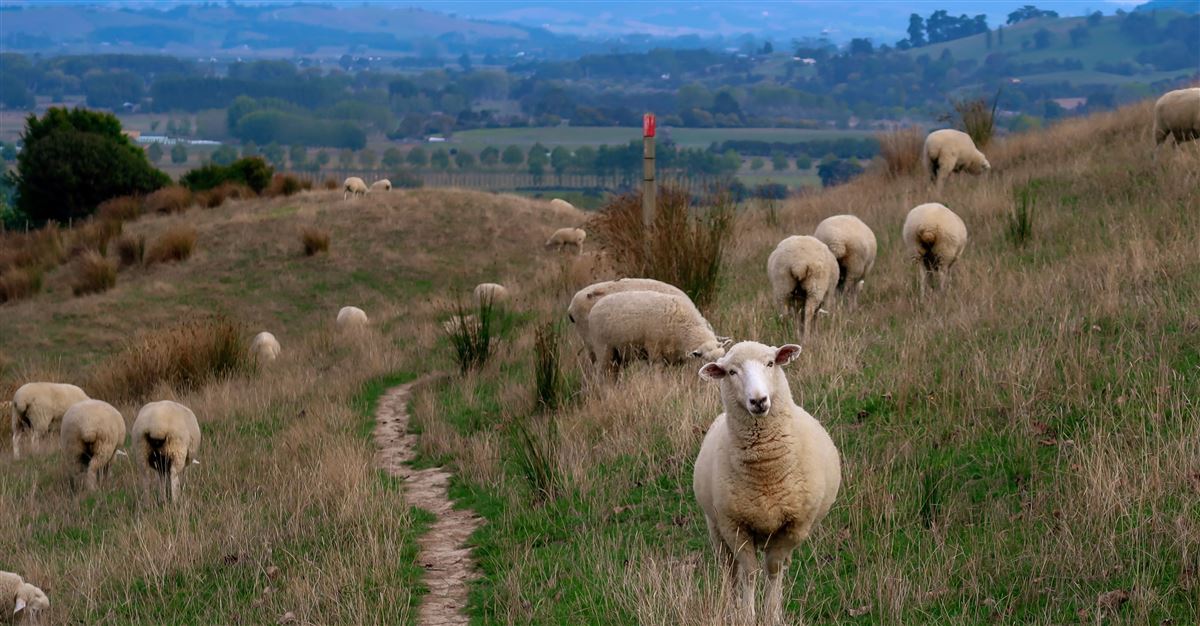
Though scripture doesn’t say, you can be sure David’s sheep had no idea how lucky they were to have a shepherd like him. They were just sheep after all. How could they fully appreciate the extent that David went to in order to keep them safe? Before this begins to sound ridiculous, let’s remember that at least two of David’s sheep were carried off in the jaws of a lion and a bear. When the terrified bleating of an unfortunate sheep is heard by the shepherd, he sprints after the wild animal knowing all the while— it’s just a sheep. It’s just one sheep! Nevertheless, David strikes the predator and saves the sheep (1 Sam. 17.34-35).
What made David a good shepherd? It certainly wasn’t his stature. The average male of his day stood around five feet tall. He was also the youngest of his family and often unappreciated (1 Sam. 16.11,17.29,33). It was David’s heart and not his height that made him exceptional. He was a natural shepherd of sheep, and of people.
David is sent by his father, Jesse, to deliver bread for his brothers who are among Saul’s army. When he arrives on scene everyone, including the king, is afraid and unwilling to take a stand against the arrogant Goliath. But before the giant warrior from Gath meets the shepherd boy from Bethlehem, a few more giants will be faced.
The first giant was the giant of degradation.
David’s own brother, Eliab, would greet him with two belittling questions that would make a lesser man feel sheepish, but not this shepherd. Eliab asks, “why have you come down here? And who is watching the few sheep?” David’s brother doesn’t think he belongs among warriors and that he is only capable of handling a small number of dumb animals.
The second giant was that of accusation.
In the same breath Eliab would accuse and insult David three different times. He claims, “I know how conceited you are and how wicked your heart is. You’ve only come to watch the battle.” How wrong he was and how dare he insult such a godly man! It’s interesting to note that David had an answer to each of these questions and accusations, but never attempts to defend himself. His father sent him, that’s why he was there. He was there to deliver nourishment for this dear brother who had, no doubt, worked up an appetite doing absolutely nothing. No retaliation or snarky remark would escape from the shepherd’s mouth because nothing like that was in his heart (Matt. 12.34).
The third giant David would conquer would be the towering giant of indignity.
He didn’t shame his brother and he didn’t let his brothers shaming keep him from shining.
Shepherds put up with a lot, don’t they? Good shepherds really put up with a lot. Faithful god-fearing elders within the Lord’s church all over the world are faced with giants more often than they should. Sometimes the giants they face are their own sheep. How easy it is to make confident accusations against them, to question their intentions, hearts, and capabilities. That unpaid servant of God is more often than not the first one to come running when the bleating of a wayward member is heard. When we find ourselves in the clutches of our various trials, they attempt to pry us out. At times they earnestly pray over and take on burdens that aren’t theirs to carry. Faithful elders will find themselves in a position where they could make the sheep feel shame, but choose to save the feelings of others because that’s what a good shepherd does. It’s not their height, it’s their heart. The sheep need to love their shepherds, because the shepherds love their sheep!






 The Preacher Pollard Blog