Living In The Moment

Brent Pollard

The passage Ecclesiastes 9.1–10 explores themes consistent with the philosophies of “seize the day” or “you only live once.” It reflects a perspective emphasizing the value of living in the present moment and making the most of life. In this passage, Solomon highlights the unpredictable nature of life and the certainty of death, encouraging people to enjoy life’s pleasures fully.

Key Verses Explored

Here’s a brief breakdown of some key verses:

Verses 2–3: Solomon observes that everyone faces the same ultimate fate of death, whether righteous or wicked, good or bad. This observation could lead to a view that suggests nothing has inherent significance.

Verses 5–6: He highlights that the living is aware of their mortality, unlike the deceased, who are unaware and do not receive further rewards, signaling the end of earthly experiences after death.

Verses 7–10: Solomon advises relishing in eating, drinking, and enjoying life’s pleasures with one’s spouse, whom he views as the ultimate reward for toiling under the sun during life’s fleeting days. He says there is no work or planning in the realm of the dead, where everyone is going, so one should do whatever comes to mind with all their might.

On the surface, this advice to enjoy life contradicts the larger Judeo-Christian ethical framework, which emphasizes restraint, morality, and the consequences of one’s actions.

Harmonizing Perspectives

However, we can consider several points to harmonize these views:

Context of Vanity: Ecclesiastes frequently mentions “vanity” (Hebel, meaning “vapor” or “breath”), suggesting that much of human endeavor is fleeting and ultimately futile in the face of death. This definition doesn’t imply life lacks meaning; instead, it indicates that life’s true worth goes beyond material accomplishments or pleasures.

Moral Framework: The call to enjoy life in Ecclesiastes isn’t a call to hedonism or moral recklessness. It’s based on living a life in reverence to God, as indicated in Ecclesiastes 12.13–14, where the advice is to respect God and follow His teachings. Enjoyment in life is seen as a gift from God, not as an end in itself.

Balance: Solomon’s advice recognizes the balance between enjoying life and maintaining moral and spiritual discipline. It proposes appreciating life’s gifts while avoiding becoming overly attached or compromising one’s ethical values.

Ecclesiastes 9.1–10 underscores the importance of enjoying life responsibly while recognizing one’s accountability to God. It promotes a balanced and moderate approach to seizing the day, respecting human existence’s ethical and spiritual aspects while embracing life’s lawful pleasures as gifts from God.

“Solomon Says…”

Dale Pollard

In each chapter of Ecclesiastes one can expect at least two kinds of verses. While one verse might make you wonder what Solomon is talking about at first, another will hit you in a profound way. It turns out that humans really haven’t changed that much over the years. Our current experiences and lives share many similarities— that fact is elucidated further in the Bible’s Old Testament books of wisdom. 

Here are twelve truths found in Ecclesiastes book. 

1.4-8 

Some things never change. 

2.24-25 

Pleasing God will bring you more joy than chasing the things that bring momentary pleasure. 

3.9-11 

God has given us a desire to know the future. Because of this, we understand that while we don’t know the future we’re better off serving a God who does. 

4.9-12

It’s by design that we can accomplish more with help. God can do more with us when we are team players. 

5.19-20 

There’s joy to be found in hard work and that too is by design. Satisfaction is a natural feeling produced by the work of our hands. 

6.6

If you don’t find joy in life then life will drag on and feel slower. 

7.13-15 

When life is good, enjoy it. When life is hard— remember that it’s like that for everybody. Ups and downs are part of living. 

8.16-18 

This world is not just but don’t let that fool you into thinking that God isn’t just. We can’t understand how God’s mind operates in every circumstance. 

9.11-12 

Not everything happens for a reason! God might have a hand in any event, Satan may have something to do with it— or maybe it’s all a coincidence.

10.8-15 

Every job has its dangers but wisdom can make a job run smoother just as a sharp knife can make a task easier. 

11.7-8

It’s good to be alive! It’s nice to see the light from the sun. You should enjoy the life you live with eternity on your mind. 

12.11 

You can put your trust in any wisdom and teaching that comes from God. 

Each chapter of Ecclesiastes is filled with wisdom and life changing words. What Solomon says is not only wise, but the Spirit led and guided each word. That alone is reason enough to immerse ourselves in the greatest book ever written. 

2 Peter (Part 3)

Wednesday’s Column: Third’s Words

Gary Pollard

I’ll be repeating the book of II Peter in present-day terminology. It’s not a true translation of the book, as I am not qualified to do so. It will be based on an exegetical study of the book and will lean heavily on the SBL and UBS Greek New Testaments, as well as comparisons with other translations (ESV, NASB, NIV, ERV, NLT). My goal is to reflect the text accurately, and to highlight the intent of the author using concepts and vocabulary in common use today. 

This is not an essentially literal translation, and should be read as something of a commentary.

The Liars

There have always been liars who claim to be speaking on God’s behalf, so you’ll encounter them, too. They’ll secretly teach things that will wreck your faith. They’ll even disown the one who saved them, but they’ll be destroyed soon. They don’t have moral restraint, so a lot of people will follow them. This will make the world think of us as hypocrites. They don’t even have your best interests in mind! They’ll take advantage of you and lie to you. They will face inescapable consequences. God didn’t even give angels a free pass when they sinned. He sent them to a dark place where they’ll stay until judgment. God didn’t give the ancient world a free pass. In fact, only Noah and his family survived the flood that destroyed everything else. God didn’t give Sodom and Gomorrah a free pass, either. He completely destroyed them as a warning to everyone who might be interested in living like they did. Lot was a good man and he was extremely upset by how everyone in his city was living. God rescued him from the bad conditions he had to live through, so he knows how to rescue us from temptation. He also knows how to take care of godless people who do whatever they want and reject authority. They’ll have to answer to him. These people don’t even get nervous when they insult angelic beings! Even though angels are considerably more powerful than humans, they wouldn’t ask God to condemn those liars with that kind of animosity! These liars are just like dumb animals. They act on every impulse, they insult in ignorance, and they will be destroyed. They’ll gratify their passions in broad daylight. They drag you down with them, and they’re excited about that! They’re a cancer. They are obsessed with gratifying their impulses and they won’t stop. They drag down people who aren’t strong in their faith. They only care about themselves and they’ve abandoned the right path. Remember Balaam? He enjoyed living by his own rules, too. He was reprimanded by a donkey, of all things, so that he’d get a grip on himself. Donkeys aren’t even supposed to talk, but God did whatever it took to make sure he’d get back under control. These liars are like wells that don’t have water. They’re like rain that gets blown around by the wind. They’re destined to spend forever in the darkest place. They lie with confidence and bring down people who have a hard enough time staying pure as it is. They promise freedom, even though they’re slaves. After all, we’re slaves to whatever controls us. This is really bad for them. If you learn about God and escape the influence of worldliness, but fall right back into your old ways, you’re much worse off. It’s better to not know God at all than to know him and then reject him. You’ve heard the old saying, “Dogs eat their own puke,” and, “Pigs get right back into the mud after they’ve had a bath.” That’s what these liars have done. 

Where Vanity Leads

Friday’s Column: Brent’s Bent

Brent Pollard

When my father and I travel in the car together, we listen to one of three SiriusXM stations: 40s Junction, Bluegrass Junction, or Willie’s Roadhouse. Today, we tuned the radio dial to Willie’s Roadhouse as I made my way to a gastroenterology appointment. On the way home, Tom T. Hall’s tune, “Faster Horses (The Cowboy and the Poet),” played as we started back up the mountain towards Blairsville, Georgia. I have heard this song by “The Storyteller” before. “Faster Horses” never fails to remind me of King Solomon. 

Within Hall’s song, a poet asks a cowboy for words of inspiration. Instead, the cowboy tells the poet that the best things in life are “faster horses, younger women, older whiskey, and more money.”1 The poet balks at the idea, but the cowboy calls him a liar. The poet desires to punch the cowboy, but the cowboy draws a weapon, and the poet backs off. Eventually, the poet drops his philosophical pursuits, settling on the “wisdom” imparted to him. He supposes the “wisdom” sage enough to share with his offspring. I would venture to guess that alcohol, at least, figured prominently in Hall’s life as he also wrote the songs “I Like Beer” and “Old Dogs, Children and Watermelon Wine.” Even my favorite of Tom T. Hall’s discography, “I Love,” contained the lyrics “bourbon in a glass and grass.” (As an aside, there was a radio edit that substituted those lines with “old TV shows and snow.”)  

In Ecclesiastes 2.1-3,8, Solomon admits, “I said to myself, ‘Come now, I will test you with pleasure. So enjoy yourself.’ And behold, it too was futility. I said of laughter, ‘It is madness,’ and of pleasure, ‘What does it accomplish?’ I explored with my mind how to stimulate my body with wine while my mind was guiding me wisely, and how to take hold of folly, until I could see what good there is for the sons of men to do under heaven the few years of their lives…Also, I collected for myself silver and gold and the treasure of kings and provinces. I provided for myself male and female singers and the pleasures of men—many concubines” (all ref. NASB1995 unless otherwise indicated).  

Yes, Solomon said it was futility (vanity—KJV and ESV). Solomon tried the cowboy’s life and found it wanting. It may well be that the late Tom T. Hall found out the same thing. On August 20, 2021, Tom T. Hall took his life. He was 85 years old.2 Though I do not wish to debate the wisdom of Chilon of Sparta, who in circa 600 BC was the first recorded speaker of the aphorism, “Do not speak ill of the dead,”3 I will add that many suicides stem from a sense of hopelessness. Depression is typically the common factor among those choosing to end their life. If this was Hall’s motivation, and only God knows, we note how the vanity of “faster horses, younger women, older whiskey, and more money” can create a downward spiral. 

Vanity is an unhealthy type of narcissism. One is preoccupied with best satiating his desires, as Solomon well documented. In Ecclesiastes 6.7, Solomon says of his pursuits, “All a man’s labor is for his mouth and yet the appetite is not satisfied.” Thus, Solomon assures us that he found his pursuits futile despite trying everything he could. So why didn’t Solomon’s dissatisfaction cause him to lose hope or become depressed? Because he still had enough wisdom to draw the proper conclusion: “The conclusion, when all has been heard, is: fear God and keep His commandments, because this applies to every person. For God will bring every act to judgment, everything which is hidden, whether it is good or evil.” (Ecclesiastes 12.13-14). 

If we are to develop the mind of Christ (Philippians 2.3-8), our focus must be outward. Rather than following one’s vanity to inevitable destruction, one must look out for the interests of others (Philippians 2.4). Therefore, whether said initially by Benjamin Franklin, John Ruskin, or Henry Emerson Fosdick, we note the truth in the expression, “A man wrapped up in himself makes a very small bundle.” Embiggen yourself by obeying the law of Christ (cf. Galatians 6.2,10). Don’t follow vanity where it leads.    

Sources Cited 

1  “Tom T. Hall – Faster Horses Lyrics.” AZLyrics.com, AZLyrics.com, www.azlyrics.com/lyrics/tomthall/fasterhorses.html.  

2   Leimkuehler, Matthew, and Cole Villena. “Country Music’ Storyteller’ Tom T. Hall Died by Suicide, Medical Examiner Says.” USA Today, Gannett Satellite Information Network, 6 Jan. 2022, www.usatoday.com/story/entertainment/music/2022/01/06/tom-t-hall-died-suicide-medical-examiner-autopsy/9120690002/

3 “De Mortuis Nil Nisi Bonum.” The Free Dictionary, Farlex, encyclopedia.thefreedictionary.com/De+Mortuis+Nil+Nisi+Bonum

Courtesy: Max pixel

The Gripsholm Terror

Tuesday’s Column: Dale Mail

dalejanelle2021

Dale Pollard

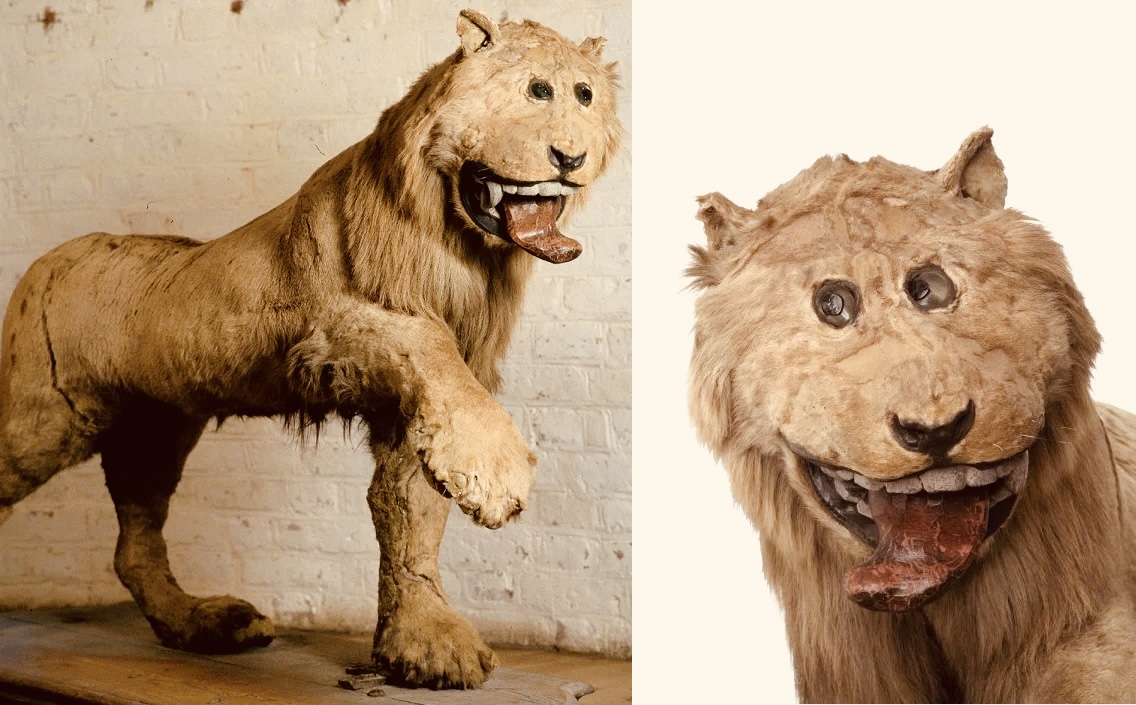
The Gripsholm Castle, in Sweden, is home to the world’s oldest portrait gallery. This might be of interest to some art enthusiasts, but there’s something else in this castle you’d never forget seeing. Inside of a glass box in Gripsholm’s upper armory, there is an 18th century stuffed lion. This lion, nicknamed “Leo,” is a beast that tends to provoke a wide arrange of emotions from it’s viewers. It has a disfigured face and human like teeth with an oversized (fake) tongue hanging out of it’s mouth. The history of the lion is also somewhat of a mystery. However, there’s a particular legend about this taxidermy terror that the writer finds hilarious. In 1731 the king of Sweden was given an incredible gift. He was once the proud owner of a handsome lion and he loved this beast. Unfortunately, it died at a young age and the king’s heart was broken. He sent the lion’s pelt and bones to a taxidermist to have it stuffed so that it’s memory would be kept “alive.” There was only one problem. The taxidermist had no idea what a lion actually looked like because he had never seen one before. This being the days before the internet, he was forced to try his very best. The finished product remains part atrocity and part masterpiece to this day.

 In 1 Peter 5.8 we are warned about our adversary, the Devil, and that he is currently stalking the earth looking for his next potential prey. The sad truth is the fact that many in this world aren’t sure what this lion looks like. The Devil can disguise himself in the form of sinful pleasures and promises and as a result he has become the, “King of this world” (John 12.31). The Scriptures and the king of Sweden can both agree that things will get ugly if we aren’t sure what a lion looks like.