
God’s “Seal Training”

Jon Paschal

During the mask era, while I was playing on social media, I found this inspirational speech made by Navy Seal Admiral William H. McRaven during the 2014 University of Texas in Austin commencement.

Most of you are aware that the Navy Seals make up the tip of the spear for our military. Although I do not have the distinction of having trained with them, I have known a few and I can tell you they are some of the most tested, battle hardened, and confident men you will ever encounter.

Wouldn’t it be great to have similar confidence, spiritual fortitude, and faith like a seal has? I believe this is the faith described by Jesus in Matthew 17:20 and displayed by Peter as he steps from a boat of full of scared men out on to the waves of the lake in a storm expecting walk on water to his Lord.

I highly recommend you listen to the admiral’s speech. His 10 key points are very similar to a lot of Bible lessons.

1. Start off by making your bed. This may sound a little silly, but the premise is that if you complete something simple it can build a level of confidence. This confidence carries with you through the day as you attempt to overcome harder tasks. -This is a lot like little prayers before you start on a difficult task. Just like Nehemiah asking for direction, protection, and strength, I guarantee a short plea to God will be way easier to accomplish than anything else you do. And the knowledge that you have requested the assistance from God, the one entity that can make you overcome all obstacles is quite comforting. His will might not be for you to succeed every time, but by asking you have a better opportunity than not asking and it will bring you closer to the Lord.

2. Find someone to help you paddle – This is a lot like Hebrews 10:24-25: “Let us consider how to stir up one another to love and good works”.

3. Measure a person by the size of the heart, not the size of their flippers – This is a lot like Matthew 7:15-20 where Jesus says to measure a person by their fruits.

4. Get over being a sugar cookie and keep moving forward. When the admiral failed in BUD/S training, he ended up wet and covered with sand or, as he referred to, as a sugar cookie. -Basically, sometimes no matter how hard you try you still fail. And even though you fail we must be like Paul in Philippians 3:13-14 “forgetting what lies behind” and “press on toward the goal”.

5. Don’t be afraid of the circuses. Circuses are the extra work that the would-be seals must do when they fail a test to build strength. – And like in James 1:2-4 these extra trials produce steadfastness and make you complete.

6. Sometimes you have to slide down an obstacle headfirst – basically you must use your personal skills to do things more efficiently. In Matthew 25:14-32 the 5 and 2 talent men illustrate this point.

7. Don’t back down from the sharks – This story exemplifies overcoming fear like Deuteronomy 31:6: “Be strong and courageous… for it is the Lord your God who goes with you.” Or Isaiah 41:1-20, which says, “Fear not, I am the one who helps you”

8. You must be your very best in the darkest moment- This lesson is similar to what Paul provides to Timothy in 1 Timothy 6:11-16 “Fight the good fight of the faith”

9. Start singing when you’re up to your neck in mud- Singing can help lighten a mood and strengthen your resolve. I believe this is why Psalm 96 teaches us to sing to Lord, daily.

10. Don’t ever, ever ring the bell. – Never give up. Look at the stories of Job, the apostles, and Jesus. All went through great adversity and never stopped praising God.

Although most of us will never be a navy seal, we can take the admiral’s stories along with what the Bible has taught us to do our part in changing the world and make us better Christians.

Four Waves On The Sea Of Life

Monday’s Column: Neal At The Cross

Neal Pollard

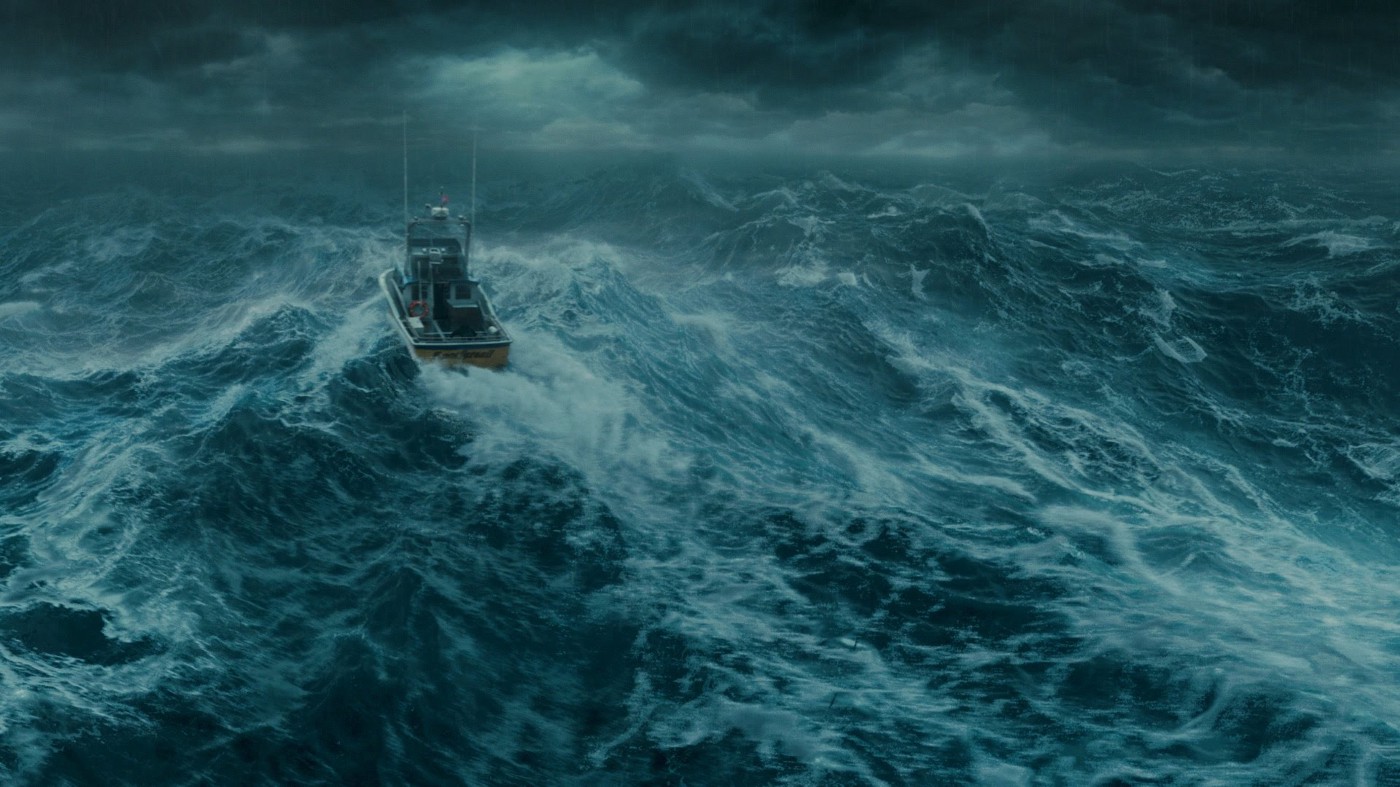
For whatever reason, I have been fascinated with stories of maritime disaster. I have read about the Titanic, but have even read more closely about the Lusitania, the Edmund Fitzgerald, the HMS Hood (for more, click here), and more. Perhaps few things could conjure up more fear than the thought of being thrust into a cold, deep ocean with no way to stay afloat, subject to attack and almost certain drowning. Poets have drawn upon such imagery, but so do the psalm writers. Read Psalm 42:7 or Psalm 69:2, 14-15 or Psalm 88:7. It is also the way Psalm 130 begins.

It seems to me that the writer is depicting the rolling waves we encounter in life, the ups and downs and the good and bad. How will I respond when I am in the storm, whether a literal storm, a storm others bring upon me or a storm I bring upon myself? What will I do when the winds have subsided and the storm has passed? Let’s look at this psalm as depicting four successive waves. 

APPREHENSION: Our Cries And Supplications (1-2)

(Wave One)

We find the writer in a watery valley, looking up at a high, but descending, wave. It causes him to cry out and voice his pleas and supplications. The crisis may be financial, medical, familial, personal, or spiritual. It may seem like the world is crashing in on top of you. Do you sink in waves of worry, fear, and doubt? Or do you cry out to God for help? The writer sets an example for us, when we feel like we will be buried by trouble!

TRANSGRESSION: Our Iniquities And Unforgiven Sins (3-4)

(Wave Two)

Though the writer moves away from the metaphor, the idea continues. When you wade in the ocean and reach a shelf, you can no longer put your feet on the bottom. You can sink or swim, but you cannot stand. Verse three asks, “If You, Lord, should mark iniquities, O Lord, who could stand?” The question is rhetorical, but a lifesaver is thrown! “But there is forgiveness with You, that You may be feared.” Perhaps better imagery is to see the Omnipotent Hand of God reaching into the deep, grabbing our outstretched, up- stretched hand! Perhaps self-inflicted trouble, our sins, cause us to sink deeper than any other trouble. 

EXPECTATION: Our Waiting And Hoping (5-7a)

(Wave Three)

Perhaps we could envision this as one floating to the top or having their head come up out of the water. The writer uses two significant, connected words–“wait” and “hope.” Help is coming! Just wait. Hope. You’re trusting, praying, studying, serving, and enduring. Maybe you feel like you’re holding onto a splintered plank that’s separating in the aftermath of your shipwreck, but you hear the sound of the rescue vessel humming on the waters. You know Who is at the helm, so you hang on!

REALIZATION: Our Mercy And Redemption (7-8)

(Wave Four)

I don’t know about you, but I don’t think I could be coaxed off a massive barge onto a rickety rowboat. But, most of us would make the exchange in the opposite scenario. Yet, the world clings to the leaky carrier of lostness when the ship of salvation is within reach. The writer calls heaven’s help “lovingkindness” and “abundant redemption.” This is the way I want to view the tumultuous waves of this world, from the safety of God’s saving grace. Resting in His everlasting arms, I can experience confidence and assurance at life’s worst while keeping my focus on Him at life’s best! 

You are probably facing, enduring, or looking back at one of those first three waves right now. We sometimes singing, “Jesus, Savior, pilot me over life’s tempestuous sea; Unknown waves before me roll, hiding rock and treacherous shoal, chart and compass came from Thee, Jesus, Savior, pilot me.” We are echoing the sentiments of the psalmist in Psalm 130. Wherever you are in life, be sure you are letting Him lift and lead you! It’s the only way to reach eternal safety (John 14:6)!