A Surprising Find

Thursday’s Column: Captain’s Blog

Carl Pollard

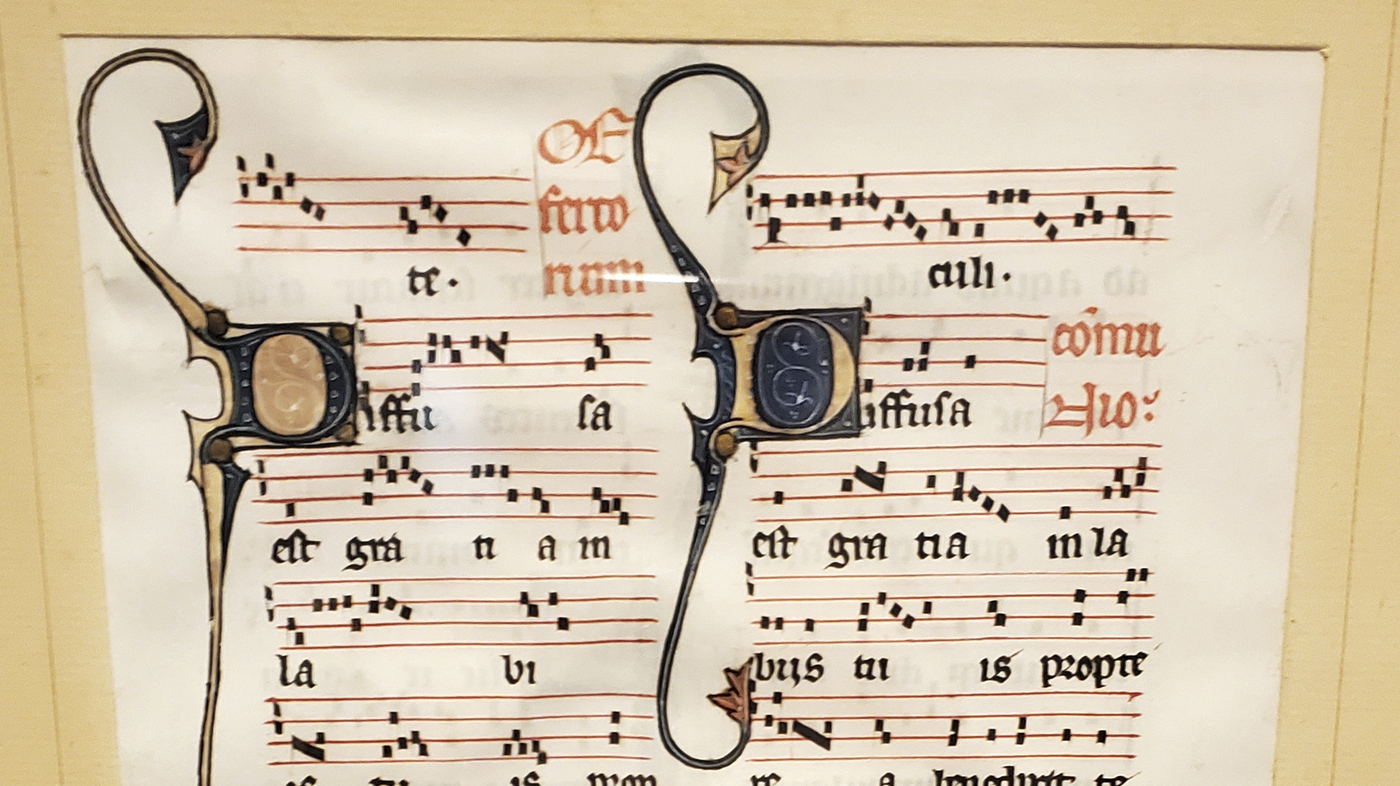
I recently read a news article about a bargain hunter that went to an estate sale in Portland, Maine, to find a KitchenAid mixer. Rather than finding his kitchen appliance, he ended up walking away with a 700 year old treasure. Will Sideri stumbled upon a framed document hanging on a wall that caught his eye. It had an elaborate script in Latin, along with musical notes and decorative gold edges. Based on what he’d seen in a manuscripts class at College, he figured that this document was from the medieval ages. And it was a bargain at $75. Academics confirmed the parchment was from The Beauvais Missal, used in the Beauvais Cathedral in France, and dated to the late 13th century. It was used about 700 years ago in Roman Catholic Church. An expert on manuscripts said the document, first reported by the Maine Monitor, could be worth as much as $10,000. Will Sideri walked away with a priceless treasure that cost him just 75 bucks.

This news story reminded me of a parable taught by Jesus in Matthew 13:44. It reads, “The kingdom of heaven is like treasure hidden in a field, which a man found and covered up. Then in his joy he goes and sells all that he has and buys that field.” In this short verse we read that: 

  • The treasure is hidden 
  • The treasure is valuable 
  • Sacrifice was needed to gain the treasure
  • The field was bought, but the treasure came free 

What did Jesus mean with this parable? You can’t find The kingdom without looking (the treasure was hidden). Seek and you will find (you’ll never find it if you aren’t looking). The kingdom of God is valuable, and sacrifice is required to obtain the kingdom. The man in this parable joyfully went and sold everything. The Kingdom is freely given. When we seek and sacrifice for Christ, he freely gives us grace, mercy, peace and salvation. 

Will we recognize the value that is found in the Kingdom of God?
The Truth Is Out There

Wednesday’s Column: Third’s Words


Gary Pollard

I believe that God exists. I believe that He communicated with His creation by direct contact, messengers, and a series of ancient texts. I believe that He wants His human creation to be with Him after they die. I believe that He expects those who claim to be His to act within the guidelines He set in those ancient texts. I believe that there is life after death and that where we go depends on whether or not we follow this God.

Why do I believe this, though? What reason do I have to believe in something I cannot experience with my senses? I was not there thousands of years ago when the prophets and Hebrews talked to God. I was not there when God came here to teach. I was not there when the authors of the original texts delivered their writings to the early church. The ancient texts translated into English sometimes do not effectively communicate the emotion of the words and concepts in the original language. So why do I believe these things? Why do you believe these things?

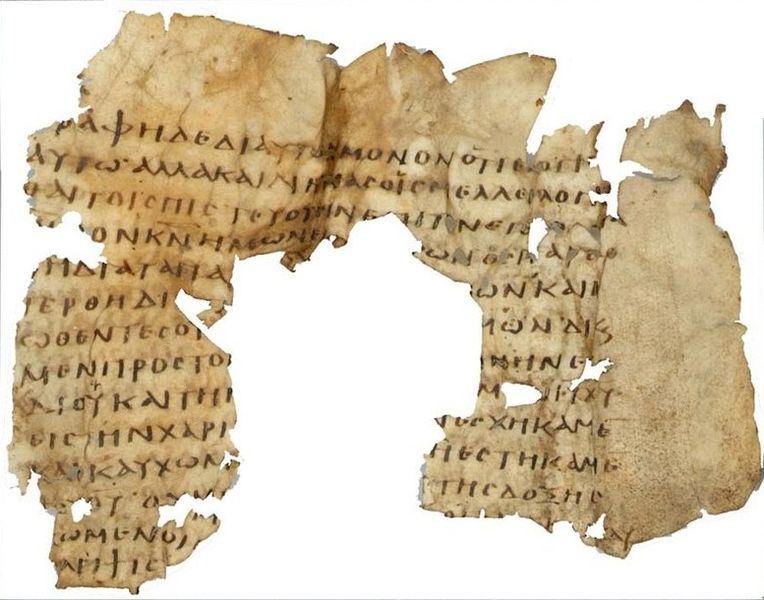
Think about this carefully. From Genesis to Revelation the message is clear: God wants His people to exist with Him after time is destroyed. This message was communicated to an impossible variety of people, sometimes separated by hundreds of years, thousands of miles, culture, kingdom, race, and language. There are tens of thousands of manuscripts of these ancient texts in many, many different languages. There are some 25,000 New Testament manuscripts or fragments that are separated by about a thousand years, at least 8 different languages, thousands of miles of geography, and many different cultures. Yet, they are at least 95% accurate to each other. The remaining 5% do not contain a single contradiction; rather, they are spelling errors, slips of the pen, writing on the wrong line, or minor variances (“God said” vs. “He said” or “and” vs. “but”).

Of the rich libraries we have of ancient literature, none can hold even the dimmest candle to the profound accuracy and unity of the scriptures. They could not have been produced by man alone. There had to be Someone not confined by time supervising each person as they wrote. Keep in mind, these ancient cultures did not have the advantage of modern communication. They were almost totally isolated from each other and would have known little of the others’ existence, much less what they experienced or wrote from God. Our Bible has supernatural origins and its contents reveal the nature of our Creator. What I believe comes from this book because I know it is God’s message to mankind. I encourage those who have not already done so to do an in-depth study of the origin of scripture. It is one of the most faith-building studies anyone could undertake. When you know with certainty that what you are reading contains the actual thoughts and desires of God, it bolsters your faith in ways I could not begin to adequately describe.

WHY DO YOU BELIEVE?

Wednesday’s Column: Third’s Words

10423661_10207901451272315_9069631728203375436_n

Gary Pollard III

I believe that God exists. I believe that He communicated with His creation by direct contact, messengers, and a series of ancient texts. I believe that He wants His human creation to be with Him after they die. I believe that He expects those who claim to be His to act within the guidelines He set in those ancient texts. I believe that there is life after death and that where we go depends on whether or not we follow this God.

Why do I believe this, though? What reason do I have to believe in something I cannot experience with my senses? I was not there thousands of years ago when the prophets and Hebrews talked to God. I was not there when God came among men and taught. I was not there when the Spirit-inspired authors of the original texts delivered their writings to the early church. The ancient texts translated into English sometimes do not effectively communicate the emotion of the words and concepts in the original language. So why do I believe these things? Why do you believe these things?

Think about this carefully.  From Genesis to Revelation the message is clear; God wants His people to exist with Him after time is destroyed. This message was communicated to an impossible variety of people, sometimes separated by hundreds of years, thousands of miles, culture, kingdom, race, and language. There are tens of thousands of manuscripts of these ancient texts in many, many different languages. There are some 25,000 New Testament manuscripts or fragments that are separated by about a thousand years, at least 8 different languages, hundreds (if not thousands) of miles of geography, and many different cultures. Yet, they are at least 95% accurate to each other. The remaining 5% do not contain a single contradiction; rather, they are spelling errors, slips of the pen, writing on the wrong line, or minor variances (“God said” vs. “He said” or “and” vs. “but”).

Of the rich libraries we have of ancient literature, none can hold even the dimmest candle to the profound accuracy and unity of the scriptures. They could not have been produced by man alone. There had to be Someone not confined by time supervising each person as they wrote. Keep in mind, these ancient cultures did not have the advantage of modern communication. They were almost totally isolated from each other and would have known little of the others’ existence, much less what they experienced or wrote from God. Our Bible has supernatural origins and its contents reveal the nature of our Creator. What I believe comes from this book because I know it is God’s message to mankind. I encourage those who have not already done so to do an in-depth study of the origin of scripture. It is one of the most faith-building studies anyone could undertake. When you know with certainty that what you are reading contains the actual thoughts and desires of God, it bolsters your faith in ways I could not begin to adequately describe.

764px-uncial_0220_rom-4.23-5.3
Uncial 220 (fragment of Romans 4:23-5:3)