
LONGEST SPEECH, SHORTEST TERM

Neal Pollard

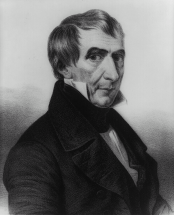
The shortest inaugural address was George Washington’s second, in 1793, and it was comprised of 193 words! William Henry Harrison, though raised a cultured, educated man, campaigned on a folksy ticket symbolized by the log cabin. To set a different, more cultured tone for his presidency, Harrison decided to give a lengthy, erudite speech on a bitterly cold, early March day in 1841. He spoke for nearly two hours, doing so without benefit of a topcoat or hat. Historians are generally agreed that Harrison’s motivation was to show himself not be a country bumpkin or simpleton. While it is unclear if his exposure led to the pneumonia that killed him exactly a month later, it still boils down to a lot of talk and very little execution.

How often do we, as congregations, spend a seemingly endless amount of time outlining, discussing, and rehashing grand plans? Goals and planning are vital to a church’s existence, but so often much talk produces little action. In any congregation’s mind, they are going to be a fast-growing, active, moving, and shaking bunch. Yet, so few churches are that. We spend our time laying out the plan and give ourselves so little time to do it.

We do that in our individual lives, too. We make big plans for tomorrow (cf. Jas. 4:13-15). Like the poet expressed it, “He was going to be all that man should be…tomorrow; no one would be kinder or braver than he…tomorrow.” Yet, the poet depicts the dreamer as one who died today while hoping for tomorrow. Are we making grand, long-winded speeches about all we are going to do? Are we spending such time outlining it that we have so little time left to execute it?

Think of all you know about William Henry Harrison compared to George Washington. Both were thinkers and planners, but oh the difference in how we remember each of the. Think, then do!
Addicted To The Taste

Neal Pollard

On a slightly different life’s path, Kathy could easily be a world-famous, wealthy celebrity on Food Network.  Her culinary skills and creativity in the kitchen has yielded some incredible dishes that would cave the iron-willed. Incredibly, she has learned through the years to make things that are good for you not simply palatable but tasty!

In 1 Peter 2, Peter urges Christians, facing an ultimate inheritance from a God who wanted them though impeded by persecution by a world who did not want them, “Therefore, laying aside all malice, all deceit, hypocrisy, envy, and all evil speaking, as newborn babes, desire the pure milk of the word, that you may grow thereby, if indeed you have tasted that the Lord is gracious” (1-3).

Peter urges them to purge from their spiritual diet those dangerous additives of attitudes in verse one.  They are more than malnourishing; they are poisonous!  Instead, he calls for them to hanker for the pure milk of God’s Word.  What would heighten their craving was having tasted the Lord’s graciousness.

May I suggest that this is a cyclical process.  In other words, we must be willing to begin feeding on the word.  For most, this is an acquired taste.  But from the first serving, the reader gets a taste of God’s good food.  It nourishes and satisfies.  It illuminates the soul.  It is practical in daily application.  It helps forge a closeness with God.  It gives strength in a difficult world.  The blessings of Scripture are multifarious, endless, and inexhaustible. The very experience of all of this by the consumer drives him or her right back into the Word for more!

Are you addicted to the sweet savor of Scripture?  If you are not partaking, you are starving your soul!  Those hunger pangs you feel cannot be satisfied by adulterated alternatives. Let us say with the ancient patriarch Job, “I have not departed from the commandment of His lips; I have treasured the words of His mouth more than my necessary food” (23:12).