Endurance

Carl Pollard

“But above all, my brethren, do not swear, either by heaven or by earth or with any other oath; but your yes is to be yes, and your no, no, so that you may not fall under judgment” (James 5:12).

Keeping this verse in the context of what James has been talking about in chapter 5, 

If you agree to work for the rich, and then don’t, you have stopped being righteous. The rich have been dishonest (see the beginning of chapter 5). They are not letting their “yes be yes.” It would be tempting as a poor person who was being taken advantage of to make the same decision. 

Often when we are tempted to compromise our character we do it for someone else. These Christians who were being mistreated most likely had families, a spouse and children who needed to eat. Can’t we compromise to help our family? If our integrity goes out the window in suffering, what does that say about our faith in God? Do we truly believe that He will reward the upright? But it’s easy to see how tempting it would be to stoop to their employer’s level. 

If they are dishonest, why should we be any different? 

This is how the world thinks. Someone cuts you off in traffic you need to get even. 

Your spouse insults you, you give one right back. It is human nature to try and repay evil for evil. 

Verse 12 says, “do not swear either by heaven or by earth or with any other oath.” 

Matthew 5:34-36, Jesus in His sermon on the mount says, “But I say to you, Do not take an oath at all, either by heaven, for it is the throne of God, or by the earth, for it is his footstool, or by Jerusalem, for it is the city of the great King. And do not take an oath by your head, for you cannot make one hair white or black.” 

To understand this section we need to recognize that the Jews had “Lesser” and “Greater” oaths. It was their way of making a commitment while leaving a way out if you needed one. If you swore by Jerusalem you were basically saying yes, but there’s a 40 percent chance I mean “no.” Jesus tells the Jews that no matter what kind of oath you make, God will hold you accountable. There is no greater or lesser oath. There is only yes or no. Applying this to James five, and these christians are being told to just wait on God. 

He will make it right in the end. The dishonest employers will be dealt with; just hold on and stay faithful. 

It won’t end well for these rich men. So don’t do something you will later regret because the Judge is near. God didn’t save Lazarus from his poverty on earth. The reward came after his life was over. We need to realize that James is not saying to not make oaths in general. In fact, Jesus and Paul both made oaths (Matt. 26:63; 1 Thes. 5:27; 2 Cor. 1:23). The point is not to make an oath that you knowingly might break. That’s like making plans to go out to eat with your spouse, knowing that you’ll make up an excuse to get out of it later. 

In suffering, we can be tempted to lose our integrity in order to try and save ourselves. 

When we face trials, we must keep our integrity. That is when it is needed most. 

“Let your yes be yes and your no, no so that you will not fall under judgement.” Remain righteous, have wisdom enough to stay the course until the very end.

Important Benefits From God’s Wisdom

Friday’s Column: Brent’s Bent

Brent Pollard

In the first chapter of Proverbs, Lady Wisdom was shouting at the crowd in the town square. From our last article, we know that she was looking for simpletons, mockers, and fools to warn about what would happen if they didn’t listen to her advice. In Proverbs 2, we meet another set of three people, but these are servants of Lady Folly who are ready to lead people down the path to eternal damnation. But first, we are told to find wisdom once more. 

Lady Wisdom is not always in plain sight. If she were, you wouldn’t have to dig sometimes to find her, just like a miner who digs precious metals and ores out of the ground. One can, thankfully, also cry for her (2.3-6; cf. James 1.5). Crying is a good way for a baby to get food (1 Peter 2.2), and it works just as well for people who are hungry and thirsty for righteousness (Matthew 5.6). God will not only feed us, but He will also tell us what to do to please Him.  

Lady Wisdom also helps people deal with their neighbors fairly and correctly (2.9). She shows us what God’s justice looks like so we can do the same thing when dealing with others. This example is critical because people don’t always see things as God does. But her advice is also helpful when dealing with risks posed by others. God’s wisdom, which Lady Wisdom represents, is great because it acts as a shield and watchman (2.7-11). 

But here is where our triplet comes in. We have a perverse guy, people who walk in the dark, and the adulteress (2.12ff). God’s wisdom is helpful because it tells us more than just what to avoid. It gives us what we need to do. So, when our triplet comes, we know how to send them away. This wisdom comes from letting God’s word into our hearts, where it guides us. As David said, “Your word I have treasured in my heart, That I may not sin against You” (Psalm 119.11 NASB1995). 

But we must do more than say no to evil. We must take charge of being good. How does that happen? When you don’t hang out with bad people, you hang out with good people instead (2.20-21). Paul told the Corinthians that the people they hung out with could change their morals (1 Corinthians 15.33). Lady Wisdom helps you tell the difference between good and bad people so you can be a good judge (Matthew 7.20). 

The end of Proverbs two is a warning. Those who aren’t looking for Lady Wisdom or calling for her will be led astray by our trio. Once a person is lost, God will take them out of His garden like he would a dead branch or tree. No one wants this to happen to them. In the meantime, let’s also remember what Jesus said about seeking, asking, and knocking:  

“Ask, and it will be given to you; seek, and you will find; knock, and it will be opened to you. For everyone who asks receives, and he who seeks finds, and to him who knocks it will be opened” (Matthew 7.7-8 NASB1995). 

What God Does Not Expect Of Elders

Neal Pollard

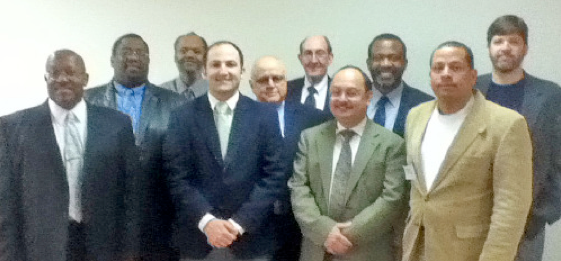
Sermons preached on the qualifications of elders often, rightly, emphasize the importance of selecting men who qualify to serve. In the Lord’s church,  covetous, inhospitable, intemperate, cold, imprudent, biblically ignorant, pugnacious, and newly-converted men (among others) have been appointed to that important work who should not have been. That hurts the local church! Many times it has been said that “bad elders” are worse than “no elders.”

Harboring unfair expectations of men who would serve as elders is another hurtful trend that occasionally surfaces. A hypercritical spirit is a quality of human nature, though a quality the spiritually-minded ought to fight to personally eliminate. Let us briefly consider what God does not expect of elders.

  • More Than The Qualifications Specify. Gut feelings, intuitions, and hunches might work well when hunting, fishing, or making March Madness picks, but there is no call for them in selecting men to serve as elders. God does not need our help, tacking on additional requirements for an elder than He felt the need to supply for us. Adding to the Word of God carries a stiff penalty (cf. Rev. 22:18); therefore, our scrutiny of a man’s fitness to serve needs to stop where the Bible’s does.
  • Sinless Perfection. He expects maturity (1 Tim. 3:6), ability (Ti. 1:9), and stability (1 Ti. 3:4-5), but not impeccability (the Latin origin of this word means “not to sin”)! If so, no man could ever conceivably qualify to serve. Gnat-straining can keep a qualified man from serving as surely as camel-swallowing can allow an unqualified man to sit as watchman. With a 1000-tooth-comb, some would inspect the minutia of his life and his family’s. Those searching for flaws, who look hard enough, will always find things. Yet, such findings do not necessarily prove anything except his humanity and fallibility (cf. Rom. 3:10,23).
  • To Neglect Their Own Families. It is unfair to expect a man, as elder, to always place the needs of the congregation over those of his own family. Too many wives and children have been deprived of husbands and fathers due to disproportionate expectations of time, resources, and attention placed upon elders by members. Elders need the full cooperation and understanding of their families, while elders are obligated by God to supply the needs of their families (cf. 1 Tim. 3:4-5,7). Elders (and their families) are entitled to vacations and nights at home together. Elders will answer for not only their service as elders (Heb. 13:17; 1 Pe. 5:4) but also their influence and leadership in the home (1 Tim. 3:4-5; 1 Co. 11:3; Eph. 6:1-4).
  • To Be The “Complaint-Receiving Committee.” It is impossible but that complaints will come, but woe unto him (or her) through whom they constantly come. Murmuring and complaining got Israel into trouble (cf. 1 Co. 10:10), and members who find it impossible to speak to elders without doing such may find themselves in the same predicament. How many times has an elder heard you say something positive about another member, a successful program, or their efforts on your behalf? How many of your complaints have they fielded? Elders will answer for our souls. Let us find ways and opportunities to encourage, praise, and support them. Complain whenever you must, but compliment whenever you can.

Did you realize members have qualifications to meet with regard to the elders?

  • Love and appreciate them (1 Th. 5:12-13)
  • Honor them (1 Ti. 5:17)
  • Do not recklessly accuse them (1 Ti. 5:19)
  • Obey and submit to them (He. 13:17)

As we examine who would serve as elders, let us not forget to examine ourselves (2 Co. 13:5). How spiritually fit are we? Jesus’ words about beams and specks apply to our relationship with elders, too (cf. Mt. 7:3-5). Let us have high expectations of elders, but let us have only those expectations God has!

screen-shot-2013-03-14-at-1-01-53-pm