Finding Contentment in Economic Uncertainty: Biblical Wisdom for Today’s Financial Anxiety

When Paul wrote to the brethren of Philippi, the Romans had already implemented tariffs to boost revenue, oversee and regulate the movement of goods across their lands, and unify various economies within the empire, all while preserving Roman economic dominance. Hence, the Apostle had a good idea of how tariffs impacted one’s finances. Yet, as we’ve already observed, he preached contentment regardless of one’s financial circumstances. Paul could make tents if his brethren weren’t financially providing for him (see Acts 18.3). Clearly, the Roman tariffs enforced by the notorious Nero were not a source of sleepless nights for Paul. 

Brent Pollard

Many individuals frequently misinterpret the writings of the Apostle Paul, pulling them from their intended context. Peter observed this concern regarding numerous writings of Paul (see 2 Peter 3.14-16). Philippians 4:13 states, “I can do all things through Him who strengthens me” (NASB95). Paul wasn’t suggesting that believers can attain every wish through Christ’s strength; instead, he pointed out that they can withstand any financial circumstance, whether in plenty or want. Remembering this when consuming news or scrolling through social media chatter regarding our economy’s current and potentially future state is crucial.

A Gallup poll published on April 20, 2025, revealed that many respondents expressed worries about the potential downturn of their financial situations. A significant 45% of respondents to a survey by the Pew Research Center on April 23, 2025, expressed concern about a potential economic decline. The responses indicate that participants’ primary worry centers on the cost of products. A recent poll by CNBC and SurveyMonkey, published on April 10, 2025, showed that 73% of respondents claimed to face financial stress. Notably, the latter part of the CNBC/SurveyMonkey poll reveals that 66% of respondents attributed their financial stress to Donald Trump’s tariffs.

I am not writing this to defend any man or political party. I do this because Jesus forbade us from succumbing to worry, particularly regarding our needs for food and clothing (see Matthew 6:25–34). Paul conveyed to Timothy that anyone who possesses these two gifts promised by Jesus to those who prioritize God’s kingdom and righteousness should find contentment (1 Timothy 6.8). In light of that foundational principle, I aim to alleviate your concerns by delving into the historical context of this recent financial specter: the tariff. 

When Paul wrote to the brethren of Philippi, the Romans had already implemented tariffs to boost revenue, oversee and regulate the movement of goods across their lands, and unify various economies within the empire, all while preserving Roman economic dominance. Hence, the Apostle had a good idea of how tariffs impacted one’s finances. Yet, as we’ve already observed, he preached contentment regardless of one’s financial circumstances. Paul could make tents if his brethren weren’t financially providing for him (see Acts 18.3). Clearly, the Roman tariffs enforced by the notorious Nero were not a source of sleepless nights for Paul. 

However, tariffs have existed for an even longer time. Clay tablets from ancient Sumerian cities, dating back to approximately 2,500 BC, document the duties imposed on goods that traversed their lands. The adversaries of the post-exilic Jews sought to undermine the Temple’s reconstruction by prompting the Persian king to scrutinize the Jews. Ezra 4:20 reveals a critical insight regarding the Hebrews: “…mighty kings have ruled over Jerusalem, governing all the provinces beyond the River, and that tribute, custom and toll were paid to them” (NASB95). In other words, kings like David used tariffs. 

Adam Smith, often regarded as the father of capitalism, clearly opposed tariffs under most circumstances. Conservative thinkers such as Thomas Sowell and Milton Friedman share Smith’s perspective. Libertarian Republican Rand Paul contends that tariffs essentially function as a tax burden on the American citizen. As a result, individuals across the political spectrum agree that Donald Trump’s tariffs will have negative financial repercussions for us. Undeniably, tariffs lead to a rise in the cost of goods. This increase will hit hard in a nation like ours, which has become reliant on inexpensive products frequently produced by forced labor overseas. Take, for instance, the Apple iPhone. Tim Cook mentioned that an iPhone made in America would come with an additional cost of $300. Analyst Dan Ives has boldly asserted that a U.S.-manufactured iPhone could carry a staggering price tag of $3,500! How could one not worry when hearing these dire predictions?

Jesus reminded us, “So do not worry about tomorrow; for tomorrow will care for itself. Each day has enough trouble of its own” (Matthew 6.34 NASB95). In simpler terms, avoid creating unnecessary problems for yourself since every day brings challenges. Focus on the task at hand and tackle what’s right in front of you. In the prayer model, Jesus instructed us to request solely for “our daily bread.” Luke articulates it as: “Give us each day our daily bread” (Luke 11.3 NASB95). The outcome remains uncertain because of one President’s choice to impose reciprocal tariffs. (Among those tariffs Trump implemented, only those against China are punitive.)

An age-old adage in the news industry goes, “If it bleeds, it leads.” What is the significance of this? This phrase highlights how the media often places sensational, violent, or shocking news stories at the forefront of broadcasts or on the front pages. It’s a harsh reality that media outlets tend to spotlight stories filled with conflict, tragedy, or violence, as these are the ones that capture attention and boost viewership or readership. “Bleeding” is a metaphor for any significant or negative occurrence, while “leading” indicates that these narratives receive prominent visibility. The apprehension surrounding Trump’s tariffs fits into this category, given that Donald Trump is incredibly divisive. 

What impact will all of this have on us? Are we on the brink of another Great Depression, or could these tariffs act as a national dose of Ipecac, cleansing us of our reliance on foreign-made goods and encouraging industries that left the United States to return? Those issues do not pertain to the realm of devotional contemplation. Our emphasis is “That which has been is that which will be, And that which has been done is that which will be done. So there is nothing new under the sun” (Ecclesiastes 1.9 NASB95). We are not the first people on planet Earth to experience monetary disturbances. And, if God allows time to continue, we will not be the last. Paul reminded Timothy that we entered this world with nothing and will leave it with nothing (1 Timothy 6.7). We must trust God’s ability to feed and clothe us providentially (see again Matthew 6.25-34).

In times of economic uncertainty, it is essential to remember that God’s provision has never faltered. The challenges we face today are not unique in the grand scheme of history. As those before us have navigated financial struggles, we can trust God’s guidance and providence for our needs. Let us find comfort in knowing there is nothing new under the sun and place our faith in His eternal care for us. 

Works Cited

Dhue, Stephanie, and Sharon Epperson. “Majority of Americans Are Financially Stressed from Tariff Turmoil, CNBC Survey Finds.” CNBC, 10 Apr. 2025, www.cnbc.com/2025/04/10/majority-of-americans-are-financially-stressed-from-tariff-turmoil-cnbc-survey.html.

Saad, Lydia. “Americans’ Economic, Financial Expectations Sink in April.” Gallup, 10 Apr. 2025, news.gallup.com/poll/659630/americans-economic-financial-expectations-sink-april.aspx.

Pew Research Center. “Economic Ratings and Concerns 2025.” Pew Research Center, 23 Apr. 2025, www.pewresearch.org/politics/2025/04/23/economic-ratings-and-concerns-2025/.

The Almanac. “Ancient Taxes.” Vol. 48, no. 28, 2 Apr. 2002, almanac.upenn.edu/archive/v48/n28/AncientTaxes.html.

Daley, Beth. “Ancient Rome Used High Tariffs to Raise Money Too, and Created Other Economic Problems Along the Way.” The Conversation, 3 Apr. 2025, theconversation.com/ancient-rome-used-high-tariffs-to-raise-money-too-and-created-other-economic-problems-along-the-way-253752.

Leswing, Kif. “Here’s How Much a Made-in-the-USA iPhone Would Cost.” CNBC, 11 Apr. 2025, www.cnbc.com/2025/04/11/heres-how-much-a-made-in-the-usa-iphone-would-cost.html.

Do Not Fix Your Hope On The Uncertainty Of Riches

Monday’s Column: Neal At The Cross

All Scripture should mean more to us than anything else, but sometimes passages of Scripture hit home more when our circumstances are more relevant. With the cascading effects of economic crisis moving from supply chains and interest rates to market volatility and failing banks, Paul’s words of warning to Timothy are much more stark and meaningful!

  • We came into the world empty-handed and we’ll leave that way (1 Tim. 6:7).
  • We should be content with basic necessities like food and covering (1 Tim. 6:8).
  • We invite disaster when we want to get rich and we love money (1 Tim. 6:9-10).
  • We need to run away from materialism (1 Tim. 6:11).
  • We had better not get arrogant about how much we have (1 Tim. 6:17).
  • We should not attach our hope to uncertain riches (1 Tim. 6:17).
  • We should trust God rather than ourselves to take care of our needs (1 Tim. 6:17).
  • We should use our wealth to serve God and how He wants us to use it (1 Tim. 6:17-19).

That is quite a challenging list of demands God makes on our spiritual lives. It runs contrary to human nature, self-reliance, and the pride we take in creating and preserving wealth. Some who trust in material things never have to endure an economic crisis in this life, but awaken in eternity to see how costly their approach is (Luke 12:16-21; 16:19-25). Many are blessed to lose the money they “banked” on in time to repent and amend their unhealthy or unholy attitude toward things.

Jesus warned, “Do not store up for yourselves treasures on earth, where moth and rust destroy, and where thieves break in and steal. But store up for yourselves treasures in heaven, where neither moth nor rust destroys, and where thieves do not break in or steal; for where your treasure is, there your heart will be also” (Matt. 6:19-21).

Neither Jesus nor Paul warn about the having of wealth, but rather the wanting, loving, and trusting of it. Whether or not the current economic issues are a canary in a coal mine of an impending breakdown, it is an opportunity for us to be reminded that we should invest our hope and trust in God rather than wealth (Matt. 6:24). It is an object lesson about not trusting what is here today and gone tomorrow and will, in the end, be burned up (2 Pet. 3:10-11)!

Neal Pollard

Necessary, But Not Essential

Friday’s Column: Supplemental Strength

brent 2020

Brent Pollard

Has your job been deemed “essential” during our mitigation efforts against COVID-19? If not, you are likely either working from home or are facing a difficult financial situation as we await the reopening of our economy. Noting the choices made by certain people in positions of authority about essential and nonessential workers, however, makes this whole process of determination seem…capricious.

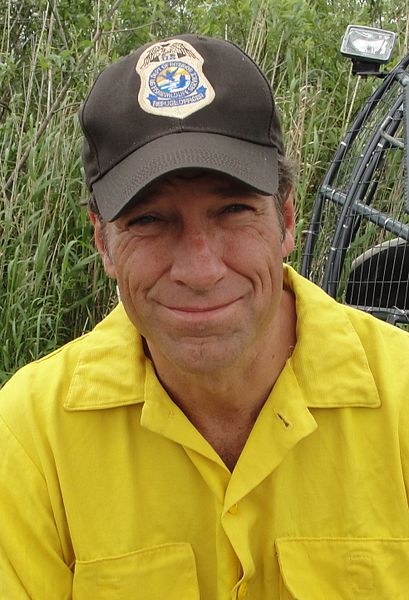
Mike Rowe, a man who made a name for himself doing the “dirty jobs” other people refused to do, stated his opinion was that there was no job that is nonessential. Appearing on a cable news program, he said, “Right now, there is this fascinating conversation going on on your network and all the networks, where we are making a distinction between essential workers and nonessential workers.” Rowe continued, “…there’s something tricky with the language going on here because, with regard to an economy, I don’t think there is any such thing as a nonessential worker.” 1

Rowe did admit that certain positions are greatly needed during a pandemic. Hence, we have greater need for a doctor now than a center fielder for a Major League Baseball team. “I just wanted to make the point that, when we talk about the economy, all work is essential,” Rowe stated. “Maybe it’s a distinction without too much of a difference, but in my mind, there is no such thing right now as a nonessential worker.” 2

Rowe makes a good point. For a healthy economy, every able-bodied person of age, must work. When person “A” earns a paycheck, he spends it in person “B’s” store. Person “B” can then provide for his own family. The property taxes person “B” pays allows person “C’s” child to go to school. In other words, the economy is something in which we all play a role, whether we appreciate our role within it or not. Yet, we see what happens when we purposely shut down a country to mitigate a virus. All the financial gains about which our country boasted for the last few years was wiped out in six weeks!

This isn’t a message about the economy or politics or Mike Rowe. It is rather about the harmful consequences we bring about by rashly judging what’s essential and nonessential without considering the bigger picture. When you have extra time, enter in the words, “baptism” along with “essential” and “necessary,” into your internet search engine of choice. I did. I found one page that proffered “101 Reasons Why Water Baptism is Not Necessary to be Saved.”

Fortunately, we have the book of Acts, also known as the “book of conversions.” Acts has many examples of people who, having heard the proclamation of the Gospel, submitted to baptism. It is a troublesome book for the one seeking to discount the necessity of baptism’s role in salvation. For this reason, such practitioners of a perverted gospel must say, “Baptism is an outward sign of an inward faith.” In other words, all these people were baptized to show their salvation rather than receive it.

Even if we only had the example of Paul’s conversion in the book of Acts, we would have enough reason to prove why baptism is not only necessary but essential. Paul was a man, made miserable by his newly acquired knowledge he was a sinner. He prayed fervently for three days. If one could “pray through” then Paul should have been able to have done so. And yet, when the preacher Ananias arrived, he saw the pathetic state that Paul was in and said, “Now why do you delay? Get up and be baptized, and wash away your sins, calling on His name” (Acts 22.16). Did Paul not realize he was saved and needed only to perform a ritual to confirm his salvation? If true, Paul was the most miserable Christian about whom we read in the pages of the New Testament during those three days he prayed and fasted.

We might make a tough judgment call because of a virus and shut down certain sectors of our economy since we believe them less essential during a health crisis. Ultimately, though, we realize even those deemed “nonessential” do play an important part in our economy, as Rowe suggested. We need them if we are going to climb up out of this trillion-dollar deficit hole this crisis has made us fall into.

Likewise, people may capriciously proclaim baptism nonessential. However, one wanting total restoration to the innocence lost in Eden must also know a demon’s faith (James 2.19) is not only insufficient to save but fatal (Mark 16.16).

References

1  Shiver, Phil. “’Dirty Jobs’ Star Mike Rowe: There’s No Such Thing as a ‘Nonessential Worker’.” The Blaze, Blaze Media LLC, 2 Apr. 2020, www.theblaze.com/news/mike-rowe-non-essential-worker.
ibid.

409px-ready_for_a_dirty_job_28cropped29

Profiting From A Penny

Neal Pollard

While walking down the hallway, I felt something lumpy in my left shoe. I pull off the shoe and, when I revived, I found that a penny was the aforementioned lump. The first thing I do when I find a penny is look at the date. This penny carried the date of 1964. It had that characteristic dark appearance of a well-loved penny, the shiny copper color long since faded. It had some scratches and had endured a bit of erosion.

Several things of a spiritual nature occurred to me about that 1964 penny.

It has been in service for a long time. Fifty years doing the same thing is amazing. George Blanda was still kicking a football at 48, and for that he is legendary. Others like Jerry Rice, Warren Moon, Doug Flutie, and Earl Morrall hung around into their 40s. Some of pro basketball’s greats played past the age of 40, including Kevin Willis, Robert Parish, Kareem, Bob Cousy, and Karl Malone. In Major League baseball, pitchers Satchel Paige and Jack Quinn played into their 50s.  A number of renowned pitchers made it to their late-40s. Four position players made it to their 50s, and the last guy most of us would remember to play so late in life was Julio Franco (49). It is not just sports. I regularly meet people who continue to have the opportunity and energy to bolster the U.S. workforce in their golden years.  We are living longer and healthier lives than our ancestors!

That penny continues to be spent and passed along the economic chain, having survived 13 presidential elections, an impeachment and a resignation. It was “born” in the days of mainframe computers and in the pre-moon space program era. It may have ridden in Martin Luther King’s pocket during the Civl Rights era. Still it spends. 

How i thank God for the longevity of service typified by our elders and many of our senior saints, who have worshipped and serviced God for so long. These golden, godly girls and gents were teaching Bible classes and Bible studies before many of us were born.

It has likely been used for its intended purpose wherever it has gone.  A penny cannot be substituted for a dollar or even a dime. It cannot be eaten without painful consequences. It will not text or play music. It will not work as a monocle or a magic marker. It is a penny. No doubt, it has been spent and “re-spent” for decades, with other money, for a variety of purchases. A penny is a denomination of money. That’s the value of a penny.

As I think of you and me, God has an intended purpose for us, too. As priests of God, we are to shine the light in darkness (1 Pe. 2:9). As disciples, were are to go into all the world with the gospel (Mark 16:15). Wherever we go, that’s why we’re here. We can work a job, have hobbies, play games, and be entertained, but that’s not the purpose of our sojourn here (cf. 1 Pe. 1:15-17). As Christians, we have been given a purpose as part of God’s eternal purpose (Eph. 3:9-11). Thus, like Christ, we must be about our Father’s business (Luke 2:49).

It continues to circulate, though it can do relatively little. A penny is virtually worthless in our modern economy, but I am far from alone in picking up every penny I find (even those in my shoe!). Put a lot of pennies together and the value of what you have dramatically increases. 

You may think you have very little to contribute to the kingdom. Yet, when you join with others our collective value soars! God uses the little things from “average” Christians to do great things.

They say a penny saved is a penny earned. The penny I found may never be spent, but it has demonstrated its value to me.  Take heart!  Don’t be weary doing well.  Do what God has you here to do. Do your best whatever you can do!