When do we normally appreciate good health? Often, it is when we are aching and running a fever (or worse). When do we most keenly contemplate financial security? For many, it is in a time of financial crisis. take away food and water, and you see how vital and blessed it is to have such provisions. When things are going wrong, we wistfully long for and desire that feeling and state when things are all right.
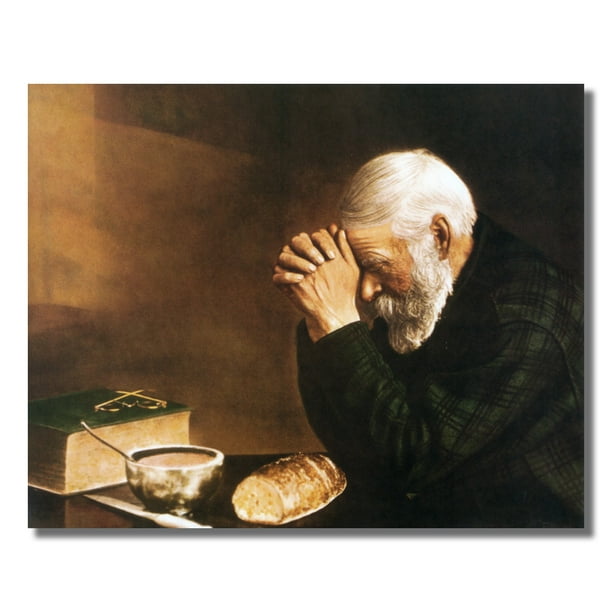
When was the last time we thanked God for these things when they were not a pressing need or something elusive to our grasp? It is harder to remember these things when all is well. Yet, don’t you think God is pleased and impressed with a heart that knows how to be grateful at times when those things are abundantly present in that life? How must He appreciate the person who wakes up or pauses through the day, assesses life, and from the overflow of thanksgiving tells God in heartfelt sincerity how much he or she appreciates the cornucopia of blessings.
It takes so little effort, but it shows such spiritual maturity and goodness. Remember that God is pleased with such sacrifices as doing good (Heb. 13:16), which showing gratitude certainly is (Psa. 92:1). Won’t you say with David, “I will give thanks to the Lord with all my heart…” (Psa. 9:1a). He is imminently worthy and we are infinitely indebted!
Very rarely do people seek out complainers to be their friend. It can be a challenge to spend any length of time around that person who is constantly grumbling and complaining about everything. At the same time, becoming a chronic complainer isn’t all that hard. Our society is filled with discontent people. Everyone has complaints. It seems that the more we are blessed the more we complain. Why are we so quick to complain? It’s human nature, but society still labels this as a negative trait.
I read a story about a cowboy that was driving down a dirt road, his dog riding in back of the pickup truck, his horse in the trailer behind. He failed to negotiate a curve and had a terrible accident. Sometime later, a highway patrol officer came on the scene.
The officer saw the horse first. Seeing how badly hurt it was, he drew his revolver and put the animal out of his misery. He walked around the accident and found the dog, also hurt critically. He hated to see it in so much pain, so he ended the dog’s suffering as well.
Finally he located the cowboy –who suffered multiple fractures–off in the weeds. “Hey, are you okay?” the cop asked.
The cowboy took one look at the smoking revolver in the trooper’s hand and quickly replied, “Never felt better!”
Sometimes it’s in our best interest to keep our complaints to ourselves. Mark twain once said, “Don’t complain and talk about all your problems–80 percent of people don’t care; the other 20 percent will think you deserve them.” Problem is, it can be difficult to refrain from complaining. We want sympathy, we desire compassion, often we don’t even realize when we complain.
I used to think I wasn’t a chronic complainer, which is true to an extent. I made a mental note of how many times I said something negative in a day…and well here’s an article that hopefully will help you as well as me.
Maybe you struggle with being negative; honestly I believe we all complain to a certain extent. In Philippians 2:14-16 Paul writes this letter as a call for unity in the church at Philippi. Right off the bat he starts talking about how blessed he is…to be in prison. He acknowledges his dire circumstances, but even after being wrongly imprisoned for 4 years, all he talks about is the gift he has been given to suffer for the cause of Christ.
If anyone had the right to complain, Paul had every right in our eyes. Why does Paul say all of this?
In chapter 2 he tells us to imitate the mind of Christ. Followed immediately by 14-16, “Do all things without grumbling or disputing,that you may be blameless and innocent, children of God without blemish in the midst of a crooked and twisted generation, among whom you shine as lights in the world,holding fast to the word of life, so that in the day of Christ I may be proud that I did not run in vain or labor in vain.”
According to Paul, it is impossible for us to focus on the will of God if all we do is grumble and complain. How can we keep our eye on the example of Christ if all we do is talk about everything that is wrong.
I know our country is a mess, the church as a whole is divided, and people are more self-centered than ever. But, and I say this kindly, “who cares?” God has given us His Son, the gift of eternal life, and a family. I know there is a lot to complain about, but ultimately God cannot use us if thats all we do. There are a couple of key words mentioned in the text that we need to define. “Grumbling” the Greek word literally means, “utterances made in a low tone of voice.” Context defines whether these are satisfied or dissatisfied grumbles. The way Paul uses it is in a negative light. Also known as “murmuring.” “Complaining” (disputing) is a word that is best translated as arguing or disputing.
So, Paul tells us to do all things without complaining and arguing. God expects us to be a joyful people. And we have no excuse! Let’s stop complaining.
The English Romantic poet, Elizabeth Barrett Browning, is famed for her Sonnet 43. It is also known by its first line: “How do I love thee? Let me count the ways.” She was reared with privilege, wealth, and the finest education, but her health was compromised by an equestrian accident. Her father was controlling, and when she eloped to marry Robert Browning she was disinherited. She published many works of various types throughout her life, and this allowed her to become independently wealthy though her health made her an invalid. Robert became enamored with her writing, and they corresponded for two years. During this time, she wrote fervently romantic poems showing her love for Robert. For all that she wrote in her relatively brief life, her poetry stands out most of all. Of her poems, Sonnet 43 may be most famous.
The title above Psalm 92 reads, “a song for the Sabbath day.” That connects its words to worship, and this psalm shows the writer’s deep adoration for God. He never uses the word “love,” but his affection for God is obvious. It seems that the writer gives several proofs of that love here. Notice how.
HE GIVES THANKS TO THE LORD (1)
HE SINGS PRAISES TO HIS NAME (1,3-4)
HE DECLARES HIS LOVINGKINDNESS AND FAITHFULNESS (2)
HE PRAISES GOD’S WORKS AND THOUGHTS (5,8)
HE SCORNS THE WICKED WHO OPPOSE GOD’S WAY (6-7,9,11)
HE APPRECIATES THE BLESSINGS OF A GOD-APPROVED LIFE (10,12-14)
HE EXPRESSES CONFIDENCE IN THE CHARACTER OF GOD (15)
One of the most rewarding exercises you can engage in is to enumerate the ways you love and appreciate God. Do it in your prayer life; spend time praising God and be specific in expressing your adoration and admiration. Think deeply about it. Look around. Look into your life. Consider what looks like His providence in your life and the life of others. Count your blessings, and tell God what you are thankful for. Wait! Did you mention running water, hot water, reliable vehicles, paved roads, coffee, air-conditioning, music, puppies, baby’s breath, eyesight, and brisket? What about the church, salvation, prayer, the Bible, peace, the hope of heaven, His guidance and protection, the elders, deacons, Bible teachers, your spouse, your parents, and your children?
This will build your love and appreciation for God. It will remind you of how much He loves you and cause you to love Him more. It will humble you and help you focus on the fount of your every blessing! It should make you a better, more obedient servant for Him. How do you love Him? Like this psalmist, count the ways! It will lift your spirit and open your eyes to a harvest ripe with those who need what you have. Get counting!
I wonder if Kathy felt like she was living with Briscoe Darling and the boys (imagine them if they were talkative) through the years they were growing up. She is refined and genteel, words that are not usually connected to our three sons and me. One thing she impressed upon us was the importance of timely, thoughtful thank you notes. Gratitude, though it can be expressed with very little time and expense, is telling. It acknowledges the kindness and generosity of the giver.
One of the elements of worship, generally, and prayer, specifically, is thanksgiving. Our songs call for it: “Give Thanks With A Grateful Heart,” they express it: “Thank You, Lord,” “For All That You’ve Done,” “How Great Thou Art,” “10,000 Reasons,” and “He Has Made Me Glad.” Though that songwriter, Leona Von Brethorst, apparently wrote the song from Psalm 100, she includes a line from Psalm 118:24: “This is the day that the Lord has made.”
Five times in Psalm 118, the psalmist says “give thanks” (1,19,21,28,29). He urges others to do so, but also expresses his resolve to do the same. Why?
GIVE THANKS FOR HIS GOODNESS (1-4)
“Good” is a general word that takes in pleasantness, desirability, and beauty. The good quality specified here is His everlasting mercy (lovingkindness). The writer moves from the broad to the specific–Israel, house of Aaron, those who fear the Lord. Everyone is the object of God’s lovingkindness. The righteous freely express their thanks for it.
GIVE THANKS FOR HIS DELIVERANCE (5-13)
There is a sudden, dramatic shift in tone in verse five. From an upbeat, positive tone, he turns to thoughts of trouble and difficulty. Distress, hatred, being surrounded, and violence threatened him, but God was there for him as protection and help. This kept him from fearfulness. It gave him refuge.
It is an amazing thing to think of all the ways and times God has been with me, but those are just the instances I’m aware of. How many trials has God spared me from, disasters has He caused me to avoid, and troubles has He averted for me that I won’t know about on this earth? Just what I do know humbles me, and it should fill my heart with gratitude.
GIVE THANKS FOR HIS GREATNESS (14-17)
The writer turns to the Giver. He is strong, a Savior, valiant, and exalted. Summarizing God’s qualities, the writer says, “I will not die, but live, And tell of the works of the Lord” (17). Awareness of who God is for me, physically, materially, and spiritually, will drive me to grateful thanks.
GIVE THANKS FOR HIS DISCIPLINE (18)
Though it is almost a parenthetical phrase in the middle of this song of thanksgiving, it is important and an additional reason for gratitude. He writes, “The Lord has disciplined me severely, But He has not given me over to death.” Who is brave enough to say that with the psalmist? He implies gratitude for God’s severe discipline. Hebrews 12:7-10 tells us that God disciplines those He loves and calls His children. It is for our good and allows us to share His holiness. Can I thank Him for the trials and challenges that refine me and grow my dependence on Him? Or do I just plaintively ask, “Why?”
GIVE THANKS FOR HIS PROVISION (19-29)
He uses the imagery of a city here–gates, stones, and chief corner stone. Then, he ends with a temple analogy, with the house of the Lord, festival sacrifice, and the horns of the altar. Saved inside God’s walls of protection, we are free to offer worship which He accepts. We marvel, we rejoice, we are glad, we prosper, and we extol. He has given us light. The primary thrust is not material, but spiritual. However prosperous or impoverished you are, financially, however strong or weak you are, emotionally, we have the greatest provision of all in Christ. Eternal salvation, the hope of heaven, fellowship with God and the saved, the church, strength to endure, the list is endless.
Today, as you go through the day, why not stop and spend time in prayer to God thanking Him categorically: physical blessings, relationship blessings, emotional blessings, national blessings, and spiritual blessings. No doubt, there are things in your life right now that are dissatisfying and disappointing. You may be struggling mightily. Perhaps those are ways God is disciplining you in His love. Whatever is happening in your life, choose to give thanks and know God is trustworthy! It’s more than polite. It’s righteous!
Her name was Mrs. Broadhead. She was a resident in a west Alabama nursing home. She was known for saying one thing with great frequency: “We have a lot to be thankful for, don’t we?” Emaciated, confined to a wheel chair, with a speech impediment due to a stroke, and filled with aches and pains, that phrase was still her life’s motto.
Wedding and baby showers, small gifts or tokens of appreciation, compliments, words of encouragement, acknowledgements, visits, deeds of kindness, and the like are golden opportunities to express it. yet, far too many have failed to learn the beautiful grace of gratitude. It is wondered if Jesus used the parable of ten lepers to illustrate not just the importance of thankfulness but to give an approximate percentage of those who fail to show it. Remember that when the lone man returned to give thanks to Jesus, He obersved, “Were there not ten cleansed? But where are the nine?” (Luke 17:17).
While showing gratitude to God and to fellow men is growing more rare, it is certainly a Christian characteristic! Paul says, “Be thankful” (Col. 3:15). In prior generations, great emphasis was placed on instilling manners and courtesy within our children. One show of etiquette was to never let a gift or kindness go without a card, call, or word of thanks. It is extreme self-absorption to fail to acknowledge the sentiment of others! Failing to show gratitude is like telling others we’re spoiled or feel entitled.
Christians, above all others, have so much to be thankful for. The remarkable command from Paul is “in everything give thanks” (1 Th. 5:18). Thankfulness for toothaches, flat tires, bills, taxes, and death? Perhaps Pollyanna was a good teacher. She played “the glad game.” Whenever she had to endure bad, she chose to find something to be glad about. Can’t we do that? Christians are to be found “overflowing with gratitude” (Col. 2:7).
God rejects those who aren’t thankful (Rom. 1:21). It is an ugly trait to be ungrateful. It’s synonymous with inconsideration. Paul says esteem others better than self (Phil. 2:4). Never fail to return a favor, gift, or thoughtful act with a simple “Thank you.” It is your obligation. It will become your joy!







 The Preacher Pollard Blog