A Hope For The Future

Carl Pollard

 Hebrews 7:20-28 compares and contrasts Christ to the Levitical priesthood. In these verses Jesus’ Superiority is clearly seen. With Christ we have hope in the future, and with that comes power for the present. Christ is a better hope because He is the Appointed Priest. Being appointed caries with it the idea of being assigned a role or job. Christ has been assigned the role of being our very own priest. 

Hebrews 7:20-22 says, “And it was not without an oath. For those who formerly became priests were made such without an oath, but this one was made a priest with an oath by the one who said to him: “The Lord has sworn and will not change his mind, ‘You are a priest forever.'” This makes Jesus the guarantor of a better covenant.”

The Levitical priests were appointed by command. Exodus 28:1-4, “Then bring near to you Aaron your brother, and his sons with him, from among the people of Israel, to serve me as priests—Aaron and Aaron’s sons, Nadab and Abihu, Eleazar and Ithamar. And you shall make holy garments for Aaron your brother, for glory and for beauty. You shall speak to all the skillful, whom I have filled with a spirit of skill, that they make Aaron’s garments to consecrate him for my priesthood. These are the garments that they shall make: a breastpiece, an ephod, a robe, a coat of checker work, a turban, and a sash. They shall make holy garments for Aaron your brother and his sons to serve me as priests.”

‭‭God created the role of priests. It was a Divine command, but without an oath. In contrast to this, the great High Priest was made Priest with an oath. Psalm 110:4 says, “The Lord has sworn and will not change his mind, “You are a priest forever after the order of Melchizedek.””

This is a promise joined with an oath. Hebrews 6:17, “So when God desired to show more convincingly to the heirs of the promise the unchangeable character of his purpose, he guaranteed it with an oath.” Jesus is a guarantee of the better covenant appointed by an oath from God, Christ guarantees the new covenant that is better. 

Since He is appointed by God, we have direct access through Our Great High Priest. We have hope in knowing that the very Son of God is active in our relationship to the Father. That is a better hope. Beyond anything in the world. 

What do you hope for in the future? A better job? More money? A bigger home? If so, know that people get fired, money gets spent, and homes rot away. If our hope is anything but our great High Priest, we have lost sight of what’s most important. Christ is our better hope because He has given us what we need most, a relationship with God the Father.

Light Of The World (S:3; E:26)

Lessons On The Home

Another Wendell Winkler Video

Indebted to Leonard Graves, Jr., who has this on his YouTube page. Check it out!

Alone!

Neal Pollard

Kathy and I very recently discovered an interesting show produced by the History Channel, and the title of the series is “Alone.” It is a “reality show” (not usually a fan of those), but it involves survival experts dropped, alone, in the middle of nowhere. They get to take ten items of their choice to help them battle predators, the elements, and, most of all, isolation. Food, water, shelter, and fire top their priorities, but even having these cannot prevent the maddening monotony of being deprived of human companionship.

I love the way Solomon says it in the book of Ecclesiastes. “Two people are better off than one, for they can help each other succeed. If one person falls, the other can reach out and help. But someone who falls alone is in real trouble. Likewise, two people lying close together can keep each other warm. But how can one be warm alone? A person standing alone can be attacked and defeated, but two can stand back-to-back and conquer. Three are even better, for a triple-braided cord is not easily broken” (4:9-12, NLT, emph. mine). At the very beginning, God made it clear that it isn’t good for man to be alone (Gen. 2:18). Alone one is in trouble, in the cold, and in danger. It is not good for us.

The survivalists on the show figure that out. So does the person, even with people all around them, who keep themselves in isolation. Think of all the ways God combats our loneliness.

  • He gives us marriage (Gen. 2:18; 1 Cor. 11:9).
  • He gives us children (Psa. 127:3-5).
  • He gives us the church (Eph. 2:19).
  • He gives us the assemblies (Heb. 10:24-25).
  • He gives us fellowship (Acts 2:42).
  • He gives us hospitality (Rom. 12:10,13).
  • He gives us counselors and mentors (Prov. 15:22; 24:6; Ti. 2:3-4).
  • He gives us the aged (Lev. 19:32; 1 Tim. 5:1).
  • He gives us shepherds (Acts 20:28).

Life is difficult for the person determined to go it alone! We are left with our thoughts, which may or may not be accurate reflections of reality or at least the whole picture (Prov. 18:17). We are deprived of the very resources God has given to help us successfully overcome life’s challenges. It is an easy habit to get into to withdraw from the company of others, but it is not healthy! We need others, and, just as much, they need us!

The guys on the reality show voluntarily go it alone for money and notoriety, but, even with that incentive, the loneliness gets unbearable. For us, the prize and reward does not require us to cloister ourselves. It requires the opposite! May we never choose to be alone, when we have so many tools supplied by God to survive the challenges of this life.

God’s Form And Function

Gary Pollard

After showing us that Jesus is our only true hope, Paul gives some information about the one who saved us. This is one of the most straightforward descriptions of God’s form and function that we have in scripture.
God the father is invisible (1.15). No human has ever seen the father (Jn 6.46). The only visible form of God visible to human eyes is Jesus. This verse uses an interesting word: εικων (eikon). This means that Jesus is the form of God that we can see; or, he’s the “body” of God. This is clarified by 1.19, “God was pleased for all of himself to live in the son.” It’s repeated in 2.9, “I say this because all of God lives in Christ fully, even in his life on earth.”
We’re all familiar with Genesis 1.1, “In the beginning God created the sky and ground.” We know from John 1.1ff that that was done through Jesus. Col 1.16 reaffirms this by saying, “Through Jesus’s power all things were made: things in space (ουρανοις) and on earth, visible and invisible — all spiritual rulers, masters, powers, and authorities. Everything was made through him and for him.”
So why does Paul describe the physical makeup of the father and son? Because of 1.20, “Through Jesus, God was happy to bring all things back to himself again — things on earth and things outside of earth. God made peace by using the blood sacrifice of his son on the cross.”
This is because we were separated from God because of our moral impurity (21). But he made peace with us through the death of Jesus (22). What’s very interesting in these two verses is the emphatic use of two different words for a physical body — σαρκος (sarkos) and σωματι (somati)! He just said that Jesus is the physical form of God, then emphasizes this by using two words for physical body.
Jesus had form before he became fully human — he was the Angel of the Lord in the Old Testament. But he became fully human so that he could feel pain, feel emotion, and bleed out for our sake. He did this so we’d be special and blameless in God’s eyes.
In 1.23, Paul summarized why he said all that stuff — “You must not let anything cause you to give up the hope that became yours when you heard the good news.”

Fightin’ Words

DalePollard

On May 30, 1806, Charles Dickinson, an attorney from Nashville, TN, and Andrew Jackson engaged in a duel on the Jeff Burr farm. Charles Dickinson was a famous duelist and as he confidently walked to the farm he would fire multiple shots with his pistol to show those around who they should bet on.

 Dueling was illegal in Tennessee so they made their way just a hair over the state line into Kentucky. It was on the bank of a river where over eighty people were buzzing with excitement as they gathered to watch. 

 Dickinson and Jackson had each taken twenty-four steps and then faced each other with pistol in hand. Both men glared at each other; sweat beading on their brows. This moment had been a long time coming and it was Jackson who had the most to lose, his good name. 

Dickinson raised his pistol and shot first. The bullet hit Jackson in the shoulder but he was still standing. It’s reported by an eye-witness that with one hand Jackson pressed down on the bleeding wound and with the other he took aim— and shot. His bullet hit Dickinson square in the chest and he collapsed to ground.

 Andrew Jackson would recover from his injury and become the president of the United States. Dickinson, however, would die The quarrel that had escalated to a duel to the death began with derogatory rumors that were spread by Dickinson about Jackson’s wife, Rachel. 

Four Ways To Guard Against Gossip 

  1. When speaking of negative qualities: Say things that only need to be said.
  2. Speak only things that would likely help the person being discussed, and no more. 
  3. Know your end game and why you’re saying what you’re saying. What do you hope to accomplish? 
  4. Most importantly— handle it biblically. 

Romans 1:29; 2 Corinthians 12:20 – Both differentiate gossip from slander and condemn it as the result of a “depraved mind.” That’s strong language! 

1 Timothy 5:13; 2 Thessalonians 3:11 – Both condemn “busybodies” who “speak about things not proper to mention.”

“Busybodies” – “busy about trifles and neglectful of important matters”

Matthew 18:15 – “If your brother sins, go and reprove him in private…” 

This implies resolving the matter one on one. Gossip is just the opposite. Gossip is like breaking something that’s already broken and that makes a situation even harder to fix. 

Galatians 6:1 – It must be a public matter if someone was “caught in sin.”

1 Timothy 5:20 – Paul tells Timothy that an elder who “continues in sin” should be rebuked “in the presence of all.”

Ps. 141.3 “set a guard over my mouth, a gatekeeper over my lips.”

You Can Have A Relationship Like That

Neal Pollard (at En Gedi, 2018, with Kathy)

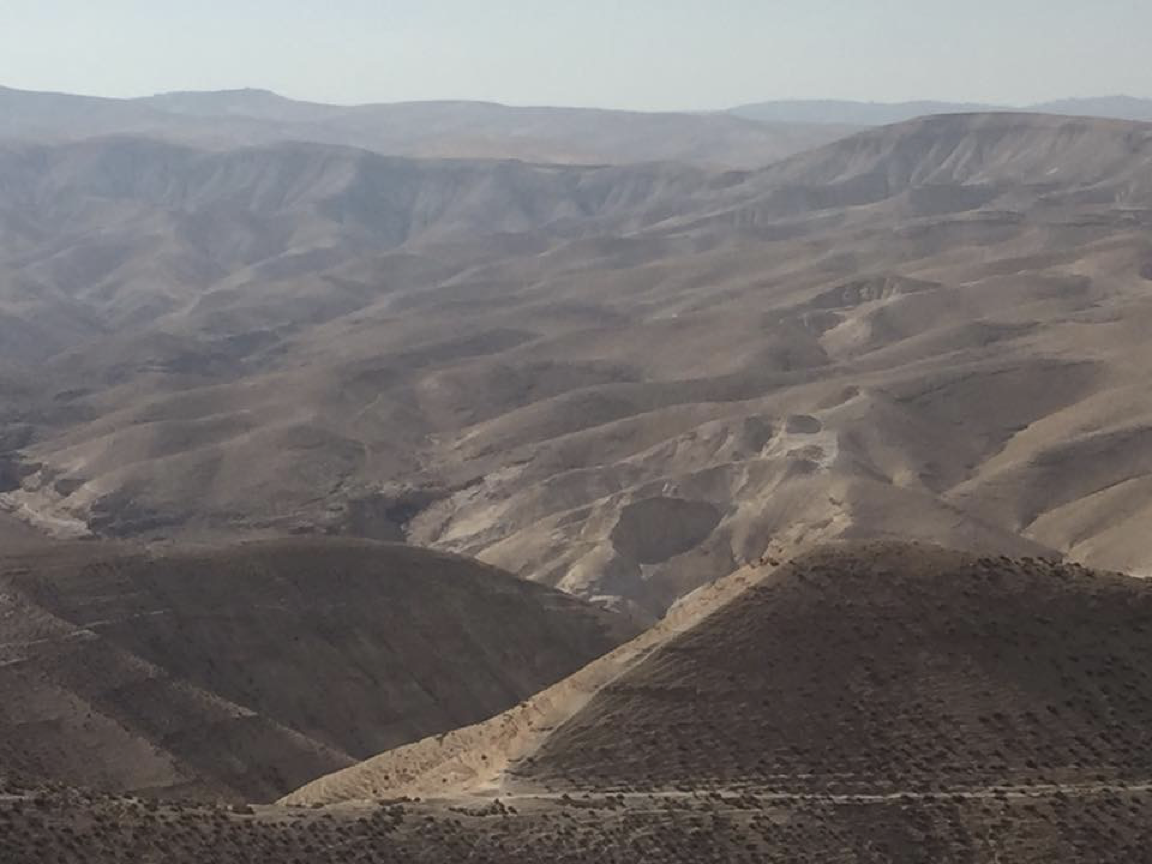
In two different summers (2017 and 2019), I have visited the wilderness of Judea. Two words describe it very well: “hot” and “dry.” It serves as a great graphic or visual for David’s illustration in Psalm 63. The title over the psalm simply says, “A psalm of David, when he was in the wilderness of Judea.” He would have spent time there throughout his life, as a shepherd boy, as the Shepherd King, and, no doubt, later in life as the region included his Bethlehem home and his Jerusalem home. Whether herding sheep, fighting (or fleeing) enemies, or simply traveling, David would have traversed the land he speaks of in this psalm.

There is an entire song drawn from the words of this psalm. Mike Di Scala wrote it and the group Acapella sang this beautiful song (Your Love Is Better Than Life).  The most striking feature of this psalm, to me, is the intimacy between David and God. David is not indifferent, like a spoiled child. God is not pictured as an indulgent Father or wrathful Deity. There is such depth to the relationship. 

It Is A Personal Relationship–“You are my God” (1); “my soul, my flesh” (1), “my lips” (3), “my hands” (4), “my soul” (5), “my mouth” (5), “my bed” (6), “my help” (7), “my soul” (8), “my life” (9). You’ll find the personal pronoun “I” eight times (along with “my” 11 times). Not his father Jesse’s faith. Not his predecessor Saul’s faith. Not his brother Eliab’s faith. Not his the faith of a wife. David was personally invested. “I have seen you in the sanctuary, to see Your power and Your glory.” Nobody can do that for me.

It Is A Passionate Relationship–Modified with words like “earnestly” (1), “thirst” and “yearn” (2), it led him to praise, bless, lift hands, be satisfied and meditate. His soul clings to God (8). Notice that the one led to the other. By investing, he reaped dividends.  What we do daily is either building our fire or dousing it. David was aflame.

It Is A Performing Relationship–It went beyond feelings. David did not simply receive; He gave. He sought (2). He worshipped (2-5). He meditated (6). He clung (8). It was characterized by faith, but also works. 

It Is A Protecting Relationship– Despite the adversities and struggles he encountered in life, David was confident that God was with him and would deliver him (7, 9-12). God is praiseworthy, just in His nature. But it’s so much more than that. He cares for us and will help us every step of the way. Knowing that, who can help but mirror David’s thoughts and feelings in Psalm 63? 

The Judean Wilderness today

HAPPY 31ST ANNIVERSARY, KATHY!

One Of Dale’s Most Popular Posts

Light Of The World (Season 3, Episode 12)

A Healthy Fear

Carl Pollard

As Christians we believe in an all powerful God. A God who used words to form the universe. A God who has the power to destroy the world with a flood. A God who is Just and Holy. We fear God because He decides where we will spend eternity. 

If we are Christians, our relationship with God should be filled with Love, respect, praise, and fear. Proverbs 9:10 tells us that fearing the Lord is the beginning of wisdom. The wise person fears God, which means that the foolish do not fear God. Because they lack this fear for God, they continue in sin. They aren’t concerned about what God could do to them. 

This is where our context from Romans 3 comes into play. Mankind naturally desires sin over God. And there will be those, like in Romans 3, that will try to find excuses to continue in sin. Paul gives us the bottom line with this mindset. Romans 3:18 says, “there is no fear of God before their eyes.” He uses phobos, which is where we get our English word “phobia.” Those who live in sin do so because they have no fear of God and His power. 

When we make the choice to live in sin we are saying 3 things about God: 

  1. We truly don’t believe in God 
  2. Or if we do, we don’t think God can do anything
  3. We don’t think God will do anything

Whether we consciously think these or not, when we live in sin, we don’t fear God or the consequences. There’s a man we read about in scripture that perfectly illustrates this mindset. 2 Samuel 11 is one of the most powerful lessons we can read in scripture on sin. David’s sin with Bathsheba shows us the desire of sin, and paints a graphic picture of what sin can do to even the most godly of men. 

David sees Bathsheba bathing on the roof (11:2). He wants her, and pursues his desire. David sinned because in the moment he wanted pleasure over God. 

This is the start of David’s intricate plan to cover up what he has done. He tries to get Uriah to go home to his wife. He has Uriah killed so that he can have Bathsheba as his own. David continued to sin because there was no immediate punishment for sleeping with Bathsheba. The entire chapter ends with these words, “but the thing that David had done displeased the Lord.” 

How could such a man of God, someone that is described as “the friend of God” do such a thing? Because in that moment, and the days to follow, David lost his fear of God. It was replaced with deception, lust, and murder. 

It is said of sin that it will take you further than you want to go, keep you longer than you want to stay, and cost you more than you want to pay. We will always be surrounded by a world filled with sin, and the consequences of those sins. 

But a day will come when God will punish those who practice sin, and reward those who are faithful to Him.

Light Of The World (S3, E11)

Who Needs Your Kindness Today?

Neal Pollard
  • The widow who no longer has her companion to talk to (Isa. 1:17).
  • The new Christian who is trying to find his or her way (Luke 17:2).
  • The family who just moved into the area and doesn’t know anyone (Heb. 13:2).
  • Your child (small or grown) who is secretly struggling and needs a listening ear and maybe some guidance (Psa. 103:13).
  • The cashier or waiter/waitress who is stressed, frazzled, and harried (Heb. 12:12).
  • The person who is struggling with addiction or problems (Gal. 6:1).
  • The public servant or first responder who faces risk and unpleasantness daily (Rom. 13:3-4).
  • The elder who hasn’t heard a word of appreciation in awhile (1 Thes. 5:12-13).
  • The neighbor who’s putting on a front but who is hurting badly on the inside (Prov. 12:26).
  • The person who is searching for truth and needs someone to guide them (Acts 8:31).
  • That socially awkward, ugly duckling that doesn’t seem to fit in and nobody seems to relate to easily (cf. Job 4:3-4).
  • The ones Jesus is concerned about in Matthew 25:35-36.
  • The elderly couple who doesn’t have the health and energy they used to have, but who still have so much to have and share (Prov. 16:31).
  • The small child who is usually invisible to adults, but who may do great things in the kingdom some day if properly encouraged (Mark 9:37).
  • The visitor to the assemblies.
  • Anyone you have an opportunity to bless, especially someone in the household of faith (Gal. 6:10).

Light of the World (Season 3, Episode 9)

Debuted on April 2, 2023

“Moment In The Mirror” (Emily Pollard)

Emily’s Latest Post (3-16-23)

Light Of The World (S3, E8)

No Power!

Neal Pollard

Henry Rogers’ house in Appleton, Wisconsin, was the first to use hydroelectric power. That was September 30, 1882 (Marsha Weisinger, Buildings of Wisconsin, 222). Today, we not only take electric power in our homes for granted; we expect it! When a strong wind storm knocked down trees and power lines in our area yesterday, we lost electricity for eight hours. For those who did not immediately fire up a generator, that meant no TV, no internet, no cell phones, no overhead lights, and no stove.  It turned out to be enjoyable to cook dinner in the fire pit and play games  and read books by candlelight and lanterns. Yet, thanks to the tireless work of utility crews, most of us went to bed with the power restored! It is easy to take such a blessing for granted!

How often do we try to live our entire lives without the extraordinary power available to us? This power does more than give us modern conveniences and appliances that cook and store food, heat and cool the house, and the like. It enables us to face otherwise unbearable trials, to overcome the eternal consequences of our sin problem, and to conquer the most insurmountable troubles. It is the “power of God,” and we find it demonstrated in the virgin birth (Luke 1:35), the gospel (Rom. 1:16), the cross (1 Cor. 1:18,24), the word of truth (2 Cor. 6:7), the resurrection (2 Cor. 13:4; Phil. 3:10), and so much more. “His power” will raise us up (1 Cor. 6:14), works mightily in us now (Col. 1:29), and upholds all things (Heb. 1:3). Or, as Paul says, enlightened eyes know “what is the surpassing greatness of His power toward us who believe” (Eph. 1:19). 

Do we ever voluntarily shut ourselves off from this power? Do we choose to live in the dark, depriving ourselves of the blessed live that flows from staying connected to God’s power? How tragic and foolish when I fail to pray, to study His word, to trust His providential care and work in my life, and to have the courage and confidence to fulfill His purpose for me in this world. When I do, I am spiritually in the dark! 

Each day, I should be thankful that God empowers me for the work He has given me on this earth. I must stay connected to Him while helping others plug into that power source, too. God’s power is no mere convenience! It is the ultimate necessity! 

Are You Prepared?

Saturday’s Column: Learning From Lehman

Jeremy Waddell

We all meet people every day…Some good, some bad and then some…we say, “What just happened?” I was doing an inspection last fall. It was getting dark, it was starting to rain, and I was getting tired. A lady came around the house and asked what I was doing. I introduced myself and asked if she was the buyer, the seller, or who she was. She said, “No, I just live around here.” I said, “Well, I’m a home inspector and I’m inspecting the home on behalf of the buyers. She asked, “Are you any good at your job?” I said, “Well, I try to be.” Then she said, “Well, I think I have radon at my house.” I told her I could check that, then she said, “How much does that cost?” I told her and she said, “Well, I don’t have that much money.” I said we could work something out. Then she asked, “How can I get in touch with you?” I told her I was on Facebook, I can give you my phone number, or you can Google it. She said, “Can I get a business card?” I said, “No ma’am. I don’t. I’ve run out and don’t have any in my truck. She told me, “Oh, you’re not prepared, huh?” I said, “No ma’am, I’m not.” She didn’t have anything else to say to me, but turned and walked off and was gone.

The more I thought about it the madder I got. I turned my truck upside down and found one. It turns out she was sitting on the back porch next door and been watching me the whole time. She didn’t want a home inspection and was just being nosy. I took her my business card, offered my services, and left. But it got me to thinking.

  • Does it bother us as much about our Christianity as it does our jobs or school or just meeting people in general when someone calls us out? 
  • Do we think about how prepared we are to not only answer questions about the Bible, Jesus, our Christianity but whether we are prepared for heaven or hell? 
  • Being prepared is not something we can put off or procrastinate about. It’s something we must do and be ready for right now! 

Matthew 25

1-13. The 10 virgins here are used as an example of some being ready and some not.  

  • Vs 13- He’s told us He’s coming… not when but that He is. Be prepared daily!
  • Other passages that make mention of His coming are 2 Peter 3:10, 1 Thess. 5:2, Mark 13:32-37. There are others that inform us that we will not know when He is coming. Be on watch!

14-30. This teaching is about the different number of talents that was given to 3 different men.  

  • He’s given us all talents and jobs to do so that we can be prepared. To make ourselves ready and to make the most of what’s been given to us. 
  • Are you using those talents to prepare yourself? Are you using them to be ready for the kingdom and to help others be ready?
  • If we are, we will hear, “well done good and faithful servant”. If we aren’t using the talents that’s been given us, we are told what will happen…vs 30- “we will be cast into outer darkness where there is weeping and gnashing of teeth.”
  • Use wisely and often the gifts given to you!!

31-46. He’s coming to judge us on the deeds we have done. He’s coming to judge us on the preparation we have made. Heaven or hell

  • Best thing is…we get to pick, and we get to make preparations for our choice. 
  • Heaven is “prepared” vs 34.
  • Hell is “prepared” vs 41. 
  • Are you “prepared”? 
  • God has done His part; He’s just waiting for us to do ours. 
  • We’ve been given the warning, the instructions, and the motivation.
  • In whatever way you need to prepare…are you doing it? 
  • Whether it’s being baptized, asking for forgiveness, repairing relationships, doing more for the kingdom of heaven–Be prepared! 
Jeremy and me, “prepared” for some of the world’s best BBQ last year.

.  

Looking Up! Now Available In Video, Too

Have You Heard The New Podcast?

S7E23 Lies We Believe Looking Up with Kathy and Carla

We can be susceptible to a lot of lies that the devil wants us to believe; for example, "I am not enough." "God is always disappointed with me." "Good moms are never overwhelmed." This week we are talking about things that are not true, but find their way into our minds and hearts and poison us. How can we fight against those lies and, instead, live in the truth that God provides? We hope you'll join our discussion and let us know your thoughts on this topic.
  1. S7E23 Lies We Believe
  2. S7E22 A Few More Of Our Favorite Things
  3. S7E21 Hold That Thought!
  4. S7E20 God, Don't Let Me Get In Your Way!
  5. S7E19 Fighting the Green-Eyed Monster

Latest Episode Of “Light Of The World”

Debut on WNKY NBC 40 (2/12/23)