A Fondness For Flogging

Only God knows heart and motives, but we need to guard against a fondness for going after people for their perceived perpetrations. We need to be sure that we are not making mountains out of mole hills, mistaking what offends our sensitivities with what violates God’s will, or making our scruples the standard which others must pledge allegiance to.

Neal Pollard

A Fondness For Flogging

Neal Pollard

Richard Snow authored the book, Sailing The Graveyard Sea, which details the only alleged case of mutiny in the history of the U.S. Navy. There are many interesting circumstances and subplots in this infamous incident, including a failed apprenticeship program, the captain’s literary success, and the sitting secretary of war’s son, accused as the mutiny’s ringleader, and his fascination with piracy. Another notable detail was ship captain Alexander MacKenzie’s fondness for flogging. Snow records that “during his six weeks at anchor in New York, MacKenzie put the colt (a type of whip, NP) to use 422 times, for crimes that ranged from spitting and throwing tea on the deck to blasphemy and ‘skulking'” (69). A former sailor under his charge called out the captain in print for cruel and unusual punishment, saying “he was noted for his cruelty to the men for small offenses and trifling accidents” (ibid.). 

Whatever drove MacKenzie to such fanatical levels of discipline (frequent flogging for apparently minor offenses was somewhat characteristic of that era), it would come up in his court-martial and hang over him in infamy. No less than James Fenimore Cooper would serve as his critic in what became known as “the Somers affair.” 

Jesus tangled with a group who had a verbal tendency to flog those who would not conform to their views. Even the rulers (Jewish leaders) were intimidated by the Pharisees, “for fear that they would be put out of the synagogue” (John 12:42). To the healed blind man that stood up to them, they rebuked, “‘You were born entirely in sins, and are you teaching us?’ So they put him out” (John 9:34). This was part of their larger conspiracy to intimidate those who believed in Jesus (John 9:22). 

No one was a more favored object of their verbal abuse than Jesus. Three times they accused Him of having a demon for accurately calling out their wickedness (John 7:20; 8:48, 52). They accused Him of working for Satan, leading them to blaspheme the Holy Spirit (Mat. 12:25ff). They watched Him closely to find a reason to accuse Him (Luke 6:7). Yet, Jesus had no problem calling them out for it. He says, “You blind guides, who strain out a gnat and swallow a camel” (Mat. 23:24). Read that entire chapter for a divine assessment of their tactics.

A love and passion for truth is praised in Scripture, but a fondness for flogging is not! Truth must be spoken in love (Eph. 4:15), kindness, patience, and gentleness (2 Tim. 2:24-25), and a spirit of gentleness (Gal. 6:1). Long ago, Solomon had said, “A gentle answer turns away wrath, but a harsh word stirs up anger” (Prov. 15:1; cf. 15:18; 25:15). God puts such actions as “disputes, dissensions, factions” in the category of works of the flesh (Gal. 5:20). 

Only God knows heart and motives, but we need to guard against a fondness for going after people for their perceived perpetrations. We need to be sure that we are not making mountains out of mole hills, mistaking what offends our sensitivities with what violates God’s will, or making our scruples the standard which others must pledge allegiance to. A faith in the Father’s form of teaching is imperative, but a fondness for flogging is improper! 

A Passage I’ve Neglected To Apply To Myself

Neal Pollard

To be fair, there have been several passages I’ve neglected to apply to myself, but, given the time of year we are in, this is certainly one. Paul writes,

“One person regards one day above another, another regards every day alike. Each person must be fully convinced in his own mind. He who observes the day, observes it for the Lord, and he who eats, does so for the Lord, for he gives thanks to God; and he who eats not, for the Lord he does not eat, and gives thanks to God. For not one of us lives for himself, and not one dies for himself; for if we live, we live for the Lord, or if we die, we die for the Lord; therefore whether we live or die, we are the Lord’s. For to this end Christ died and lived again, that He might be Lord both of the dead and of the living. But you, why do you judge your brother? Or you again, why do you regard your brother with contempt? For we will all stand before the judgment seat of God” (Romans 14:5-10). 

When we encounter a passage in Scripture, we are well-served to consider its practical application for daily life.

According to this passage, an individual is permitted to regard one day above another and another may choose not to do so. How might that apply to us today? What if one personally regarded December 25th over, say, August 17th (which, while it’s National Custard Day and National Thrift Shop Day, was an attempt to pick an ordinary day on the calendar)? Is that wrong? 

According to this passage, one may elect to observe a day (or not) and eat certain foods (or not) “for the Lord.” If they observe and eat, they aren’t wrong and should not be judged. Remember what Paul says elsewhere: “Therefore no one is to act as your judge in regard to food or drink or in respect to a festival or a new moon or a Sabbath day—things which are a mere shadow of what is to come; but the substance belongs to Christ” (Col. 2:16-17). Is application restricted just to customs under the Old Law, or could someone today act as our judge regarding some or all of these things? Even in Colossians, Paul was dealing with more than Judaisers. 

According to this passage, we must consider our actions in light of how they impact each other. As a local church and even an entire brotherhood, we don’t act in isolation because we are part of one big spiritual family. It also means each member, every weak and strong Christian, should first apply this passage to himself/herself and not just project it onto others. It is a two-way street. If one wants to personally show homage to Christ on a specific day, should he or she be respected and left alone to do that? That seems a fair application of this text.

According to this passage, we must watch judging our brother in matters like these. Further, we must avoid seeing him with contempt. That’s a strong word, meaning “to show by one’s attitude or manner of treatment that an entity has no merit or worth, disdain” (BDAG 352). Jesus reserved a scathing parable of two men praying in the temple for some because “they trusted in themselves that they were righteous, and viewed others with contempt” (Luke 18:9). Every weak and strong Christian, along with the rest of humanity, “will all stand before the judgment seat of Christ.” That should temper my spirit and speech, especially in matters which upon fair investigation turn out to be matters of judgment.

When I was younger, I sadly admit that I passed judgment on Christians who sent me religiously-themed Christmas cards or put up a nativity scene in their yard. Any sign that they attached religious significance to this season I attributed to their being spiritually weak and inferior. In light of Romans 14, I believe I was wrong to do this. This was a personal liberty granted to them by God through Paul in that text. If, as I presumptuously assumed, I was their “stronger brother,” then I should not act as their judge in the matter. I should set an example of patience, compassion, and acceptance.

This passage does not authorize the church to observe Christmas or to conclude, as one wise brother put it, “If I can do it, we can do it.” Scripture is filled with condemnation for the church, in its worship and teaching, setting up what God set down and setting down what He set up. Paul, in Romans 14, is talking about an individual Christian engaging in a personal observance. In a mountain of doctrinal and moral crises, let’s be sure to put this in proper perspective. More than that, let’s be careful to avoid being in either the camp which looses where God has bound or which binds where God has given liberty. And let it begin with me.

nativitysilhouette1

LET’S BE CAREFUL WITH OUR SCRUPLES!

Neal Pollard

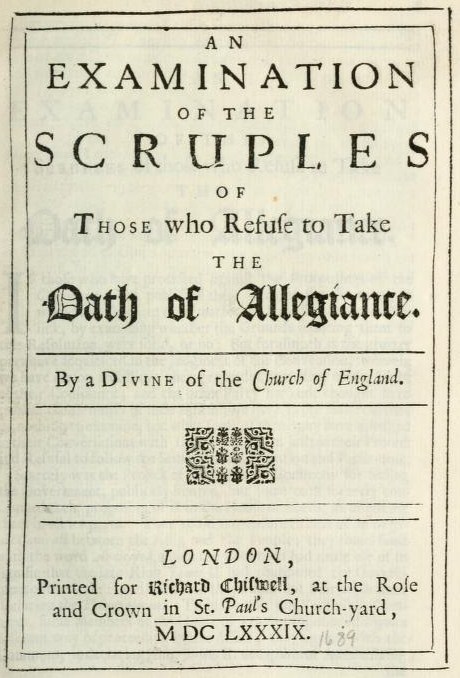
The word “scruple” comes to us, as many words do, from a Latin word (in this case, scrupus) and it literally meant “rough pebble” and figuratively meant “anxiety.” It has come to mean “a feeling of doubt or hesitation with regard to the morality or propriety of a course of action” (Apple Dictionary, version 2.2.1, 2005-2015). All of us have scruples that reveal themselves in the standards we set for ourselves.  Often, our “doubt” or “hesitation” arises because of Bible teaching. We disapprove of sexual immorality because God forbids it. We shun drunkenness because Scripture condemns it. Where God commands something be done or avoided, we are simply exercising obedience by following His Word and even echoing His will by teaching it to others. In such cases, we are not making law but only seeking to be obedient to what God has already commanded. Yet, there are areas that fall within the realm of judgment where we must be careful to distinguish between our tastes, proclivities, and convictions and what God has actually said about it. In its more serious and sinister form, we may even draw lines of fellowship or form judgments about someone because they violate, not Scripture, but our scruples. Consider a short list of areas and examples:

  • That men must wear a suit and/or tie to the assemblies and women must wear a dress to the assemblies (most especially that the preacher must don suit and tie when he preaches).
  • Abstaining from watching all TV.
  • That putting up a Christmas tree or otherwise celebrating the season is wrong.
  • That one must offer an invitation after every sermon.
  • That there must be an evening worship assembly offered for a church to be sound.
  • Opposing tattoos of any shape, size, or place.
  • That children must be educated at home or in the public school system.
  • That allowing one’s teenaged children to date is inherently sinful.
  • That a preacher must support himself with a secular job.
  • That an organized youth program is wrong.

There is no way to be exhaustive with such a list, but what all of these (and other things) have in common is that we cannot find book, chapter, and verse that causes these scruples to rise to the level of commandment. I’m not talking about whether they are wise or unwise, what role principle might play in decision-making, or what is or is not the best judgment.  Short of a heavenly mandate, we must tread so carefully.  Most of the examples above have been the source of friction between faithful brethren who otherwise stand together upon the gospel foundation. I have strong, decided feelings on most of the matters mentioned above. A few might surprise you, but many may not. When it comes down to the brass tacks of practicality, though, we need to remember to balance Paul’s injunction to not only “bear with the scruples of the weak, and not to please ourselves” (Rom. 15:1) but also “receive one who is weak in the faith, but not to disputes over doubtful things” (Rom. 14:1). This requires such Christian qualities as wisdom, grace, patience, understanding, and love. Some battles can distract us from the real enemy. Let’s not allow that to happen!

allix_examination_of_the_scruples