Exploring The Eye As The Lamp:

A Deep Dive Into Jesus’ Teachings In Matthew And Luke

Brent Pollard

I am unsure if the statements made by Jesus in Matthew and Luke regarding the eye as a lamp qualify as one of the “hard sayings” of our Lord, but I am willing to confess that they have caused me difficulty. These words require more contemplation, like all of Jesus’ metaphors and parables. I’m not sure we’re always willing to give Jesus’ words the consideration they deserve. Therefore, let us examine these texts, think about them, and explore their meaning more thoroughly. 

“The eye is the lamp of the body; so then if your eye is clear, your whole body will be full of light. But if your eye is bad, your whole body will be full of darkness. If then the light that is in you is darkness, how great is the darkness!” (Matthew 6.22-23 NASB1995).

“The eye is the lamp of your body; when your eye is clear, your whole body also is full of light; but when it is bad, your body also is full of darkness. Then watch out that the light in you is not darkness.” (Luke 11.34–35 NASB1995).

We must begin by looking at the setting where Jesus said these words. Even though they sound alike, Jesus spoke these words at separate events. Matthew includes these words in the context of the Sermon on the Mount. But these words appear in Luke at a time when the Pharisees have blasphemously said that Jesus could drive out demons through Beelzebul rather than the Holy Spirit and when people are pressing Jesus to perform signs for them. As a result, the meaning of Jesus’ words will take on the nuance intended for their context. 

During the Sermon on the Mount, Jesus stresses the importance of inner purity and sincerity. He uses the metaphor of the eye as the body’s lamp to illustrate the significance of having a clear and uncorrupted perspective. This metaphor highlights that a sincere heart and faith lead to a life of righteousness and truth. This mindset contrasts with a life of hypocrisy or merely following religious laws without proper understanding or commitment.

The book of Luke emphasizes distinguishing truth from falsehood, especially in situations involving religious leaders like the Pharisees, who were outwardly religious but inwardly corrupt or misguided. In this context, the teaching that the eye is the lamp of the body serves as a warning against spiritual blindness and the danger of misjudging what is true of God. It is a reminder to examine oneself and ensure that hypocrisy, legalism, or false beliefs are not hindering one’s spiritual perception.

The metaphor of the eye is a powerful tool used in both Matthew and Luke to emphasize the importance of spiritual perception and integrity. In Matthew, Jesus uses the metaphor to teach about sincere and authentic religious practice, while in Luke, it addresses the issue of correctly discerning spiritual truth. This latter point is critical in the face of misleading religious authorities, such as the Pharisees. Although the passages may appear similar in wording, they have distinct emphases based on their contexts.

Upon examining these passages, we can identify four recurring themes:

  • The metaphor of the eye
  • Light versus darkness
  • One’s inner spiritual state
  • A call to self-reflection

The metaphor of the eye represents one’s perspective on life. When the eye is clear, it suggests a spiritually enlightened or morally sound outlook. This clarity of vision allows the light of understanding, wisdom, or divine guidance to fill and guide the entire body or being.

In the Bible, the contrast between light and darkness is a frequently used theme, representing good and evil, knowledge and ignorance, or God’s presence versus the absence of it. Light is often associated with goodness, purity, truth, and guidance from God, while darkness usually symbolizes evil, sin, or ignorance.

The texts suggest that a person’s inner spiritual state impacts their entire life. If a person’s internal state is “clear” or “healthy,” it denotes an alignment with spiritual truth and moral clarity, leading to a life filled with light, including understanding, moral integrity, and closeness to God. On the other hand, if a person’s inner state is “bad” or “unhealthy,” it represents a corrupted, selfish, or misguided outlook, leading to a life full of darkness, including ignorance, sin, and separation from God.

Luke 11:35, in particular, warns us to be vigilant and examine ourselves, ensuring that the light within us is not darkness. It calls for believers to constantly evaluate their spiritual health and motivations, verifying that what they perceive as light or good is not misguidance or darkness.

These passages urge people to develop a spiritually and morally sound outlook on life, as this inner state profoundly impacts their well-being. They encourage individuals to seek spiritual wisdom and moral integrity, ensuring their lives are guided by what is truly good and enlightened rather than misguided or harmful perceptions.

Jesus uses the metaphor of the eye as a lamp to stress the immense impact of our spiritual state on our lives. A clear, sincere, enlightened perspective fills us with moral wisdom and brings us closer to God. But, a corrupt outlook marked by hypocrisy, selfishness, or falsehood leads to ignorance and separates us from the truth. Jesus urges us to examine ourselves through honest self-reflection and ensure that we walk in the light of authentic faith instead of darkness masked as light. As we ponder upon these teachings, may we assess our inner state, align our vision towards godliness, and allow the light of Christ to fill our entire beings.


Achieving Moral Purity

Wednesday’s Column: Third’s Words

I Thessalonians 4.1-8 — Moral Purity Involves Self-Control

It means avoiding sexual sins. It means being honest and ethical with each other. 

4.9-11 — Moral Purity Is Built on Love

This love is for all Christians everywhere. We’re a global family; we know from the epistles that we’re actually a unique “ethnicity”. It has nothing to do with race, since our identifying characteristic is our relationship with God. It’s far more fundamental than just culture or genetics. We’re supposed to grow our love all the time. This proves that we’re never going to arrive or perfect our love. This is why we have to always work on it. We’ll never reach God’s level, but that shouldn’t keep us from trying. 

4.11-12 — Moral Purity Means Living Peacefully

This means we don’t cause trouble. When the world thinks of peaceful people who don’t cause trouble, who do they think of? Usually Buddhists. This shouldn’t be the case. I can say from experience that Buddhists aren’t all peaceful (try converting to Christianity in lower Cambodia). But most of them keep to themselves and we never really hear anything about them — except that they have a reputation for being peaceful and living quiet lives. Satan has done a fantastic job (historically) of gaining followers who claim to be Christian, only to do horrible things like the Salem Witch Trials or condoning slavery or loudly protesting every sinful thing that happens in our sinful world. 

God expects us to stand up for morality, but he also expects us to live quiet, peaceful, unassuming lives. When people think of Christians, they should picture a low-key group of people who do good things for others and live quiet lives. This is extremely appealing to our culture, which is drowning in existential crisis and self-indulgence. They’re desperate for purpose and meaning. If we follow the commands of I Thessalonians 4.11-12 and I Timothy 2, our example alone could very well lead those people to God. 

This means we mind our own business. This means we don’t place unnecessary burdens on other people. Non-believers will at least respect our lifestyle, even if they don’t agree with it. 

4.13-18 — We Have a Reason for Pursuing Moral Purity

We have hope because Jesus came back to life, proving that death is only the beginning. Jesus will personally come back for his family and we’ll be with him forever. 

5.1-11 — We Have to Keep Living Pure Lives if We Want to Leave with Him

The world isn’t looking for the end, so it’ll catch them off guard. Luke 21.25 says everyone will panic when Jesus returns because they won’t have a clue what’s going on. The reminder to Christians in that passage is that we should look up and be strong because our rescuer is coming. We may not know the exact day, but when it happens we’ll know what’s really going on. We should always watch for his return because our hope of escaping earth’s fate is what keeps us going. 

Gary Pollard

99 44/100% Pure

Friday’s Column: Supplemental Strength

81121814_2462862270639428_5746232403106463744_n

Brent Pollard

When Harry Procter first marketed his Ivory soap in 1891, he used the simple slogan, “It floats!” Within a few years, however, he conceived of a new angle he could use to peddle Ivory to the masses. He decided to have an independent laboratory analyze his soap along with Castile soaps also available on the market in the 1890s. The laboratory’s conclusions were used by Procter to declare that Ivory was “99 44/100% Pure.” And that was Ivory’s new slogan. 1

 The problem with that slogan is that there was no standard for comparison. Who defined what “pure” meant? Was it the independent laboratory that Procter paid to do the analysis? That does not pass the smell test. If paid to find a particular result, are you going to maintain your integrity and admit that there was no litmus test for soap purity? Thus, when you look at a package of Ivory soap today with its vaunted claim of being “99 44/100% Pure,” remember that is a subjective statement based on a clever marketing ploy. In other words, Ivory is pure only because it proclaims itself to be so.

If we are not careful, we can be guilty of doing something similar spiritually. That is, we might puff ourselves up, stating we are superior to those around us when we have no objective basis for our statement. Jesus cautioned us against such behavior. He told us not to do things to be seen of men in His Sermon on the Mount (Matthew 6.1-6). He gave the parable of the Pharisee and the publican to caution us that we should not seek to justify ourselves by looking upon others with contempt (Luke 18.9-14). The sobering truth is that even when we have done everything commanded of us, we are to say, “We are unworthy slaves; we have done only that which we ought to have done” (Luke 17.10b NASB). Indeed, Jesus calls us to second-mile service (Matthew 5.41).

Regarding the final judgment, Jesus warned that there would be some who would stand before Him and laud those works (of their devising) they had done. His response for them will be, “I never knew you; depart from Me, you who practice lawlessness” (Matthew 7.23 NASB). It is not as if the desires of God are unknown. He has declared them to us. And this constitutes the criteria for our judgment (John 12.48). Indeed, we must do the will of the Father (Matthew 7.21). As such, we have an objective standard by which to compare our lives. Beyond that, we are to show mercy. We must walk in the same love as Christ had for us (Ephesians 5.1-2). That was a generous love putting our interests ahead of His own. In like manner, we must avoid allowing the abuse of our Christian liberty to cause another to stumble (1 Corinthians 8.9). Only when doing such, can we begin to say that our righteousness is not like filthy rags (Isaiah 64.6).

Fortunately, we do not have to guess whether we are living lives pleasing to Him. Hence, even if we cannot quantify our purity with an exact number like 99 44/100%, we can still rest assured that the blood of Jesus Christ has us thoroughly cleansed (1 John 1.7). In the interim, we plead with David, “Create in me a clean heart, O God, And renew a steadfast spirit within me.” (Psalm 51.10).

 Reference

1 “Ivory (Soap).” Wikipedia, Wikimedia Foundation, 10 June 2020, en.wikipedia.org/wiki/Ivory_(soap).

1800s_blue_ivory

MODESTY AND THE MEDIA SEXUALIZATION OF OUR GIRLS

Monday’s Column: Neal At The Cross

16174665_10154303308455922_2453812807432667966_n

Neal Pollard

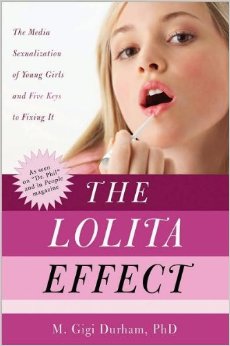
In 2008, M. Gigi Durham wrote a blunt book entitled: The Lolita Effect: the Media Sexualization Of Young Girls And What We Can Do About It. Durham is not at all writing from a Christian worldview, being a militant, secular feminist instead. In the book, she writes about several myths created by the media and the culture.

  • The “if you’ve got it, flaunt it” myth: Fashion magazines and media urge girls to dress in a way that’s “hot” and as such sets up the danger girls will attract harmful sexual attention.
  • The “anatomy of a sex goddess” myth: The runway model or the Barbie doll is projected as the ideal body, but both are unnatural.  They are genetic anomalies.
  • The “pretty babies” myth: “Ideal sexiness is about being young—very young it seems.”
  • The “what boys like” myth: “The ideal spectator is said to be male and the image of the woman is designed to flatter him.”

Durham is definitely on to something, even if it serves her own and different agenda. She is not alone in the secular world, worrying about the unhealthy consequences of the sexualization of our girls, even at the youngest of ages (Read more here).

Christian families, who believe and follow the Bible, already had these warnings in place. Consistently, God calls women (and girls) who profess godliness to reflect that by how they project themselves (cf. 1 Tim. 2:9-10; 1 Pet. 3:3-4).  Many preachers and Bible class teachers through the years have taken great pains to try and define and describe modesty, but what we have observed above would have been indisputably immodest in most people’s eyes in the world just a generation or so ago.

Too many parents, including Christian parents, have been swayed by the world’s fashion standards.  Even girls being raised in a Christian home have at times been encouraged and allowed to dress in ways that can easily produce lust. Jesus says that those who lust after a woman are committing adultery with her in their hearts (Mat. 5:28).  Men, young and old, have a responsibility to combat lust in their hearts, but Christian love would seem to dictate that women, young and old, would make that as easy as possible for them.

Fashions that are marketed as hot, sexy and daring, that reveal the body in a sexual way, are immodest!  The world, even without the Word, sees and understands that. We dare not rationalize it!  The world sexualizes everything from Cheetos to plant food and everything in between.  God commands purity of His people, but His Word must inform our standard of purity rather than what we think is pure.  Proverbs 30:11-13 says, “There is a kind of man who curses his father and does not bless his mother.  There is a kind who is pure in his own eyes, yet is not washed from his filthiness. There is a kind—oh how lofty are his eyes! And his eyelids are raised in arrogance.”

It’s important for us to ask, “What kind am I?”  Fashion choices and body obsession that say “if you’ve got it flaunt it” must be honestly examined and carefully avoided. God bless our homes which thoughtfully consider and decide with hearts set to honor Him.

Wells And Cisterns

Neal Pollard

In 1980, my family moved to the thriving metropolis of Glenn, Georgia. Dad brought in a Jim Walters Home on the property that already held a barn, smokehouse, and considerable spring. However, it proved difficult to bore a well there because of the rock that stood between the surface and the water table. I’m sure that was one of the more trying experiences my parents ever had in their decades of home-owning. Because we could not access fresh water, my siblings and I had to make regular trips up to the neighbor’s house for drinking water (I say up because the driveway was a long, steady incline to the highway, and our neighbor, the Buckners, had their house just off the highway to our north).

We rarely think about the blessing we enjoy in this nation simply to turn on a faucet and have safe drinking water on demand. Many places I have visited around the world do not enjoy that same extravagance, but must at times travel a great distance to get water from a well. Others must risk drinking water contaminated with bacteria, parasites, and viruses that cause typhoid fever, cholera, Hepatitis A, giardia, and similar, deadly pathogens.

It is not surprising that God uses a substance so basic to our existence to illustrate great spiritual truths. It’s not just the water itself that is presented figuratively, but the source and reservoir of it. The well is the source, while the cistern is the container of water. As followers of Christ, we draw from a divine source but it is contained within us. If we’re not putting it in, we will not keep it or have it to use. The Bible tells us that:

—Wells May Need Dug Again (Gen. 26:18). In Isaac’s day, that was literal. Today, that may mean reviewing the basics even if we feel like people should already know them (2 Pet. 1:12; 3:1).

—Cisterns Need To Be Clean (Lev. 11:36). That was true physically, and it needs to be true of our hearts today. How well can we keep divine water in a dirty pool?

—One Must Draw From His Own Cistern And Well (Prov. 5:15). Solomon uses the cistern figuratively to speak of the imperative nature of faithfulness in the marriage relationship. Be satisfied with your spouse alone.

—One May Foolishly Decide To Draw From Broken Cisterns (Jer. 2:13). Jeremiah speaks of how Judah rejected God for the thinking of men. It was doomed to failure then, just as it is today.

—We Must Drink From The Well Springing Up To Eternal Life (John 4:14). Jesus uses physical water to speak of eternal life. We cannot go to a source other than Him and hope to receive it.

Water is an essential part of us and a necessity to maintain us. That’s true spiritually, too. Are we going to the right source? Are we a good reservoir for that living water? When we lived in Virginia, we had a well. We were told to pour a little Clorox into it on occasion to keep it from contamination. However helpful that is to drinking water, it is vital that we let the water of life serve us in its pure and unadulterated form. Then, let us share that with the people around us dying of spiritual thirst.

one_of_the_16_rockcut_cisterns_at_pavurallakonda_bheemili

PURER YET AND PURER

Neal Pollard

While this song is not one of our “toe tappers,” it is meant to be reflective. What a challenge it presents to us, too! Johann Wolfgang Goethe wrote the poem during Napoleon’s heyday and Anne R. Bennett translated the lyrics a full decade before the Civil War, but the words are perhaps more timely today than they were in her place and time. While the song is about more than just holiness and purity, the idea is about aspiring to greater, better service to God. Goethe’s original poem had four verses, talking alternately about finding duty dearer, calmness in pain, peace and confidence in God, greater nearness to God, running the Christian race swifter, and the like. All of these endeavors are tied together, but I want to focus on that first phrase: “Purer yet and purer, I would be in mind.”

Do you feel like you are doing pretty well at purity of thought and heart? May I encourage you to take Goethe’s challenge to heart and make his prayer your prayer? Do you ever have feelings, however “small” or infrequent, for someone other than your mate? Do you ever look at things and people in web sites, advertisements, magazines, commercials, or an immodestly or provocatively dressed person of the opposite sex without looking away or in a way that produces lust or inappropriate thought? Do you ever find yourself harshly judging motives or drawing conclusions in your mind about people without sufficient knowledge of the person’s heart or situation? Do you ever envy another’s situation, their job, popularity, wealth, or home or marriage situation? Do you ever harbor a grudge toward someone, feeding those unhealthy feelings?

Obviously, that is just a starter list designed to create a host of similar questions. Purity of heart and mind is a daily challenge. Just because you defeated those purity foes yesterday does not give you respite from today’s battles. In fact, we know that since these challenges often arise when we least expect it, so we have got to keep the battle implements close at hand. Will you take the challenge of Goethe’s writing? Will you have as your goal absolute purity of heart? Being pure in heart will not inherently bring wealth, health, or fame, but it pays off in the highest and best way. Jesus said, “Blessed are the pure in heart, for they shall see God” (Matt. 5:8).