A History Of Suspicious Serpents

Dale Pollard

For some strange reason cultures all over the world have long had an obsession with snakes. Of all creatures in the animal kingdom to worship, the serpent certainly doesn’t make logical sense for a plethora of reasons. The Bible opens with the craftiest beast of creation tempting the woman and successfully bringing about the destruction of mankind. The serpent didn’t have a great track record but somehow managed to become a god that was loved by thousands not long after the flood. We find cultures all over the world who at one point dedicated their entire lives to strikingly similar serpent-like gods.  

If we were to look at these eerie similarities through a biblical lens, things begin to make sense. Even though the consequences of that first sin led to death and the entropy of all things, the serpent was still crafty enough to lead the human race to fall. It’s not clear why the snake became a prominent early global symbol but one doesn’t need to stretch the imagination too much in order to develop a convincing theory. 

Satan still roamed the earth– Adam and Eve were merely his first victims. 

COMPARATIVE SERPENT MYTHOLOGY 

Assyria  

Ningishzida (Sumerian: 𒀭𒊩𒌆𒄑𒍣𒁕NIN-G̃IŠ-ZID-DA, meaning “Lord [of the] Good Tree”) was a Mesopotamian deity of vegetation, the underworld and sometimes war. He was commonly associated with snakes. Like Dumuzi, he was believed to spend a part of the year in the land of the dead. It’s worth noting that the Sumerian legends sprang up in ancient Mesopotamia— which is where the Genesis account originated. 

South America 

Quetzalcóatl, Mayan name Kukulcán, (from Nahuatl quetzalli, “tail feather of the quetzal bird [Pharomachrus us mocinno],” and coatl, “snake”), the Feathered Serpent, one of the major deities of the ancient Mexican pantheon.

Ancient Rome 

Glycon (Ancient Greek: Γλύκων Glýkōn, gen: Γλύκωνος Glýkōnos), also spelled Glykon, was an ancient snake god. He had a large and influential cult within the Roman Empire in the 2nd century, with contemporary satirist Lucian providing the primary literary reference to the deity.

Norse Legend 

In Norse mythology, Jörmungandr (Old Norse: Jǫrmungandr, meaning “huge monster”), also known as the World Serpent (Old Norse: Miðgarðsormr), is a sea serpent, the middle child of the giantess Angrboða and Loki.

India 

Shiva is also known as Nageshwar, meaning lord of the snakes. There are temples dedicated to Shiva across the country. 

In the eastern religions of Hinduism, Buddhism and Jainism, a mythological semi-divine race known as the naga (Sanskrit for “serpent”) took half-human, half-cobra form—although they could shift shapes to fully take on one or the other. The Hindhu god Brahma was said to have banished the naga to their underground kingdom when they overpopulated the earth. 

North America  

Many old native tribes in America worshipped a horned serpent creature and evidence of this is not only found in oral traditions that have been passed down for thousands of years, but also seen in paintings on rocks in New Mexico, Utah, and Alabama. 

Among Cherokee people, a Horned Serpent is called an uktena. Anthropologist James Mooney, describes the serpent creature: 

“Those who know say the Uktena is a great snake, as large around as a tree trunk, with horns on its head, and a bright blazing crest like a diamond on its forehead, and scales glowing like sparks of fire. It has rings or spots of color along its whole length, and can not be wounded except by shooting in the seventh spot from the head, because under this spot are its heart and its life. The blazing diamond is called Ulun’suti—”Transparent”—and he who can win it may become the greatest wonder worker of the tribe. But it is worth a man’s life to attempt it, for whoever is seen by the Uktena is so dazed by the bright light that he runs toward the snake instead of trying to escape. As if this were not enough, the breath of the Uktena is so pestilential, that no living creature can survive should they inhale the tiniest bit of the foul air expelled by the Uktena. Even to see the Uktena asleep is death, not to the hunter himself, but to his family.”

Africa 

Nehebkau was an Egyptian god depicted as half serpent and half man. Egyptian reliefs and figurines show snakes walking upright like a man, upright with wings, and even as a man with the head of a snake. 

Commonly worshipped in the Egyptian 2nd dynasty of ancient Egypt, also known as the Remesside period. Nehebkau has been documented as being worshipped since aprox. 1900 BC— about the time Abraham and Sarah entered Egypt for the first time. 

Mamlambo is one of the many gods mentioned in South Africa and Zulu mythology, the “goddess of rivers”, described as a large snake-like creature. There have been several eyewitness accounts of this massive serpent through the years but no tangible evidence. 

Europe 

Eglė the Queen of Serpents is one of the best-known Lithuanian fairy tales with many references to Baltic mythology.

SERPENTS & ARCHEOLOGY 

Serpent Mound Ohio 

The Great Serpent was an alleged source of spiritual power that a widespread pre-Columbian culture could call upon to aid them in hunting and even to curing illnesses. In Adams County, Ohio, you can find the largest surviving effigy mound in the world, and it takes the shape of a serpent. From a land based perspective the site doesn’t look like much, but from the air a massive 1,348 foot long snake reveals itself. 

The Shaman Staff  

In the 1950s a group of ditch diggers on the shores of Rautajarvi Lake in southwest Finland uncovered something unusual— a wooden staff carved into the shape of a serpent. The 4,400-year-old artifact was discovered in a wetland, and is believed to be an ancient shaman’s staff. 

A Mysterious Mask

In Mexico at the site of the Pyramid of the Sun, archaeologists dug a 380-foot-long tunnel in the 1930s. In 2011, anthropologists used this tunnel to reach the mother-rock at the bottom of the shaft. There, they discovered a rare cache of treasures including three serpentine human figurines, and an emerald green serpentine mask.

WALKING-SNAKE FOSSIL

Scientists widely accept that snakes originally began with two legs then evolved over millions of years (so they say) and grew two more. There’s no fossil evidence for a four legged snake, but the skeletal remains of a two legged snake have been found. It’s been dubbed Tetrapodophis. A Yale PhD candidate, Daniel Field states that early snakes were, “…stealth hunters and nocturnal. With two small hind legs complete with ankles and toes…” 

THE ISHTAR GATE 

The Ishtar Gate in Iraq is an enormous burnt-brick gate which loomed over the main thoroughfare of ancient Babylon. It has depictions of hundreds of lions, bulls, and a strange looking four legged snakelike dragon. Interestingly, the back legs of the serpent have claws— just like the fossil of the Tetrapodophis. According to the Mesopotamian Museum of Art, the dragon represented the Babylonian god, Marduk.

EXTRA BIBLICAL REFERENCES 

Herodotus casually mentions that there were snakes that would fly from Egypt every year from the Sinai wilderness (Herodotus 2.75-76). This may strike fear in the heart of any snake-fearing person, but it sure is interesting. 

Marco Polo would also write in his travel log about flying venomous “birds” as well as snakes of gigantic proportions as he explored Asia. It could be that ancient eye witness reports of flying snakes of the ancient world were pterosaurs. Biblical categorization of animals and our modern binomial nomenclature are different. In Genesis, all creatures dwelling in the oceans were created on the same day and called fish. That includes whales, which we place in the mammal family since they breathe air. The Hebrew word for fish is the word “dag” but it could be used to describe a water dwelling reptile or mammal as well. 

SERPENTS IN SCRIPTURE 

Snakes on Fire 

The Bible records several strange serpents and one passage in particular is especially fascinating. 

In the book of Numbers there’s an account that’s made many readers scratch their heads as they wonder what these fiery (possibly flying) serpents are (21:6-9) which God sent to plague the Israelites. 

Some have suggested that perhaps the strange description is of a particular kind of venomous snake. Others have made the observation that the Hebrew word for serpent here (Saraph) could be symbolic to indicate their color since it means “burning ones.” Interestingly enough there are bronze colored serpents around today in Australia that are incredibly poisonous. Perhaps there’s something to this based on the Lord’s instruction to Moses to fashion a serpent made of brass. Of course this description could also literally be taken to mean snakes which either breathed fire, or were somehow on fire. God was, after all, punishing people who had complained of their miraculous meals of manna. 

The Great Serpent Connected to the Leviathan 

“In that day, the LORD will punish with his sword— his fierce, great and powerful sword— Leviathan the gliding (fleeing) serpent, Leviathan the coiling serpent; he will slay the monster of the sea” (Isa. 27.1) 

“And he laid hold of the dragon, the serpent of old, who is the devil and Satan, and bound him for a thousand years;” (Rev. 20.2) 

The Serpent Defeated In The Battle of Heaven  

“The pillars of the heavens quake,
    aghast at his rebuke.

By his power he churned up the sea;
    by his wisdom he cut Rahab (Leviathan) to pieces.

By his breath the skies became fair;
    his hand pierced the fleeing serpent” (Job 26.11-13) 

The Horned Serpent 

“Dan shall be a serpent in the way,
A horned snake in the path,
That bites the horse’s heels,
So that his rider falls backward”  (Gen. 49.17) 

Likely referring to the horned viper which lives in the Sahara desert. Its name comes from two prominent scales protruding behind its eyes that resemble horns. 

If The Devil Had A Self-Help Book

Friday’s Column: Brent’s Bent

I recently preached a sermon based on an idea I took from Paul Harvey’s “If I Were the Devil.” My inspiration came from reading in John 15.18-25 about Jesus’ words to His disciples shortly before His betrayal about how the world would hate Christians as much as they hated Him. I immediately thought of Andrew Carnegie’s book, How to Win Friends and Influence People, for reasons I can only attribute to my ADHD. God created us to be social creatures. Remember, God said it was not good for man to be alone (Genesis 2.18). So I expected the devil to twist Jesus’ words to persuade potential converts that their desires should be more like Carnegie’s and less like Christ’s. In other words, he’d write a self-help book about how to make the rest of the world fall in love with you rather than hate you. 

So, if the devil had a self-help book, he’d write, “If you are of the world, the world loves its own.” (Compare John 15.19) Rather than risking the world’s wrath by becoming a disciple, make friends with it. Ignore James’ statement that being friendly with the world makes you an enemy of God (James 4.4). Instead, give in to your flesh’s desires, even if it means separating yourself from God (Romans 8.5-8). Yes, give in to the desires of your flesh, eyes, and pride, and forget that God will destroy this world and its lusts in the end (1 John 2.15-17). The pleasure of sin is yours for the taking if you’re willing to go to such lengths, unlike poor old Moses (Hebrews 11.25). The world will make it worthwhile until you pay for all the fun (Romans 6.23). 

The devil will try to convince readers that serving yourself is better than following another, especially if there are no tangible benefits from subservience, such as better treatment than your master. (Compare John 15.20). So it’s best to go your way, to be free to choose for yourself, without being yoked (Matthew 11.28-30). This restraint is especially true when one considers that Jesus steers him down a “constricted” path (Matthew 7.13-14 NASB). But there is an alternative highway that is easy. And the way must be correct if it seems fitting (Proverbs 14.12). Besides, who needs some dusty old road from a long time ago when men have built newer roads since then (Jeremiah 6.15-17)? So, be your own man or woman; aim to be autonomous. 

Finally, the devil would remind his readers that Jesus revealed that people treated Him cruelly “simply because they could.” (Compare John 15.25) What Jesus did, did not matter. There were just those who despised Him. So, what was Christ’s compensation for being loyal to His Father, healing the sick, and raising the dead? The people crucified Him. Why take the risk that someone will persecute or despise you even though you are doing good? It just seems like too much trouble. Avoid worrying about the welfare of others and focus on your interests instead (Philippians 2.4). It’s the proverbially “dog eat dog” world. The iron rule of “might makes right” is what people practice, not the golden rule (Matthew 7.12). 

Yes, the devil will try to convince you that he has your best interests at heart. The apparent problem with the devil’s self-help book is that it is full of lies and mistruths. Jesus reminds us that the devil is the father of lies (John 8.44). Thus, lies are all that the devil can authoritatively speak. Jesus was honest with us, not discouraging or scaring us away when He gave us His warning about how the world would receive us. And Paul told Timothy that “all who want to live in a godly way in Christ Jesus will be persecuted” (2 Timothy 3.12 NASB). If the world hates us, that is a good thing, as long as their reason for hating us is because we are one of God’s “peculiar people” (1 Peter 2.9 KJV).  

Death was not the end for Jesus, and He assures us that it will not be the end for us, either. The author of Hebrews reminds us that Jesus was able to endure the cross and disregard its shame because of the joy set before Him (i.e., His return to Heaven)—Hebrews 12.2. So likewise, there is no reason for us to sorrow regardless of what may occur. And those of us in the United States have yet to put our lives in danger as a result of practicing our faith (cf. Hebrews 12.4). At most, men may take our lives, but they cannot take our eternal reward (Matthew 10.28). And for those facing physical persecution as those of olden Christians, we take heart from Paul’s words to the Corinthians:  

“But we have this treasure in earthen vessels, so that the surpassing greatness of the power will be of God and not from ourselves; we are afflicted in every way, but not crushed; perplexed, but not despairing; persecuted, but not forsaken; struck down, but not destroyed; always carrying about in the body the dying of Jesus, so that the life of Jesus also may be manifested in our body. For we who live are constantly being delivered over to death for Jesus’ sake, so that the life of Jesus also may be manifested in our mortal flesh” (2 Corinthians 4.7-11 NASB95). 

If you want to make friends and influence people, stick with the Bible. It truly is the best book on the subject. And, wherein his principles find a Scriptural foundation, also consult Mr. Carnegie’s work for the business world. But avoid those books on the subject written by the adversary (1 Peter 5.8). Instead, he writes self-help books that are how-to guides for self-immolation (cf. Revelation 20.14-15). 

Brent Pollard

Lessons We Learn From Jesus’ Temptations

Monday’s Column: Neal At The Cross

img_5670

Neal Pollard

Jesus knew temptation. The writer of Hebrews makes that point about Him in assuring us He, as our High Priest, knows just what we are going through in this life (2:18; 4:15). His suffering allows Him to sympathize. I am comforted to know that He understands, since He is like me (Heb. 2:17). Luke (4:1-13) records this significant and pivotal moment in Jesus’ life before He begins His public ministry. It gives me necessary insight into who Jesus is, and it helps me fight the common battle against the enticements of my flesh, my eyes, and my pride.

TEMPTATION STRIKES THOSE IN A HEALTHY RELATIONSHIP WITH GOD. To be clear, temptation strikes “every man” (Heb. 4:15). But, sometimes we conclude that it’s not so bad or so frequent for the spiritually strong. Here is the perfect Son of God, described as full of the Holy Spirit and led by the Spirit (1), who encounters the tempter (2). Being spiritually strong can help make navigating temptation easier than it is for those who live according to the flesh (Rom. 8:5-14), but no one was closer to God and more spiritually healthy than Jesus as He walked the earth. How helpful to consider Paul’s warning here: “Therefore let him who thinks he stands take heed that he does not fall” (1 Cor. 10:12). 

TEMPTATION STRIKES IN PREDICTABLE AREAS. John classifies temptation into three major categories: “the lust of the flesh and the lust of the eyes and the boastful pride of life” (1 Jn.2:16). Methodical Luke lists Jesus’ temptation in that very order (cf. Mat. 4:1-11). The serpent, approaching Eve, must have appealed to these very areas at the beginning (Gen. 3:6). The devil does not have to get more complicated than that because these avenues are overwhelmingly effective for him. Though this and other passages reveal the Evil One’s intentions and efforts, we are fully accountable for how we respond to temptation (Jas. 1:13-15). We must take responsibility for how we handle temptation. 

TEMPTATION STRIKES WHEN WE ARE VULNERABLE. Jesus has gone an unfathomable 40 days without food when He encounters the devil (2ff). The devil goes straight for this susceptible area. Think back to times when you haven’t gotten proper rest, you faced stress and pressure, you were sick or felt poorly, and other trying times. These can easily become doors we open to sin. All of us will experience physical and emotional weakness. We must be aware that these lead to spiritual exposure. 

TEMPTATION CAN MAKE US CALL WHAT WE KNOW INTO QUESTION. Twice, the devil uses conditional statements to try and create doubt. First, he says, “If You are the Son of God” (3). He called Jesus’ identity into question. Then, he says, “if You worship me” (7). He seeks to get Jesus to question His loyalty. It was not a matter of what Jesus intellectually knew, but Jesus dwelled in the flesh (John 1:14; Heb. 2:14). Be aware that temptation will cause us to question things we know, too. That includes our exalted identity and our true motivation.

TEMPTATION IS THWARTED BY AN OMNIPOTENT TOOL. Jesus wins His battles with the devil and temptation by leaning on truth. There are 86 quotations of Deuteronomy (the second giving of the Law of Moses) in the New Testament, and Jesus quotes this book in reference to each of the devil’s temptations (8:3; 6:13; 6:16). Proper knowledge and handling of Scripture help even when enemies of truth, even the devil, try to misuse Scripture against us (as he does with Jesus, misapplying Psalm 91:11-12). Scripture is God’s own weapon, given to us not to cut and maim others but to fight off temptation and fend off the biggest threats to our faith and soul (Heb. 4:12; Eph. 6:17). 

It is wonderful to contemplate a day in which temptation will be permanently past-tense (cf. Rev. 21:1ff; 1 Cor. 15:55-58). Until then, we benefit so much from seeing how Jesus coped with the bane of temptation. It also helps us appreciate what He endured in order to give us salvation. 

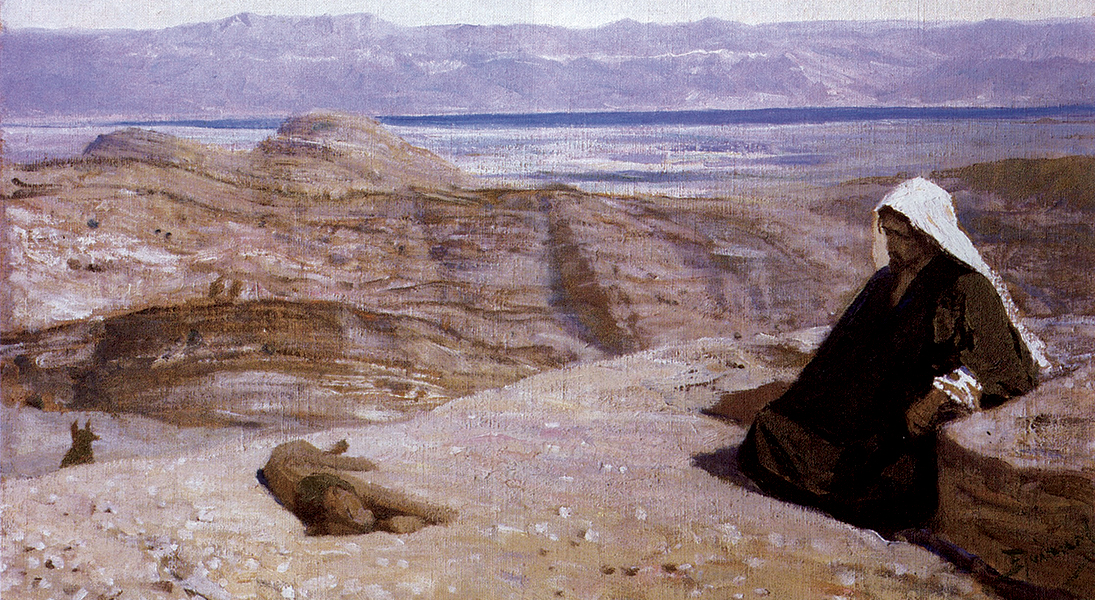
Vasily Polenov (1909), “Christ In The Desert”

The Gripsholm Terror

Tuesday’s Column: Dale Mail

dalejanelle2021

Dale Pollard

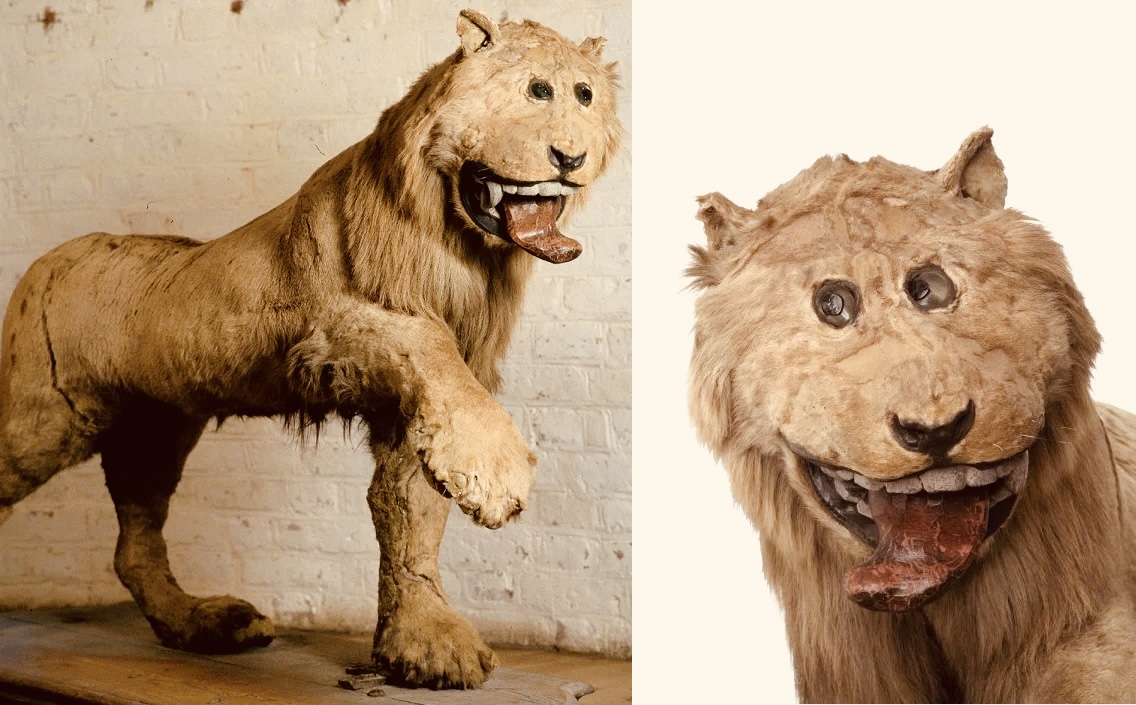
The Gripsholm Castle, in Sweden, is home to the world’s oldest portrait gallery. This might be of interest to some art enthusiasts, but there’s something else in this castle you’d never forget seeing. Inside of a glass box in Gripsholm’s upper armory, there is an 18th century stuffed lion. This lion, nicknamed “Leo,” is a beast that tends to provoke a wide arrange of emotions from it’s viewers. It has a disfigured face and human like teeth with an oversized (fake) tongue hanging out of it’s mouth. The history of the lion is also somewhat of a mystery. However, there’s a particular legend about this taxidermy terror that the writer finds hilarious. In 1731 the king of Sweden was given an incredible gift. He was once the proud owner of a handsome lion and he loved this beast. Unfortunately, it died at a young age and the king’s heart was broken. He sent the lion’s pelt and bones to a taxidermist to have it stuffed so that it’s memory would be kept “alive.” There was only one problem. The taxidermist had no idea what a lion actually looked like because he had never seen one before. This being the days before the internet, he was forced to try his very best. The finished product remains part atrocity and part masterpiece to this day.

 In 1 Peter 5.8 we are warned about our adversary, the Devil, and that he is currently stalking the earth looking for his next potential prey. The sad truth is the fact that many in this world aren’t sure what this lion looks like. The Devil can disguise himself in the form of sinful pleasures and promises and as a result he has become the, “King of this world” (John 12.31). The Scriptures and the king of Sweden can both agree that things will get ugly if we aren’t sure what a lion looks like. 

“Created for His Enjoyment? “

Friday’s Column: Brent’s Biblical Bytes

81121814_2462862270639428_5746232403106463744_n

Brent Pollard

While in college, I accompanied a friend to Chattanooga to pick up her car from her parents. Both of us were from rural Appalachia and shared a love for nature. Thus, learning that the Tennessee Aquarium was our rendezvous point did not surprise me. It was my first visit to this establishment, and I was impressed. Among the permanent exhibits, there was a temporary one featuring jellyfish. I thought that was lackluster from the sound of it. As I discovered, jellyfish can be quite beautiful. 

There were varieties of jellyfish (i.e., comb jellyfish) looking like UFOs, filled with running lights. I felt like I was watching a science fiction movie as the jellyfish slowly moved through the water. If you have seen Close Encounters of the Third Kind, you may recall the scene where the aliens converge on Devil’s Tower in Wyoming. The “men-in-black-types” atop Devil’s Tower used musical tones associated with colored lights to “communicate” with the extraterrestrial visitors who replied with the same notes and colors. That is what I recalled watching those jellyfish.  

I suppose there may be a sense in which I was watching ambassadors from another world. These are creatures that humanity does not usually get to see, outside of a documentary such as the BBC’s Blue Planet. I suppose prey are attracted to the light. However, a blind mechanism, like evolution, would not have given them the beauty I witnessed. Intelligence must have designed them this way since a single glowing color would be sufficient to attract their meals. Jellyfish would not need a rainbow of colorful lights. Indeed, these comb jellyfish spoke to me of an unseen God (cf. Romans 1.20). 

Isaiah 43.7 informs us God created Israel for His glory. I wish to treat this passage with great care since Christians sometimes use it to give rationale to God’s creation of all humanity. Yet, God made it clear that He picked an insignificant group on purpose (Deuteronomy 7.7). To what end? He could show the world His power and bring salvation through their seed (cf. Genesis 3.15; 22.18). That said, we may safely conclude that God created everything with a purpose. When one can view amazing spectacles, usually observed only by an omnipresent God (cf. Psalm 139), it is hard not to suppose God made things also for His enjoyment.  

In addition to these alienesque gelatinous animals, God has other interesting “sights” to which only He has a regular vantage. Beneath the arctic ice, for example, one can find coral with, admittedly, more subdued colors than their kin in warm, tropical waters. Yet, here is something beautiful and unexpected no human typically sees. But God does. What about other aspects of creation that suggest they exist for God’s enjoyment? Some people say platypuses show God’s “sense of humor.” Consider the amalgamation of creatures one sees within the platypus. The platypus is a mammal but lays eggs. Like an avian, platypuses have duckbills and webbed feet. A platypus has a tail like a beaver and otter-like fur. Male platypuses are even venomous! Platypuses are so odd, in fact, that the first scientists examining them felt someone was pranking them. (“platypus”1)   

Yes, God created the universe and all that is in it per His Will. Maybe God makes nations that can show His glory like ancient Israel. Perhaps, God creates organisms for no other reason than His enjoyment, like comb jellyfish and platypuses. But we know God created humanity so He could have a relationship with us. That is why the Father intervened by sending His Son (Isaiah 53.10-11; John 3.16), and why we find our purpose in doing God’s Will (Ecclesiastes 12.13-14).   

Works Cited 

1 “Platypus.” National Geographic, National Geographic Partners, LLC., 21 Sept. 2018, www.nationalgeographic.com/animals/mammals/p/platypus/.  

Why Doesn’t God Just Kill the Devil?

Thursday’s Column: Captain’s Blog

carl pic

Carl Pollard

This is a question that has been asked for centuries. If God is all powerful, why doesn’t He just kill Satan? In order to adequately answer this question we will need to look at a few different aspects of the Devil himself, as well as the attributes of God.
It’s not hard to find evidence of a world filled with sin, and logically it would make sense for God to just destroy the source of the problem…or would it? Let’s notice a few things about Satan.
Where did he come from? In Genesis 1:31, God sees His creation and it says, “everything was very good.” All of God’s work was perfect. From this we can conclude that Satan started off as good and became evil. While Scripture doesn’t reveal his exact origin, it says enough for us to draw a logical conclusion. For example, 2 Peter 2:4, Matthew 12:24, and 25:41 point to Satan as the leader of a groups of angels that have abandoned heaven. So we have to ask, why was Satan cast out of Heaven?
Based on the previous verses and what we read in Jude 6, the angels were created with free choice. And Peter explains that the angels sinned (2 Peter 2:4). We read the phrase “The Devil and HIS angels” so Satan was most likely the leader and instigator of this rebellion in heaven. Satan tried to rebel against God and failed miserably and will face the consequences of his actions (Revelation 20:1-3). Since Satan cannot win against God, he now wants to get payback by taking his anger out on God’s creation.
So why doesn’t God destroy Satan? Aside from the fact that he’s an angel and killing him would be different from killing a human, we run into another issue.
Even if Satan were destroyed, man would still sin. James 1:14 tells us that as humans we are carried away by our OWN desires, and these desires lead to spiritual death. Satan doesn’t cause everyone to sin, at every location on earth, because he doesn’t have this kind of power. Even if God destroyed Satan, there would still be sin on earth.
There is one other aspect we must look at in order to answer this question; What is the definition of good? Without evil, how can good exist? If God is good, then evil must exist. Without darkness, how can we recognize light? There is balance and perfection in everything.
We are given free will, and if there were no other choice except faith in God, we would not have faith by choice. We would have faith by force. I think about when I was younger and got in a fight with my siblings. Mom would force us to hug each other. That hug was not done out of love, but by mom telling us to get it done. Do you prefer to be loved by choice or by force?
Satan will get what he deserves, but God is defined as a God of love. If God took away our free choice (either to serve Him or sin) then He would be a God of Force. God has the power to destroy Satan, but in doing so we would still be in a fallen world filled with sin. God loves us enough that He wants us to come to Him by choice. This is something each one of us should strive to do.
reptile-5043671_960_720