

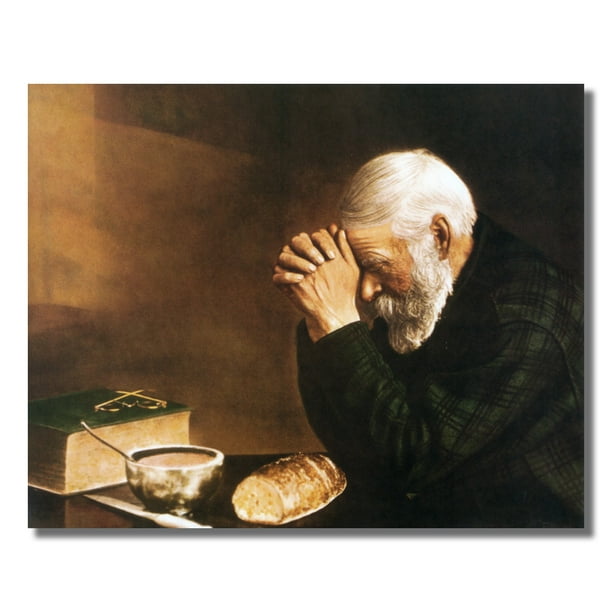
“Give Thanks To The Lord”

Thursday’s Column

Smiling middle-aged man with purple shirt and tie on with evergreens as a backdrop
Neal Pollard

I wonder if Kathy felt like she was living with Briscoe Darling and the boys (imagine them if they were talkative) through the years they were growing up. She is refined and genteel, words that are not usually connected to our three sons and me. One thing she impressed upon us was the importance of timely, thoughtful thank you notes. Gratitude, though it can be expressed with very little time and expense, is telling. It acknowledges the kindness and generosity of the giver. 

One of the elements of worship, generally, and prayer, specifically, is thanksgiving. Our songs call for it: “Give Thanks With A Grateful Heart,” they express it: “Thank You, Lord,” “For All That You’ve Done,” “How Great Thou Art,” “10,000 Reasons,” and “He Has Made Me Glad.” Though that songwriter, Leona Von Brethorst, apparently wrote the song from Psalm 100, she includes a line from Psalm 118:24: “This is the day that the Lord has made.” 

Five times in Psalm 118, the psalmist says “give thanks” (1,19,21,28,29). He urges others to do so, but also expresses his resolve to do the same. Why?

GIVE THANKS FOR HIS GOODNESS (1-4)

“Good” is a general word that takes in pleasantness, desirability, and beauty. The good quality specified here is His everlasting mercy (lovingkindness). The writer moves from the broad to the specific–Israel, house of Aaron, those who fear the Lord. Everyone is the object of God’s lovingkindness. The righteous freely express their thanks for it.

GIVE THANKS FOR HIS DELIVERANCE (5-13)

There is a sudden, dramatic shift in tone in verse five. From an upbeat, positive tone, he turns to thoughts of trouble and difficulty. Distress, hatred, being surrounded, and violence threatened him, but God was there for him as protection and help. This kept him from fearfulness. It gave him refuge. 

It is an amazing thing to think of all the ways and times God has been with me, but those are just the instances I’m aware of. How many trials has God spared me from, disasters has He caused me to avoid, and troubles has He averted for me that I won’t know about on this earth? Just what I do know humbles me, and it should fill my heart with gratitude. 

GIVE THANKS FOR HIS GREATNESS (14-17)

The writer turns to the Giver. He is strong, a Savior, valiant, and exalted. Summarizing God’s qualities, the writer says, “I will not die, but live, And tell of the works of the Lord” (17). Awareness of who God is for me, physically, materially, and spiritually, will drive me to grateful thanks.

GIVE THANKS FOR HIS DISCIPLINE (18)

Though it is almost a parenthetical phrase in the middle of this song of thanksgiving, it is important and an additional reason for gratitude. He writes, “The Lord has disciplined me severely, But He has not given me over to death.” Who is brave enough to say that with the psalmist? He implies gratitude for God’s severe discipline. Hebrews 12:7-10 tells us that God disciplines those He loves and calls His children. It is for our good and allows us to share His holiness. Can I thank Him for the trials and challenges that refine me and grow my dependence on Him? Or do I just plaintively ask, “Why?”

GIVE THANKS FOR HIS PROVISION (19-29)

He uses the imagery of a city here–gates, stones, and chief corner stone. Then, he ends with a temple analogy, with the house of the Lord, festival sacrifice, and the horns of the altar. Saved inside God’s walls of protection, we are free to offer worship which He accepts. We marvel, we rejoice, we are glad, we prosper, and we extol. He has given us light. The primary thrust is not material, but spiritual. However prosperous or impoverished you are, financially, however strong or weak you are, emotionally, we have the greatest provision of all in Christ. Eternal salvation, the hope of heaven, fellowship with God and the saved, the church, strength to endure, the list is endless. 

Today, as you go through the day, why not stop and spend time in prayer to God thanking Him categorically: physical blessings, relationship blessings, emotional blessings, national blessings, and spiritual blessings. No doubt, there are things in your life right now that are dissatisfying and disappointing. You may be struggling mightily. Perhaps those are ways God is disciplining you in His love. Whatever is happening in your life, choose to give thanks and know God is trustworthy! It’s more than polite. It’s righteous!
Some Perspective, Please!

Neal Pollard

–I have taught a Bible study in the hut of a woman in a jungle village of southeast Asia. She had no furniture and only a couple of cooking vessels and utensils. Her one-room house was thatched in a place that averages an inch or more of rain each week. Her lifestyle reflected that of nearly all of her neighbors. 

–I have stayed in the house of a faithful, fruitful gospel preacher in west Africa. One night, the temperature in the house was 91 degrees overnight. The interior walls were made of styrofoam, thin enough to hear the rats scurrying around and scratching behind them. They were actually better off than most in their village. 

–I have stayed not far from the Bay of Bengal in a crowded city across from a leper colony. Taking a bath/shower consisted of using a large cup from a single spigot in a “bathroom” where the water ran a light brown color. Within a hundred miles of there, at least 100,000 people were living under cardboard boxes and old tarps.

–I met a man at a church service in east Africa who made his living working in a gem mine. He and his wife had four children of their own. Their neighbors both died of AIDS, leaving their three children orphaned. This Christian and his wife adopted them. He made $2 per day and Sunday was his only day off. He supported a household of nine on less than $15 per week. 

In every one of the examples above, I was only there for a couple of weeks and returned home to hot water, running water, reliable shelter and automobiles, and a thousand other amenities. 

Many of the people in our world, before the current pandemic, struggled to survive through subsistence farming, poor nutrition, virtually non-existent healthcare, and little access to education. This sets up a cycle of poverty and disease that lowers life expectancy to middle-age at best. Sports, vacations, retirement plans, and insurance are, for many, a pipe dream if even a concept they have ever entertained. I once drove past a slum in a capitol city that was part of 2.5 million homeless people living in what was essentially a trash dump. 

The current crisis is real and impactful. It has required adjustments, changes, and sacrifices. Yet, from a medical, monetary, and material standpoint, we still find ourselves at the top of over 200 nations in just about every earthly way things can be measured. This is a time for us to pause and humbly thank God for His abundant blessings, to ask forgiveness for complaining in the face of such generosity, and to seek His guidance in how we can use this time to focus on others’ needs and helping those who are truly unfortunate. Matthew 25:31-46 is a convicting text, where the Lord tells us He watches how we respond to the hungry, thirsty, naked, stranger, sick, and imprisoned among “the least” of the world. Perhaps what we are going through now is a door of opportunity, to sharpen our perspective on what is essential and what is extra. Let it begin with me!

800px-kibera_slum_nairobi_kenya_01

Are You Grateful?

Neal Pollard

Jesus asked a lone, appreciative soul, “Were there not ten cleansed? But the nine–where are they? Was no one found who turned back to give glory to God, except this foreigner?” (Luke 17:17-18). They were terrified (13), terminal (12), transformed (14), but they were not thankful. They were saved, but to what end? They were selfish and not spiritual. God made them whole, and what did they do? They blended into the world when they should have blessed The Word.

Ingratitude increasingly characterizes man’s interaction with man–the etiquette of thank you cards is rarer, the feelings of loyalty and appreciation for the American military and first responders is waning, and many have forgiven themselves of the debt owed to generations past whose sacrifice has led us to national plenty. This is not all-inclusive and at times there are spikes of improvement and pleasant, positive change toward greater thankfulness.

Yet, since the time when Christ’s sandals kicked up dust in Palestine, people have failed to show gratitude to Him. that the ingratitude comes from those whom He saved from the devil’s disease and death is remarkable! Yet, we all struggle with that sin.

New Testament writers point out how grave an error ingratitude is. Paul warned about the “ungrateful” (2 Tim. 3:2) who would ultimately make no spiritual progress. God rejects as foolish and futile those who “glorified Him not as God, neither were thankful” (Rom. 1:21). Someone may ask, “Why make such a big deal about something so seemingly minor?”

Is it minor? If we’re not thankful to God, one or more things have occurred. (1) We are convinced there is no eternity and it’s all about here and now. (2) We have forgotten how it felt to be forgiven. (3) We believe that everything is about us and nothing is about anyone else, let alone God. (4) We have come to believe that sin is just no big deal. (5) We think we owe everything we have and are to no one but ourselves. No doubt, more answers could be postulated, but here is the bottom line. A failure to thank God for His abundant blessings makes one in more dire condition than any leper ever was. We may not be losing our extremities, our hair may not be turning bleach white, we may not have painful sores, and we may not be social outcasts. But, here is what has happened. Our heart is cold, our soul is endangered, we’re in denial, and we’re blinded to the realest of realities.

Won’t you say with David, “Enter His gates with thanksgiving And His courts with praise. Give thanks to Him, bless His name.For the Lord is good; His lovingkindness is everlasting and His faithfulness to all generations” (Ps. 100:4-5)? Stop and think how much you owe to God. Translate that gratitude into godly servitude. Give Him your best. Give Him yourself. Give Him your thanks. 

800px-gebhard_fugel_christus_und_die_aussc3a4tzigen_c1920