WHEN GOD PAID A VISIT TO ISRAEL

Neal Pollard

The Bible tells the beautiful story about the day God visited earth as a human being, coming as a baby by way of the virgin Mary (John 1:14). Because He came here, we can hope to go to His home (John 14:1-3). But one day, He’s going to pay another visit, a visit that will be welcomed by the saved but horrific for the lost (2 Thess. 1:7-10). But, there have been times when God has come in judgment of people on earth, and Amos’ day was one of them (3:14). The prophet wrote, “That in the day that I shall visit the transgressions of Israel upon him I will also visit the altars of Bethel; and the horns of the altar shall be cut off, and fall to the ground.”  Some versions have the word “punish” instead of “visit.” Punishment was the purpose or nature of the visit.  Why did God pay a visit to Israel?

  • Life had become very cheap (2:6). Two different classes of people were viewed cheaply by Israel—the righteous (spiritually rich) and the needy (physically poor).  This could refer to those who were innocent of crimes who were found guilty through bribery and corruption. Apparently, a ridiculously small amount was required to purchase the poor. Throughout the history of mankind, evil people have found ways to devalue human life (slavery, abortion, euthanasia, prostitution, pornography, etc.). When God pays a visit and sees such an attitude toward life, He is not pleased (cf. Prov. 6:16-17). I should ask, “Do my everyday dealings with others reflect my high regard for human life? Do I see others as pawns in my hand to be manipulated, as those I can take advantage of for my selfish gain, or as those who can meet my needs?” This applies to fellow-Christians, too. Do I value them or devalue them (cf. Phil. 2:1-4)?
  • There was immorality (2:7).  God did not hesitate to enter the bedroom when He paid a visit. It was God who created sexuality, and what He made was good. Since the fourth chapter of the Bible, people have tampered with His design. By the time God visits Israel in Amos’ day, the condition of things in this area of life was disgusting and perverse. It violated the Law of Moses (Lev. 18:8). But it also violated the laws of common decency. It was that way in New Testament times in the church of Corinth (1 Cor. 5:1). Woe unto the people who, when God visits, He finds full of immorality. God created human sexuality and He lays the ground rules for it (Heb. 13:4).
  • There was ingratitude (2:9-10). It’s not clear whether the feasts in Amos 2:8 were legitimate and therefore abused worship to Jehovah or if these were pagan practices to idols. We know there was drunkenness and probably fornication during the course of these festivities, whatever the intended object of worship. But the root of the problem was a failure to acknowledge God’s hand in their protection and deliverance. These people failed to give God the credit for their success. They had been so blessed by God, but they ignored Him. It’s the problem of the nine ungrateful lepers in Luke 17:11-19. They appealed directly to God, He healed them, then they forgot Him. I believe that in our land of plenty, we must guard against ingratitude and even a sense of entitlement. We have running water on demand, clean water, hot water, air conditioning, dental plans or at least dentists, clean hospitals with the world’s best doctors and nurses, no malaria, cholera, or typhoid epidemics, retirement plans, and more. But we’re the most ungrateful people on the planet. As a Christian, I have even more than that. Am I grateful for it?
  • They closed the mouths of the prophets (2:12). They had aready tempted the Nazarites to break their vows (11). They were hard at work on the prophets, too, trying to stop them. When God visits a people, He had better find faithful messengers. Later, in Ezekiel’s day, God was hard pressed to find them (cf. Ezek. 22:30). Paul warned about this (2 Tim. 4:3-4). Woe to the preacher who has a price, who markets his message to the highest bidders. A man who sells out to his paycheck and a people who love to have it so will neither one fare well when God pays a visit.

These weren’t the only things God saw when He paid Israel a visit. They were out of step with God (3:3). Their women lost their spirituality (4:1). They corrupted their worship (4:4). They were rebellious (4:6). They had divorced religion from righteous living (5:21). They were at ease at Zion when they should have grieved over it (6:1). At the judgment seat of Christ, many people’s works will go up in flames. We must be ready when Christ pays a visit.

Some Things That Will Not Be At The Judgment

Neal Pollard

What will the throne of judgment look like? What will Christ, the Judge, look like? Will the Judgment be experienced through the sense of sight? What will be different there from this life? What will be changed?

The Bible speaks often about the moment of reckoning, when the righteous and wicked dead (John 5:28-29) and all living (Mat. 25:31-33) will stand before the King of kings to give account for the conduct of the body (2 Cor. 5:10). As we attempt to paint a mental picture of the Judgment Day, some things shouldn’t be envisioned because they won’t be there.

  • There will not be an unbeliever at the Judgment (Phil. 2:10-11). With an introduction only heaven could produce, John says Jesus will come with clouds, every eye shall see Him, and all nations of the earth will wail because of Him (Rev. 1:7). No person will be able to continue in unbelief. Faith will be permanently past tense. Evidence of God’s power and the power of His promises will be beyond the realm of the hopes for and in the arena of the finally seen (Heb. 11:1). Jokes scoffing the Divine will not slip off the sin-darkened hearts of the defiant. No skeptics, no agnostics, no doubters, and no infidels will be at the Judgment.
  • There will not be a material possession at the Judgment (2 Pet. 3:10). The inhabitants of this planet seem to be more engrossed with things daily. The Lord calls things “corruptible” (1 Pet. 1:18) and inferior treasure (Mat. 6:19). People seek material things to provide them a life of joy, peace, and comfort. We will give an account for our stewardship of material things. We will answer “yes” or “no” when asked if we robbed God (Mal. 3:8). But no person will bring his possessions or amassed wealth into the venerable court of justice.
  • There will not be a mistrial at the Judgment (Acts 17:31). Each of us will appear before the Judgment seat of Christ (Rom. 14:10). We will each “stand trial” (2 Cor. 5:10). Christ, the “true” (John 8:16), universal (Acts 10:42), righteous (Acts 17:31), God-ordained (Rom. 2:16) and ready (1 Pet. 4:5) judge will sit to hear the case of every mentally accountable person to have lived. Jesus will judge without bias (Eph. 6:9) by relying on heaven’s unabridged record of the individual’s life (Rev. 20:12). He will judge according to the perfect law of liberty (Jas. 1:25). No one will be able to legitimately cry “foul.” When the law book is closed and the last judgment is handed down, no one will be able to find a loophole or mistake in the proceedings that will allow them to go free or be retried. There will not be any miscues or oversights.
  • There will be no secrets at the Judgment (Rom. 2:16). God now knows every man’s secret sins (Psa. 90:8) and He shall bring such things to the Judgment (Ecc. 12:14). God sees every secret place (Jer. 23:23). He reveals the deepest, darkest secrets (Dan. 2:22). At the Judgment, such things will judged (Rom. 2:16). “…All things are open and laid bare to the eyes of Him with whom we have to do” (Heb. 4:13b).
  • There will be no baptistery at the Judgment. Most people will go into eternity not having been washed, sanctified and justified (cf. 1 Cor. 6:11). As Christ divides the sheep from the goats, it will matter whether a person has fully obeyed the gospel (cf. 1 Pet. 3:21; Rom. 6:3-4; Col. 2:12; Acts 2:38; Gal. 3:27; Acts 22:16; Mark 16:16). Perhaps people will cry out for another person to baptize them. The angst of many who bargained for a later date to be baptized will be realized when they stand before Christ without His blood covering their sins.
  • There will be no invitation song at the Judgment. When the trumpet sounds, no sermon will be preached to convince the lost to obey the gospel. There’ll be no pleading with the lukewarm and unfaithful Christians. No song leader will stand before that numberless crowd to appeal to the lost and erring. Legions of hearts will be melted by the power of God. Fearful realization will fill those unready to meet Christ. Perhaps many will cry out for another chance, but the last opportunity will have passed.

There will be a righteous Judge who will give a fair trial to every individual. All will give an account. An eternal sentence will be handed down based upon one’s life and acceptance or rejection of Christ’s sacrifice. There will be no parole, stay of execution, or pardon for the lost. We all will need abundant grace to be able to stand at His right hand side, but Scripture tells us how that is extended. We must prepare for that in this life (Heb. 9:27). OLYMPUS DIGITAL CAMERA

Ancient, But Temporary

Neal Pollard

The oldest buildings in the world are found in Turkey, France, Italy, Scotland, Malta, England, Ireland, and Iran. All of them date back to at least 3,000 B.C.  They include tombs, temples, settlements, houses, sanctuaries, and plazas. They are historical treasures, revealing the earliest dental procedures, burial habits, religious ceremonies of pagans, societies and more. Some are remarkably preserved for their age, and many are visited by tourists after having been meticulously studied by archaeologists and other students of history.  It fires the imagination to think about what life was like for people who lived contemporary to Noah’s sons, Abraham, and perhaps Job. The fact that any part of these edifices still stand is incredible. When you consider that the oldest buildings intact in the United States are Puebloan houses and villages located in New Mexico, Arizona, Colorado, and Utah, dating only as far back as between 750-1000 A.D., the existence of the aforementioned structures in Europe and Asia is all the more impressive (information via taospueblo.com, wikipedia, et al).

History and archaeology buffs revel at the thought of visiting such sites, and who could fail to marvel at such testaments to durability?  We can hardly fathom buildings that have stood for several thousands of years.  However, they are all comparatively temporary.

Peter writes, “But the day of the Lord will come like a thief, in which the heavens will pass away with a roar and the elements will be destroyed with intense heat, and the earth and its works will be burned up. Since all these things are to be destroyed in this way, what sort of people ought you to be in holy conduct and godliness, looking for and hastening the coming of the day of God, because of which the heavens will destroyed by burning, and the elements will melt with intense heat!” (2 Pet. 3:10-12).  When Christ comes again, all the works of earth will be destroyed with fire. Such a promise is meant to motivate us to live in view of the unseen and the eternal.  Specifically, Peter says such knowledge such cause us to be holy and godly, watchful and anticipating.  Ancient buildings can be seen with the eyes of flesh.  Future destruction must be viewed through eyes of faith.  May we remember, as we live each day and build our lives, that nothing in this life is worth surrendering eternal life.

GET READY!

Neal Pollard

As one who can count on one hand the number of snow events experienced in childhood, I have lived the last decade in Colorado where snow is more ordinary than oddity. Even so, the meteorological chatter is much higher in advance of an anticipated big storm this weekend. Because almost all my adult life has been spent in either Virginia or Colorado, we have heard many warnings.  In both places, it has seemed as though the weather experts were akin the boy crying wolf.  At the same time, in both places, we have had some huge surprises measured in feet rather than inches.

Perhaps because of this, locals in both places have at times been jaded and skeptical at these fearsome forecasts.  Their facial expressions say, “I’ll believe it when I see it.”  Why not? I remember a time in Virginia when the forecast was a foot of snow, all metro county schools closed in anticipation, and the next pre-dawn morning revealed starry skies without even a cloud.  Man, even with sophisticated radar and computer models, are at the mercy of the complexities of weather put in motion millennia ago by an all-powerful Creator.

We should not make the mistake of thinking God is like man (Ps. 50:21; Ezek. 28:2).  When He speaks of things to come, it is not mere prognostication or educated guessing.  He declares the end from the beginning (Isa. 46:10).  Thus, whatever He says is to come must not be dismissed.  It is a promise, as certain as His perfect character.

Throughout the New Testament, God is telling us to get ready for a day of judgment.  When writers say, “The Son of Man is going to come” (Mat. 16:27), “an hour is coming” (John 5:28-29), “all the nations will be gathered before Him” (Mat. 25:32), and the like, we should not expect a change in that forecast.  Just because it has not happened yet does not mean it will not come.  Peter warned of those who would say, “Where is the promise of His coming? For ever since the fathers fell asleep, all continues just as it was from the beginning of creation” (2 Pet. 3:4).  Nonetheless, Scripture says, “Get ready!” We don’t know when, but we should not wonder if.

Evel Knievel At Snake River Canyon

Neal Pollard

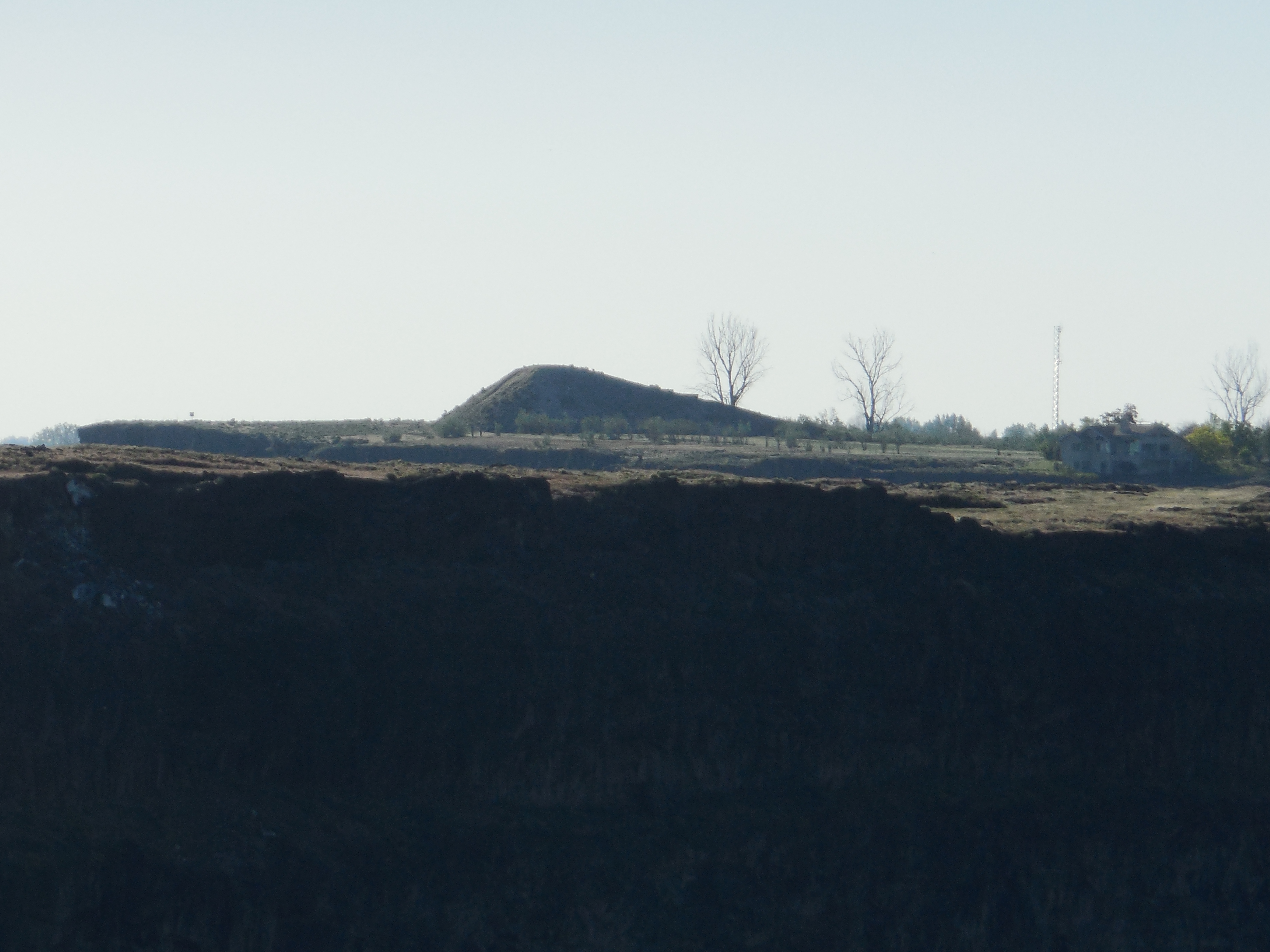
Today I took a picture of a famous pile of dirt.  It was the “launch site” for an infamous jump made by an infamous figure of the ’60s, ’70’s, and ’80s.  On September 8, 1974, almost 40 years ago, Evel Knievel used a rocket-powered cycle known as the Skycycle X-2 to jump the Snake River Canyon in Twin Falls, Idaho.  Having now seen this foreboding span between the north and south rim with my own two eyes, I can only wonder why he would have even attempted it. If you aren’t familiar with how it turned out, it was a dud.  His chute deployed at the beginning of the jump and he fell to the canyon floor narrowly missing the river in what would have been a certain drowning due to a malfunctioning harness. Tim Woodward, a now retired columnist for Boise’s Idaho Statesman newspaper, was there covering the event.  He describes the atmosphere, saying, “It was, in the terminology of the day, a ‘happening.’ Spectators and groupies came by the thousands from all over the country, bringing drugs, alcohol and nudity in profusion. It was Woodstock without the music. Or the peace and love” (Woodward, Idaho Statesman, 12/1/07). A local member of the church says that the event cost the city untold money, due to vandalism, theft, and other destructive acts.  He also says the common belief is that the daredevil lost his nerve and panicked, triggering the parachute himself.  Whether that was the case or not, it was a much-anticipated event at which many raucous spectators gathered only to be disappointed.

As I heard and read these details, it made me think of an event that will be far different from this one.  It will involve a figure who has been the center of far greater controversy than any other—one who some love but many more hate.  It will involve a promised event infinitely more spectacular than anything man has devised.  It will include the largest crowd ever assembled to witness any other event, and it will include raucous rabble-rousers as well as righteous religious people.  But it will be neither a dud nor a flop.  Its magnificence defies adequate words of description.  The second coming of Christ will be no mere “publicity stunt.” It will be at the center of the ending of time and the ushering in of eternity.  It will draw every person from every nation for all time.  It will bring everyone to our knees.  God has foretold us of this day and we cannot afford to take it lightly (cf. John 5:28-29; 2 Pe. 3:10).  We must be prepared for it (Mat. 24:44).  We have never seen anything like it, but we can be ready for it!

DSCN8647

Unprepared For The Conditions

Neal Pollard

As one who was born in Mississippi and raised in south Georgia, I am very proud of my southern roots.  Frankly, I could not hide them even if I was inclined.  It is a heritage that includes the Bible Belt, sweet tea, BBQ, lemon icebox pie, peanut butter, gnats, humidity, pecan trees, Georgia mud cats, the Georgia Bulldogs, and the Atlanta Braves (including the bad years).  But, one thing we rarely needed to be ready for was treating the roads for snow and ice.  Therefore, even a light or moderate amount of snow means impassable roads and gridlock in traffic.  The historic snowstorm that has hit the deep south has come with power outages, massive traffic jams, stranded motorists, numerous wrecks, and seven states of emergency.  Typically, southern cities do not have chemicals for road treatment, a bevy of snow plows, or organized plans because these events are so rare.


I am not criticizing these locales and governments because of this lack of preparation.  Of course, I was not trying to get home from work or school in those conditions. If you were, you likely feel differently.


Yet, there is a general state of unpreparedness for something that is 100% likely to occur at some point in the future.  Every single person could potentially make completely ready for it.  It has been forecast with the greatest of certainty.  It has been described in clear enough detail.  The preparation is outlined in clear and simple detail.  There are even a number of people who have been employed and enlisted to aid in warning and educating the general public.  Those tasked with being prepared and preparing others will be held accountable for whether or not they were involved in enacting that plan.  Every single person who is unprepared will nonetheless be accountable and liable for the consequences of their not being ready (Mat. 25:1-13).  There is absolutely no reason why anyone should be unprepared for the Judgment Day.  May each of us do our part to help prepare as many as possible for it!


Is Your Life “Award Winning”?

Neal Pollard

CBS News reports on 19-year-old Chris Strickland, a very ordinary young man who seems unaware of how heroic his split-second action was. In his first job, Chris, working at a Home Depot in Anchorage, Alaska, happened to turn around and face a shopping cart at the moment an unattended baby fell out of a baby seat sitting atop it.  Store surveillance video captures the whole thing, as Strickland rushes over and reaches out to catch the falling infant.  For this simple, profoundly important act, Strickland will receive the Home Depot Angel Award, “reserved for those who perform exceptional acts of heroism” (via http://www.cbsnews.com/news/quick-thinking-home-depot-employee-saves-falling-baby/).

If all goes well, some day that baby will grow up, maybe get married and have children, and, optimists might say, do some great thing—become president, save an entire burning building full of people, or, better yet, become a faithful Christian responsible for scores of folks getting to heaven.  No matter what happens with the child, it will not diminish the heroism of this young man who, at the right place and right time, chose to save another human being and one literally helpless.

In 2 Timothy 4:8, Paul speaks of Christ giving an unequaled reward on the Judgment Day.  It will be for those heros and heroines who loved His coming and appearance, who fought, finished, and kept the faith (7).  In a parable about the Judgment, Jesus speaks of the award winning “sheep” who will enter heaven.  What did they do?  Cared for those who had needs.  James 1:12 speaks of a reward Christ will personally give to those who persevere under trial.

You didn’t consider yourself a “hero,” did you?  Passages like those above speak of how ordinary folks like us can receive the highest honor of all time and eternity.  How?  By faithful endurance, service, and response to Jesus, the Lord!  Congratulations!