
The Bible & The Pyramids (PT. 1)

Dale Pollard

Spoilers! The Bible never mentions the pyramids by name. This seems a little odd since many important events took place in Egypt. Abraham visits, Joseph rose to power, and later the Israelites are enslaved there (Gen. 12, 41). Because of Egypt’s prominence in scripture, I’m sure the author isn’t the only reader that’s wondered about the pyramids and the biblical record.

The foundational Hebrew term for Egypt in the Old Testament is Mizraim, and it’s mentioned 639 times (Strong’s H4714, BLB). According to the old McClintock & Strong, the name Mizraim could be connected to a term meaning “two mounds or fortresses.” The encyclopedia notes that the name is in a dual form and came to signify the two regions—Upper and Lower Egypt.

That reference to the two mounds/fortresses is intriguing as Egypt is famous for its huge pyramids—two of them. The Great Pyramid (481 feet) sits next to the Khafre pyramid (448 feet) and both dwarf the other sand triangles in the area. Amazingly, they also happen to be the oldest.

While McClintock & Strong doesn’t make the claim that Mizraim literally means “pyramids,” the association with Egypt with its great monumental structures has led some to find the wording at least worth noting. Maybe it’s not too much of a stretch to say that the Hebrew name for Egypt was based on the two mound-like fortresses that Egypt is still known for today.

BONUS NUGGET

Pre-Flood Builders & Mizraim

In medieval-Islamic and Near Eastern historical chronicles by writers like al-Tabari and Ibn ‘Abd al-Hakam, a tradition is recorded multiple times. According to ancient legend, the Great Pyramids were built before the Great Flood by an ancient king warned of a coming global cataclysm. Based on those accounts, the pyramids survived the Deluge and Mizraim (or Masar/Mesr) was led to occupy the region once again. He reclaimed the pyramids and used the antediluvian architecture and astronomical knowledge stored inside. Even though none of that can be taken as inspired fact– it gets cool points. 
Books by the Pollards

A Tiny Spark Snail Mail Club (Kathy Pollard)

Vulcan The Iron Man

Neal Pollard
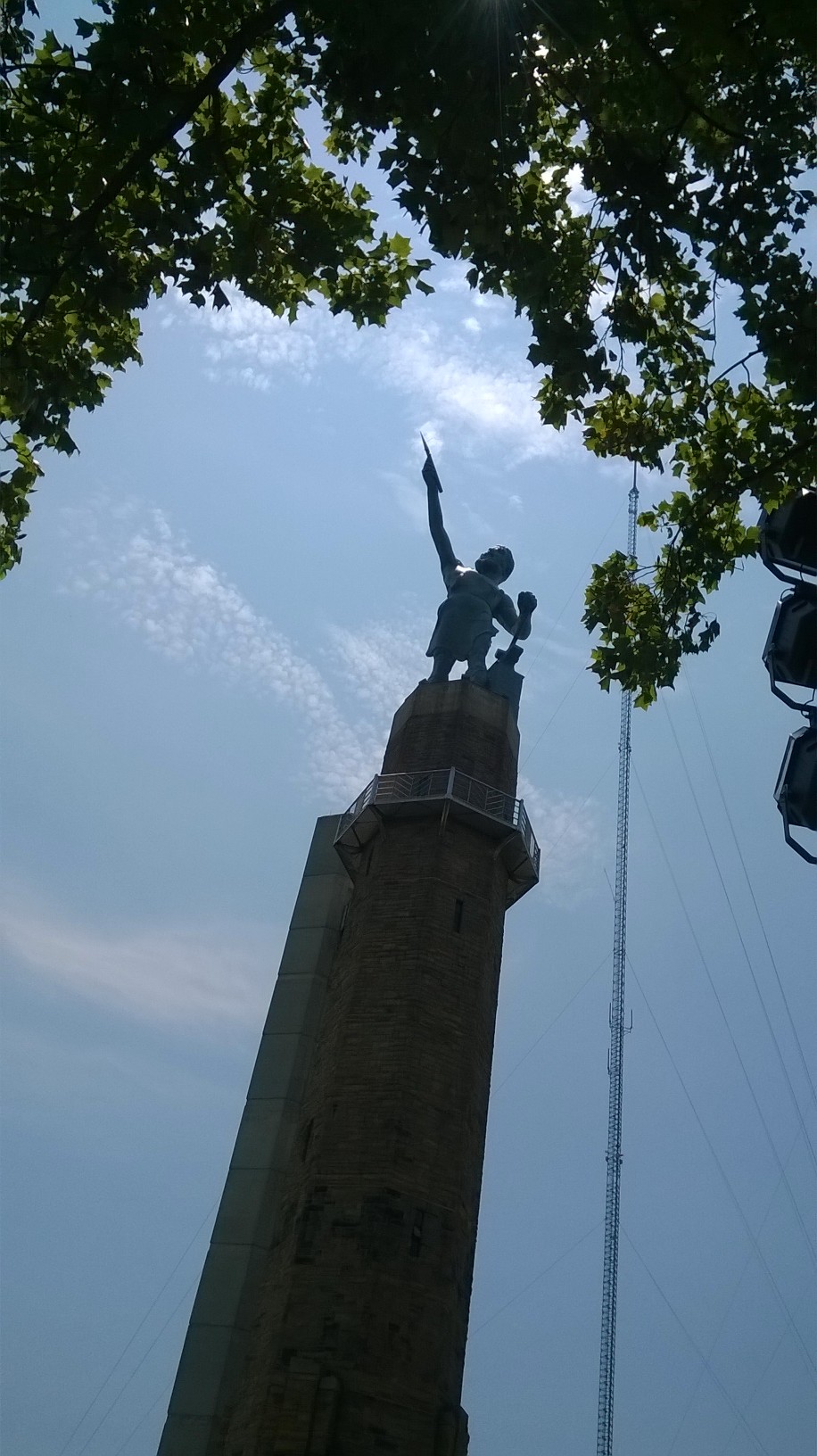
I took an hour to go over to see one of the iconic figures of the south, Birmingham’s cast iron statue of “Vulcan.” Built 110 years ago for the World’s Fair in St. Louis, it is the largest cast iron statue in the world. This is a nod to the iron industry that put Birmingham, Alabama, on the map starting in the 19th century. I remember this imposing figure from when I was a little boy and our family visited this “big city.” At that time, Vulcan’s torch would shine red if there was a traffic fatality and green if a traffic accident wasn’t fatal. It was, and is, a fascinating icon and landmark.

Perhaps the most impressive aspect of this unique statue is the prominent place it occupies in the skyline as you approach the city from several points of origin. If you had no other clue, you would know you were in Birmingham as soon as you saw Vulcan. The city takes understandable pride in the distinctiveness he lends it.

Other cities in our nation’s history and in other nations throughout time have had landmarks that set it apart and are even synonymous with it. In Jesus’ day, Egypt had the sphinx and the pyramids, Greece had the acropolis, Italy had the Colosseum, and nearer to Palestine was Petra (in modern Jordan) and the lion of Babylon (in modern Iraq). The Romans had their iconic statues and buildings that often towered over the cities within its empire.

Jesus may have fired the imagination of the first-century disciples with His picturesque imagery, calling us a city set on a hill or a light of the world (Mat. 5:14-16). Our distinctiveness is not based on physical prominence, not our church buildings or having famous members. It centers on how well we reflect the mission and character of Christ as a congregation and as individual members of it. When people hear about the church of Christ, they should know who we are and, while they may try and say evil against us (cf. Ti. 2:8), the charge of wrongdoing should not stick. Instead, they should look at us and see a reflection of Christ. A community could have no better landmark! May we work to provide it.
vulcan