A common practice for thousands of years was to drain “bad blood” out of the body. In fact, there are still some cultures today that practice this. The greatest doctors who were thought to be extremely smart would commonly drain the “bad blood” out of their patients if they were sick. For the longest time it was believed that if you were sick you needed to let this poisonous blood out of your body in order to be healed.
Leviticus 17:11 says, “For the life of the flesh is in the blood, and I have given it for you on the altar to make atonement for your souls, for it is the blood that makes atonement by the life.”
December 13th 1799 a man was riding a horse through his plantation. It was a day like any other, and everything was perfectly normal. Little did this man know that in less than two days he would be dead. The decision he made that day in December proved to be fatal. While he was out riding he got caught in the rain, and when he returned home he decided to hold off on changing out of his wet clothes because he didn’t want to be late for his dinner party. The next morning, he worked outside in the bitter cold as he had the day before. The whole day he worked through the pain that had developed in his throat. Nevertheless he pushed on and tried to ignore it.
That evening his symptoms worsened, but he decided to see if they would improve by the morning. This man woke up and things had only gotten worse. He called in three well-known physicians and he received good news that it was just a cold and a slight fever. The physicians assured the man that he would be just fine. All they had to do was drain the sickness out of his body and he would be healed.
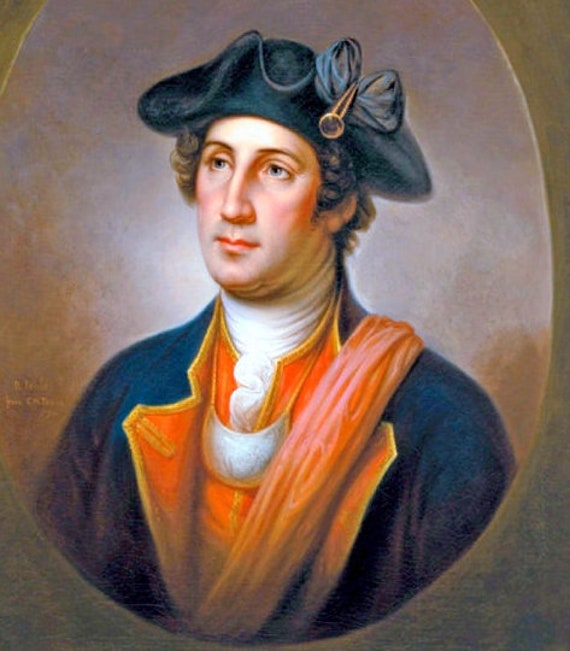
This fatal decision resulted in the death George Washington.
Bloodletting is now seen as an incompetent practice. Yet it was practiced worldwide until the late 1800s. Millions of people died thanks to this lack of understanding, but guess who knew NOT to do this right from the start? The life is in the blood and God is the one who revealed this fact to us.
Sometimes we are a little slow in catching on to the wisdom that God has revealed in His Word. If God was right about the blood, what else could He be right about?
Hopefully, those within the United States enjoyed a safe and joyous Thanksgiving holiday yesterday. Thanksgiving is one of those holidays that has come under attack by secular humanist forces in recent years. Worse than merely shifting the focus to turkey and American football, some people are trying to attack the holiday based on injustices perpetrated against the American Indian population over a century ago. While true that the “Thanksgiving feast” in seventeenth-century Plymouth serves as a romantic backdrop to our current holiday, we should not forget that days of giving thanks is not limited to one group or one time.
Many countries observe some Thanksgiving holiday today. These observances are typically about the giving of thanks for the bounty of the harvest. They may reflect a pagan rather than Christian influence. However, to single out the United States’ practice as a matter of perpetuating injustice is a move by those seeking to erase American history with its Judeo-Christian values. The removal of said Judeo-Christian values are necessary to create the secular humanistic state esteemed by the disciples of Karl Marx. It is not an exaggeration to say we are in the midst of a great cultural war here within the United States. The winner of this cultural war will determine whether the United States continues to be free or becomes despotic. I realize that may sound like hyperbole on my part. Still, the Founding Fathers were clear in emphasizing that only religious people could maintain the liberties enshrined within the Constitution.
Thus, we find the American Thanksgiving holiday’s actual genesis in 1789, the year of the United States Constitution’s ratification. President George Washington wrote that Congress had tasked him to declare a day of Thanksgiving. The purpose of this day was to thank God for blessing the newly-formed United States with peace and prosperity. A cursory examination of all of the Presidential Thanksgiving Proclamations demonstrates the common theme of acknowledging and thanking Providence. Many Presidents likewise include an exhortation to remember the less fortunate and spend the day in service to others. President John Adams approached it differently. He asked people to fast on Thanksgiving and include with their prayers those of penitence, acknowledging national sins. How novel!
Thomas Jefferson balked at the idea of making Thanksgiving Proclamations. He thought it smacked too much of enjoining the populace to some State religion. I believe Jefferson was mistaken, but it should help you understand that this holiday has been one long conceived as religious in tone. After Jefferson’s successor, Madison, the practice of the President giving a Thanksgiving Proclamation fell by the wayside until the Civil War. At the behest of Secretary Seward and a private citizen, Sara Josepha Hale, Lincoln reinstated the practice of issuing Thanksgiving Proclamations. Essentially, Lincoln helped make Thanksgiving an annual observance. It would not be until 1941, though, that the federal government made Thanksgiving an official holiday. Except for President Garfield, who died from an assassin’s bullet, every President since Lincoln has issued a Thanksgiving Proclamation, regardless of party affiliation.
The beloved Norman Rockwell contributed to the iconic depiction of Thanksgiving with his painting “The Freedom from Want” in 1943. (It was a part of Rockwell’s “Four Freedoms” series.) A patriarch and matriarch stand at the head of the table around which the family has gathered. The matriarch has prepared a sumptuous turkey feast. Delight fills the faces of all assembled. For me, however, the best Rockwell depiction of Thanksgiving was the last Thanksgiving cover he would paint for The Saturday Evening Post in 1951. He entitled that painting “Saying Grace.” A “grandmother” and a little boy sits in a restaurant. Their heads are bowed in prayer as others look on. The looks given by their tablemates seem to show amusement or curiosity. (Frankly, they seem to be reacting as if it were the first time they have seen this behavior.) Within those brush strokes, Rockwell has, to me, captured the true meaning of Thanksgiving. Amid the rush of a secular world, we pause, giving our thanks to God for even the simple meal. It matters not if others are willing likewise to thank God.
I fully expect that should God allow time to continue that we will see an assault on the Thanksgiving holiday of 2021 since that would mark 400 years after Plymouth. Again, secular humanists want to take God from the picture. They wish to define the holiday as an observance in which we celebrate the rape and plunder of indigenous peoples by calling their seized property our possession. Yet, such critics demonstrate ignorance also of that original Plymouth feast. Thanksgiving is not about what we have. Thanksgiving is about acknowledging our Benefactor. It is a day for our nation to pause and admit that we would not be here without the Providence of God. And, as we count our blessings, we are motivated to show mercy to our neighbor as God has shown mercy to us.
“‘Freedom from Want,” 1943 – Norman Rockwell Museum – The Home for American Illustration.” Norman Rockwell Museum, Norman Rockwell Museum., 1 Mar. 2017, www.nrm.org/2016/11/freedom-want-1943/.
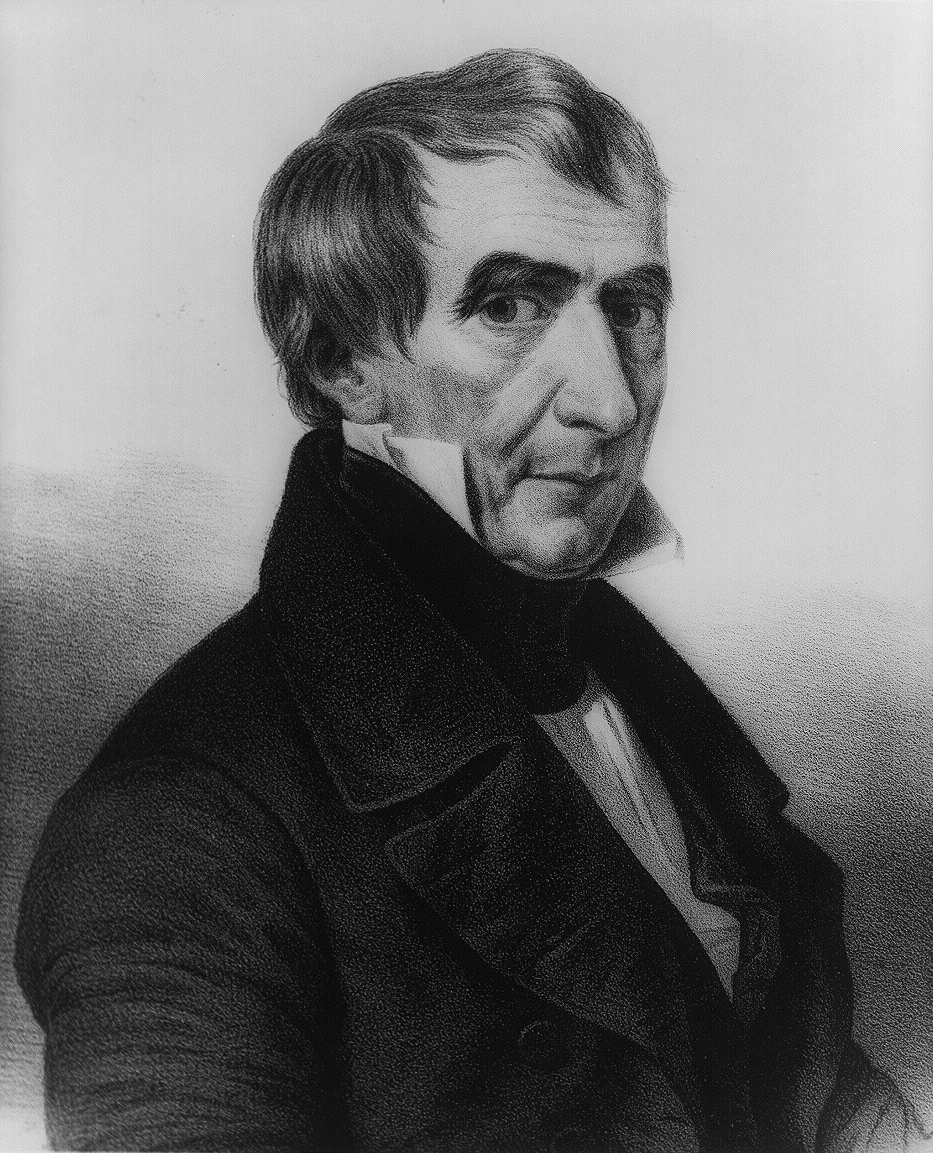
The shortest inaugural address was George Washington’s second, in 1793, and it was comprised of 193 words! William Henry Harrison, though raised a cultured, educated man, campaigned on a folksy ticket symbolized by the log cabin. To set a different, more cultured tone for his presidency, Harrison decided to give a lengthy, erudite speech on a bitterly cold, early March day in 1841. He spoke for nearly two hours, doing so without benefit of a topcoat or hat. Historians are generally agreed that Harrison’s motivation was to show himself not be a country bumpkin or simpleton. While it is unclear if his exposure led to the pneumonia that killed him exactly a month later, it still boils down to a lot of talk and very little execution.
How often do we, as congregations, spend a seemingly endless amount of time outlining, discussing, and rehashing grand plans? Goals and planning are vital to a church’s existence, but so often much talk produces little action. In any congregation’s mind, they are going to be a fast-growing, active, moving, and shaking bunch. Yet, so few churches are that. We spend our time laying out the plan and give ourselves so little time to do it.
We do that in our individual lives, too. We make big plans for tomorrow (cf. Jas. 4:13-15). Like the poet expressed it, “He was going to be all that man should be…tomorrow; no one would be kinder or braver than he…tomorrow.” Yet, the poet depicts the dreamer as one who died today while hoping for tomorrow. Are we making grand, long-winded speeches about all we are going to do? Are we spending such time outlining it that we have so little time left to execute it?
Think of all you know about William Henry Harrison compared to George Washington. Both were thinkers and planners, but oh the difference in how we remember each of the. Think, then do!




 The Preacher Pollard Blog