Christianity Should Change You

Neal Pollard

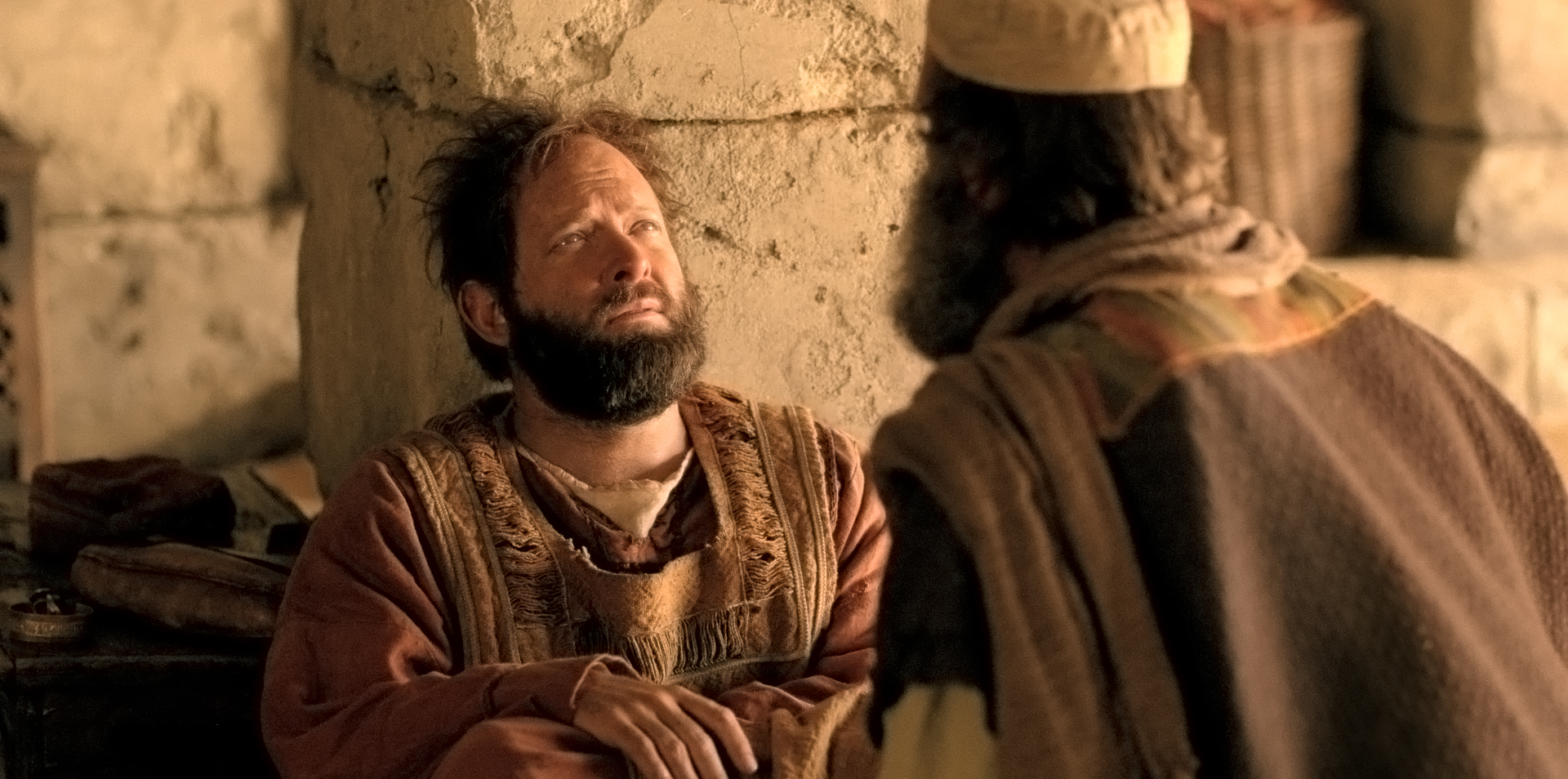
Reading Luke’s account of things, Saul may have been the chief threat to the Christians at the time recorded in Acts 8-9. He was “ravaging the church” (8:3), “breathing threats and murder against the disciples of the Lord” (9:1). He was doing “much harm” to the saints (9:13). He would look back on this part of his life, calling himself a harmful persecutor and killer of Christians (22:3ff; 26:9ff; 1 Cor. 15:9; 1 Tim. 1:13). The last thing we would expect, reading about his violent exploits against followers of Christ, would be a complete turnaround. But that’s what happens in Acts 9. 

SAUL’S PLANS ARE CHANGED (1-3). He had letters from the High Priest to authorize his imprisoning of Christians. His zeal and passion to stop Christianity is as strong as could be, but Christ has a message for him. It literally stops him in his tracks. The Christian life can be a sudden, abrupt change even today. When one comes face to face with who Jesus is, it will cause unforeseen, dramatic changes in one’s life!

SAUL’S MIND IS CHANGED (4-7). His entire worldview about who Jesus is changes in what happens on this road to Damascus. He sees a light and hears a voice asking, “Saul, Saul, why are you persecuting Me?” (4). He’s not sure who he’s speaking to, but he knows it’s no mere man. Jesus tells Saul who He is, then tells Saul what to do next. He’s not saved on the road, but told to go to Damascus to await news of what he should do (6). The greatest question of life just may be, “Who is Jesus?” Saul thought he knew, but is finding out that everything he thought he knew was wrong. 

SAUL’S PERSPECTIVE IS CHANGED (8-18). Saul is blinded on the road. He doesn’t eat, drink, or see for three days. Meanwhile, the Lord commissions a man named Ananias to go preach to Saul. Jesus could have easily laid it out there for Saul, but He chose the “foolishness of preaching” to save this persecutor (cf. 1 Cor. 1:21). Naturally, Ananias was apprehensive about his mission, knowing full well all that Saul had done to the saints (13-15). The Lord reassures the preacher that Saul has changed his mind and is ready to hear what he must do, so Ananias obediently goes to Damascus and preaches to him (17). The hardships and realities of life can totally change our perspective, leaving us receptive to the will of Christ. We might not have been seeking before suffering. 

SAUL’S CONDITION IS CHANGED (18). In this moment, he could see–physically and spiritually. With spiritual sight restored, he “got up and was baptized.” Saul would later look back on this and tell us more of what Ananias preached to him. “The God of our fathers has appointed you to know His will and to see the Righteous One and to hear an utterance from His mouth. ‘For you will be a witness for Him to all men of what you have seen and heard. ‘Now why do you delay? Get up and be baptized, and wash away your sins, calling on His name'” (22:14-16). Baptism changed his spiritual condition before God. It washed away his sins. It brought about the change of condition, opening door to a change of mission. Baptism is but part of God’s saving plan, but it is the point at which sins are forgiven for a penitent believer. 

SAUL’S FELLOWSHIP IS CHANGED (19ff). His environment is no longer Christian-haters. It’s the hated Christians. He spends several days with them. He would prove to be such an asset to the saints at Damascus, and he is ultimately, readily accepted as one of them. He fought against the very ones he fought for before becoming a Christian (22), until his former allies plot to kill him (23-24). His new spiritual family helps him steal away (25). He seeks to fellowship with the disciples in Jerusalem, but in an age long before instant communication and technology the word had not reached these saints. They fear he’s an infiltrator, coming among them to do them harm. Can you imagine sitting down for a fellowship meal with the man that imprisoned or killed a friend or loved one? That’s possibly the situation for Saul and these saints. Barnabas, the generous encourager we met in Acts 4, paves the way for Saul’s acceptance. He is ultimately welcomed into the fellowship. Sometimes, our comfort zone is challenged with the addition of new Christians into our fellowship. It could be their worldly background, their income bracket, their skin color, or some similar difference that requires our adjustment. God expects that we’ll overcome any such superficial barriers and see what ties us together–our faith in and following of Jesus.  

SAUL’S MESSAGE IS CHANGED (20-31). He proclaimed that Jesus is the Son of God (20). He proved to opposing Jews that Jesus is the Christ (22). He spoke boldly in the name of Jesus (27). He spoke boldly in the name of the Lord, talking and arguing with the Hellenistic Jews (28-29). As hard as he had been fighting against Jesus, he was now fighting that hard for Him. 

No wonder the most operative word is “change.” A change of life changes our mind and outlook, setting up a change of our spiritual state (if we respond properly to teaching) that reflects itself in a change of our spiritual environment and a change of our purpose and mission. No, it won’t happen with the flair and drama that Saul experienced, but the gospel is as powerful today as it was then (cf. Rom. 1:16). If being a disciple of Jesus hasn’t dramatically changed who we are and what we do, it may help us to look at Saul’s life and then our own. He can be an encouraging example that prompts us to go deeper and further in our faith. Conversion involves real change. Jesus says conversion is essential to entering the kingdom of heaven (Mat. 18:3), spiritual healing (John 12:40), and for sins to be wiped away (3:19). May people be able to see the change Jesus has made and is making in us!

The Church’s First Internal Problem

Monday’s Column: Neal At The Cross

Neal Pollard

We cannot call what happens in Acts five the church’s first problem. Having your members hauled before community leaders and threatened would be stressful and concerning. Having members in financial need would be considered a tough issue. But, neither of those things were “unforced errors.” In an organization filled with people, there will be internal problems because we have struggles and sins. What we do about them and after them spells the difference in ultimate success and failure. 

THE REBELLION (1-10). We are introduced to a couple named Ananias and Sapphira, members of the Jerusalem congregation. In the spirit of sacrificial generosity, Barnabas, who owned a tract of land, “sold it and brought the money and laid it at the apostles’ feet” (4:37). This couple also sold a piece of property, an admirable and generous thing to do to prevent needs among the Christians (4:34). But, what they did after the sell was anything but righteous. They kept back part of the proceeds from the sale. What was the sin in that? Apparent there was an intent to deceive, to suggest that they were giving all the money while keeping part of it for themselves. The word translated “keep back” is the word for pilfer or embezzle, suggesting they had pledged the full price of the sale but kept back some for their own security. This would also suggest covetousness or greed, hearts influenced by worldliness. It also certainly implies pride, wanting to be seen as generous as Barnabas while not suffering the full sacrifice of surrendering all the money for the needs of the saints. This husband and wife were united, but in the worst possible way. Do we struggle with materialism, pride, greed, dishonesty, and selfishness? It is good for us to appreciate how seriously God takes the willful sin in the lives of His children (Heb. 10:26ff). God preserved this in Scripture for us to contemplate how harmful “sin in the camp” is to the spiritual health and well-being of His sacred community (the church). 

THE RESPONSE (3-10). Peter calls out Ananias (3-4), then Sapphira (8-9) three hours later. He specifies what they had done and why it was so wrong. God’s response was to strike each of them dead! Looking back on this, especially if we struggle to see the “big deal” of their sin, we might think the reaction was overly harsh or unreasonable. No doubt this event gets our attention and sharpens our focus on how seriously God views premeditated sin and sin that threatens to harm the entire spiritual community. Conceiving transgression in the heart and attempting to lie to God is such a basic betrayal of our Lord. While we should be grateful that God does not choose to respond with such immediacy today, we should also reflect deeply upon how grave it is to engage in unrighteousness. It’s not “no big deal,” something to be rationalized away. Even if church leadership does not address it in this life does not mean God will not address it at the judgment. This text encourages us to keep our heart soft to His will and to the reality of our willfulness. 

THE RESULT (11-16). We might think that people would have left that church in droves! After all, if they had a marquee in front of their “building,” it might say, “Come inside and try us. The Holy Spirit strikes down our liars.” Yet, what happens next? As we might suspect, “great fear came upon them all” (11). But, the judgment on the couple did not drive people away or even send the cause in a backward direction. The apostles demonstrate God’s power (12), the church spent more time together (12), the broader community held them in high esteem (13) and benefited from their benevolence (15-16), and, maybe most startling, “all the more believers in the Lord, multitudes of men and women, were constantly added to their number” (14). How could this be the result of the ultimate example of “church discipline”? Simply, this is God’s wisdom. Paul will later say, “the foolishness of God is wiser than men, and the weakness of God is stronger than men” (1 Cor. 1:25). Just because we don’t understand God’s ways does not make them inappropriate and improper (Isa. 55:8-9). The Potter has a right over the clay (Rom. 9:20-21). We must resist the temptation to protest the teaching and conclusions God’s Word makes because we find it too hard and narrow. If we trust God’s wisdom and pattern, we’ll find it works in any culture, time, and place. 

Three Men Named Ananias

Monday’s Column: Neal At The Cross

Neal Pollard

Recently, I heard Dr. Ted Burleson point out that the book of Acts reveals three men named Ananias. The first one is in Acts five, the second one is in Acts nine, and the last one is in Acts 23. Those three men are very much unalike from one another in some basic, important ways.

The Ananias in Acts 5 was a Christian known for lying to Peter and to God about his offering. On the heels of Barnabas’ publicized and praised generosity, this man conspired with his wife to deceive the church about how much they were giving. While we do not read his words or even read that he spoke, it is implied that he did talk this over with Sapphira. His entire legacy is of a liar! Isn’t it tragic that the rest of his life, including his conversion, are completely omitted. This is all we know about him. What a sobering object lesson that I can undo a great deal of other good in my life if I let sin reign in my heart!

The Ananias in Acts 23 was the Jewish High Priest Paul stood before after he was arrested in Jerusalem. “Ananias was High Priest from A.D. 47 to 66, when he was assassinated by the Jews because of his support of the Romans during the Jewish uprising” (Newman and Nida, 432). We also learn that he was “famous for bribery and plunder of temple offerings” (Gangal, 386). Then we see, “His action (having Paul struck on the mouth, NP) was completely in character. Josephus depicted him as one of the very worst of the high priests, known for his pro-Roman sentiments, his extreme cruelty, and his greed” (Polhill, 468). He is known both in Scripture and out of Scripture for being unscrupulous. He will lead the attack against Paul before Felix (Acts 24:1-9). Not only does he refuse to accept Christ, he persecutes and attacks Christ’s messengers. He went out into eternity a sworn enemy of Jesus. At the Judgment, he will stand before Him! He reminds me that life is about preparing for eternity, and it is tragic to live for self in this life and reject the One who died for me.

The Ananias in the middle, in Acts 9, is completely unlike the other two who shared his name. He is introduced to us as a “disciple” (10). The Lord chose him for a choice mission, to go preach to Saul of Tarsus (10). As fearful as that task understandably was, he obeyed the Lord and went (11-17). Acts 22 adds that he was devout (God-fearing)(12), well-spoken of by other Jews in Damascus (12), and a faithful preacher (14) who was bold in message (16). Jesus did not convert Saul on the road; He chose a human messenger on earth to preach to him. Of all the disciples he could have chosen, this Ananias was given the opportunity. This man seized the opportunity and helped give the world the greatest preacher, save Jesus, the world has ever known! Nothing is said about this man after he preached to Saul. Whatever else happened in his life, Ananias is praised for his courage and faithfulness. He is forever linked to this eventual apostle, the man who baptized the ultimate world evangelist whose name we all know 2,000 years later. 

There are other “Neals” in the world today. None of us have our names in the Bible, but which of us will have our names in the “book of life” (Phil. 4:3; Rev. 3:5)? Of course, the same is true of you whatever your name is. How we respond to the Lord’s grace as well as His will matters. Ask Sapphira’s husband. Ask Paul’s antagonizer. Ask Paul’s preacher. We have one life to prepare for the next life. May we so live that our name will be associated with the Name above all names (Phil. 2:9-10)!  

What Can Be More Minimalist Than the Gospel? 

Friday’s Column: Brent’s Biblical Bytes

81121814_2462862270639428_5746232403106463744_n

Brent Pollard

Minimalism is a term often associated with the arts and humanities. It can also be a term used to describe a lack of decoration or adornment in design. One notes that minimalism features everywhere today, from webpage design to people’s desire to live in tiny houses. Despite sounding like a paradox, I suppose one can make the case that minimalism is the ultimate form of refinement. Even Leonardo DaVinci allegedly proclaimed that simplicity is the art of sophistication.   

Since minimalism appears to be beloved, why is it so difficult to share the simple Gospel to a postmodern world? What could be more straightforward than the Gospel of Jesus Christ? Paul distilled it to three topics about Christ, even though each of those topics can fill volumes of their own accord (cf. 1 Corinthians 15.1ff). Yes, the Gospel, at its core, is the death, burial, and resurrection of Jesus Christ. Our salvation is contingent on symbolically reenacting His death, burial, and resurrection (Romans 6.3-6). Indeed, the salvation plan is so simple that kids sing a song detailing those steps to the tune of “Pop Goes the Weasel.”  

Yet, when it comes to religion, complex human emotion appears to trump Divine simplicity. Ask Naaman. When told how to cure his leprosy, Naaman balked. The prophet told him to dip himself seven times in the Jordan River to cleanse his leprosy. Naaman stormed off. 

“Behold, I thought, ‘He will surely come out to me and stand and call on the name of the Lord his God, and wave his hand over the place and cure the leper.’ Are not Abanah and Pharpar, the rivers of Damascus, better than all the waters of Israel? Could I not wash in them and be clean?” (2 Kings 5.11-12 NASB1995) 

Luckily, Naaman’s wise servants were not turned away by simplicity. They reminded their master he would do any great thing to cure his leprosy. So, why not just wash? (2 Kings 5.13) Similarly, I do not think that telling people to be immersed so that they can wash away sins and call on the Lord’s name (Acts 22.16) is a matter of complexity. It is simple. The stumbling block for those unwilling to obey is typically prejudices and fears. They think another way is better. Perhaps, this other way was taught to them by a dear, departed loved one. They do not want to “condemn” their relative by obeying the Gospel.  

However, obeying the Gospel is not an act of judgment. In rendering obedience, I am demonstrating a good conscience before God (1 Peter 3.21). We allow God to take care of the implications and trust, like Abram, “Shall not the Judge of all the earth deal justly?” (Genesis 18.25 NASB1995). No doubt, if that loved one who taught us something differently had the opportunity to be preached the simple Gospel of Jesus Christ, then they would have obeyed too.  

If time permitted, I could expound upon other areas in which human emotion overly complicates the minimalism of God’s Divine plan for items such as worship. Yet, as with the virtue I am extolling, minimalism, it is best to keep this focused and concise. We should not be surprised that God would make the most critical things, like salvation, simple for us all to understand. Minimalism, experts remind us, is user-friendly and accessible. That is why we like it so. And it is also why God, the Master Designer, set up things so that the simplest among us can gain wisdom from it (Psalm 19.7).  

Indeed, what can be more minimalist than the Gospel?  

Screen Shot 2021-04-16 at 7.57.01 AM


Necessary, But Not Essential

Friday’s Column: Supplemental Strength

brent 2020

Brent Pollard

Has your job been deemed “essential” during our mitigation efforts against COVID-19? If not, you are likely either working from home or are facing a difficult financial situation as we await the reopening of our economy. Noting the choices made by certain people in positions of authority about essential and nonessential workers, however, makes this whole process of determination seem…capricious.

Mike Rowe, a man who made a name for himself doing the “dirty jobs” other people refused to do, stated his opinion was that there was no job that is nonessential. Appearing on a cable news program, he said, “Right now, there is this fascinating conversation going on on your network and all the networks, where we are making a distinction between essential workers and nonessential workers.” Rowe continued, “…there’s something tricky with the language going on here because, with regard to an economy, I don’t think there is any such thing as a nonessential worker.” 1

Rowe did admit that certain positions are greatly needed during a pandemic. Hence, we have greater need for a doctor now than a center fielder for a Major League Baseball team. “I just wanted to make the point that, when we talk about the economy, all work is essential,” Rowe stated. “Maybe it’s a distinction without too much of a difference, but in my mind, there is no such thing right now as a nonessential worker.” 2

Rowe makes a good point. For a healthy economy, every able-bodied person of age, must work. When person “A” earns a paycheck, he spends it in person “B’s” store. Person “B” can then provide for his own family. The property taxes person “B” pays allows person “C’s” child to go to school. In other words, the economy is something in which we all play a role, whether we appreciate our role within it or not. Yet, we see what happens when we purposely shut down a country to mitigate a virus. All the financial gains about which our country boasted for the last few years was wiped out in six weeks!

This isn’t a message about the economy or politics or Mike Rowe. It is rather about the harmful consequences we bring about by rashly judging what’s essential and nonessential without considering the bigger picture. When you have extra time, enter in the words, “baptism” along with “essential” and “necessary,” into your internet search engine of choice. I did. I found one page that proffered “101 Reasons Why Water Baptism is Not Necessary to be Saved.”

Fortunately, we have the book of Acts, also known as the “book of conversions.” Acts has many examples of people who, having heard the proclamation of the Gospel, submitted to baptism. It is a troublesome book for the one seeking to discount the necessity of baptism’s role in salvation. For this reason, such practitioners of a perverted gospel must say, “Baptism is an outward sign of an inward faith.” In other words, all these people were baptized to show their salvation rather than receive it.

Even if we only had the example of Paul’s conversion in the book of Acts, we would have enough reason to prove why baptism is not only necessary but essential. Paul was a man, made miserable by his newly acquired knowledge he was a sinner. He prayed fervently for three days. If one could “pray through” then Paul should have been able to have done so. And yet, when the preacher Ananias arrived, he saw the pathetic state that Paul was in and said, “Now why do you delay? Get up and be baptized, and wash away your sins, calling on His name” (Acts 22.16). Did Paul not realize he was saved and needed only to perform a ritual to confirm his salvation? If true, Paul was the most miserable Christian about whom we read in the pages of the New Testament during those three days he prayed and fasted.

We might make a tough judgment call because of a virus and shut down certain sectors of our economy since we believe them less essential during a health crisis. Ultimately, though, we realize even those deemed “nonessential” do play an important part in our economy, as Rowe suggested. We need them if we are going to climb up out of this trillion-dollar deficit hole this crisis has made us fall into.

Likewise, people may capriciously proclaim baptism nonessential. However, one wanting total restoration to the innocence lost in Eden must also know a demon’s faith (James 2.19) is not only insufficient to save but fatal (Mark 16.16).

References

1  Shiver, Phil. “’Dirty Jobs’ Star Mike Rowe: There’s No Such Thing as a ‘Nonessential Worker’.” The Blaze, Blaze Media LLC, 2 Apr. 2020, www.theblaze.com/news/mike-rowe-non-essential-worker.
ibid.

409px-ready_for_a_dirty_job_28cropped29