SUPERFLUITY OF NAUGHTINESS

Neal Pollard

As a young preacher, James 1:18-27 was one of the first sections of Scripture I memorized. James is a practical book, and I was using a Dickson study Bible given to me by Wendell Winkler and the Bible Department at Faulkner University upon my graduation. The study Bible was in the King James Version, the version I had grown up with. The Elizabethan English and archaic words made memorizing, to me, much easier than other versions. 

James 1:21 reads, “Wherefore lay apart all filthiness and superfluity of naughtiness, and receive with meekness the engrafted word, which is able to save your souls.” Disparagers of the version might admit that there is a certain poetry to the words and cadence in verses like this: “lay apart,” “engrafted,” and “superfluity of naughtiness.” Apologists might admit that people do not speak that way and stumble upon such unfamiliar words in personal study. 

What is “superfluity of naughtiness”? How does it function in this verse and context? The NASB’s rendering is disappointingly inadequate, yielding “all that remains.” The ESV comes much closer with “rampant.” The NLT does not even translate it. The NKJ gives a pretty good idea with “overflow.” This word, found in its various forms in only four New Testament verses (Romans 5:17; 2 Corinthians 8:2 and 10:15, and here), means “Over and above, an overflowing, something above the ordinary” (Zodhiates). It refers to “extraordinary” or “more than usual” things (TDNT, Vol. 6, 61). It is “much greater” (Newman, 141). “Naughtiness” is simply the state of wickedness, evil, and depravity “with the implication of that which is harmful and damaging” (Louw-Nida, 753).

James has been talking about how to properly receive God’s Word. That word makes one spiritually reborn (18) and saves the soul (21). It will bless one’s actions (25). According to James 1:21 and the surrounding context, we must destroy all obstacles to that necessary result. Barriers include stubbornness (19), anger at the word (19-20), hearing without doing (22-24), forgetfulness (25), failing to bridle the tongue (26), deceiving the heart (26), and, in our verse, “rampant wickedness.”

You cannot allow the word to work on your heart so long as you hold on to mean-spirited, vicious attitudes and dispositions or depravity in your heart. But, when you lay it aside or put it away, and you open and humble your heart, you are in position to hear what God has to say and let it positively influence you. 

What is your superfluity of naughtiness? Is it bitterness because of trials (1:2-4,12)? Is it double-mindedness (1:8)? Is it improper attitudes toward money (1:9-11)? Is it various lusts and enticements of the world (1:13-15)? It is whatever we hang onto that drowns out God’s word. Like a malignant tumor, rampant wickedness must be completely removed from our hearts and minds. Only then can we allow the power of the word to work on and transform us from the inside out! 

Pause And Be Grateful

Neal Pollard

When do we normally appreciate good health? Often, it is when we are aching and running a fever (or worse). When do we most keenly contemplate financial security? For many, it is in a time of financial crisis. take away food and water, and you see how vital and blessed it is to have such provisions. When things are going wrong, we wistfully long for and desire that feeling and state when things are all right.

When was the last time we thanked God for these things when they were not a pressing need or something elusive to our grasp? It is harder to remember these things when all is well. Yet, don’t you think God is pleased and impressed with a heart that knows how to be grateful at times when those things are abundantly present in that life? How must He appreciate the person who wakes up or pauses through the day, assesses life, and from the overflow of thanksgiving tells God in heartfelt sincerity how much he or she appreciates the cornucopia of blessings.

It takes so little effort, but it shows such spiritual maturity and goodness. Remember that God is pleased with such sacrifices as doing good (Heb. 13:16), which showing gratitude certainly is (Psa. 92:1). Won’t you say with David, “I will give thanks to the Lord with all my heart…” (Psa. 9:1a). He is imminently worthy and we are infinitely indebted!

What Generous Giving Shows

Monday’s Column: Neal At The Cross

Neal Pollard

After praising the Corinthians in the midst of his second letter to them, Paul challenges their growth in a specific area of their Christianity. It is an area where several need to be challenged. Jesus urges us to have proper hearts by laying up treasure in heaven (Mat. 6:19-21) and Paul spends time showing what a proper heart looks like. Notice what he says on this subject in 2 Corinthians 8. 

GENEROUS GIVING REFLECTS THE GRACE OF THE LORD (1-2,9)

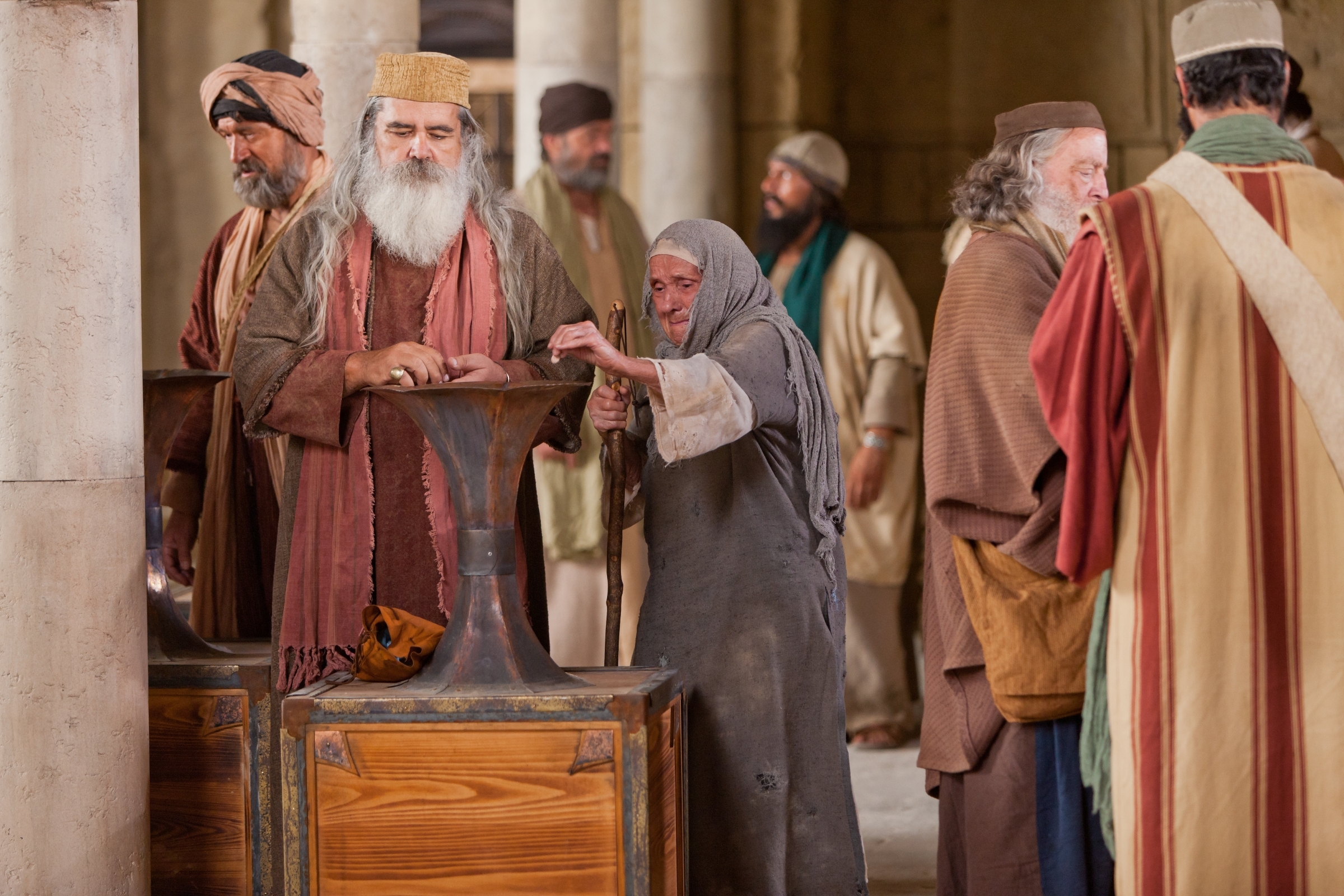
Paul holds up the impoverished churches of Macedonia and the Lord Jesus Christ as examples of grace for the Corinthians. The poor saints of Macedonia, in a great ordeal of affliction, had abundant joy and a wealth of liberality to give generously despite that poverty. Who does that look like? The Lord Jesus Christ, who, though rich, for our sakes became poor that we through His poverty might become rich. Do you want to look like Jesus? Give generously and abundantly.

GENEROUS GIVING REVEALS AN EAGER, SACRIFICIAL HEART (3-6)

What kind of hearts did the Macedonians have? They had willing hearts, which caused them to give “beyond their ability” (3). They had begging hearts, which considered being allowed to give a favor (4). They had giving hearts, which prompted a financial generosity out of their first giving themselves to God (5). How is my giving? Let me first ask how my heart is, when it comes to “my” money. Paul uses Macedonia’s example to spur on Corinth.

GENEROUS GIVING REINFORCES OTHER OTHER SPIRITUAL QUALITIES (7-8,24)

Paul credits Corinth for their faith, utterance, knowledge, earnestness, love, and sincerity. The first three seem to be alluding to their spiritual gifts (cf. 1 Cor. 12-14), necessary to grow the church. The last three are attitudes Christians must possess. Yet, Paul tosses generosity right onto that figurative pile. He calls for them to abound in this gracious work, too. It proved the sincerity of their love. Later, Paul urges them to “show them the proof of your love and of our reason for boasting about you” (24). It’s not generous giving or these other qualities, or vice versa. God wants all of us. 

GENEROUS GIVING READIES ONE FOR COMPLETION (10-15)

Paul calls for them to finish what they intended to do in this matter. Intentions, as great as they may be, cannot be spent or used to meet the various needs Paul is concerned about. The completion of it was as vital as the readiness to do it. God sees giving as the great equalizer between those with abundance and those with need. He’s not talking about redistribution of wealth. He’s talking about a healthy attitude toward one’s wealth that leads to God supplying all that’s needed through our generosity. Don’t just intend or desire to give. Do it!

GENEROUS GIVING RESULTS IN ACCOMPLISHING GOD’S WORK (16-24)

This is a matter of practicality. Real needs in spreading the gospel existed, requiring monetary aid to accomplish. Titus brought it to their attention. Paul is reminding them of it. As they participated in this gracious work, they were helping the church. 

Do you find it interesting that for the inspired Paul, the subject of giving was not off-limits whether he was talking about the rich or the poor or the weak or the strong? Giving is a fundamental aspect and expression of our faith. It is not a substitute for good works. It is a specific example, one of many good works. We need to excel in this gracious work also!