If you know me, you know that I love church camp. In fact, that’s where I met Jennifer back in the late 1990s, early 2000s at Taylor Christian Camp. Also, if you know me, you know I struggle with acting my age at times. It’s true – I am a big kid at times. Which leads me to this past summer at church camp. If you have ever been to camp you know that our young people love a good game of 4 square. It’s a big deal! There’s always a long line, and you stand in this line for what seems like an hour to get into the game, just to be embarrassed by a 7-year-old. It’s awful, it’s terrible, and what’s worse you go to the back of the line just to do it all over again. I learned a valuable lesson the hard way on that Monday night. Just because you’re still 20 years old in your mind, does not mean your body is! What could go wrong though? After all, I wasn’t the only person “of age”, notice I didn’t say old, out there playing. Jennifer, Josh, Cassie, Stephen and even Hiram were playing. The fun wouldn’t last long though. As I was chasing a ball out of bounds, my foot hit the grass, I slipped, my knee buckled, and I knew something was wrong. The pain that shot through my leg was intense. Like any guy would, I tried to walk it off till it felt better, pretending like it was ok. I remember hearing Hiram ask, “Bro, you ok?” I tried to take another step, and I laid down on the ground. “Nope, I’m not ok guys, I think I just tore something in my knee.” Thankfully Josh and Stephen were there to help me off the ground. With one guy under each arm, they helped basically carry me into the lodge to see nurse Dawn and Clint Raymer. Clint was quick to diagnose that I had torn the meniscus in my knee. Dawn helped wrap my knee up, gave me an ice pack and medicine to ease the pain. She also let me know that I may or may not need to leave the 4 square games to the younger people.
I had no plans to get hurt that day. It never crossed my mind that by playing a fun game I would change the course of my week. You can imagine the thoughts that raced through my mind; all the worst-case scenarios that I played out in my head. What was I going to do? Our lives can be like this sometimes. We are going about our business, enjoying life. Everything is going great, not a care in the world. Then trouble comes, or disaster strikes, and the pain we feel is more than we can stand, and we can find ourselves on the ground. Sometimes physically, other times mentally, emotionally, spiritually and we can’t get ourselves up without help. What everyone did for me after my “incident” was care and have concern, which is exactly what God wants us to do as members of His family. We have an awesome family here at Cumberland Trace. I have personally experienced the literal and physical “lifting up” by my brothers and sisters in Christ, and I know many of you have also. God tells us over and over that this is exactly how he expects His people to be – but not just physically. We are to come alongside one another and spiritually hold each other up.
“Bear one another’s burdens, and so fulfill the law of Christ.” Galatians 6:2. “Confess your sins to one another and pray for one another, that you may be healed.” James 5:16.” Our church family is a blessing, and our brothers and sisters can help us carry those heavy burdens in our lives and help keep on us track. It starts by forming those deep, meaningful relationships and being able to speak openly about our struggles with sin as well as the physical and worldly issues we all face. “But you don’t know or understand the things I’ve been through” …maybe not. The circumstances might be different, but the results can be the same. We can lean on each other when those unexpected times in our lives come; we don’t have to do it alone.
Look around you. Would you notice if one of your brothers or sisters wasn’t here? Have you checked on someone you haven’t seen recently? We’ve all heard it said that if you start to miss church, one day you won’t miss church. We need to be in each other’s lives so much so that missing one service prompts us to check on our brother or sister. We miss them when they’re not here – we should be letting them know! I know when we’ve been away and received multiple messages asking if we are ok – we feel encouraged by that! Maybe they’re sick? Just visiting family? Vacation? Or maybe they really are struggling with sin or fighting something that keeps them from wanting to be at church. “My brothers, if anyone among you wanders from the truth and someone brings him back, let him know that whoever brings back a sinner from his wandering will save his soul from death and will cover a multitude of sins.” James 5: 19-20. We are commanded to know each other well enough that we can answer these questions. If they’re sick, is there something you can do? Can you bring them something? If they’re struggling, are you praying for them? Can you spare a moment to listen to them? Are you willing to help lift that heavy load they’re carrying? We should be the crutch that our brothers and sisters lean on when they’re physically, mentally, spiritually exhausted and are too weak to stand alone. God through Paul tells us exactly how He wants us to interact in His family. “Therefore encourage one another and build one another up, just as you are doing. We ask you, brothers, to respect those who labor among you and are over you in the Lord and admonish you, and to esteem them very highly in love because of their work. Be at peace among yourselves. And we urge you, brothers, admonish the idle, encourage the fainthearted, help the weak, be patient with them all.” I Thessalonians 5:11-14. We should treat our church family like the group of sheep in Matthew 18 – and we should all be the shepherd who goes after the one who’s gone astray. If we aren’t working on building these relationships, how will we even know if we’ve lost one?
There were several things I could’ve done. I could have just laid around the cabin and felt sorry for myself. I could have gone home, pouted – which I may have done a little due to the injured pride…I could have let disappointment, discouragement, or bitterness ruin my week. My Christian family didn’t let that happen. I’m glad that I stayed the whole week, even if I couldn’t walk for a couple days. Like I said I love church camp. It’s the most fun, joy filled, uplifting, and physically exhausting week ever, but I love it. Part of what makes it so great is I get to spend a whole week with my family. My wife and kids, and my Christian family. Learning about God, growing closer to Him and growing closer to each other. I needed that reminder that week, that our Christian family can be there for us through all the things life is going to throw at us. My brothers and sisters literally came alongside me and helped pick me up in more ways than one. I love my church family, and I hope you all do too. My hope for this new year in 2025, is we can all find opportunities to lift one another up. Get to know your Christian family better, in doing so, growing closer to each other so that we can share and rejoice in each other’s good times and can have confidence to lean on each other through the bad times.
What is one of the clearest Messianic prophecies in the Minor Prophets? Maybe you think of Micah 5:2 or Zechariah 12-14. What about Joel 2:28-32? What makes it so significant?
A Promise Fulfilled Through The Apostles (2:28-32)
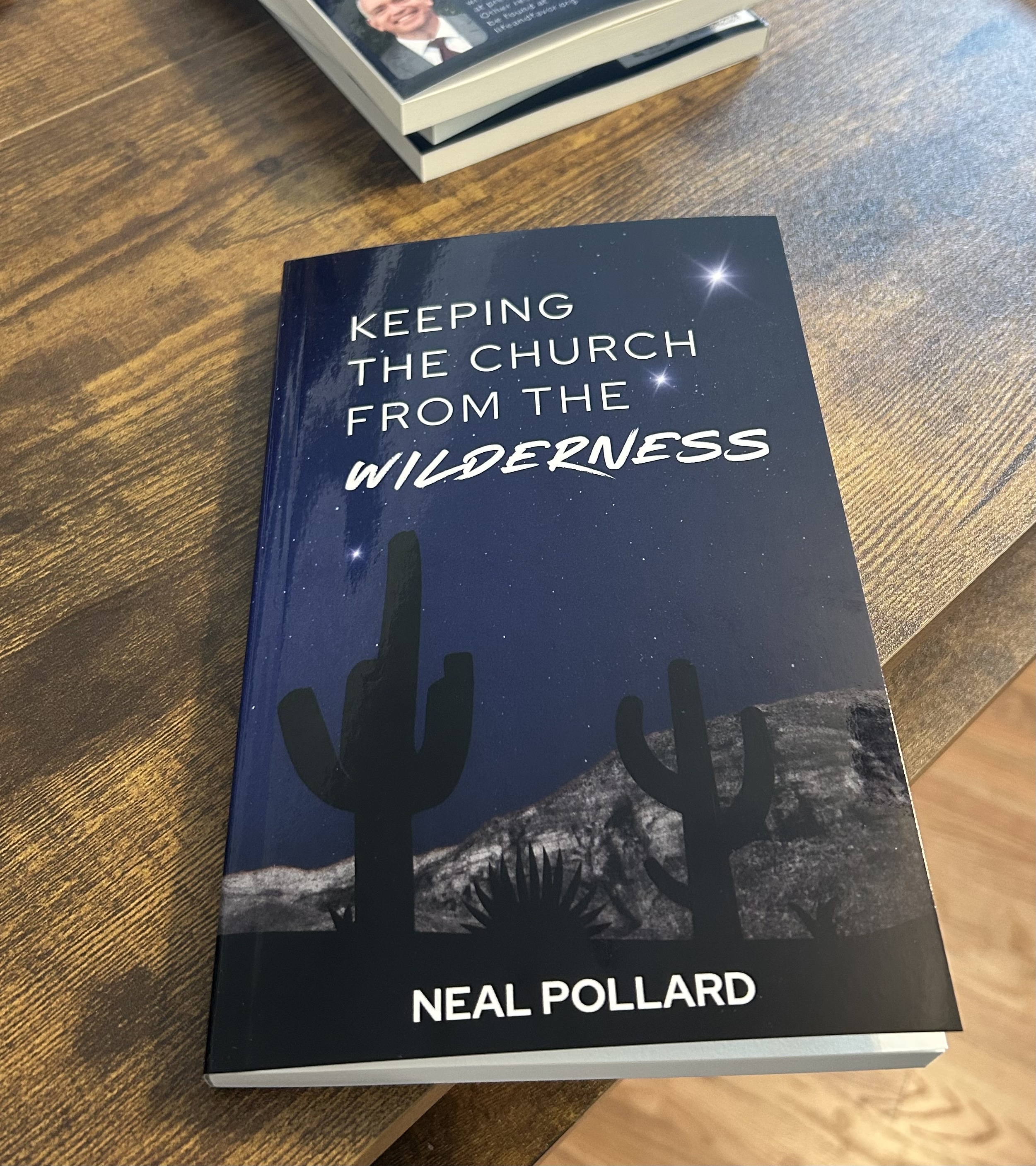
Neal Pollard
After the national restoration of God’s people, another promise loomed over the horizon of time. Joel does not specify a timetable, but Doctor Luke helps us understand when it was fulfilled. He records Peter’s first gospel sermon, preached the Pentecost following the death, burial, and resurrection of Christ, in Acts two. Duane Garrett says, “According to Acts 2:17, Peter understood this phrase in an eschatological sense and so paraphrased it as ἐν ταῖς ἐσχάταις ἡμέραις (“in the last days”). The LXX (Greek O.T., NP) has μετὰ ταῦτα, “after these things.” Peter’s transformation of the text implies that he believed that he and his contemporaries had witnessed the beginning of the messianic age” (NAC, 367). More precisely, the Holy Spirit guided Peter to this conclusion (John 16:13).
Let us look at this Messianic promise more closely.
Who was the promise for (28-29)? Notice the universal nature of the promise, of the elderly and the young and of men and women. Joel says, “All mankind” (literally, “all flesh”). This is a promise frequently found in the prophets. Isaiah 44:3 speaks of pouring out the Spirit on their offspring. Ezekiel speaks of the Spirit being poured out on the house of Israel (39:29). Zechariah refers to the Spirit being poured out on the house of David and inhabitants of Jerusalem on that day (12:10). The significance of Joel’s prophecy is that it would be on all mankind. The Jewish fulfillment is on Pentecost, and Peter quotes Joel. The servants and the rest of mankind, Gentiles, find their fulfillment in the conversion of Cornelius and his household (Acts 10:48). Read also Acts 11:15, Acts 21:9, and 1 Corinthians 11:5.
How would the promise be known (28-31)? Gifts would accompany the outpouring of the Spirit. Dreams, visions, and prophecy would result from it. Joel speaks apocalyptically of the wonders preceding this great and awesome day. James Smith gives a wonderful summary of the implications of this timing: “The immediate reference here is to the Roman destruction of Jerusalem in a.d. 70. Yet every judgment in history is a forerunner of the final eschatological judgment with which time ends and eternity begins” (OT Survey, 88). The gifts accompanied the establishment of the church and the preaching of the gospel. In the absence of completed revelation, these gifts would confirm the message the Spirit spoke through His messengers (1 Cor. 13:1-13). While the gifts would be tied to the good news, there was judgment to come on those who rejected God’s eternal plan. This would be realized with the judgment prediction shared by Joel (30-31).
What would the promise bring (32)? Despite there being a reckoning for the unbelieving and disobedient (cf. 2 Thess. 1:7-9), look at the beautiful prospect for the believers. There would be deliverance and escape! Those who answer the gospel call would be saved. Paul will quote Joel 2:32 in Romans 10:13 when describing the importance of preaching the gospel. The promise would be for those who call on the name of the Lord (Acts 2:21). Peter speaks of the Lord calling to Himself those who would repent and be baptized for the forgiveness of sins (Acts 2:39). Later, when Saul of Tarsus awaited instructions on what to do to be saved from his sins, Ananias tells him, “‘Now why do you delay? Get up and be baptized, and wash away your sins, calling on His name'” (Acts 22:16). This will literally begin on Mount Zion and in Jerusalem (32).
Peter removes any doubt about the import of this text, saying, “But this is what was spoken of through the prophet Joel” (Acts 2:16). From this proof text, Peter begins the first gospel sermon, saying, “Men of Israel, listen to these words: Jesus the Nazarene, a man attested to you by God with miracles, wonders, and signs…” (Acts 2:22). What a reminder that even in the midst of spiritually dark times, God extends hope to the penitent. In judgment, there is also salvation.
How does God feel about us when we refuse to be faithful to Him?
How Can I Give You Up? How Can I Surrender You? (11:1-12)
Neal Pollard
Israel and Judah have betrayed God and given Him up for far inferior and worse alternatives. Their wanton pursuit of such love interests was met by violence and mistreatment from their misguided choice. What utter folly in exchanging the perfect, providing, and protecting God for the perverse, pitiless, and pompous world and its idols!
Despite their resolute determination to forsake Him, God’s perfect love cannot be extinguished. That does not mean He will change His mind about their judgment and punishment, but He does not do so with out of control rage and jealousy. He does so, as it were, with audible weeping and restraint. These are His people, and He loves them so much.
He recalls the love He had for the nation at its beginning, when He led them out of Egypt (1). He calls Israel His son, the very way He refers to the nation to Moses (Ex. 4:22). The ultimate fulfillment of this prophecy, according to Matthew, is when Joseph and Mary take Jesus from hiding in Egypt to settle in Nazareth (Matt. 2:15,19-23). In the context, though, God is recalling the beginning of their relationship. Yet, in such recall, He remembers how their idolatry and unfaithfulness started even back in this formative stage (2). While God was teaching them to walk, taking them in His arms, leading them with bonds of love, lightening their burdens, bending over and feeding them, they refused to return to Him (3-5). For that reason, God says, they will return not to Egypt but instead go to Assyria (5).
He will allow them to have the consequences of their own choice. They will experience the sword of the notoriously cruel Assyrians (6). Their property and bodies will be demolished (6). Why? Because they turned from Him and none exalted Him (7). Despite how God felt about Israel, He would not make them love Him and be faithful to Him. He allows us to go the way we prefer to go, even if it is disastrous for us.
But do not miss the heart of God! It is vividly depicted in the last five verses. He says, “My heart is torn within me, and my compassion overflows” (8b, NLT). This is why He cries out to the nation, “How can I give you up…How can I surrender you…How can I make you like Admah…treat you like Zeboiim?” (8). The cities mentioned here are the lesser known towns in the Valley of Zoar that were destroyed with the better known dens of wickedness, Sodom and Gomorrah (Deut. 29:23). He will not execute His fierce anger or come in wrath (9). He speaks of a future where they would return to Him and resettle (11), even as they were presently walking in treachery before a God who is faithful (11b). This reminds me of something Paul will say later about the steadfast character of God: “For if we died with Him, we will also live with Him; If we endure, we will also reign with Him; If we deny Him, He also will deny us; If we are faithless, He remains faithful, for He cannot deny Himself” (2 Tim. 2:11-13; cf. Rom. 3:3).
He desires our faithful devotion (see Hos. 4:1). But even when we refuse to come to Him, He loathes to let us go. If we persist, He will do so. Yet, He does so not with gritting teeth or clinched hand. He does so with weeping and wailing, devastated at the very loss.
God calls to His chosen people, reminding them that He formed them and set them apart for Himself (1). Everything He promises in this chapter is built upon the foundation of that truth. They were perpetually guilty of aiming infinitely too low in what to place their trust in. As we read, we can relate to that. We doublecheck our investments, log a great many minutes in our workout routines and dietary plans, expend a lot of passion and energy into political matters, and engage our hearts in other earthly things while ignoring and neglecting the God who made us and set us apart by Christ. Because He has given His Son, we have even less reason to misplace our trust today. Walk though this powerful chapter and make the comparison the prophet leads Israel to make.
Recognize You Belong To God (1-5). Just as He chose them (1), He speaks of all He has provided for them as their God. He mentions water (3), His Spirit (3), and fruitfulness (4). Consequently, His discerning people would say, “I am the Lord’s” and revel in being claimed by Him (5). This came with blessings for them and their descendants.
Trust In The True God (6-23). God sets Himself apart by who He is–Lord, King, Redeemer, and Lord of hosts (speaking of military might)(6). He proves Himself trustworthy by His unique nature, calling on them to compare Him to the gods of the nations around Him. Gary Smith provides a great chart which shows the contrasts stated and implied in the text here:
What was said?
What contrast was implied?
1. Men “form” idols (44:9)
God “forms” the world and his people
2. Idols do not help; give no profit (44:9)
God strengthens and helps his people
3. Their witness does not see, know (44:9)
God’s witnesses see and know
4. Idol makers tremble in fear (44:11)
God’s people need not fear
5. Idol makers will be ashamed (44:11)
God’s people will not be ashamed
6. Idol makers get tired and weary (44:12)
God’s strengthens so people are not weary
7. Idol makers measure on wood (44:13)
God measures out the heavens with his hand
8. Idols are images of humanity (44:13)
God made man in his image
9. Idols are wood and metal (44:14)
God made the wood and the metals
10. People worship what they make (44:15)
The Maker/Creator should be worshipped
11. People seek divine deliverance (44:17)
Only God can bring real deliverance
12. Idols blind people’s eyes (44:18)
God opens people’s eyes
13. Idols give no understanding (44:19)
God gives wisdom and understanding
14. Idolatry is a deceptive lie (44:20)
God reveals the truth
15. Idols lead people astray (44:20)
God calls people to turn from lies
(NAC, 239).
Isaiah presents the case, showing how utterly ludicrous it is to trust in a god that one has to make, who is useless, who is mindless, who is powerless, and who after he has crafted it worships it. He writes, “he makes a god and worships it; he makes it an idol and falls down before it” (15).
Instead, by discerning who God is, the people appreciate how fully He has forgiven them (22). Their right-thinking response is to praise Him for being a God without rival (23).
Understand That We Are Restored By God (24-28). He is our Creator and Sustainer (24). He has the ability to do what He promises and determines. This God is the One who promises to rebuild, to even do so by the hands of a foreign power who is hundreds of years from being born (28). A God without limits of power and who sees the future as if it is the past is the God who promises to restore His people.
It’s not hard in today’s world to find things that discourage us. There are plenty of things that can bring us down. At times it really does feel like wherever we go, whatever we do, or say, there is something ready to discourage us. Unfortunately, people can be those roadblocks as well. That’s far from what we as Christians are called to do.
It was important in the days of the early church to encourage one another. So important that God commands it. It was important to God then – its important now. Thankfully we have blessings such as the church and our church family to help us through those discouraging times. How do we go about finding ways to encourage each other? Is it the way we speak or how we live, or is it in our faith? Is it all the above? The fellowship we have with our friends, our family, along with worshipping and singing praises, and studying God’s Word are just a few. These are blessings that we receive when we meet together no doubt, but let’s not contain our encouragements just to the assembly. Our everyday lives are just as important and those around us everywhere need to feel encouraged regularly. I just want to share briefly a few examples of what the Bible says about encouraging others and ways we can do just that.
Encouraging others is important, it’s necessary, it’s a command. Paul was one, if not the, most influential apostles of the first century church. He was a great teacher, preacher, mentor, and guess what? He was great at encouraging people. At the beginning of most of his letters he would begin with words of praise and thanks. (1 Thess. 1:2-3,) (Phil. 1:3-8,) (1 Cor. 1:4-5) are a few examples. In (Romans 1:12) Paul writes that he longs to be with them so that they can encourage one another in the faith. These types of encouragements were part of his everyday life.
We can’t discuss encouragement without mentioning Barnabas, the “son of encouragement.” He is mentioned several times in the New Testament, but he wasn’t a main character like Paul – he played a smaller, but still very important role. Paul spent his early life persecuting Christians. The people of the first churches, as well as the disciples feared this man, and rightfully so. After he became a Christian, the disciples didn’t believe he was one of them, so what did Barnabas do? He encouraged Paul by standing up for him in Jerusalem (Acts 9:26-31). He was a fellow missionary with Paul, Mark, Titus, and others. He encouraged those in Antioch to remain faithful in the Lord with steadfast purpose, (Acts 11:23.) Paul and Barnabas visited these churches, they taught, and they lived out their teachings. They encouraged them in their works and through their faith. They instilled hope, strengthening the church’s faith. (1Thessalonians 5:11) – Therefore encourage one another and build one another up, just as you are doing. We can all benefit from their examples.
Let’s face it, life is hard at times. Certain situations bring us discouragement and can distort and change our thinking. Who wouldn’t want to be encouraged and uplifted in these hard times? It might not seem like a big deal to some, but kind words of encouragement and praise could make all the difference in the world. (Proverbs 16:24) – Gracious words are like a honeycomb, sweetness to the soul and health to the body. (Proverbs 12:25) -Anxiety in a man’s heart weighs him down, but a good word makes him glad. We shouldn’t be surprised that little things like sending a card or giving a compliment, sending a text message, phone call or email, could make a big difference. How underrated but so appreciated those things can be! It’s hard not to smile and be filled with some kind of encouragement if someone messages you to say they’ve missed you, and been thinking about you, been praying for you. Check in on those you haven’t seen recently – Invite someone new to dinner – someone not typically in your crowd or someone new to the church. Practice hospitality as it says in (Romans 12:13.) Love one another with brotherly affection. Outdo one another in showing honor, (Romans 12:10.)
When we encourage people we show our love, compassion, understanding, and we give them hope. It helps reset our minds, builds our confidence in each other, and allows us to see God more clearly. More than anything we are showing others how we live our faith just as Paul and Barnabas did. We show we want to be like Christ and people can see God through our actions towards them. Encouragement is powerful! Just remember that sometimes the smallest things can have the biggest impacts.