Deprivation In The Land Of Plenty

Friday’s Column: Supplemental Strength

brent-portrait

Brent Pollard

It is likely the most willfully ignorant who would deny that we are entering a period of inflation. Various issues are causing this, such as rising fuel costs and a growing sector of society preferring unemployment to gainful employment. To illustrate this, look no further than our ports. There are dozens of ships parked off our coasts with an insufficient workforce to unload the products at the docks. COVID-19 indeed gets its share of the blame for this but, despite the pundits, cannot account for it all. Thus, we are beginning to see shortages of certain products and empty shelves in stores. For example, we will be running out of certain products again while it sits on a ship just hundreds of feet from our shore. Thus, we may well experience deprivation in the shadow of plenty. 

This deprivation happens with greater frequency within our collective spiritual lives. For example, how many households own unread Bibles? I would venture to guess that there are many. So here we have people sitting in the presence of plenty but suffer for a “lack of knowledge” (cf. Isaiah 5.13; Hosea 4.6). The Israelites ended up in captivity because of a similar choice of ignoring God’s Word. We cannot suppose that a gracious-but-just God would allow those of us living under the New Testament to skate when committing the same offense. Jesus depicted a Judgment scene in His Sermon on the Mount. Do you recall what He said to those crying, “Lord, Lord?” God only allows heavenly entry to those doing the Father’s will (Matthew 7.21-23). And where do we learn of God’s Will? Peter says that God has given us all things about life and godliness (2 Peter 1.3ff). And Paul reminds us that the Scriptures are God-breathed [inspired] (2Timothy 3.16-17). Lastly, Jesus confirms this Word as truth (John 17.17). Indeed, God has left us with a book into which even the angels desire to look (1 Peter 1.12). 

So why do people suffer spiritual want? God’s Word sits like those cargo ships, within reach of those who would profit from it. The problem lies in the lack of readers on this side of eternity’s shore. Oh, there are excuses, to be sure. For example, “I’m too busy and cannot find time to read.” Or “I get enough instruction during church services.” But their stores are increasingly empty of what the spirit most needs. Unlike our current economic situation in the United States, where reliance on imports leaves us in a lurch, there is a different reality in the spiritual realm. Since we refuse to partake of the plenty God has supplied, the devil gladly steps in and stocks our shelves for us with the sensual. Since our focus is on the immediate, we don’t notice we’ve traded our soul for that which will destroy us (Matthew 6.19-21; Luke 9.25; Luke 12.16-33). 

Get to work (2 Timothy2.15)! Grab that Bible and unload its truth into your heart. Don’t suffer deprivation in the shadow of plenty.    

“Does the Bible Really Teach That?”

Monday’s Column: Neal At The Cross

16174665_10154303308455922_2453812807432667966_n

Neal Pollard

Have you ever heard “chimney corner Scriptures”–those things that sound like or we think that are in the Bible but are not (“Let your conscience be your guide” or “confession is good for the soul” or “God works in a mysterious way”).  It is not as funny when our hearts and minds are not adequately protected from a teacher or preacher who promotes something as biblical that is not.  It may be someone who touts a thing as acceptable to God which the Bible teaches is not.  It may be someone who asserts that something must be believed or done, though the Bible does not bind it.  Either way, God holds each of us accountable for knowing His will.  We are cheating ourselves and our souls who allow a teacher or preacher to dictate to us how we should feel or think about a given matter.  I am not saying we should be suspicious or distrusting.  Instead, I am saying we should be like the Bereans.  One of the most powerful, positive statements made about any group of people is said of them in Acts 17:11: “Now these were more noble-minded than those in Thessalonica, for they received the word with great eagerness, examining the Scriptures daily to see whether these things were so.” You have likely read that passage before, but what is the Holy Spirit saying about them?

They Were Characterized By EXCELLENCE.  They were noble-minded. Notice that it began here.  All else positive that is said about them began with their mindset.  Jesus praises people who hunger and thirst for righteousness (Mt. 5:6). These people were predisposed to accept God’s Word.  What higher praise can be lavished on anyone?

They Were Characterized By EAGERNESS.  The antithesis of this would be apathy and indifference.  These were “word-receivers.”  They were sponges, anxious to know God’s Word.  The Bible, from cover to cover, touts itself as the message of salvation.  Doesn’t it deserve our greatest enthusiasm?

They Were Characterized By EXAMINING. But, they were not uncritical, undiscerning students.  They were listening to one of history’s greatest Christians, borne along by the Holy Spirit, but they still checked after him.  Every man who purports to be God’s proclaimer deserves that same level of scrutiny.

They Were Characterized By EVERYDAYNESS.  They were not content to wait for the next Bible class or sermon.  They were daily devourers of these Divine dictates!  Aren’t there things you feel compelled to do on a daily basis (eat, sleep, brush your teeth, check social media)? We prove to God we are serious about the blessing of having a relationship with Him by constant, consistent consultation of His revealed mind and desires–we only find that in His Word!

How can we tell whether something is just a man’s conviction or is God’s command?  How do we know that some strange, new doctrine is true or false? Do not be content to let somebody be your sole source of gauging that!  Be a Berean!

The Virtue of an Investigative Mindset 

Friday’s Column: Supplemental Strength

81121814_2462862270639428_5746232403106463744_n

Brent Pollard

Socrates famously said, “The only true wisdom is in knowing you know nothing.” Obviously, Socrates did not say that one cannot learn since that would sabotage his career as a teacher and philosopher. Instead, Socrates meant one could not take what he believes for granted, understanding that his “knowledge” may be incorrect. Socrates told us always to investigate. There is a certain humility arising from this mindset.

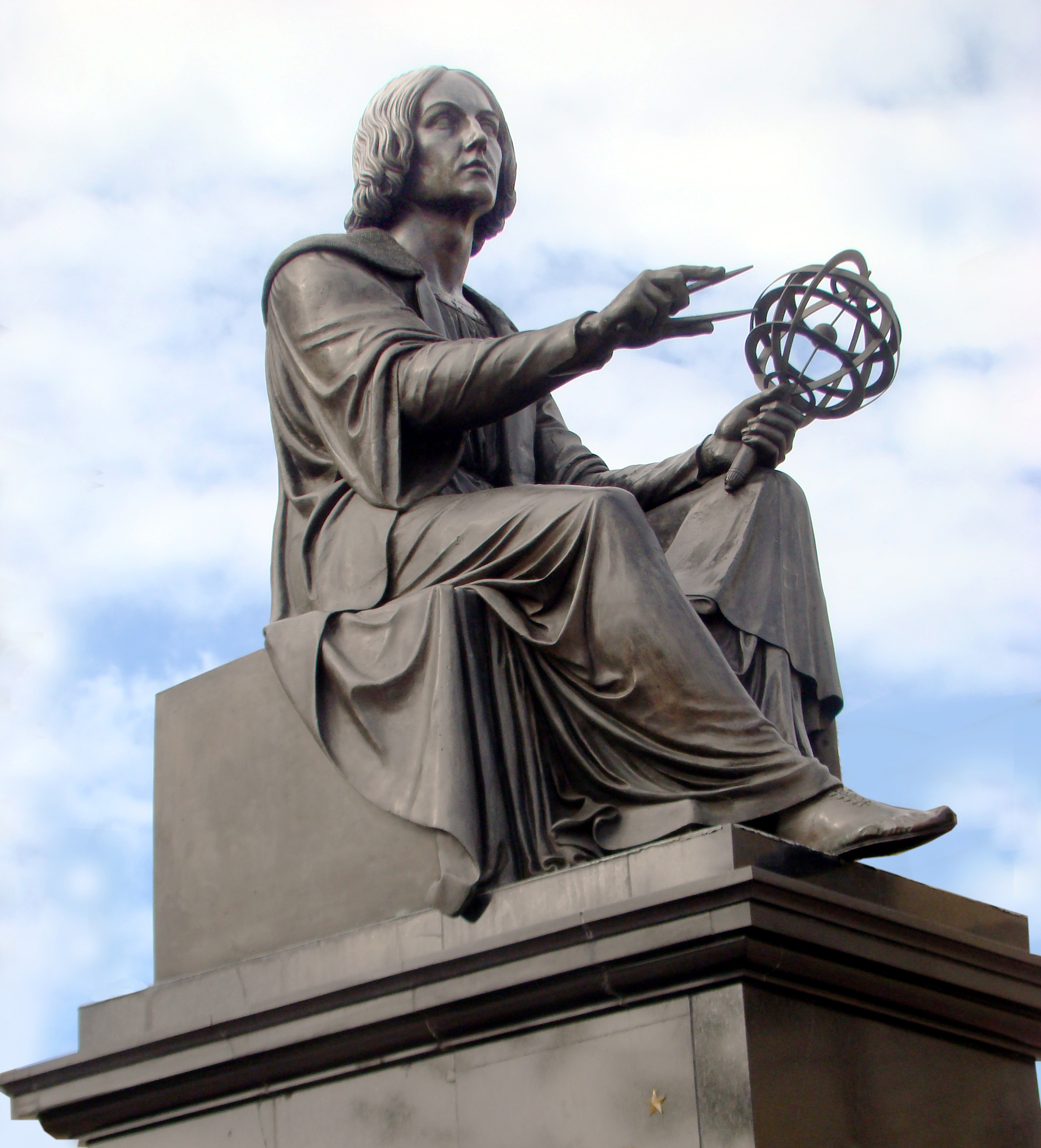
Consider an example of two such people who questioned: Copernicus and Galileo. For how many hundreds of years were people taught that the earth was the center of the universe before Copernicus showed them otherwise? Even so, Catholicism banned Copernicus’ book after his death. Within a few decades, Galileo, who assumed Copernicus’ mantle, stood trial for teaching the same heliocentric model. Galileo was forced by the Catholic Church to recant his life’s work. Yet, we know how the story ends. The Ptolemaic geocentric model of the universe, embraced by Catholicism, would not withstand future scrutiny and would be abandoned, vindicating both Copernicus and Galileo.

This virtue of the investigative mindset should not surprise Christians engaged in a study of God’s Word. We are encouraged to be noble Bereans, checking what we hear by the standard of Scripture (Acts 17.11). Furthermore, we must test the spirits to see whether they are of God (1 John 4.1). There is a warning to us that we should reject even an angel’s message if it is contrary to the revealed Gospel (Galatians 1.8). The father of lies is Satan, who used one lie to murder humanity (John 8.44). Since he works to deceive, and his ministers can take on the appearance of servants of righteousness, Paul encourages us to take our confidence in our weaknesses, which highlight God’s strength (2 Corinthians 11.13-15, 30).

Unfortunately, we seem to live in an era encouraging lockstep conformity in thought. There are those calling this “progress.” Critics rightfully call it “cancel culture,” pointing to a desire of “social justice warriors” to cancel contrarian viewpoints. If beliefs can only persist within an ideological vacuum, how is it any different from Catholicism forcing Galileo to recant? It is not. So, those ironically crying “fascism” in the streets act as the brownshirts of Hitler’s fascism in Nazi Germany. (I apply this truth secularly and politically since it is evident on the news and in the streets.)

In regards to politics, of course, the end is inconsequential for the Christian, since he or she must submit to the governing authority (Romans 13). Note we are not told to waste our time trying the political spirits, but those purporting to be spiritual. It may be that in making a stand against false religious doctrine, though, that we will enter into conflict with a political ideology glorifying what God calls abomination and permitting infanticide. However, that is not our principal task.

Praise God that our struggle for wisdom is much simpler than that of Socrates. After all, we believe in an infallible God who gave us His Truth within the Bible (John 17.17). We can admit our ignorance of what that Word says and test those things we hear from preachers, but we are not left to grope blindly for truth. Indeed, “The fear of the LORD is the beginning of wisdom, And the knowledge of the Holy One is understanding”  (Proverbs 9.10 NASB). Ultimately, it comes down to adopting the mindset of Paul, who determined to know nothing except Jesus Christ and Him crucified (1 Corinthians 2.2).

copernicus_by_thorwaldsen_warsaw_02


THE MASTER’S MATERIAL

Neal Pollard

A while back it was popular in the religious world to talk about Jesus’ encounter with two disciples on the road to Emmaus. The emphasis has often been on the disciples’ experience. I believe the biblical emphasis is on the character of Jesus. The disciples are contemplating Him even as they encounter Him. They describe Jesus as “a man who was a prophet mighty in deed and word before God and all the people” (Luke 24:19). Notice three reasons why He was so mighty in word before all the people.

JESUS KNEW HIS MATERIAL. Luke 24:27 says, “And beginning with Moses and all the Prophets, He interpreted to them in all the Scriptures the things concerning Himself.” Truly His knowledge is perfect and ours is not, but there is no excuse for failing to study–both on our own and for a class we are teaching or sermon we are preaching.

JESUS KNEW HOW TO RELATE ITS MEANING EFFECTIVELY. The men journeying to Emma’s, after walking with Jesus, said, “Did not our hearts burn within us while He talked to us on the road, while He opened to us the Scriptures?” (Luke 24:32). The dismal method of too many Bible classes is to essentially read and paraphrase in verse by verse fashion. Preaching can too often be disorganized in delivery or vague in message. Paul told Timothy, “Do your best to present yourself to God as one approved, a worker who has no need to be ashamed, rightly handling the word of truth” (2 Tim. 2:15, NIV).  Robertson says of “rightly handling” that it means “cutting straight…Since Paul was a tent-maker and knew how to cut straight the rough camel-hair cloth, why not let that be the metaphor?” (Vol. 4, 619). As presenters of truth, tell what it meant then and in context, and then apply it!

JESUS KNEW HOW TO MAKE THE MATERIAL LIVE IN HIS STUDENTS. Luke 24:45 says, “He opened their minds to understand the Scriptures.” That is just what we are after as teachers, preachers, and proclaimers of the Word. We are not just fact-reporting. We are trying to get into the heart. Remember that Jesus sought to change lives with His teaching.

Only Jesus was the perfect teacher. But we can always be better and great. Let us mimic the Master’s approach to His material!

When Warriors Meditate

Neal Pollard

CBS News was doing a report about a new, effective therapy for soldiers who return from combat, suffering from Post-Traumatic Stress Disorder (PTSD).  Chris Eder, an Air Force veteran who had near-death experiences, has found a way to cope and helps other veterans in a group, veterans, that loses 22 people every day through suicide.  Some turn to legal or illegal drugs or other unsatisfying or unhealthy means of coping, but Eder discovered yoga and meditation.  In the course of an interview, he said, “When a warrior sits down to meditate, we know how to focus, and it happens like that” (cbsnews.com/news).

While yoga may certainly seem at odds with the tough-guy picture we have of our military, the idea of meditation is nothing new.  One of the Bible’s fiercest warriors, David, was a strong proponent of it.  The meditation he called for was not eastern or mystical, but spiritual.  12 of the 15 times the word is seen in the NASB, David is the penman, calling for the godly to meditate.  He meditates on the law of God (Ps. 1:2). He meditates in the place of worship (Ps. 27:4). He meditates on God (Ps. 63:6). He meditates on God’s works and deeds (Ps. 77:12; 145:5). He meditates on God’s precepts and ways (Ps. 119:15).  That word “meditate” means to “muse” (BDB, n.p.), “to read in an undertone” (Koehler, et al, Hebrew-Aramaic Lexicon, n.p.), or the idea of contemplating something before then uttering it (cf. TWOT, n.p.).  With all of these definitions, there is the idea of deliberate, prolonged thinking about the object—whether God or His word.  The process has a profound change on the person, shaping and influencing them. There are rewards like knowledge, peace, grounding, hope, and godliness for the meditator.

It is great and necessary for you and I to engage in spiritual warfare.  We are defined by God as soldiers (cf. Eph. 6:10ff).  Yet, when we as spiritual warriors meditate through prayer, study, and contemplation of our God, we do more than soothe the savage beasts within us.  We draw greater power and strength to continue doing battle.  This week, please be found on the battlefield, but make sure you take time to meditate, too!