“Received Up Into Heaven” 

Friday’s Column: Supplemental Strength

81121814_2462862270639428_5746232403106463744_n

Brent Pollard

With the death of Nero, a path to the imperial throne was opened to Vespasian by those soldiers serving under the former’s command. Vespasian had made a reputation for himself in the conquest of Britain and the subjugation of Jewish revolts beginning in AD 66. Thus, given the opportunity by his men, Vespasian founded the Flavian Dynasty, which his son, Titus, would succeed. As emperor, Vespasian left the task of quelling the Jewish rebellion to his son, Titus. Thus, Titus remained in the theater of conflict while his father returned to Rome.

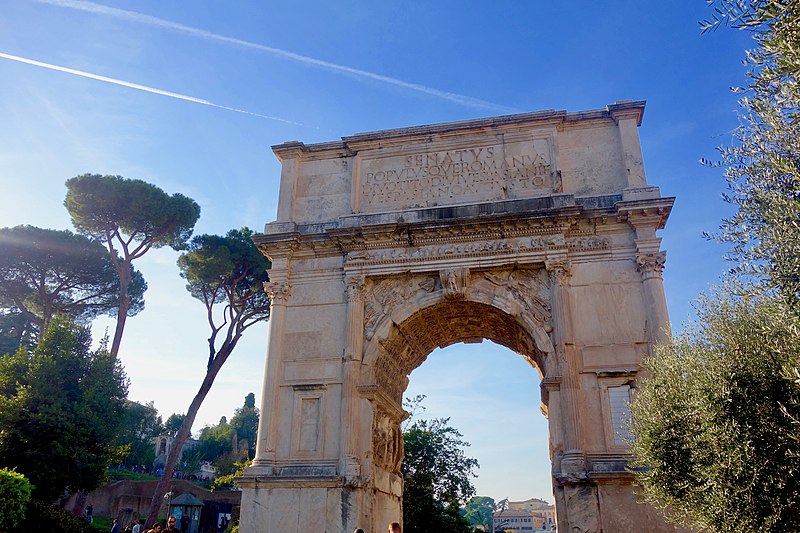
In AD 70, Titus crushes the Jewish rebellion by destroying Jerusalem and the Second Temple. Vespasian dies from an illness within a decade, opening the throne to his son, Titus. As emperor, Titus completed the Roman Colosseum and dealt with the crisis of Pompeii and Herculaneum. Upon his death, Titus’ younger brother, Domitian, became emperor and built the Arch of Titus in AD 81 to commemorate Titus’ conquest of Jerusalem. Titus serves only about three years as emperor.

It is of note that the triumphant arch Domitian dedicates is to Titus, who only completes his father’s work in Judea and Jerusalem. No doubt, Vespasian would have approved seeing as he desired to lay the foundation for his family’s rule. In life, Vespasian had likewise sought to emphasize his son’s actions. In other words, though ambitious, Vespasian was generous enough to share the spotlight with his son to further his machinations. As homecomings go, Titus was a son well-received by his father. One can question if the son was as accomplished as his father, given the brevity of his reign. If for no other reason than establishing the desired optics, though, Vespasian knew to give Titus a grand reception upon the completion of his task on the battlefield, since it glorified himself as well.

I recently completed a study on the Harmony of the Gospels; that is, the complete narrative one finds when fleshing out the revealed narrative of Christ by coalescing all four gospel accounts into a single account.  I noted that despite being the shortest gospel, only Mark ends in a manner consistent with the once-coveted literary “happily-ever-after.” Indeed, Mark 16.19-20 has Jesus returning to the Father and the disciples carrying out their Master’s work. Matthew ends his gospel with our Lord’s promise to remain with us. Luke ends his thoroughly-researched gospel by showing the rejoicing disciples continuing in their praises to God. John ends the last written gospel by telling us that despite not having a complete record of Christ’s life, we have enough information to develop a saving faith.

As a Christian, I appreciate the perspective of each inspired gospel author. I have always been partial to John’s gospel with its unique approach, but now find myself most enamored by Mark’s inspired conclusion. In stark contrast to the prodigal son, in which a rebellious son squanders his father’s inheritance in the far country, but finds a gracious, welcoming father upon his repentance, we have in Mark’s closing an obedient Son returning triumphantly to the deserved adulation of His Father. The text is simple enough. The New American Standard Version states, “…He was received up into heaven and sat down at the right hand of God” (Mark 16.19).

That was what Jesus eagerly anticipated. The Hebrews writer said it was this impending joy enabling Him to endure the shame of the cross (Hebrews 12.2). If Titus deserved a triumphant arch for doing his father’s bidding, shouldn’t a much more deserving Son receive from His Father the name above all names? (Philippians 2.9-11) No Christian doubts Jesus was worthy of this honor, but is there not something uplifting about reading the confirmation Mark provides? Given what Jesus accomplished, we relish this affirmation since we know His vicarious sacrifice enables us likewise to join Him in His death, burial, and resurrection (Romans 6.3-5,8-9). We can see by faith Stephen’s vision granted him before his martyrdom of the Christ standing at God’s right hand, looking at human events intently (Acts 7.56). Truly, He is our great High Priest (Hebrews 4.14-16), interceding for us (Romans 8.34).

Further Reading:

Wasson, Donald L. “Vespasian.” Ancient History Encyclopedia, Ancient History Encyclopedia, 11 Aug. 2020,www.ancient.eu/Vespasian/.

Chilver, Guy Edward Farquhar. “Vespasian.” Encyclopædia Britannica, Encyclopædia Britannica, Inc., 20 June 2020, www.britannica.com/biography/Vespasian.

Wasson, Donald L. “Titus.” Ancient History Encyclopedia, Ancient History Encyclopedia, 11 Aug. 2020, www.ancient.eu/titus/.

“Arch of Titus.” Wikipedia, Wikimedia Foundation, 4 June 2020, en.wikipedia.org/wiki/Arch_of_Titus.
800px-arch_of_titus_283250104217829

Petrified!

Neal Pollard

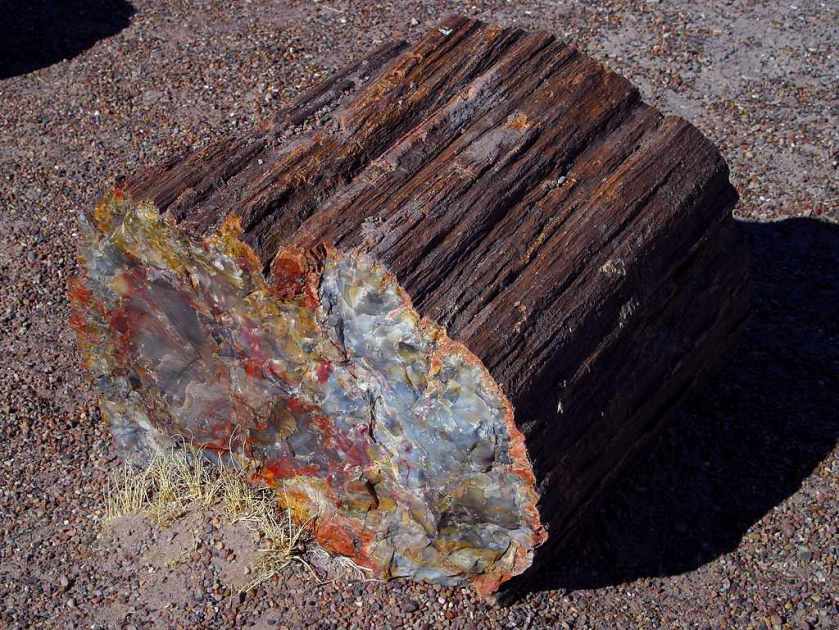
Perhaps you have seen the incredible collections of petrified wood in some of our National Parks or Monuments, or maybe you have seen individual examples in any number of other places. A geology site briefly explains how material becomes petrified:

Petrified wood is a fossil. It forms when plant material is buried by sediment and protected from decay by oxygen and organisms. Then, groundwater rich in dissolved solids flows through the sediment replacing the original plant material with silica, calcite, pyrite or another inorganic material such as opal. The result is a fossil of the original woody material that often exhibits preserved details of the bark, wood and cellular structures (geology.com/stories/13/petrified-wood).

There are a few interesting aspects to this process—the burial, the protection, the replacement, and the resulting appearance.

Twice in the gospel of Mark, the writer uses a term to describe the condition of His disciples’ hearts. In Mark six, they have seen him feed the 5,000 men and immediately thereafter they are in the boat in a strong wind when Jesus came walking on the water. They were troubled and fearful, amazed and marveling “for they had not gained any insight from the incident of the loaves, but their heart was hardened” (52). Ironically, the second incident happened in a boat following Jesus feeding thousands of people again. They misunderstand Jesus’ warning about the leaven of the religious leaders, and Jesus laments, “Is your heart still hardened?” (8:17).

BDAG defines this word, πωρόω, in this way: “To cause someone to have difficulty in understanding or comprehending, harden, petrify, make dull, obtuse, blind, close the mind” (900).  The truth was buried from their understanding, their preexisting, preset points of view blocking its penetration, and the result was their missing the important point. The truth couldn’t get through to their petrified hearts.

Why do we fail to understand basic, vital Bible truths, like the essential nature of baptism, the abrogation of the Law Of Moses (including the Ten Commandments), the emotionally difficult teaching of Jesus about marriage, divorce, and remarriage in Matthew 19, God’s law regarding sexual purity, and the like? Why do we struggle with worry, fear, and doubt? Why do we lack the courage to boldly share Jesus with the lost? Often, the answer to each of these and similar questions is the same as why the disciples feared and faltered.

We should pray for our hearts to stay soft, receptive, and moldable to Jesus. We cannot let our ignorance, resistance, or outside influences to harden our hearts. In fact, that very prospect should make us, well, petrified!

petrifiedwood

“I Know Who You Are!”

Neal Pollard

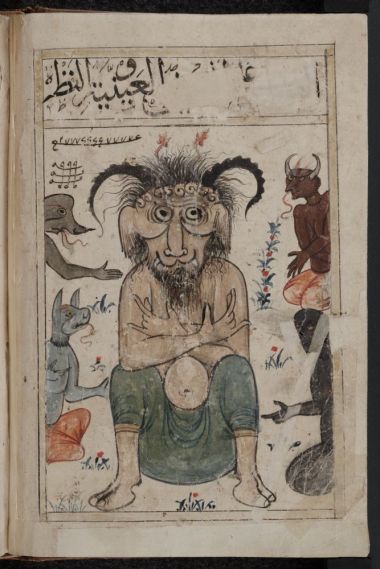
A rich detail in the study of the gospel of Mark is the testimony of the unclean spirits about Jesus. 

  • Mark 1:24—A man in the synagogue with an unclean spirit said, “What business do we have with each other, Jesus of Nazareth? Have you come to destroy us? I know who You are—the Holy One of God!”
  • Mark 3:11—“Whenever the unclean spirits saw Him, they would fall down before Him and shout, ‘You are the Son of God!’”
  • Mark 5:7—The man with the unclean spirit named Legion said, “What business do we have with each other, Jesus, Son of the Most High God? I implore You by God, do not torment me!”

In addition to these encounters, the gospel repeatedly shows Jesus’ power over the unclean spirits—He gave authority to the apostles over the unclean spirits (Mark 6:7), He healed the little girl with the unclean spirit (Mark 7:25), and He cast out the unclean “deaf and mute” spirit from the man’s son (Mark 9:25). Reading just those few accounts of Jesus’ power over them, no wonder they testified about Him! Who knows what they had seen of Him in the spirit realm that people on earth had not seen?  

Consider a few observations about these believing, confessing evil spirits we read about in the gospel record. 

Their faith exceeded the faith of the apostles, disciples, and religious leaders.  Jesus rebukes the absence and littleness of faith in the people who encounter Him, even those who were His closest followers. In Mark 8:28, so many were wrong about who He was. The disciples showed fear instead of faith or they missed the point on occasions where faith would have made things clear. How humbling for them that unclean spirits were crystal clear in their knowledge about Jesus. 

Their faith did not benefit them.  James’ epistle drives this point home. He writes, “You believe that God is one. You do well; the demons also believe, and shudder” (2:19). These unclean spirits were working against Christ. Just knowing who Jesus was did not save them nor did it make them submissive to Him.

Their faith is presented as a prominent proof of Jesus’ identity.  The miracles, wonders, and signs performed by Jesus help the apostles and disciples ultimately figure out who Jesus is. Peter would preach this (Acts 2:22ff). John would write this (John 20:30-31). Reading about this in the Bible, countless men and women through the centuries have believed based on the record about Jesus that includes His power over the spirit world. Mark presents these encounters to establish the fact confessed by Peter: “You are the Christ” (8:29).

How does this apply to us today?  First, let’s not let the world live with greater faith and understanding than we do. Second, let’s understand that merely understanding and believing the identity of Jesus will not save us. Faith must be accompanied by works. Third, may we allow the various proofs about Jesus to build and grow our faith and trust in Him, and by this yield a foundation which stands up to the fiercest storms (cf. Matt. 7:24-25). Let’s not merely say to Jesus, “I know who You are!” Let’s show Him!

kitab_al-bulhan_-_devil