Watch Your Mouth!

Neal Pollard

When a people are described with “everyone did what was right in his own eyes” (17:6), they are apt to say whatever comes out of such a heart and mind. We cannot be surprised to see the hero as well as the villains in this account getting in trouble through their words. Back at the very beginning of Judges eleven, the Gileadites foolishly speak words rejecting Jephthah because of his unseemly origins (11:2). They would eventually have to eat those impetuous words (11:7-8). The events involved in turning back the Ammonite oppression would lead to words with deadly consequences!

Jephthah spoke reckless and rash words (11:30-31). On the one hand, his vow demonstrates a faith in God that made him throw all caution to the wind. He so desperately wanted victory over God’s enemy that he vowed to sacrifice the first living thing that passed through the door to meet him. While many ancient cultures, including Israel, frequently kept livestock in their houses (cf. 2 Sam. 12:3), Jephthah at least ran the risk that it would be a loved one or at least a servant who met him upon his return. Yet, in apparent passion, he vowed to offer whatever it was as a burnt offering to the Lord. God did not ask for or expect human sacrifice; in fact, His strongest words of condemnation were reserved for false worship that included it (Deut. 12:31; 2 Ki. 17:17; Jer. 7:31). God granted this deliverer victory and upon his return home, his only child, a daughter, came out to greet him celebrating his great victory (34). Both the daughter and her father understood the absolute seriousness of his vow (Num. 30:2; Ecc. 5:4-5). There was no breaking it, so Scripture says he “did with her according to his vow that he had made” (39). How many words have been spoken in the heat of passion, anger, or zeal that were not carefully thought through and went on to hurt God, ourselves, and others? How many promises have been made that proved costly to keep? We ought to taste our words, chewing on them before we say them, to make sure they are words thoughtfully and wisely spoken. Otherwise, they may prove to be bitter! 

The Ephraimite spoke words that betrayed them (12:5-6). This started with their threatening and taunting speech, viciously (and apparently dishonestly, 12:2-3) accusing Jephthah, “Why did you cross over to fight against the Ammonites and did not call us to go with you? We will burn your house over you with fire” (12:1). They also insulted the Gileadites, whom Jephthah led, calling them “fugitives” rather than brethren (12:4). The Gileadites took control of the Jordan River, monitoring all who sought to cross it. Any Ephraimite who tried to cross, they killed. In the end, they killed 42,000 Ephraimites. How could they distinguish them from everyone else? Their speech. The Ephraimites’ speech led to their downfall. They could not pronounce “Shibboleth.” They said “Sibboleth.” It was literally a dead giveaway! What about our speech, on the job, at school, at home, or out with our friends? Do those words proclaim to others that we are followers of Christ, or do we sound just like the world? We are wise to listen to Jesus’ words of warning about our words: “You brood of vipers! How can you speak good, when you are evil? For out of the abundance of the heart the mouth speaks. The good person out of his good treasure brings forth good, and the evil person out of his evil treasure brings forth evil. I tell you, on the day of judgment people will give account for every careless word they speak, for by your words you will be justified, and by your words you will be condemned” (Mat. 12:34-37). We don’t need anybody’s affirmation or approval so badly that we would neglect this warning!

Those of us who are prone to think out loud or practice “ready, fire, aim” with our speech do well to remember Jephthah and the Ephraimites. Let’s watch our words. Let’s make sure they are pure and profitable, not poor and pitiful! 

The Worth of One’s Word 

Friday’s Column: Brent’s Biblical Bytes

Brent Pollard

I am not seeking to get into a debate about the outcome of the 2020 general election. However, everyone can agree that Trump has insisted that he won the election and has a team of lawyers trying to prove it. Again, whether he is correct is not my point. However, I wish to point out that Trump’s lawyers offer the affidavits from a few hundred people as evidence of voter fraud. For example, there are 220 affidavits in Michigan alone. I understand that most news outlets have moved on and ignored Trump’s legal team’s efforts.  

Yet, lying on an affidavit is perjury. It is as if you have lied on the witness stand in court while under oath. Perjury is a felony. In many states, felons cannot even vote. So, in Michigan, and other States, hundreds of people testify something that, if false, would make them criminals and, ironically, prevent them from voting in an election in the future. Here is the question. Do people care about lying anymore? We have a former President who was impeached but not convicted for committing perjury because the subject matter of his lie concerned sexual relations with his intern. People dismissed it as political maneuvering by Republicans about a private matter, “just sex.”  

To say, “A man’s word is his bond,” is no longer fashionable, it seems. When did you last have a “verbal contract” with someone? So, it would not surprise me that people would ignore the affidavits of hundreds of people. We are so accustomed to people lying for political expediency that we believe people would become felons to achieve their political goals.  I would hope that Christians give greater value to their words. Indeed, Jesus told us that our testimony is our bond.  

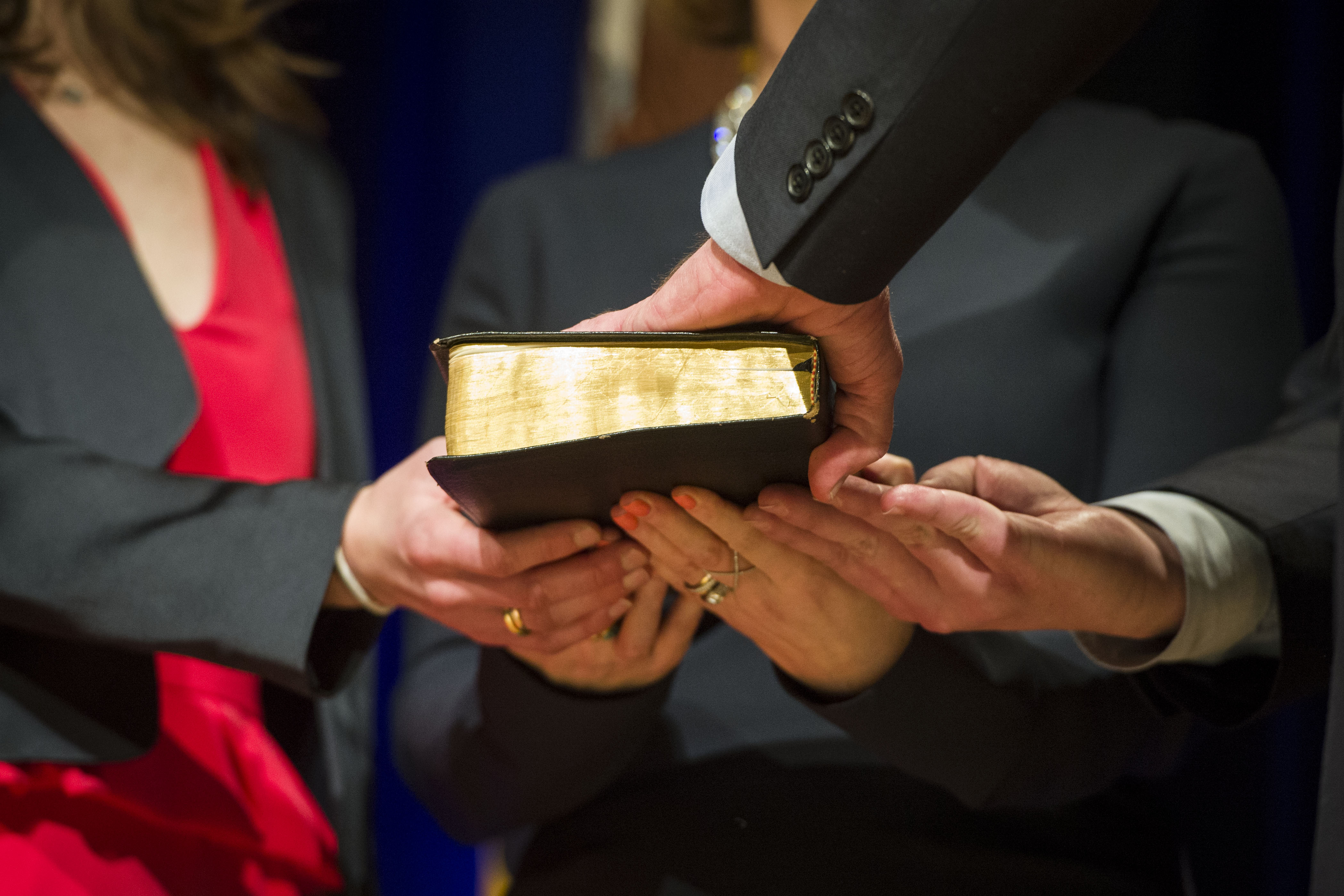
In Matthew five, Jesus discusses how the men of his day diluted their promises with unnecessary verbiage. In reading about the culture of first-century Judea, I noted that if a man wanted to create a loophole for himself, he would swear by something temporary, like his head’s hair. However, if he were making a promise he intended to keep, he would swear by the Temple or something invoking God. Jesus says, “But make sure your statement is, ‘Yes, yes’ or ‘No, no’; anything beyond these is of evil origin.” (Matthew 5.37 NASB) Jesus reminded them that the principle they were violating was that one must keep his vow to the Lord (Matthew 5.33).  

The wise man of God reminds us that it is better to make no promise at all than to promise and fail to keep our word (Ecclesiastes 5.4-5). Under the Old Law, Moses commanded, “If a man makes a vow to the Lord, or takes an oath to put himself under a binding obligation, he shall not break his word; he shall act in accordance with everything that comes out of his mouth” (Numbers 30.2 NASB). The judge, Jephthah, learned this the hard way. Jephthah made a foolish vow to God that he would offer as a sacrifice whatever met him at his house when returning victorious from battle (Judges 11.30-31). Little did Jephthah know that it would be his daughter who would first greet him upon his return. Judges 11.34 states that Jephthah’s daughter was his only child. Thus, Jephthah grieved when she greeted him.  

To her credit, Jephthah’s daughter told her father to keep the promise made with God (Judges 11.36). Given God’s feelings about human sacrifice (cf. Jeremiah 32.34-36), one wonders if Jephthah had to take her life. Jephthah’s daughter’s request was to bewail her virginity with her friends. Women of antiquity, sadly, established their worth by having children. She would be childless. Therefore, there is the possibility that Jephthah’s daughter lived a life of perpetual virginity since that is the emphasis of the last verses of Judges 11. There is no mention of her death.  

Yes, Jephthah kept the promise, understanding the worth of one’s words. He knew his obligation to God. Therefore, let us observe great care, as Jesus taught when making promises to others. Neither let us seek ways of getting out of our commitments. May our words always carry the weight of sworn testimony before the Judge of the Court of the Most High!  

Sources Consulted 

Hurd, Dale. “Where’s the Evidence of Election Fraud? Trump Legal Team Delivers Opening Arguments.” CBN News, The Christian Broadcasting Network, Inc., 20 Nov. 2020, www1.cbn.com/cbnnews/politics/2020/november/wheres-the-evidence-of-election-fraud-trump-legal-team-delivers-it

Spengler, Teo. “What Is the Penalty for a False Affidavit?” Legal Beagle, Leaf Group Ltd. / Leaf Group Media, 18 May 2020, legalbeagle.com/7642670-penalty-false-affidavit.html

File:150306-D-AF077-067 (16736531555).jpg - Wikimedia Commons