Rules

Gary Pollard

This week’s question is, “Should we always follow the rules, even if doing so causes someone harm?” 

What kind of rules? We often hear something like, “We are a nation of laws.” Yes we are — best estimates put the number of our laws and regulations in the hundreds of thousands. Some have even claimed that the average American unknowingly commits a small number of felonies every day. Not all laws/rules are created equal. Some are important (ie. to prevent serious abuse and exploitation of the vulnerable), most are totally arbitrary. 

The Pharisees did the same thing with God’s law. By the time Judaism was in full swing, there were around 613 laws. But rabbis were dissatisfied with how vague some of the commands were, so rather than leaving those to a person’s conscience or common sense, they eventually produced the Mishnah and Gemara. These were commentaries on The Law that “clarified” how those 613 commands were to be followed. Those opinions were enforced as law, which infuriated Jesus on several occasions. The rabbis had made faithful Judaism functionally impossible. 

So the short answer is, “What’s the rule your conscience is wrestling with?” If following the rule in question would cause you to violate love for God or love for your neighbor, that’s a legitimate reason to not follow the rule. 

We do have to remember that Romans 13 and I Peter 2.13ff and Titus 3.1-2 tell us to obey the laws and rules our governments put on us. The governments those early Christians had to obey were just as corrupt as our own today. If there was any confusion, Peter clarified with “Obey everyone who has authority over you in this world” (I Pt 2.13). He does use παση, which means “all” or “every”. 

I don’t like reading stuff like that. We’re supposed to be a country built on English common law tradition, with protections against government abuse explicitly listed in the Bill of Rights and in precedents from hundreds of legal cases. But this current world is not my home, and I’m more afraid of God than I am distrustful of the powers that be. The Bible doesn’t say, “Snitch on friends and family when they violate the law.” But it does say that we have to obey all governing authorities from the top down. 

So do we always have to follow the rules, even if doing so causes harm to others? Yes and no — remember that loving God and loving your fellow man are the most important laws. Be willing to sacrifice self rather than cause undeserved harm to others. But any law/rule that doesn’t conflict with those two must always be followed, regardless of the consequences.  

Daniel’s Trust

Carl Pollard

Daniel’s Trust

There are a plethora of men and women in the Old Testament who we can look to as an example of faith. Abraham, Joseph, Joshua, Sarah, and many more. However one of the strongest examples of true faith in God is found in the book of Daniel. Daniel is someone we would say was a faithful servant of God. No matter the circumstances, he would put his trust in God. Even in the toughest times, Daniel remained a servant for the Father. One instance where Daniel showed this incredible trust is found in Daniel 6. 

Daniel was apart of the kings appointed wise men. However, the other wise men in the kingdom were jealous of Daniel and wanted to have him killed. So they went to the king and asked for a decree to be made which stated that only the king could be prayed to. they did this knowing that Daniel prayed constantly to God. Despite this decree, Daniel trusted in God even though he faced dire consequences if he prayed to God. 

Daniel 6:10-11, 16-17, “When Daniel knew that the document had been signed, he went to his house where he had windows in his upper chamber open toward Jerusalem. He got down on his knees three times a day and prayed and gave thanks before his God, as he had done previously. Then these men came by agreement and found Daniel making petition and plea before his God. Then the king commanded, and Daniel was brought and cast into the den of lions. The king declared to Daniel, “May your God, whom you serve continually, deliver you!” And a stone was brought and laid on the mouth of the den, and the king sealed it with his own signet and with the signet of his lords, that nothing might be changed concerning Daniel.” 

The king banned prayer to anyone other than himself, but upon learning this Daniel still fell to his knees and prayed. In fact, the moment he learned that the document had be signed, he left and went to go pray to God. 

In a culture that is consistently moving further and further from Gods Word, how will His people respond? In our lives today do we show this kind of faith and trust in God? Do we understand the consequences, but still choose to obey God? Sadly many today have a faith that is dependent on circumstances. But we must be like Daniel. We should have a full trust in God to deliver us in our trials and understand that He is in control. 

If prayer was outlawed, would you publicly show your faith in God? If going to church was made illegal, would you still show up on Sunday morning? These are situations that will hopefully never happen, but if they do I pray that we will be like Daniel in our response.

The Veiled Heart

Friday’s Column: Captain’s Blog

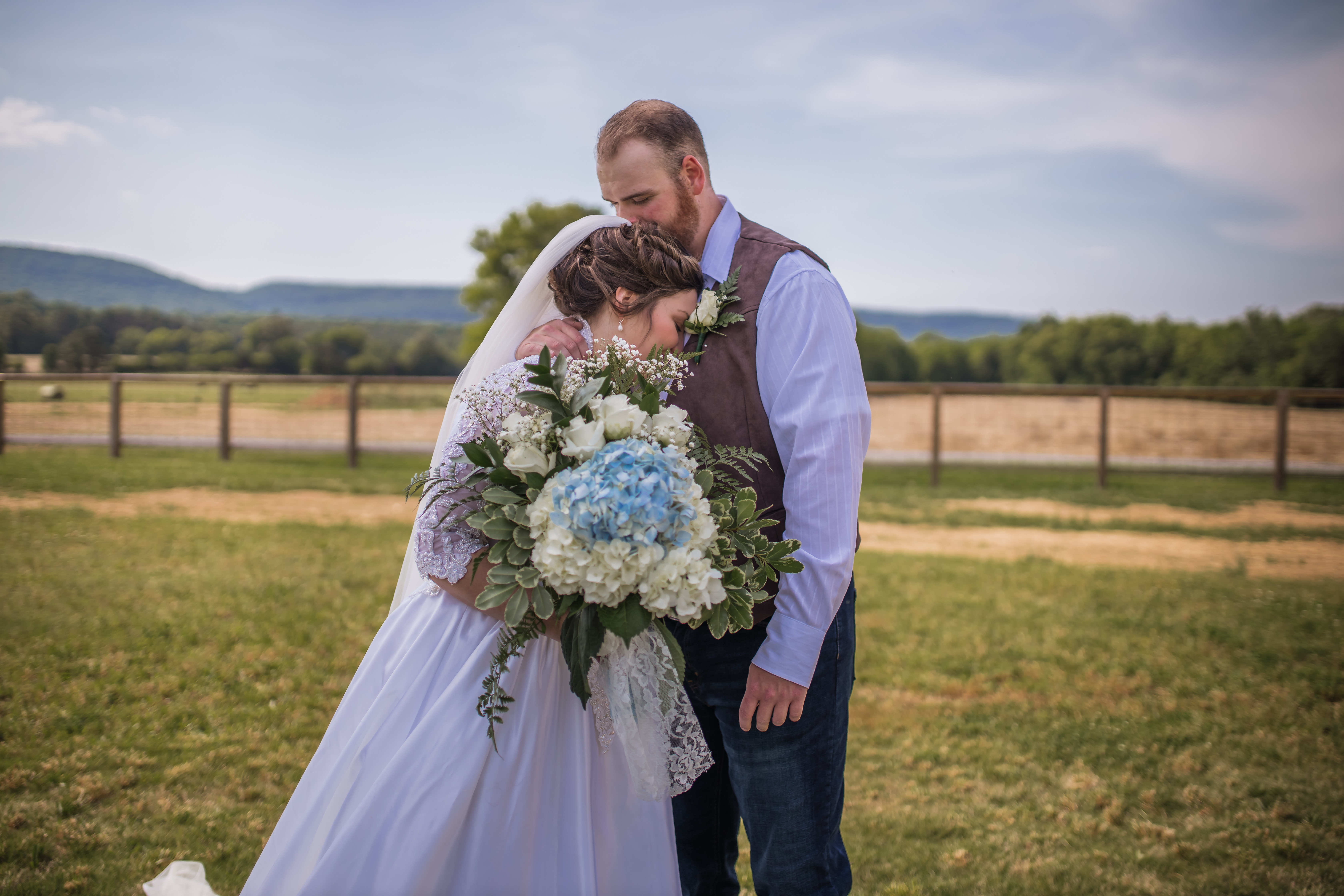
Carl Emily wedding

Carl Pollard

“Now the Lord is the Spirit, and where the Spirit of the Lord is, there is freedom” (2 Cor. 3:17).

Without the proper understanding of the context, this verse can be taken to mean many different things. With a little bit of digging we can know what Paul is saying. In reference to the Jews who read the Old Law, Paul says that they had a veil over their hearts (15). What veil is he referring to? The Jews failed to see the Messiah in the Old Law. They had preconceived ideas about what He would look like, talk like, and His mission. They dreamed up a Messiah that was completely different from the One prophesied about.

These Jews read the Old Law with a veil over their eyes. They failed to see the Messiah. Their heart and mind was made up about Christ. It was so much so that they failed to see the true Messiah. Paul says all of this to make a point, “But when one turns to the Lord, the veil is removed” (2 Corinthians‬ ‭3:16‬).

Those who turn to the Lord are able to see the Messiah for who He is. In Christ and being in the spirit of the Lord, we now have freedom from this veil. Rather than failing to see Christ, we can read and understand His Word for what it is, the Words of LIFE.

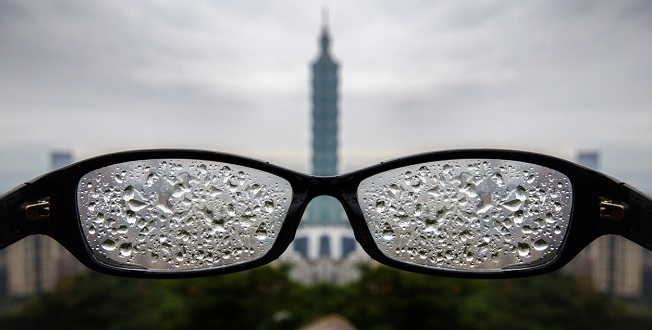
What happens when you wear glasses inside on a hot humid day? You can see just fine, but the second you step out of the AC and into the heat and humidity, the glasses fog up almost instantly. This is how the Jews read the Old Testament. With a pair of fogged over glasses. But those who are in Christ can see the story of the Bible. We can see the prophecies and their fulfillment. We can clearly see God’s plan for mankind, All of this is a direct result of the freedom God has given each one of us in His Son.

While we don’t have the same circumstances surrounding us today, we can still fall into a similar problem. Sometimes when we go to the Word we only search for the things we should or shouldn’t do. Instead of studying to learn more about our Savior, we get caught up in the rules and regulations of Christianity. While this isn’t necessarily a bad thing, if we only see the Bible as a rule book we will never have a deeper relationship with God. Studying like this effectively places a veil over our hearts and keeps us from finding that true, meaningful and love-filled relationship that God longs for us to have.

The Jews had a veil over their hearts that kept them from seeing Christ and the New Covenant. And we can sometimes do the same thing by treating God’s Word as a rule book rather than a Book that gives us a connection with God the Father.

These rules and guidelines are important, but there’s a lot more to Christianity than this.

THE STRUGGLE OF SUBMISSION


Neal Pollard

I confess to not knowing all the reasons behind some of the rules and protocol onboard the airplane.  Why do you have to power off your electronics?  Why must you have a seat when the plane is taxiing to the gate after landing?  I know what I am told, but that does not mean I necessarily see the logic as sound in every situation.  Having said that, nothing aggravates me as much as seeing fellow passengers flaunting the express command to cut off their phones.  I have seen people finishing texts even as the plane is leaving the ground.  Perhaps my feelings make me biased, reading the news story about the “rowdy” high school seniors from the Yeshiva in Flatbush in Brooklyn who were kicked off their 6 A.M. AirTran flight from LaGuardia  to Atlanta. According to an AP report, “Southwest Airlines, said in a statement that flight attendants asked passengers several times to take their seats and put their mobile devices away. The airline said that when some didn’t comply, the captain repeated the request. When that didn’t work either, the whole group of students was ordered to disembark for safety reasons” (David B. Caruso, 6/4/13).

Why do so many of us struggle with following the rules?  Children don’t want to obey parents.  Students don’t want to obey teachers and administrators.  Employees don’t want to obey employers.  Church members don’t want to obey elders.  Mankind doesn’t want to obey God.  This tendency is not only widespread, but has been timeless.

If we will honestly assess this problem, we will find that our biggest threat in this matter is internal rather than external.  Our biggest enemy in this is ourselves.  Certainly, James 1:14 applies to this struggle. We get carried away and enticed by our own lust.  With this, that ugly monster of pride swells within us, causing us to think, “Nobody can tell me what to do!” Let us remember Proverbs 16:18!  What a dangerous mentality.

Our perfect, innocent Lord faced a painful death on the cross at the hands of wicked men.  He did not complain of unfairness or decry His loss of rights.  He tearfully, humbly prayed, “Not My will, but Yours be done” (Lk. 22:42).  May we humble ourselves and follow His example in the areas of life that require us to submit to the rules.