Fighting For Our Fathers

Dale Pollard

Nebuchadnezzar became a beast in some form or fashion because of his pride in Daniel 4. Oddly enough we find out that his grandson, Belshazzar, falls into the same sinful snare in the very next chapter. This makes for more than an interesting story because it serves as an example of a common thread within scripture. The phrase “like father, like son” rings true in a negative way more often than not. It’s surprising to read of the many heroes of the faith who were failures as fathers. It’s almost disheartening to discover that it’s more common to find stories of poor parenting than successful ones. As tragic as these accounts are, it’s a blessing to have and learn from them. Let’s look into a few of these examples. 

Lot (Genesis 19.6-8)

Lot not only chose to pitch his tent outside of Sin City (Gen.13.12), he eventually moved his family into Sodom as well. In chapter 19 we read, “So Lot went out to them through the doorway, shut the door behind him, and said, ‘Please, my brethren, do not do so wickedly! See now, I have two daughters who have not known a man; please, let me bring them out to you, and you may do to them as you wish; only do nothing to these men, since this is the reason they have come under the shadow of my roof’” (6-8). Not long after these shocking verses, Lot’s remaining daughters take advantage of him in a cave after being saved from Sodom. Clearly Lot wasn’t a great father. 

ISAAC (Genesis 25)

Isaac loved Esau because he ate of his game, but Rebekah loved Jacob (Gen.25.28). Favoritism among parents is not uncommon to read about in scripture but this never seems to work out in the end. Issac was a weak father in other areas as well. He marries a deceptive wife and fails to rule his family in a God-fearing way. 

JACOB (GENESIS 37)

Like father, like son. Jacob shows favoritism towards Joseph and because of this we read the following, 

“Now Israel loved Joseph more than any of his other sons because he had been born to him in his old age, and he made an ornate robe for him. When his brothers saw that their father loved him more than any of them, they hated him and could not speak a kind word to him” (Gen. 37.3-4). 

ELI (I SAMUEL 2.22-25)

“Now Eli was very old, and he heard everything his sons did to all of Israel, and how they lay with the women who assembled at the door of the tabernacle of meeting. So he said to them, “Why do you do such things? For I hear of your evil dealings from all the people. No, my sons! For it is not a good report that I hear. You make the Lord’s people transgress… Nevertheless, they did not heed the voice of their father, because the Lord desired to kill them” (22-25b) 

Eli was a priest at Shiloh, but he was a pitiful parent. His sons, Hophni and Phineas, were allowed to make sacrifices to the Lord but they were known among the community as acting extremely wickedly. They fornicated with women in the tabernacle and stole sacrificial meats from the people. So horrible were they that the Israelites began to “abhor the sacrifices to the Lord” (v.17). 

Young Samuel, who was being raised by Eli in the temple, receives a vision from God who says that He is going to destroy Eli’s boys, but Eli’s response to this news is rather flippant. He says, “the Lord will do what is right according to Him.” Sure enough, the prophecy plays out exactly as God said it would and Eli ends up dying upon hearing of it in I Samuel 4. 

Sadly, Samuel turns out to be a failure as a father as well as the king, David, that he anoints. 

While these accounts aren’t uplifting to read, they serve as humbling warnings to fathers today. If you want to be a faithful father, you’re going to have to fight for it. 

Man Digs Tunnel Through Mountain With Hand Tools

Thursday’s Column: Dale Mail

Dale Pollard

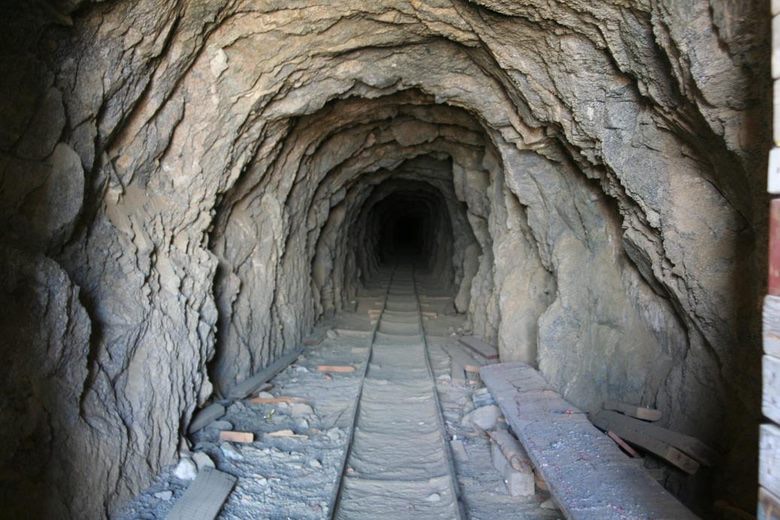
In the El Paso Mountains of the Mojave Desert, there’s a strange and mysterious tunnel. This tunnel cuts a half-mile into solid granite— but goes nowhere. William Henry Schmidt, or “Burro” Schmidt, began digging this tunnel by hand in order to provide a shortcut through the mountain. 

This solo construction project began around the year 1902 while Schmidt was hauling iron ore around the mountain to get to a railroad which would then take the ore to be smelted. 

This strenuous trip around the mountain proved to be a dangerous and time consuming journey. At some point, Schmidt decided to burro straight through the mountain which would, in his mind, save him time. With a simple pick axe and other various hand tools, he began to dig. 

And dig. 

And dig some more. 

For roughly thirty eight years he alone would continue to chisel and bore into the mountain. When he was sixty eight years old, he finally saw rays of sunlight shining through cracks in the rock wall in front of him. He finally emerged on the other side of the mountain— but his efforts were all for nothing. 

Not only did his tunnel end at the top of a steep cliff in the middle of nowhere, but unbeknownst to him during the years he had been digging, a construction crew had built a road providing the more convenient route he had been working so hard to create.

THAT SCARY SENSATION OF DESPERATION 

With four hundred men, Esau marches towards Jacob. The two brothers had parted ways years earlier under strained and deceitful conditions. Jacob, with the help of his mother, had taken advantage of his aging father and stole the birthright belonging to his older sibling. Now Jacob is filled with fear and an overwhelming sense of desperation he cries out to God.

Save me, I pray, from the hand of my brother Esau, for I am afraid he will come and attack me, and also the mothers with their children. But you have said, ‘I will surely make you prosper and will make your descendants like the sand of the sea, which cannot be counted.” 

Gen. 32.11-12 

Jacob, like so many others since his time, had spent his life carving out his own path. He attempted to create shortcuts to his own success and he suffered great losses on account of it. His family relationships were shattered, his finances took unnecessary blows, and his standing with God was turbulent at best. 

Instead of waiting on the LORD to deliver or even answer him, Jacob operates in a predictable manner. He creates a plan and sets in motion without counsel. Hundreds of cattle, servants and goods are collected and prepared as peace offerings for Esau. 

“I will pacify him with the gifts I am sending on ahead; later, when I see him, perhaps he will receive me.”

Gen. 32.21 

Let’s take a moment to assess the tense situation as it’s unfolding. 

Jacob was desperate when he didn’t have to be. Esau wasn’t angry. 

To make matters worse, the night before Jacob is to meet Esau we read that Jacob wrestles with God— when he didn’t have to. In the process he lost sleep, spent all of his energy, and then limps away with an injured hip (Gen. 32.22-32). 

WINNING WITH LESS WRESTLING 

How many times in our personal lives do we make matters more stressful than they have to be? We do that when we’re determined to find our own solutions and we leave God out of the crucial planning process. We’ll carve into metaphorical mountains thinking that we’ll solve a problem and emerge victorious only to discover that the efforts put forth were futile. 

God’s waiting for us to wait on Him. Let Him lead and let Him be the guide. Pray and wait in a ready state. When God answers and we follow with action, life is less stressful and we’re more successful. 

Burro Schmidt’s Tunnel 

But Jehu Was Not Careful…

Monday’s Column: Neal At The Cross

Neal Pollard

Nineteen kings sat on the throne of the northern kingdom, from Jeroboam (931 B.C.) to Hoshea (722 B.C.), and Jehu was the closest any of them came to being righteous. His “righteousness” was the zealous way he fulfilled the mission God gave him in destroying the house of Ahab and the followers of Baal. In fact, the Lord speaks directly to him and says, “Because you have done well in executing what is right in My eyes, and have done to the house of Ahab according to all that was in My heart, your sons of the fourth generation shall sit on the throne of Israel” (2 Kings 10:30). God recognizes and rewards him for his commitment to His cause. He enjoys a 28-year reign, second only to his great-grandson Jeroboam II. He is remembered for his deeds and his might (34). 

Yet, after the lengthy chronicling of Jehu’s extermination campaign, the Bible says little else good about the man. Here’s the summary in 2 Kings 10:

  • He did not depart from the sins of Jeroboam the son of Nebat, which he made Israel sin (29,31).
  • He kept the golden calves at Bethel and Dan (29).
  • He was not careful to walk in the law of the Lord with all his heart (31). 
  • He suffered the loss of significant territory to the Arameans (32-33). 
  • His excessive bloodshed would draw divine retribution (Hos. 1:4). 

Essentially, he lacked the moral and spiritual resolve to effect religious restoration. He lacked the conviction necessary to be fully obedient to God. He did not purify his heart to align with the heart of God. He was reckless regarding God’s law.

For over 200 years, Jacob’s descendants in the northern kingdom were spiritually adrift. Their best chance to turn that around was after Jehu purged the capital city of Samaria of the temple of Baal, its priests, and its worshippers. A hopeful start was overcome by the general spiritual trajectory of an entire people who did not have God in their hearts.

My daily life is aimed in a general direction. It is important for me to do more than conform outwardly to some of what God’s Word commands. I need to begin in my heart and conscientiously strive to follow His will and demonstrate that in my outward dedication and my inward devotion to Him. I want it to be said of me that I did what was right in His sight (30) AND that I was careful to walk in the law of the Lord with all my heart (31)! 

So You Have A Sinful Past? (POEM)


Neal Pollard

Moses was a murderer, Rahab was a liar,
David was an adulterer and to murder he did conspire,
Gideon and Timothy were timid, Peter a confirmed denier,
Paul wrecked havoc on the church, so full of hate and ire.

God, from time immemorial, has used the earthen vessel,
Sons of thunder or deceivers– like Jacob, who an angel did wrestle.
Just like Abraham and Isaac, very human if chosen and special
Barak, Samson, Jephthah, who with flaws their faith did nestle

From cover to cover, Scripture shows that God works through sinners
Preachers, prophets, kings and elders, saints and great soul-winners
It helps us who would serve today, to be better enders than beginners
To not let sin defeat us, to go from offenders to God defenders

Perhaps you have a sinful past or there’s guilt here in your today
A habit, sin, or weakness, crimes of deeds, thoughts, or what you say
Look back to men and women of old, they willed for they knew The Way
Conquer through Christ your old man, get busy, trust in God and obey!

Peter denying Jesus
Peter denying Christ

Singing With The Understanding: “Beneath The Cross Of Jesus”

Neal Pollard

Most of us have favorite songs and hymns. My favorite category of hymns is songs about the cross. I love the somber, dramatic feel of Beneath the Cross of Jesus, a hymn penned right after the close of the Civil War by Elizabeth C. Clephane and one set to the music we sing with it by Frederick Maker a dozen years later in 1881. The cross of Calvary is treated as a metaphor of protection for one in a wilderness. One might envision the wandering Israelites making their way to the Promised Land and apply that, figuratively, to our journey through this world of sin toward heaven. But the song will change scenes multiple times until, in the last verse, it is a most personal challenge to each of us to be faithful disciples of this crucified Lord.

The first verse introduces the foot of the cross as a shadow of a mighty rock where we find relief and a home to rest in from trials and difficulties while pilgrims in a weary land (the world). We might easily think of Israel’s exodus from Egypt. Some songbooks have a notation to define “fain,” a word used in the first line. It means “gladly.” I am happy to shelter behind Christ’s cross in adversities.

The second verse builds upon the metaphor of the first verse, then subtly shifts to an event from the book of Genesis. The cross is, again, a shelter and refuge. But, then, he shifts to an allusion to Jacob’s dream (Genesis 28:10ff). He has left his father’s house and his brother’s wrath and beds down near Haran. He lays down, using stones for a pillow, and falls asleep. Moses writes, “He had a dream, and behold, a ladder was set on the earth with its top reaching to heaven; and behold, the angels of God were ascending and descending on it.  And behold, the Lord stood above it and said, “I am the Lord, the God of your father Abraham and the God of Isaac; the land on which you lie, I will give it to you and to your descendants” (12-13). This is where God reaffirms the promise He had made to Jacob’s grandfather and father to make of them a great nation. It symbolized hope, reward, and heavenly assistance. The song writer says the cross is just like the ladder in Jacob’s dream, except that I ascend to heaven by way of the cross. Again, Clephane uses a poetic, if obscure word, in this verse: “trysting.” The word means “meeting.” At the cross, God’s perfect love and justice meet. His love is shown and His justice satisfied by Christ’s sacrifice.

The third verse becomes a straightforward look at a literal remembrance of the graphic, horrific suffering of Jesus on the cross. She focuses on what our reaction should be–a smitten heart, tears, and a proper conclusion. How great is His love! How unworthy I am that He would demonstrate it to me (cf. Romans 5:8).

The last verse is the challenge to respond to that sacrifice. We are to live in the shadow of the cross, daily reflecting upon it and letting it affect how we live. We are to ignore all else to focus on Him. Clephane seems to allude to Paul’s words in Galatians 6:14, if ever so subtly. Too, there’s a challenge to not be ashamed of Jesus and the cross, but reserve our shame only for the sin in our life that made the cross necessary.

It is beautifully and intricately woven. Despite some unfamiliar, even archaic, poetic words, it is powerfully written. What a great song to prepare our minds for the Lord’s Supper or to sing when our motives gets clouded and our priorities get muddled. May we take the time, when we sing it, to consider the truth it teaches and the challenge it contains.

shadow-205510_960_720