
Monday’s Column: Neal At The Cross

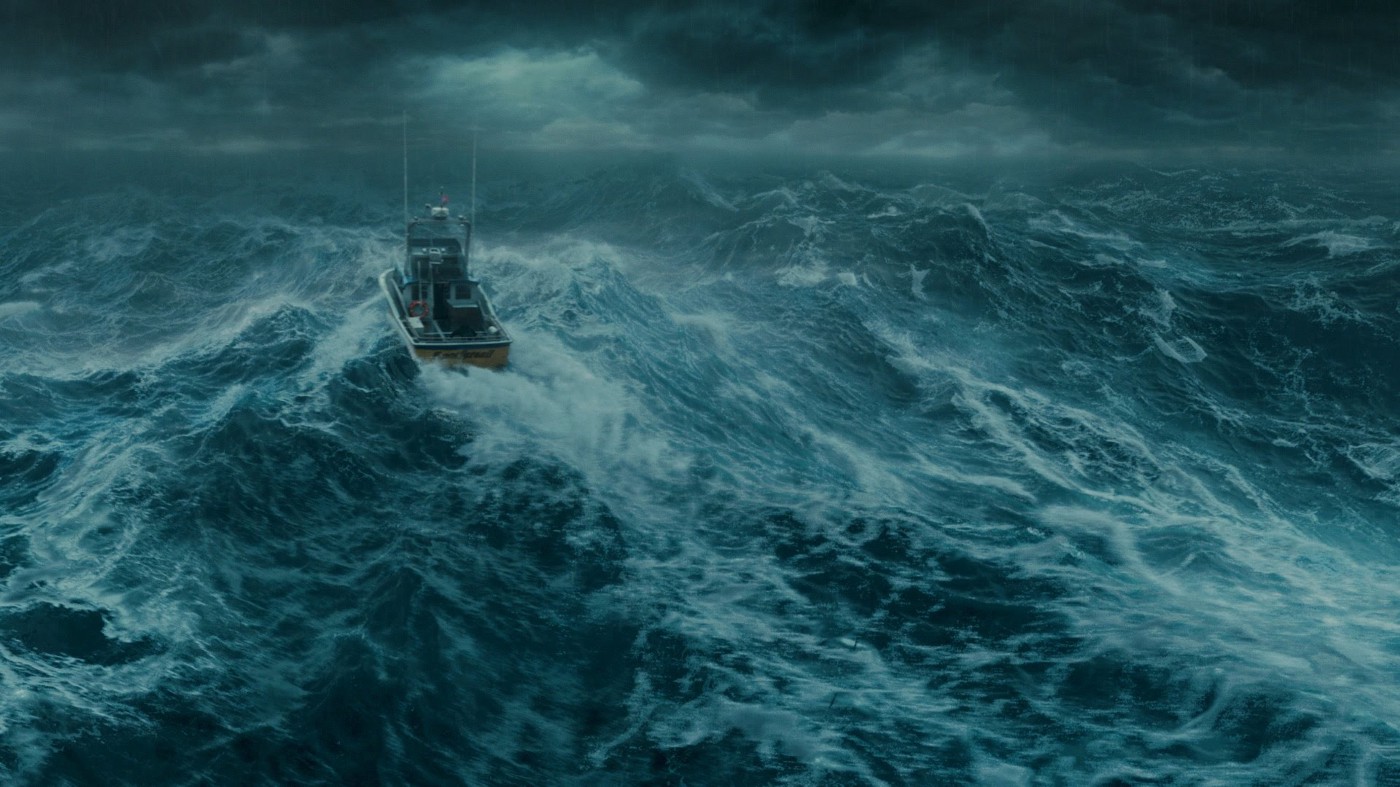
For whatever reason, I have been fascinated with stories of maritime disaster. I have read about the Titanic, but have even read more closely about the Lusitania, the Edmund Fitzgerald, the HMS Hood (for more, click here), and more. Perhaps few things could conjure up more fear than the thought of being thrust into a cold, deep ocean with no way to stay afloat, subject to attack and almost certain drowning. Poets have drawn upon such imagery, but so do the psalm writers. Read Psalm 42:7 or Psalm 69:2, 14-15 or Psalm 88:7. It is also the way Psalm 130 begins.
It seems to me that the writer is depicting the rolling waves we encounter in life, the ups and downs and the good and bad. How will I respond when I am in the storm, whether a literal storm, a storm others bring upon me or a storm I bring upon myself? What will I do when the winds have subsided and the storm has passed? Let’s look at this psalm as depicting four successive waves.
APPREHENSION: Our Cries And Supplications (1-2)
(Wave One)
We find the writer in a watery valley, looking up at a high, but descending, wave. It causes him to cry out and voice his pleas and supplications. The crisis may be financial, medical, familial, personal, or spiritual. It may seem like the world is crashing in on top of you. Do you sink in waves of worry, fear, and doubt? Or do you cry out to God for help? The writer sets an example for us, when we feel like we will be buried by trouble!
TRANSGRESSION: Our Iniquities And Unforgiven Sins (3-4)
(Wave Two)
Though the writer moves away from the metaphor, the idea continues. When you wade in the ocean and reach a shelf, you can no longer put your feet on the bottom. You can sink or swim, but you cannot stand. Verse three asks, “If You, Lord, should mark iniquities, O Lord, who could stand?” The question is rhetorical, but a lifesaver is thrown! “But there is forgiveness with You, that You may be feared.” Perhaps better imagery is to see the Omnipotent Hand of God reaching into the deep, grabbing our outstretched, up- stretched hand! Perhaps self-inflicted trouble, our sins, cause us to sink deeper than any other trouble.
EXPECTATION: Our Waiting And Hoping (5-7a)
(Wave Three)
Perhaps we could envision this as one floating to the top or having their head come up out of the water. The writer uses two significant, connected words–“wait” and “hope.” Help is coming! Just wait. Hope. You’re trusting, praying, studying, serving, and enduring. Maybe you feel like you’re holding onto a splintered plank that’s separating in the aftermath of your shipwreck, but you hear the sound of the rescue vessel humming on the waters. You know Who is at the helm, so you hang on!
REALIZATION: Our Mercy And Redemption (7-8)
(Wave Four)
I don’t know about you, but I don’t think I could be coaxed off a massive barge onto a rickety rowboat. But, most of us would make the exchange in the opposite scenario. Yet, the world clings to the leaky carrier of lostness when the ship of salvation is within reach. The writer calls heaven’s help “lovingkindness” and “abundant redemption.” This is the way I want to view the tumultuous waves of this world, from the safety of God’s saving grace. Resting in His everlasting arms, I can experience confidence and assurance at life’s worst while keeping my focus on Him at life’s best!
You are probably facing, enduring, or looking back at one of those first three waves right now. We sometimes singing, “Jesus, Savior, pilot me over life’s tempestuous sea; Unknown waves before me roll, hiding rock and treacherous shoal, chart and compass came from Thee, Jesus, Savior, pilot me.” We are echoing the sentiments of the psalmist in Psalm 130. Wherever you are in life, be sure you are letting Him lift and lead you! It’s the only way to reach eternal safety (John 14:6)!

 The Preacher Pollard Blog