Positive Encouragement

Gary Pollard

In Phil 1.6, Paul says “I am sure that the good work God began in you will continue until he completes it on the day when Jesus Christ comes again.” If this sounds familiar, it’s because he said something very similar in II Timothy 1.5 — “I remember your true faith. That kind of faith first belonged to your grandmother Lois and to your mother Eunice. I know you now have that same faith.” 

The confidence motif is repeated in both passages. It’s something Paul seems to say to give the person he’s correcting the benefit of the doubt. He also starts off his correction in both letters by saying something genuine and positive about their character. 

When we have to correct another member, we should never start with an accusatory tone. We should highlight the positive aspects of a person’s value and character and practically smother them with encouragement first. When Paul handles this uncomfortable situation he doesn’t say, “I’m sure you’re doing a great work, but…” He doesn’t tell Timothy, “I’m sure you still have faith, but…” The hug-followed-by-a-slap-to-the-face method does not and has not ever been effective. 

Instead, Paul encourages them by saying, “These are your positive attributes,” and then shifts his focus to positive examples of other people. It really is a masterful approach, but that makes perfect sense. God formatted both letters, so of course it was excellent. This also shows us that if we want to know how we’re supposed to do something difficult, we should look for a biblical example first. Chances are, God’s already given us a blueprint. 

We’re not told exactly what Euodia and Syntyche were fighting about, but there are some hints. The selflessness theme suggests a struggle with self-centered living. Love that hasn’t fully matured seems to evident from verse 9. Focusing on unimportant issues is also suggested in Paul’s prayer. Whatever it was, the root of their issue was a lack of selflessness. 

Down in verse 25, Paul talks about his struggle — he wants to leave this life and be with Jesus, but he knows the church at Philippi still needs him. He wanted to help them grow and find purpose through faith — evidently something that wasn’t already in place. 

Parkour

Wednesday’s Column: Third’s Words

garyandme521

Gary Pollard

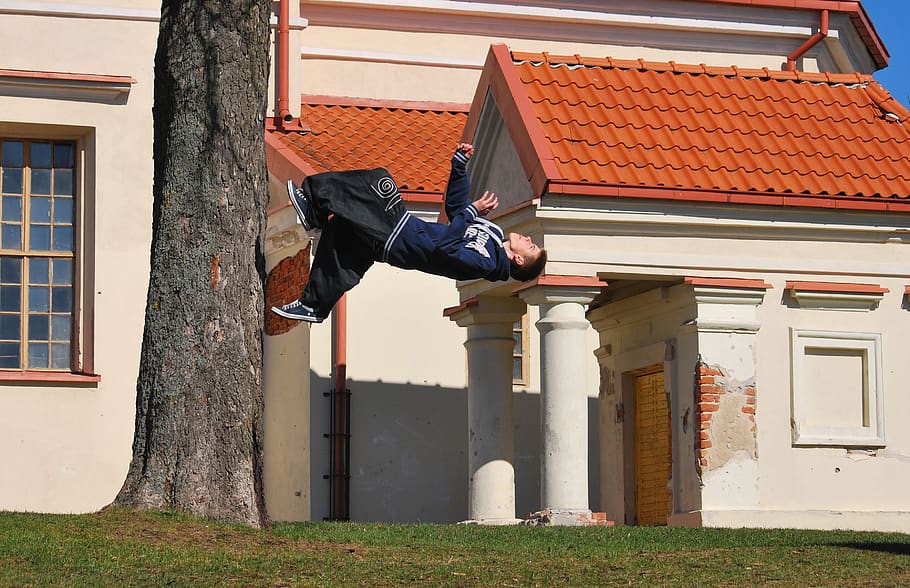
What is faith? I don’t have faith in my parkour abilities. My lack of faith comes from several factors: basic safety awareness, physique, and reality. Because of this, I have little or no confidence in my ability to scale walls. Faith is rational confidence. We’re confident about things we understand and have experience or proficiency with.

Faith in God is confidence. We’re confident that God exists. We’re confident that he made everything. We know he loves us. We know he’s coming back. We know that faithful people get to live with him.

A faithful Christian is a rationally confident Christian. When we’re doing our best to live moral lives, we’re confident in grace. We’re confident in our destination. We have reason to have confidence in God because we’ve worked on knowing him. We have the Bible and creation itself to help us know God. The more we know him, the more confidence we have.

What if I want more confidence in my parkour abilities? I’d have to hit the gym like crazy and somehow become graceful. I’d have to want to develop that skill. Confidence comes from experience and knowledge.

What if we need more faith? Get to know God more. Pay attention to all of the ways life points to a much higher power. Get close to other Christians. Get excited for heaven. No one can walk away from that without more confidence in our awesome God.

Study Is Serious

Wednesday’s Column: Third’s Words

Gary III

Gary Pollard

 
Lies closest to the truth do the most damage. It can be easy to deceive the average person because many simply will not question what they hear or read. Whether the subject is politics, science, religion, or urban legends, many have opinions based primarily on a cursory understanding of the subject matter.
 
In most areas of life, this lack of investigation or study is benign. Our eternity is not remotely impacted by (erroneously) thinking that Kalashnikov’s rifles are inherently inaccurate.
 
When it comes to our faith, however, we are left without excuse. Christians have an obligation to investigate what is taught (Acts 17). In order to effectively do so, we must have the desire to become serious bible students.
 
Depth of study is not just for theologians! The ability to analyze and accurately draw meaning from God’s word is something each Christian should pursue. Phrases like, “That’s too smart for me,” or, “Not everyone’s a preacher,” or, “It’s all Greek to me,” or any other excuse we may use will not fly at judgment.
 
The Spirit expects us to be knowledgeable enough in His words that we could teach on the subject (Hebrews 5.12). Teachers are proficient or expert in their subjects, not just vaguely familiar with them.
 
A great place to start in one’s journey to proficiency is to take the responsibility of learning seriously. We expect those who work with nuclear power to have some knowledge in their field because of the risk potential. With the Bible, souls and eternal destinations are at stake; if we appreciate this, it should drive us to become dedicated students of the word.