
Magic Dinosaur Bones

Dale Pollard

 I’m trying to convince my wife (Janelle) that she needs to make a podcast/Youtube series that would provide a nurses perspective on the many kinds of medicines used in the Bible as well as the medical practices of ancient cultures mentioned in the Bible. Would their medical practices actually work or make things worse? If you think that would be interesting as well, please send her a message and let’s all annoy nurse Janelle until she makes it happen. 

On a similar note, this article was written after researching a few of these bizarre medical practices.  

DID YOU KNOW…

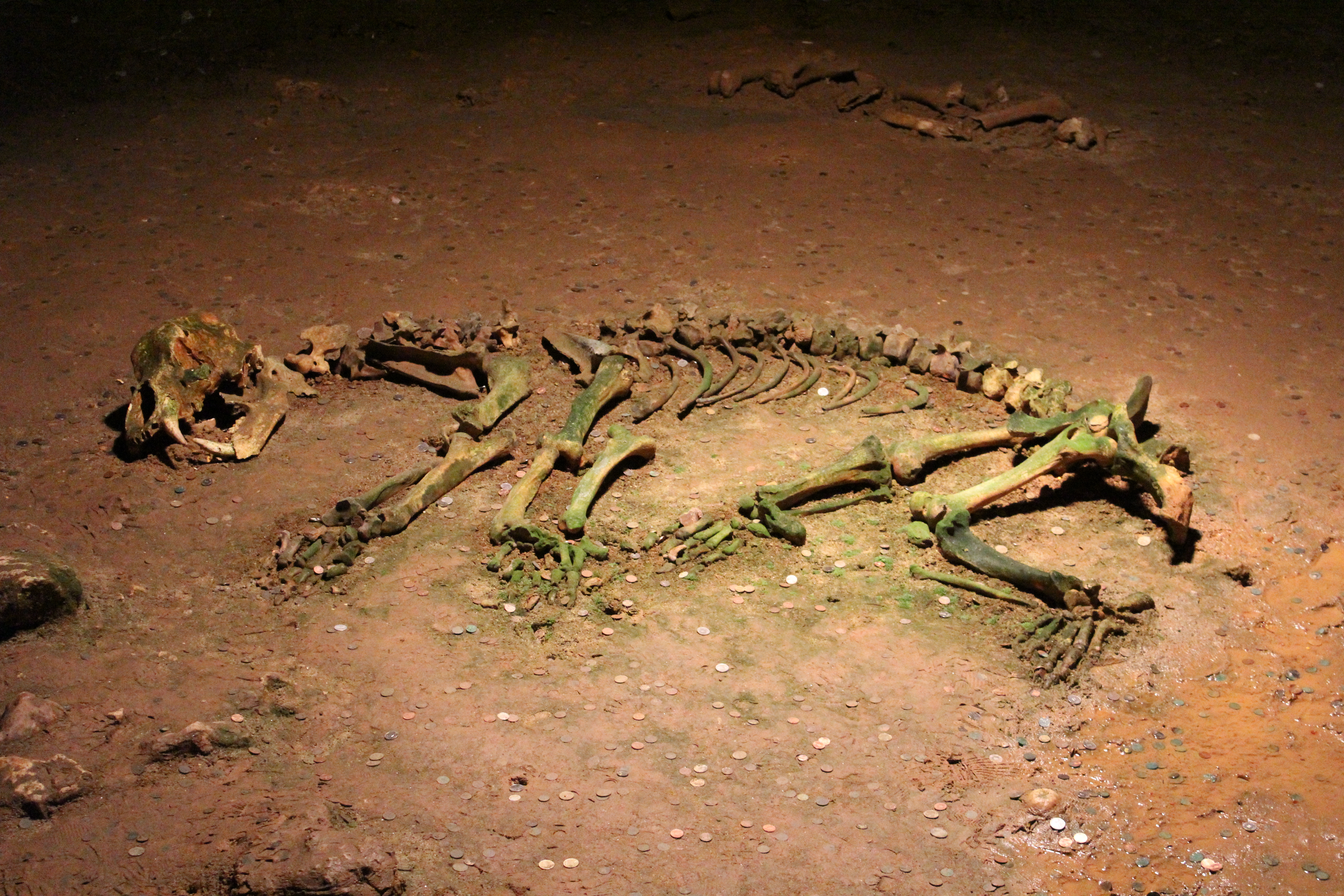
The use of dragon bones in medicine is a fascinating aspect of ancient beliefs, particularly if you view these “dragons” as possible examples of humans and dinosaurs co-existing. However, what’s really  strange is the fact that various societies around the world all decided to use the bones in such a unique way— medicine. 

For example, in medieval Europe, people sometimes discovered large bones and  believed them to hold magical properties. Powders made from these bones were used as talismans or medicinal remedies.

During the Middle Ages, alchemists often incorporated “dragon” substances in their potions and elixirs. They believed that dragon bones could enhance the efficacy of their concoctions or serve as some sort of protective charm.

Some Mesoamerican civilizations had legends about dragon-like creatures, and they used the large fossilized bones in rituals and their medicinal practices because they believed the remains held mysterious power. 

An article in the Associated Press in 2007 had this to say about the ancient Chinese: 

“Villagers in central China spent decades digging up bones they believed belonged to flying dragons and using them in traditional medicines. Turns out the bones belonged to dinosaurs…

The calcium-rich bones were sometimes boiled with other ingredients and fed to children to treat dizziness and leg cramps.”

The Bible has an interesting account about “magic” bones in 2 Kings 13:20-21. This passage recounts the power of God working through the prophet Elijah— even after his death.

Here’s a brief summary for those who might be unfamiliar with this incredible account: 

The prophet Elijah made a significant impact (perhaps the most significant) in Israel. Even after his death his prophetic legacy was admired by the people, but Elijah would perform one last miracle from beyond the grave. Some men were burying a man when they saw a raiding party coming. In haste, they threw the deceased man into the tomb where Elijah’s bones lay and when the dead man touched the bones of Elijah he came back to life and stood on his feet. 

While there may or may not be anything to the medicinal benefits of dinosaur bones as claimed by ancient cultures, there’s no need to speculate where the power was coming from in our biblical account. It’s obvious that it was God’s hand at work and not the prophet’s bones. The same can be said of baptism or even our Bibles. The power isn’t in water found in a baptistery or words on a page because we know the source is actually our Savior. The cure to the world’s greatest disease isn’t some secret recipe that utilizes dragon bones. What we need is what we already have and it’s widely available. 

“Be not wise in your own eyes; fear the LORD, and turn away from evil. It will be healing to your flesh and refreshment to your bones.” 

Proverbs 3.7-8
The Price Of Disrespecting God’s Holiness

Brent Pollard

On Wednesday nights at the Andrews, North Carolina, church, I have attempted to teach about the monarchs of united and divided Israel. After we finished studying Saul, I explored David’s life and reign. In the most recent installment of this series, we discussed David’s transport of the Ark of the Covenant from Kiriath-Jearim to David’s newly established capital Jerusalem (2 Samuel 6; 1 Chronicles 13). David didn’t follow Torah protocol when relocating the Ark of the Covenant; instead of having God’s priests carry it, he put it on the back of an ox cart. This decision by David set in motion the series of events that resulted in Uzzah’s death when he reached up to steady the Ark after the oxen jostled it. Such an outcome can more easily stir our emotions than our logic, prompting us to declare that Uzzah’s treatment was unjust.

Although God forbade the Israelites from worshiping graven or molten images, there was one physical object that they were permitted to honor: the Ark of the Covenant. This sacred artifact represented God’s Shekhinah (presence) on earth, facilitating communication with Him. We also recall the Ark’s significance on the Day of Atonement, when the high priest would sprinkle the blood of the atoning lamb on the mercy seat, which was located between the cherubim’s wings atop the Ark. During the conquest of Canaan, the Israelites took the Ark of the Covenant with them into battle as a symbol of God’s might. However, the apostate Israelites of the Judges’ Period treated the Ark as a mere talisman. This abuse of the Ark led to its temporary loss to the Philistines following their victory over Israel at Aphek (1 Samuel 4). 

Therefore, it becomes clear that God did not overlook Uzzah’s good intentions when he tried to prevent the Ark from falling off the ox cart. Instead, the dishonor David and company showed God kindled His anger because of this act. People treated this holy representation of God with great disrespect, as though they were hauling around a load of potatoes on a simple wooden cart with oxen. While God had overlooked the Philistines’ treatment of the Ark when they returned it similarly (1 Samuel 6), He had expected more from His covenant people. This carefree attitude towards the Ark of the Covenant ultimately led Uzzah to believe he could reach out and touch it without consequence.

It wasn’t the first time God made it abundantly clear that He demanded holiness. For instance, He incinerated Nadab and Abihu for offering an unapproved type of fire, as recorded in Leviticus 10.1. On that occasion, Moses reminded the men’s father, Aaron, of God’s words: “By those who come near Me I will be treated as holy, And before all the people I will be honored” (Leviticus 10.3 NASB1995). Even Moses missed out on the Promised Land for failing to give God the glory when he disobeyed God’s instructions for procuring water for the Israelites since his actions could not give God credit for supplying their needs (Numbers 20.12). Thus, David had ample examples to know that the things of God required the utmost reverence and care. Therefore, it is all the more puzzling that David, who typically sought God’s approval before acting, committed such a blunder here.

So, what is our application for Christians living today? I would suggest that there is something very holy from God that people too often treat profanely today. There are certain circumstances when people are not afraid to use the word “casual” when discussing certain assemblies. I am speaking of the church. As the Ark contained the ten commandments, Paul describes the church as the “pillar and support of the truth” (1 Timothy 3.15 NASB1995). This same passage teaches that the church is the household of God! As the Ark contained the manna that God used to sustain the Israelites, the church is where we partake of the Bread of Life (see John 6). And as the budding rod of Aaron within the Ark reminded the Israelites of God’s chosen priesthood, we are reminded that we who comprise the church are God’s holy priesthood today (1 Peter 2.9–10).In closing, the lessons from the time of David, Uzzah, and the Ark of the Covenant are not mere historical narratives; they are instructive for our relationship with God today. As David learned painfully, God’s holy nature demands our profound respect and obedience. This story encourages us, as modern-day believers, to examine how we approach that sacred institution God’s Son purchased with His blood (Acts 20.28). God’s word reminds us to live our faith with reverence and awe, understanding that we should not lightly take God’s presence. Like the Israelites of old, God calls us to honor Him in our actions and to treat the church with the respect and reverence she deserves as the bride of Christ (Isaiah 54.5; Revelation 21.2; Ephesians 5.22ff). Thus, as we go about our worship and service in the church, may we do so with the awareness that we are engaging with the living God, who calls us into a relationship marked by reverence, love, and obedience.