

Dale Pollard
Account: Isaiah, 37:36-38; 2 Kings, 19:35ff; 2 Chronicles 32
A Serious Assyrian Threat:
Sennacherib is on a campaign to control all routes across the Syrian Desert leading to the Mediterranean Sea. Assyria had already carried the Northern Kingdom of Israel off into captivity and invaded the southern kingdom of Judah.
Jerusalem is now under threat of attack and king Hezekiah sends his servants to the prophet Isaiah to ask for prayers on behalf of the people. Yahweh, through Isaiah, tells the people to not be afraid. For as unlikely as it seemed to the surrounded inhabitants of Jerusalem, their salvation would come in the middle of the night.
“That night the angel of the LORD went out to the Assyrian camp and killed 185,000 Assyrian soldiers. When the surviving Assyrians woke up the next morning, they found corpses everywhere” (2 Kings 19.35).
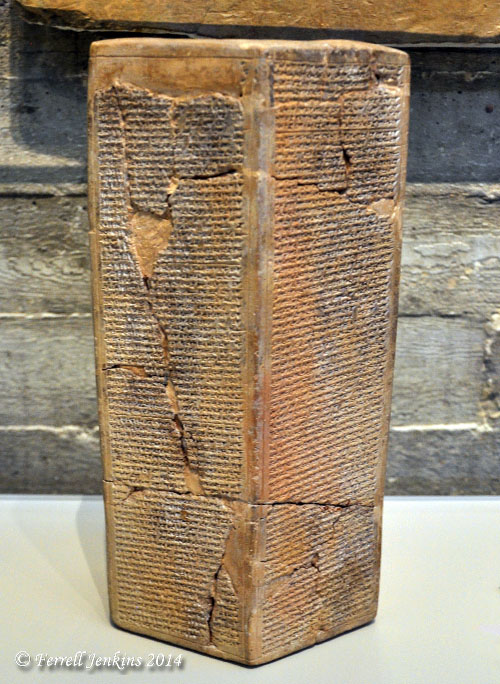
Sennacherib Cylinder Evidence:
Sennacherib left behind a record of his campaign against Judea and it can still be seen in the British Museum today.
Here’s a translation of his inscription,
“As to Hezekiah, the Jew, he did not submit to my yoke. I laid siege to 46 of his strong cities, walled forts, and to the countless small villages in their vicinity. I drove out of them 200,150 people, young and old, male and female, horses, mules, donkeys, camels, big and small cattle beyond counting and considered [them] spoils. Himself I made a prisoner in Jerusalem, his royal residence, like a bird in a cage.”
Sennacherib claims he conquered all of Judea except Jerusalem. He also claims that he surrounded the city of Jerusalem with his army, and trapped Hezekiah “like a bird in a cage.”
Curiously, that’s where he chose to end the story. To continue any further would mean to either fabricate or include a loss of such magnitude that it would tarnish the reputation of a proud Assyrian king.
 The Preacher Pollard Blog