

Magic Dinosaur Bones

Dale Pollard

 I’m trying to convince my wife (Janelle) that she needs to make a podcast/Youtube series that would provide a nurses perspective on the many kinds of medicines used in the Bible as well as the medical practices of ancient cultures mentioned in the Bible. Would their medical practices actually work or make things worse? If you think that would be interesting as well, please send her a message and let’s all annoy nurse Janelle until she makes it happen. 

On a similar note, this article was written after researching a few of these bizarre medical practices.  

DID YOU KNOW…

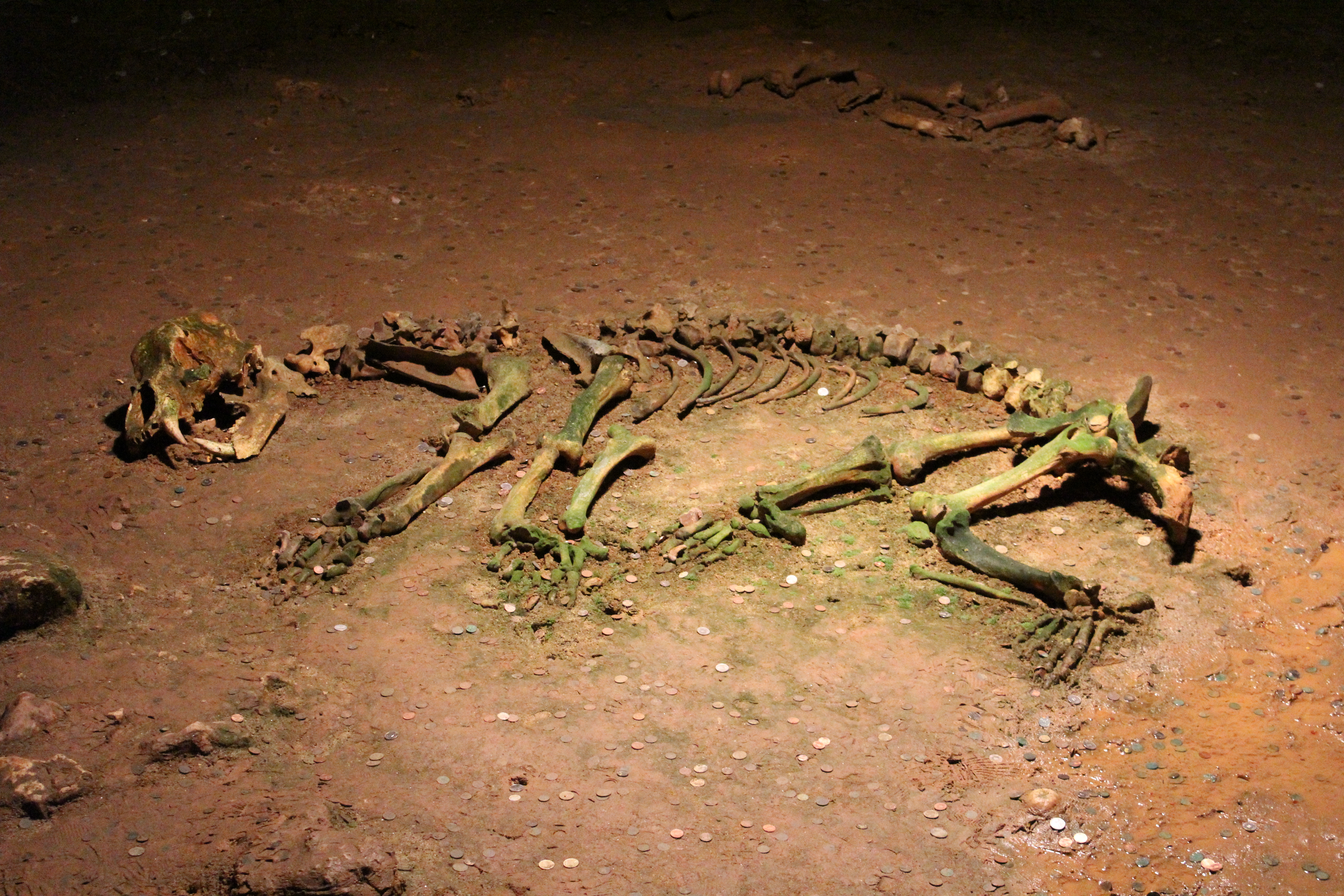
The use of dragon bones in medicine is a fascinating aspect of ancient beliefs, particularly if you view these “dragons” as possible examples of humans and dinosaurs co-existing. However, what’s really  strange is the fact that various societies around the world all decided to use the bones in such a unique way— medicine. 

For example, in medieval Europe, people sometimes discovered large bones and  believed them to hold magical properties. Powders made from these bones were used as talismans or medicinal remedies.

During the Middle Ages, alchemists often incorporated “dragon” substances in their potions and elixirs. They believed that dragon bones could enhance the efficacy of their concoctions or serve as some sort of protective charm.

Some Mesoamerican civilizations had legends about dragon-like creatures, and they used the large fossilized bones in rituals and their medicinal practices because they believed the remains held mysterious power. 

An article in the Associated Press in 2007 had this to say about the ancient Chinese: 

“Villagers in central China spent decades digging up bones they believed belonged to flying dragons and using them in traditional medicines. Turns out the bones belonged to dinosaurs…

The calcium-rich bones were sometimes boiled with other ingredients and fed to children to treat dizziness and leg cramps.”

The Bible has an interesting account about “magic” bones in 2 Kings 13:20-21. This passage recounts the power of God working through the prophet Elijah— even after his death.

Here’s a brief summary for those who might be unfamiliar with this incredible account: 

The prophet Elijah made a significant impact (perhaps the most significant) in Israel. Even after his death his prophetic legacy was admired by the people, but Elijah would perform one last miracle from beyond the grave. Some men were burying a man when they saw a raiding party coming. In haste, they threw the deceased man into the tomb where Elijah’s bones lay and when the dead man touched the bones of Elijah he came back to life and stood on his feet. 

While there may or may not be anything to the medicinal benefits of dinosaur bones as claimed by ancient cultures, there’s no need to speculate where the power was coming from in our biblical account. It’s obvious that it was God’s hand at work and not the prophet’s bones. The same can be said of baptism or even our Bibles. The power isn’t in water found in a baptistery or words on a page because we know the source is actually our Savior. The cure to the world’s greatest disease isn’t some secret recipe that utilizes dragon bones. What we need is what we already have and it’s widely available. 

“Be not wise in your own eyes; fear the LORD, and turn away from evil. It will be healing to your flesh and refreshment to your bones.” 

Proverbs 3.7-8
Calling On And Looking To Jesus

Friday’s Column: Brent’s Bent

Brent Pollard

For practitioners of Japan’s True Pure Land Buddhism, one desires to enter the pure land upon death. In so doing, he could bypass our corrupt world and enter the western paradise where he could quickly achieve nirvana. Conversely, True Pure Land Buddhism has a hellish alternative in which souls are tortured by oni (i.e., demons) until they are purged of their sins and can enter the Pure Land. No one desires torture. So, the Japanese would recite the nembutsu: “I call on the Amida Buddha.” In medieval Japan, practitioners of True Pure Land Buddhism would lay on their deathbeds holding on to a string as an added measure. That string led to a painting of Amida and his cohorts. As they looked longingly towards the picture, they hoped that their escaped soul would travel the line and enter the western paradise. 

It may be that upon reading the previous paragraph, you thought of the apostle Paul in ancient Athens. He told the men of Athens that he perceived them as superstitious, literally δεισιδαιμονεστέρους—“very fearful of gods” (Acts 17.22). As Japan is often called the home of eight million gods, with the Buddhas incorporated into the mix, it is easy to label the Japanese as superstitious. Yet, I note something different when I hear about this True Pure Land Buddhism. It would almost seem that True Pure Land Buddhism rubbed elbows with Christianity somewhere. It is conceivable since Pure Land Buddhism arose in India during the second century A.D. before making its way to east Asia. However, note two intriguing features of True Pure Land Buddhism reminding one of Christianity. 1) Calling on Amida’s name and 2) Looking to Amida for hope. 

Joel prophesied that those calling up the name of the Lord would be saved (Joel 2.32). Peter and Paul quote this verse from Joel’s prophecy regarding salvation within the New Covenant (Acts 2.21; Romans 10.13). So, there is most assuredly power in the name of Jesus Christ. Peter says there is “no other name under heaven that has been given among men by which we must be saved” (Acts 4.12, all ref. NASB1995 unless otherwise indicated). But calling on Jesus’ name is not like reciting a nembutsu. Paul shows us that we call upon the name of Jesus when our faith moves us to action. After seeing Jesus on the road to Damascus, Paul has been fasting and praying for several days. The prophet Ananias finds Paul in his misery and says, “ Now why do you delay? Get up and be baptized, and wash away your sins, calling on His name” (Acts 22.16 NASB1995). See then how Paul called on Jesus’ name. Paul submitted himself to baptism for the washing away of his sins. In so doing, Paul called on the name of Jesus. 

Do we not also look to Jesus to give hope? Well, we do not stare at an artist’s rendering of the Christ upon our deathbed. But we do look to Him in life as our hope. After citing many examples of those from whom we could find a worthy model of faithfulness, the Hebrews’ writer adds: “Fixing our eyes on Jesus, the author and perfecter of faith, who for the joy set before Him endured the cross, despising the shame, and has sat down at the right hand of the throne of God. For consider Him who has endured such hostility by sinners against Himself, so that you will not grow weary and lose heart” (Hebrews 12.2-3). The KJV says we look to Jesus. Either way, our eyes are drawn to and become fixated upon Him. This hope we have in Jesus is an anchor for the soul (Hebrews 6.19). 

It remains a challenge to preach the Gospel in those parts of the world where Buddhism has taken root. I’ve heard missionaries remark of the antagonism against Christianity within the Buddhist world. Yet, it seems strange that within at least one branch of Buddhism, there is a central figure who is something of a Messiah. Considering that so much of Buddhism asks you to find salvation from within yourself, there are at least some within that belief system who recognize the nature of the human condition is such that we must rely on the grace of someone greater. Therefore, even in hostile environments, may we endeavor to preach that the One willing and able to save is the Lord Jesus Christ. Let us tell the world to call upon and look to Jesus.

courtesy via Flickr