Zephaniah: The Coming Day Of The Lord (I)

A prophet who was the great-grandson of King Hezekiah? Perhaps another big surprise about Zephaniah that has to do with his ethnicity.

Introduction And Background

Neal Pollard

Zephaniah is written at an important cross-road. Established world powers were about to give way to new world powers. Judah was facing judgment for sin, if they didn’t repent (and they didn’t). Yet, the prophet is determined to show us a perfect, balanced view of God. He is just and holy, necessitating His wrath on the disobedient. But He is also gracious and merciful, longing to bless and restore. 

He begins his short prophetic book by stating his pedigree. More is known about him, just through his autobiographical genealogy, than several of the other Minor Prophets. He is the great-grandson of Hezekiah, and he prophesied during the reign of Josiah. These are the last two righteous kings of Judah before the Babylonian invasion. This would date Zephaniah’s prophecy as between 640-609 B.C., mere decades before Nebuchadnezzar makes his uninvited entrance into Jerusalem. While we can’t be certain, we believe him to be slightly before Nahum and Habakkuk in time. It’s very likely when you read the book of Zephaniah and review the reign of Josiah that the prophet wrote before Josiah made the sweeping, righteous changes in Judah. Zephaniah condemns foreign customs, astrology, religious syncretism and skepticism. 2 Chronicles 34 shows how Josiah, at different stages of his reign, eradicated these sins.

It would also make him a relative of Josiah as well as wicked Manasseh. Read 2 Kings 21 and remind yourself of how bad a king Manasseh was. He was so bad that his reign insured that Judah would face Babylonian Captivity (2 Kings 24:3-4). Between Hezekiah and Josiah, there is almost 100 years and two very wicked kings reigned in between them (Manasseh and Amon). The people are feeling the effects of unrighteous leadership that has spanned nearly a century and their lifestyles show it.

One last background fact concerning Zephaniah is he was almost certainly a black man. He is the son of Cushi, and the name means Nubian, the region immediately southeast of Egypt that today is the Sudan and Ethiopia. A Cushite dynasty ruled in Egypt from 715-663 BC, which would have brought more Nubian people into the nation of Judah (as Judah’s nearest southern neighbor). That also opens up the likelihood of interracial marriage. Zephaniah would have been the product of such, since Hezekiah, the Jew, was also an ancestor. It’s possible for a Cushite to settle in Jerusalem; After all, Ebedmelech is there a few years later when Jeremiah is imprisoned for his prophetic preaching (Jer. 38-39). Zephaniah seems very familiar with Ethiopia, mentioning it twice (2:12; 3:10).  

But his bloodline and his race are not what are important about him. His incredible message is one of judgment and grace, and those two qualities stand like two pillars at both ends of the book. 

The Book That Was Lost In The House Of The Lord

Monday’s Column: Neal At The Cross

Neal Pollard

The last righteous king to ever sit on the throne of the southern kingdom was Josiah, often called the “boy king”–as he was only eight years old when he acceded to the throne. We have the general evaluation of his reign in 2 Kings 22:2 as one who “did right in the sight of the Lord and walked in all the way of his father David, nor did he turn aside to the right or to the left.” What a divine endorsement! The verses that follow show us a few reasons how he demonstrated that righteousness.

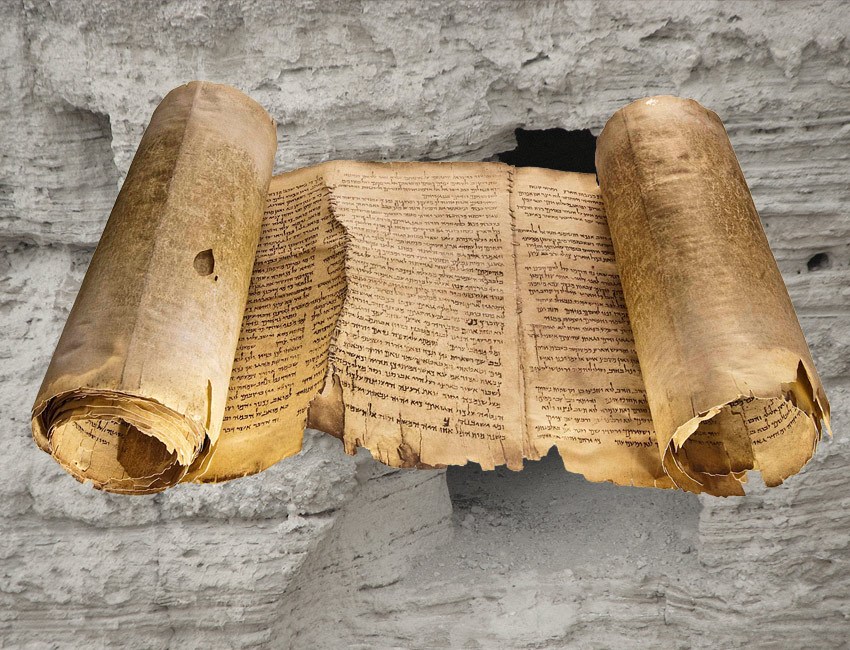
The first act of his office noteworthy enough to be preserved by inspiration was his commissioning of repairs on the temple. He sent Shaphan the scribe to Hilkiah the High Priest to pay carpenters, builders, and masons from the temple treasury to repair the temple (3-7). While Shaphan and Hilkiah finalized these plans, the High Priest makes a remarkable statement: “I have found the book of the law in the house of the Lord” (8). It is stated so matter-of-factly that we may lose the impact of this report. How could God’s Word be lost in God’s house? Was it not read in worship? Was it not consulted for direction? Was it not the heart and center of all that went on inside those walls? Incredibly, it had been buried, stored, or otherwise tucked away. Looking back to Manasseh and Amon’s reigns, they had had no need for the Book. They had abandoned God.

Shaphan takes the Book from Hilkiah, reads it, and then brings it to Josiah. He reads it to the king, who, when he hears “the words of the book of the law, he tore his clothes” (11). This godly king recognizes what a sin has been committed against God through this gross negligence! 

He sends a contingent to inquire of God about His written will, knowing God’s wrath was kindled against his people for not listening to and obeying the words of the book (13). The message they will hear from Huldah the prophetess is grim and hopeless, indicating that Judah would reap what they sowed (14-17). But, the punishment would not come in Josiah’s lifetime because of his tenderhearted, humble, penitent, and tearful response to the Word (18-20). His faith in God’s Word (and his obedient response to it that we read about in the next chapter) extended God’s grace and mercy to Josiah and the children of Judah. Sadly, the people did not share Josiah’s reverence for The Book (cf. Jer. 25:1ff). 

Surely, the Book could not get lost in the house of the Lord today! In how many sermons and Bible classes can God not “get a word in edgewise”? Human wisdom, insight, and guidance, without biblical support, is a quick way to “lose” God’s Word in His house. It also happens when church leaders do not constantly, habitually drive themselves to ask, in the face of decisions, “What does it say in the Book?” Homes where spouses and parents are not building on the bedrock foundation of the Book, but rather the sand of society, are unprepared for the storms of life (cf. Mat. 7:24-27). The constant plea of a faithful people is, “Is there a word from the LORD?” (Jer. 37:17).  There is an endless fountain of spiritual blessings held in reserve for the people who find and follow The Book! What a tragedy that it could ever get lost, especially in the house of the Lord! 

Lord, Help Me Remove The High Places

Monday’s Column: Neal At The Cross

pollard

Neal Pollard

They are mentioned throughout the Old Testament, pagan shrines Israel and Judah put up typically to worship idols. Moses warns about them as early as Leviticus (26:30) and Numbers (22:41). This was the unrighteous practice of the Canaanites (Numbers 33:52), but it was adopted early and often by God’s people. Solomon appears to be the first king to lead the people into this, part of the evil influence of his pagan wives (1 Kings 11:7).  It would become one of the reasons the northern kingdom is destroyed and the southern kingdom is taken into captivity (Psalm 78:58). It seems that this was one of the harder vices for God’s people to remove, even when times were at a relatively spiritual high. During the righteous reigns of Joash (2 Kings 12:3), Amaziah (2 Kings 14:4), Uzziah (2 Kings 15:4), Jotham (2 Kings 15:35), and others, this was an exception to their righteous rule.  Occasionally, a king was thorough enough to remove these (2 Chronicles 14:3), but soon they were rebuilt and the people went right back to using them.  Calvin explains that it was through these high places  “that the service of God would be perverted and contaminated, unless they were regulated in every part of it by the Divine Word” (Commentary on the Book of Psalms, Vol. 3, Logos). 

God had a place to be worshipped and a way to be worshipped. The high place was a concession or accommodation that became a stumbling block to the people’s spiritual health. The temptation arose through it to change the object of worship and to see the high place as a convenient substitute for the tabernacle and the temple. But, the worst of all religious practices ultimately occurred there (Jeremiah 19:5). Only in Josiah’s reign, just a few decades before Babylonian Captivity, were they finally destroyed (2 Kings 23:4-20). 

Is it possible for me to construct my own high place, a shrine or altar to something that becomes a hindrance to serving God faithfully? It might be a vice, a habit, or a secret sin, something I retreat to as an indulgence or allow myself to participate in. It might be an attitude, disposition, or character trait that is the exception to my spiritual rule. It might be an unhealthy relationship or person I allow to unduly sway me. I might say, “It’s just this one thing or area of my life. What’s the big deal?” 

Maybe that’s how the Israelites looked at the high places. But, nothing can be allowed to occupy mental and spiritual space that belongs only to God. I cannot rationale or compartmentalize something as my self-made exception to God’s rule. Sin grows and expands when it is not dealt with and rooted out. I must regularly examine myself (2 Corinthians 13:5) to make sure only Christ is seated upon the throne of my heart. Jesus challenges me, “You shall love the Lord your God with all your heart, and with all your soul, and with all your mind” (Matthew 22:37, emphasis mine). I must be vigilant to take that challenge most seriously! 

ruins_in_negev_desert_israe