

Monday’s Column: Neal at the Cross

Neal Pollard
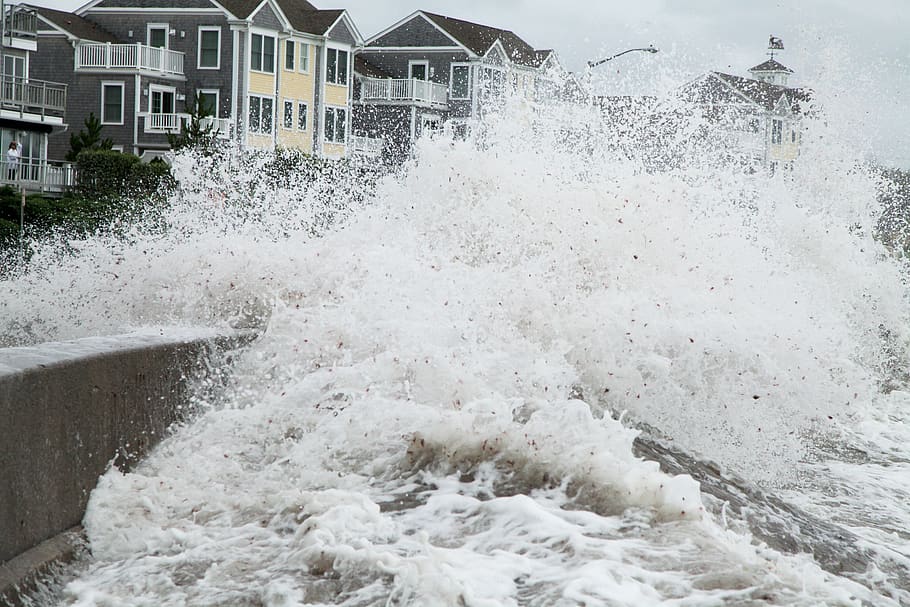
When I preached in Livingston, Alabama, Selman Falls would often lead us in singing the song, “He Will Hide Me.” This M.E. Servoss hymn was in the Songs of the Church hymnal. Servoss, a woman from Chicago (“Mary Elizabeth”), was a prolific hymn writer. This was maybe her most notable hymn. Perhaps no imagery is more graphic in scripture than depicting troubles as a storm (cf. Psalm 55:8; Proverbs 1:27; Isaiah 25:4-5; 1 Timothy 1:19; etc.). Storms are frightening and damaging. I sat in a hallway with my head in my lap in Junior High in Franklin, Georgia, during a tornado and my family and I rode out a hurricane in Virginia in 2003. The unknown of what the storm will do adds to its ferocity.
I read David McCullough’s Johnstown Flood, about the torrential rains that broke the Little Fork dam and unleashed a calamity of its kind unmatched in modern, U.S. History. People were completely swept away, crushed by debris, drowned, and even burned to death. The storms of that late May day in 1889 cost 2,209 people their lives. McCullough tells about Victor Heiser’s incredible survival in this flood. He climbed into a barn just before the powerful waters blew through the property and he watched the family house (in which his parents were) instantly demolished. The barn was carried downstream in such a way that it barely missed whole houses, freight train cars, barns, and the like before the then sixteen year old Heiser found refuge with nineteen others in the attic of a two-story brick house commandeered by the flood. Along the way, he witnessed the deaths of several not so blessed as he. Heiser made the most of the blessing. He grew up, became a doctor, and it is estimated that he saved as many as two million lives through the development of the first effective treatment against leprosy. He died at the age of 99 in 1972.
Most storm survivors are not as acclaimed and famous as Victor Heiser. So many have taken hold of the hand which calms the storms and have enjoyed the Lord’s guidance as they weathered their own storms of tragedy, trouble, and transgression. They reached their end, many of them having aided others to escape through Christ! Spurgeon and a friend saw a weather vane upon which were written the words, “God is love.” The friend objected, saying, “God’s love is not so fickle and transient. That vane is not correct.” To which Spurgeon replied, “No, friend, you have misunderstood its meaning. It is correct. It suggests that God is love, which ever way the wind blows.”
Donna Dungan, a wonderful Christian lady who has lived along the Gulf Coast where many fierce storms have blown, wrote a poem to comfort a friend suffering from an unknown virus that eventually took her life. Her beautiful words may bring you comfort as you deal with your storms. I close with it.
Though a fierce storm is raging about you
And you fear there is nothing you can do
There’s a place in your heart where He meets you
And in the eye of the storm He carries you through
Don’t let go, don’t try to leave the eye, or the storm will take you in
Nothing will overtake you while you are holding on to Him
There is a place of peace and rest that is safe from the battles of life
A place in your heart where He will shield you from worry and strife
Our Lord never sleeps nor slumbers while His children are in pain
He alone has the power to hold you up until you are whole again
Oh, please don’t let go–just hold on
In the eye of the storm just hold on.

 The Preacher Pollard Blog