

Israel first heard Exodus 20.4 spoken by God from heaven in an audible voice.
“You must not make for yourself an idol of any likeness of what is in heaven above or on the earth beneath or in the water under the earth…”
Obviously this wasn’t enough to keep humans from doing the exact opposite.
“They (Israel) forsook all the commandments of the LORD their God and made for themselves molten images, two calves, and made an Asherah and worshiped all the host of heaven and served Baal. Then they made their sons and their daughters pass through the fire, and practiced divination and enchantments, and sold themselves to do evil in the sight of the LORD, provoking Him. So the LORD was very angry with Israel and removed them from His sight; none was left except the tribe of Judah.
Also Judah did not keep the commandments of the LORD their God, but walked in the customs which Israel had introduced. The LORD rejected all the descendants of Israel and afflicted them and gave them into the hand of plunderers, until He had cast them out of His sight”
(2 Kgs 17.16-20).
Both the Egyptians and the Babylonians assigned stars to their many gods. The practice of star worship was common place among the Assyrians— and especially the Chaldeans.
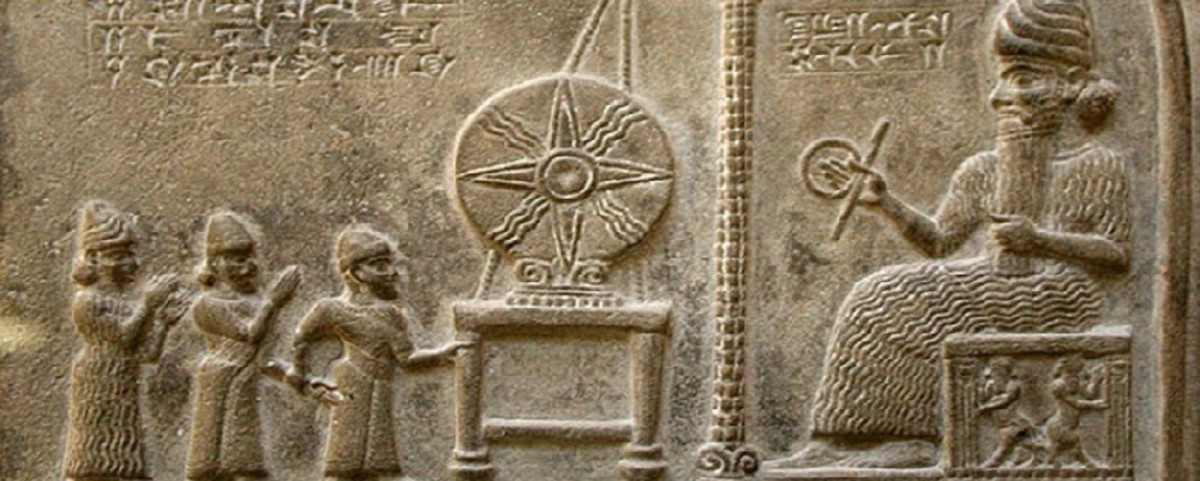
“…beware lest you raise your eyes to heaven, and when you see the sun and the moon and the stars, all the host of heaven, you be drawn away and bow down to them and serve them, things that the LORD your God has allotted to all the peoples under the whole heaven” (Deut. 4.19).
Were there any depictions of Israel’s (and our God), Yahweh? The evidence is sparse, but here’s a possible example.

An Achaemenid period coin inscribed with the word Yehud depicts a supreme deity as a seated figure riding on a winged wheel.

Images of Ezekiel’s wheel (Ophanim) or Elijah’s “flying chariot” also come to mind. These motifs are seen depicted not only in the ancient middle and near East, but throughout the entire ancient world. Orthostats (foundation blocks with artistic impression), stone stele, reliefs, and a plethora of artifacts all share a striking resemblance. While these artistic depictions and their character identities aren’t entirely accurate to biblical accounts, many aspects mimic and even seem to acknowledge true Divinity.
“He bowed the heavens and came down;
thick darkness was under his feet.
He rode on a cherub and flew;
he came swiftly on the wings of the wind.” Ps. 18.9-10

 The Preacher Pollard Blog