
Neal Pollard
The Acropolis towers over the 4.5 million people who call Athens home. From nearly any point around this iconic spot that looms 450 feet above sea level, you can see it from the heights. In Acts 17, we see an example of the division of labor with Paul and his fellow-missionaries. Timothy and Silas have stayed behind doing follow up in Thessalonica while Paul goes on to Athens. Cosmopolitan man of education and experience that he is, Paul is still agitated and disturbed by the rampant idolatry of the place.
Visiting the city today, you see evidence of the mythology of Poseidon and Athena complete with temples dedicated to their honor and that of so many gods. Paul began as he always did in any new place, attempting to reach the Jews in the synagogue (Acts 17:17) while also making effort to evangelize in the marketplace. The Epicureans, rugged individualists and materialists, and Stoics, devoted to reason above all else, were intrigued and incensed by Paul’s “new teaching” (Acts 17:18). These philosophers brought him to the Aeropagus (hill of Ares in the Greek; “Mar’s Hill” in the Latin) so he could explain himself.
Many believe that, just as Socrates had done over 450 years earlier, Paul was called before their supreme court and tried for his “strange” beliefs. There are parallels between Socrates defense and Paul’s. Second, Dionysius, who will believe Paul’s preaching, is an Aeropagite or judge on this court. Third, it fits with Luke’s theme of Paul testifying before magistrates–the Philippian magistrates, the Corinthian proconsul, the Roman governors at Caesarea, the Jewish Sanhedrin, King Agrippa, and, ultimately, the Caesar. If it was a trial, it was also a masterful sermon. Paul uses their own philosophy, their own philosophers, and their own presuppositions to preach God and the resurrection of His Son and the judgment to come.
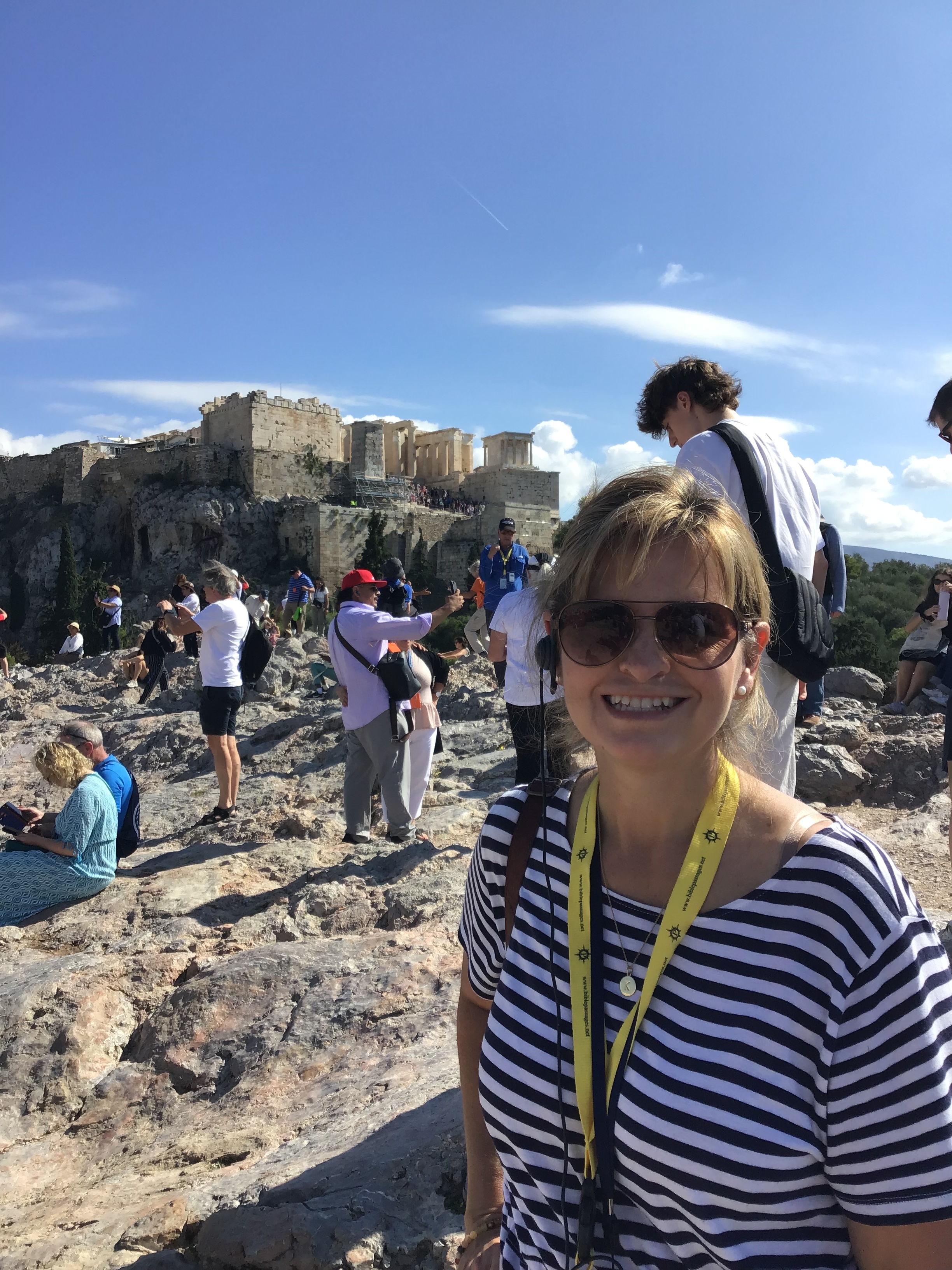
Standing on Mar’s Hill this afternoon, with the Parthenon jutting out on the Acropolis across the way, I thought about how Paul was given such a huge forum and he rose to the occasion. He gave us a masterful example of how to reach the unbelieving, biblically illiterate of any age. Ultimately, his message centered on the resurrection and the responsibility we have to stand before God, that we must believe that God is and that He is a rewarder of those who diligently seek Him (Heb. 11:6).
Right before we went to the top of Mar’s Hill, the preacher for the church at Athens, Dino Roussos, spoke to us about this event and even quoted (in Greek, of course) a portion of Paul’s sermon. How great to see the Lord’s church alive in a city where it seems Paul had, at best, only nominal success! How thankful we continue to be that Paul was willing to boldly go where no Christians had gone before to plant the first gospel seeds that are still producing today!
 The Preacher Pollard Blog